


What Is DTF Printing on Shirts Benefits Workflow and Uses Guide
¿Qué es la impresión DTF?
DTF printing, or Direct-to-Film printing, is a modern method of applying designs to shirts and other apparel. Instead of printing directly onto the fabric, your design is first printed onto a special PET film using water-based CMYK inks combined with white ink. This base layer of white ink is essential for creating vibrant, opaque prints, especially on dark or colored fabrics.
Unlike direct-to-garment (DTG) printing, DTF printing doesn’t require any pretreatment of the shirts, meaning you can print on a broad range of materials — including cotton, polyester, blends, nylon, and even leather — without extra preparation. After printing, an adhesive powder is applied to the film, then heat cured. The design is then transferred from the film to the shirt using a heat press, bonding the ink and adhesive firmly to the fabric.
This process makes DTF printing a go-to choice for custom T-shirt printing because it delivers vibrant, detailed prints that are durable and flexible, maintaining color and feel wash after wash. It’s especially ideal for apparel due to its versatility and ability to produce high-quality designs on various fabric types without compromising comfort or detail.
The Step-by-Step DTF Printing Workflow on Shirts
Getting great results with direct to film printing shirts starts with a clear workflow. Here’s the step-by-step process you’ll follow for the DTF transfer process on shirts:
Paso 1: Preparación del diseño
Start by preparing your digital design. Use high-resolution files (300 dpi or higher) in formats like PNG or TIFF to keep colors sharp. Proper color management is key to vibrant full-color DTF prints, so calibrate your monitors and profiles for accuracy.
Paso 2: Impresión en película PET
Next, print your design onto clear PET film using a DTF printer. This printer lays down CMYK inks along with a white ink base, which helps the colors pop on dark shirts. The white layer acts as an opaque background, making images stand out.
Step 3: Applying Adhesive Powder and Curing
Once printed, evenly apply hot-melt adhesive powder to the wet ink on the film. This powder is vital for bonding the print to fabric. After applying the powder, cure or dry the film carefully to melt the adhesive without damaging the print.
Step 4: Cutting or Trimming the Transfer
After curing, trim your transfers either manually or with an automated cutter. Clean cuts help prevent any unwanted powder residue from sticking to your shirt during transfer.
Step 5: Heat Pressing Onto Shirts
Use a heat press to transfer the design from film onto the shirt. Settings typically hover around 320°F (160°C) with medium pressure for 15-20 seconds, but you’ll need to adjust based on fabric type. Cotton, polyester, and blends each respond differently—cotton loves a slightly higher temperature, while polyester requires more care to avoid scorching.
Step 6: Post-Press Cooling, Peeling, and Final Curing
Let the shirt cool slightly before peeling the film off—hot peel versus cold peel depends on the adhesive used. Some prints benefit from a final cure press to lock in durability and wash fastness.
Common Troubleshooting Tips
- If adhesion issues show up, check powder coverage and heat press timing.
- Uneven powder can cause weak spots—use consistent application.
- Always test wash your garments to ensure long-lasting durability.
For a more detailed look at preventing adhesion problems and fixing common issues, exploring common causes and fixes in DTF printing can save you time and headaches.
Following this workflow helps you consistently create durable DTF prints on fabric ready for everyday wear.
Key Benefits of DTF Printing for Shirts
DTF printing on shirts offers several clear advantages that make it a top choice for custom apparel in the US market.
| Beneficio | Detalles |
|---|---|
| Exceptional Versatility | Works great on cotton, polyester, blends, nylon, leather, and both dark and light fabrics—no pretreatment needed. |
| Vibrant, High-Detail Prints | Produces full-color images with smooth gradients, sharp small text, and solid opaque whites—perfect for dark shirts. |
| Durabilidad y resistencia al lavado | Prints feel soft and stretchable, lasting 50+ washes without cracking or fading—ideal for everyday wear. |
| Cost-Effective for Small to Medium Runs | No minimum order size and lower setup costs compared to traditional screen printing make it budget-friendly. |
| Velocidad y eficacia | Fast turnaround times and on-demand printing help you meet tight deadlines easily. |
| Eco Advantages | Uses water-based inks that reduce environmental impact and waste. |
| Flexibility for Complex Designs | No limits on color count or layering, so you can create intricate, multi-color artwork without extra cost. |
This combination of versatility, quality, and affordability makes DTF printing an excellent solution for custom T-shirt printing DTF businesses, print-on-demand shops, and designers aiming for durable and vibrant apparel. For best results, using high-quality materials like specialized DTF films can enhance adhesion and print vibrancy. Check out premium options like the Película de transferencia Jinlong DTF to get started with reliable transfers.
With these benefits, DTF printing is quickly becoming the go-to method for creating durable, high-quality custom shirts without the hassle of pretreatment or color restrictions.
Posibles inconvenientes y cómo superarlos
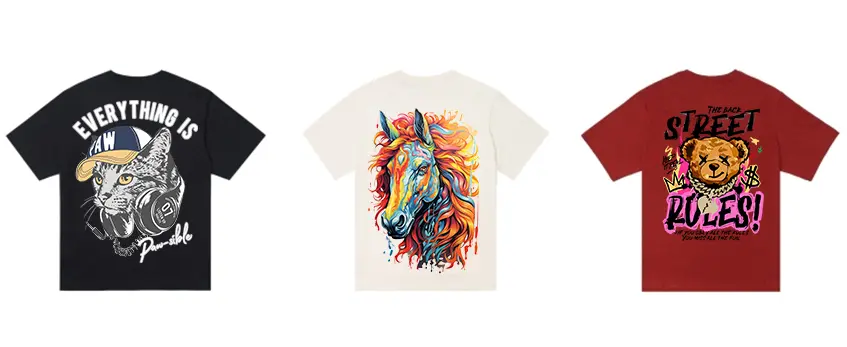
While DTF printing on shirts brings plenty of benefits, there are some challenges to keep in mind. The hand feel of DTF prints tends to be slightly thicker compared to DTG prints, which might feel less smooth on the fabric. This can be improved by using premium DTF adhesive powders that offer a softer, thinner finish without sacrificing durability.
Another consideration is the upfront equipment investment. Setting up a quality DTF printer, heat press, and maintaining supplies like specialized DTF inks and adhesive powders means higher initial costs compared to some other methods. However, the low setup costs and no minimum order requirements help balance this out for small to medium runs.
Getting consistent, high-quality results also takes some practice. There’s a learning curve when dialing in print settings, powder application, and heat press parameters. Monitoring storage and shelf life of your printed DTF transfers is critical too—improper handling can affect adhesion and print longevity. For best results, follow recommended conditions for roll storage and transfer handling to keep your designs crisp and ready-to-press. You can check out detailed Consejos de almacenamiento y manipulación de los rodillos DTF para obtener resultados uniformes para orientarse.
By addressing these issues with quality materials and proper technique, you can maximize the advantages of DTF printing and minimize any drawbacks.
DTF vs Other Popular Shirt Printing Methods

When deciding on a shirt printing method, understanding how Impresión DTF stacks up against others like DTG, screen printing, and vinyl/HTV is key.
DTF frente a impresión DTG
DTF (Direct-to-Film) printing stands out with its ability to print on a wider range of fabrics, including cotton, polyester, blends, nylon, and even leather—without any pretreatment needed. In contrast, DTG (Direct-to-Garment) often requires pretreatment, especially on polyester, and works best on 100% cotton. DTF prints have a slightly thicker feel compared to DTG but offer excellent wash durability and vibrant colors on dark and light fabrics. Cost-wise, DTF generally has lower setup expenses, making it great for small to medium runs.
DTF vs Serigrafía
Compared to screen printing, DTF prints can be produced much faster with no minimum order requirements, making it great for on-demand jobs. Screen printing needs longer setup times and higher minimums but can be more cost-effective for large batches. DTF also handles detailed, multi-color designs and gradients better than screen printing. Plus, DTF works on more types of fabric without extra prep, adding versatility.
DTF vs Vinyl/HTV
Vinyl and HTV (Heat Transfer Vinyl) offer crisp detail and durability but are limited by color layering and complexity. DTF excels in handling detailed, full-color designs with gradients and opaque whites, especially on darker shirts. While vinyl can feel softer, DTF prints tend to stretch better and remain durable through 50+ washes. DTF’s process is more efficient for complex artwork without cutting and layering separate vinyl pieces.
When to Choose DTF for Your Project
Opt for DTF printing if you need:
- Vibrant, full-color designs on multiple fabric types without pretreatment.
- Quick turnaround and low minimums for small to medium shirt runs.
- Durable, stretchable prints that last through many washes.
- Complex artwork with gradients or fine details.
With its balance of quality, versatility, and cost-effectiveness, DTF is a top choice for custom T-shirt printing, ranging from single orders to small batch production.
For more insights into adhesive and powders that boost DTF print quality, check out the detailed guide on DTF adhesive powder options. If you’re curious about printer issues that might affect your output, review tips for handling Problemas con el cabezal de impresión DTF.
Real-World Applications of DTF Printing on Shirts
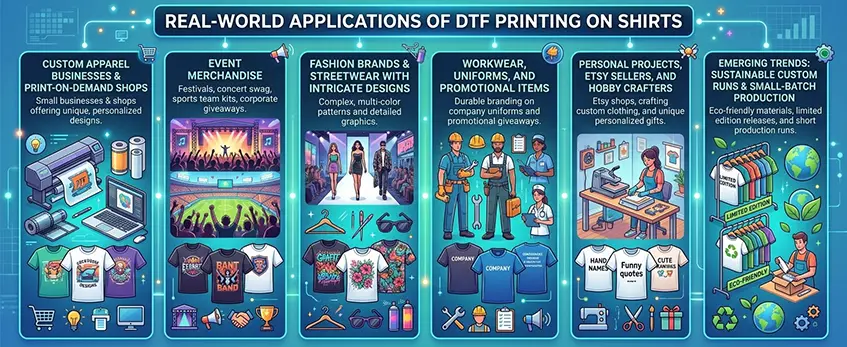
DTF printing on shirts has quickly become a favorite for many because of its versatility and vibrant results. Here’s where you’ll often see it in action:
Custom apparel businesses and print-on-demand shops: DTF is perfect for shops that want fast turnarounds with no minimum orders. It works great on all fabrics, making it easy to offer a wide range of shirt styles and colors.
Event merchandise (festivals, sports teams, corporate swag): Whether it’s festival tees, team jerseys, or company giveaways, DTF printing allows detailed, colorful designs that hold up well through multiple washes.
Fashion brands and streetwear with intricate designs: Brands that push creative limits love DTF for its ability to print fine details, gradients, and vibrant colors on cotton, polyester, or blends without sacrificing comfort.
Workwear, uniforms, and promotional items: Durable and stretchable DTF prints make it ideal for uniforms or workwear that need to stay looking sharp and professional even after heavy use.
Personal projects, Etsy sellers, and hobby crafters: Small-batch or one-off prints are affordable and easy with DTF. This helps crafters and entrepreneurs create personalized items without committing to big quantities.
Emerging trends: Sustainable custom runs and small-batch production: Thanks to water-based inks and no pretreatment requirement, DTF fits well into eco-friendly and low-waste production, popular with businesses focusing on sustainability.
For anyone interested in starting or scaling a custom shirt business, exploring a quality DTF printer setup like the JL DTF301B A3 model can be a smart investment. This printer is favored for its efficiency specifically in apparel printing, helping bring vibrant full-color DTF designs to life quickly and reliably.
Tips for Getting the Best Results with DTF on Shirts
To get top-notch prints with DTF printing on shirts, start by choosing high-quality materials. Using premium jinlong DTF films, inks, and adhesive powders ensures superior adhesion and more vibrant colors. These materials help your designs pop with rich, durable colors while sticking perfectly to various fabrics.
Setting your heat press correctly is crucial for best results. For cotton, use about 320°F with medium pressure for 15 seconds. Polyester and blends usually need a slightly lower temperature around 300°F and shorter press time to avoid fabric damage. Always follow specific guidelines for each fabric type to ensure a smooth, durable finish.
Regular maintenance for your DTF printer and equipment is key. Keep your print heads clean, check the adhesive powder distribution, and calibrate your machines to maintain consistent print quality. This reduces downtime and helps avoid common issues like poor powder coverage or adhesion problems.
When preparing your designs, stick to best practices for file formats (preferably PNG or TIFF), 300 DPI resolution, and accurate color profiles. This prevents loss of detail or color shifts, especially when dealing with vibrant full-color DTF prints. Proper color management means your shirt designs will look exactly as planned.
Finally, care instructions for the finished shirts will help keep prints lasting longer. Recommend gentle machine washing inside out, cold water cycles, and avoiding harsh chemicals or high heat drying. Proper washing and care maximize the durability of your DTF prints, preserving softness and preventing cracking through 50+ washes.
For more on quality materials and DTF printer setup, check out the comprehensive jinlong DTF films and inks guide and the full DTF printer for clothes resource. These resources will help you nail the process every time.


 English
  Español
  Deutsch
  Français