

No products in the cart.

Jinlong
Black DTF Powder Application Mistakes That Damage Print Quality and How to Fix 
Understanding Black DTF Powder and Its Unique Benefits
Black DTF powder differs significantly from standard white DTF powder, making it essential for specific printing needs. Here’s a quick comparison:
| Feature | Black DTF Powder | White DTF Powder |
|---|---|---|
| Color | Deep black for dark/translucent prints | Opaque white for bright backgrounds |
| Best Use | Dark garments, dye-sensitive fabrics | Light garments, solid backgrounds |
| Dye Migration Control | Superior blocking on dark/textured dye | Standard blocking |
| Melt Flow & Opacity | Enhanced melt flow, controlled opacity | Standard melt flow and opacity |
When to Choose Black DTF Powder
- Dye-sensitive fabrics: Black powder prevents unwanted dye migration, critical when printing on polyester blends or fabrics prone to bleeding.
- Dark garments: White powder may cause dull colors or visible shadows. Black ensures crisp, vivid prints without color distortion.
- Detailed or photo prints: Better opacity control leads to sharper images and uniform coloring.
Jinlong DTF Black Powder Advantages
Our jinlong DTF black powder offers:
- Superior melt flow: Ensures even coating and smooth adhesion, reducing clumps or uneven patches.
- Opacity control: Maintains deep black vibrancy without compromising print flexibility.
- Consistent granule size: Provides uniform application and fewer defects.
- Improved dye migration prevention: Keeps designs sharp on dye-sensitive and dark fabric blends.
Choosing jinlong DTF black powder guarantees higher print quality with fewer application issues, especially when working with challenging fabric colors and types.
Top Application Mistakes with Black DTF Powder
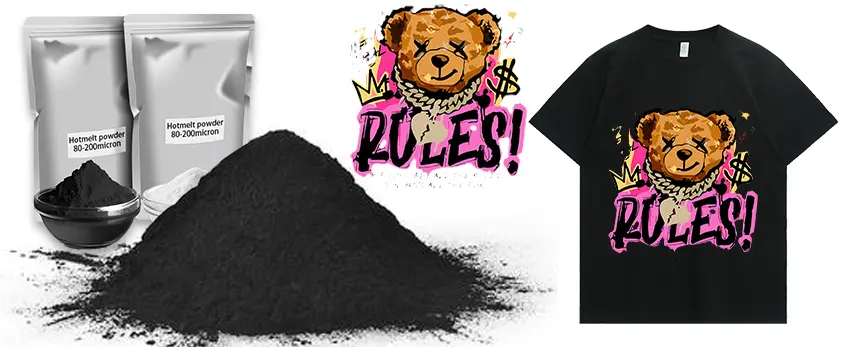
Getting black DTF powder right can be tricky. Here are the most common mistakes that mess with print quality and how they affect your results.
Uneven Powder Distribution
- Causes: Shaking the powder container unevenly or using a poor shaking technique leads to clumps and inconsistent spread.
- Effects: This causes patchy adhesion where some areas bond weakly, resulting in spots that peel prematurely.
- Visual Signs: After curing, you’ll notice blotchy textures or incomplete powder coverage, which directly harms the print’s durability.
Applying Too Much Powder
- Causes: Dumping excess powder or not removing the surplus right away.
- Effects: This creates a rough surface and visible powder buildup. You might see crystal-like spots, and equipment can clog from too much residue.
- Impact on Quality: Expect matte, dull spots, less flexibility in the print, and poor wash performance.
Applying Too Little Powder
- Causes: Not shaking enough or rushing the powder application process.
- Effects: The adhesive doesn’t melt properly, causing weak bonding. Prints crack after washes and can be removed too easily.
- Long-term Issues: Fading and peeling become major problems under regular wear and stress.
Timing Errors – Applying Powder Too Soon or Too Late
- Causes: Adding powder before the ink has set enough or waiting too long after printing.
- Effects: Powder melts into pits or holes if ink is too wet, or sticks poorly if ink is fully dry.
- Black Powder Specific: These timing missteps increase uneven dye blocking issues unique to black DTF powder.
Ignoring Environmental Factors
- Humidity: High moisture can cause powder to clump or reduce adhesion.
- Dust/Static: Particles and static charge introduce contaminants, leading to pinholes, spots, or inconsistent melting during curing.
Incorrect Curing Settings for Black Powder
- Temperature/Time Mismatches: Too low or too short leads to soft, sticky prints; too high or too long results in brittleness and discoloration.
- jinlong DTF Tip: Follow the recommended curing parameters closely for best print quality and durability. For specifics on curing, see our guide on best DTF heat press settings.
Avoiding these common black DTF powder application mistakes is key to maintaining print quality and minimizing rejects. Proper handling means smoother prints, stronger adhesion, and longer-lasting results.
How These Mistakes Directly Impact Final Print Quality
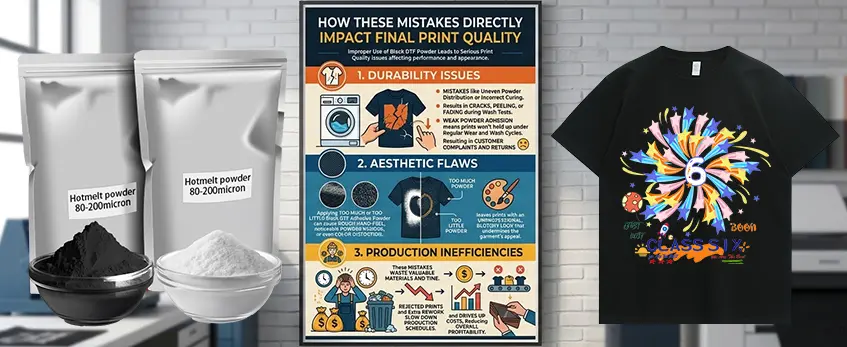
Improper use of black DTF powder leads to several serious print quality issues that can affect your final product’s performance and appearance.
Durability issues: Mistakes like uneven powder distribution or incorrect curing often show up during wash tests as cracks, peeling, or fading. Weak powder adhesion means prints won’t hold up under regular wear and wash cycles, resulting in customer complaints and returns.
Aesthetic flaws: Applying too much or too little black DTF adhesive powder can cause rough hand-feel, noticeable powder residue, or even color distortion. This leaves prints with an unprofessional, blotchy look that undermines the garment’s appeal.
Production inefficiencies: These mistakes waste valuable materials and time. Rejected prints and extra rework slow down production schedules and drive up costs, reducing overall profitability.
Avoiding common black DTF powder application mistakes ensures better print durability, smoother finishes, and more consistent results — crucial for reliable, high-quality transfers every time. For optimized results, following recommended guidelines like those in the best DTF powder for high-quality and durable transfers can significantly reduce defects and downtime.
Step-by-Step Guide to Proper Black DTF Powder Application
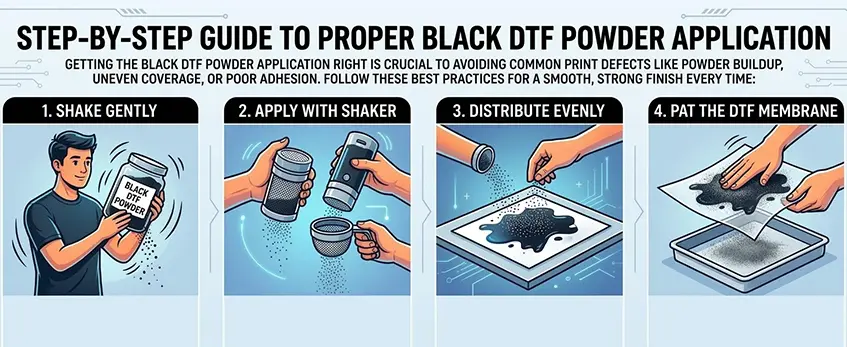
Getting the black DTF powder application right is crucial to avoiding common print defects like powder buildup, uneven coverage, or poor adhesion. Follow these best practices for a smooth, strong finish every time:
Best Practices for Even Coating
- Shake the powder container gently but thoroughly before application to ensure granules are loosened evenly.
- Apply the powder using a fine mesh shaker designed for DTF powders—manual hand shakers or battery-operated ones work best to control flow.
- Distribute powder evenly over the wet ink area without dumping too much in one spot.
- Tap the garment gently afterwards to let excess powder fall off naturally—don’t rub or press too hard.
Tools and Techniques
- Use a high-quality shaker that provides consistent powder flow to avoid DTF powder uneven coverage.
- For removing excess powder, gently tap over a clean surface or use a soft brush, avoiding any rough movements that might disturb the ink underneath.
- Employ a light, steady hand when shaking powder to prevent patchy powder distribution or over-applying.
jinlong DTF-Specific Tips
- jinlong DTF black powder features perfect granule size for smooth melt flow—adjust shaking speed to match this quality.
- For flawless results, apply powder immediately after printing but allow the ink to set briefly (about 10-15 seconds).
- Follow jinlong’s recommended curing temperatures and times closely; this ensures the powder melts uniformly and bonds strongly (see jinlong DTF temperature chart).
Quick Pre-Curing Checklist
- Confirm even powder coverage with no visible clumps or bare patches.
- Remove all excess powder—look for loose granules that can cause powder buildup.
- Ensure powder has not gathered in corners or seams.
- Double-check print ink is slightly tacky, not wet or dry, before applying powder.
Using this step-by-step approach will minimize black DTF powder mistakes, resulting in sharper prints with better wash durability and smooth hand feel. For a complete workflow incorporating these tips, check out the detailed DTF shirt printing process guide.
Troubleshooting Common Black Powder Problems
Dealing with black DTF powder issues? Here’s a quick problem/solution guide tailored for jinlong DTF products to keep your prints flawless:
| Problem | Cause | Solution |
|---|---|---|
| Uneven Finish | Inconsistent shaking or powder clumps | Use a quality shaker, apply powder evenly; avoid high humidity environments |
| Powder Marks (Buildup) | Applying too much powder, poor excess removal | Shake off surplus powder promptly; use proper powder removal tools |
| Adhesion Failure | Incorrect curing temps or timing errors | Follow jinlong DTF’s recommended curing settings; apply powder at right ink setting |
| Dye Bleed / Migration | Ink not set before powder application; humidity issues | Allow ink to partly dry; control workspace humidity; use jinlong DTF black powder to limit migration |
Prevention Tips for jinlong DTF Black Powder Success
- Consistent Powder Application: Always shake the powder gently but thoroughly to avoid clumping and uneven coverage.
- Manage Environment: Keep workspace humidity below 60% to prevent powder clumping and ensure good adhesion.
- Cure Precisely: Stick to recommended temperature and time settings for black DTF powder to avoid brittleness or sticky prints.
- Ink Setting Time: Don’t rush powder application; let ink set slightly to prevent poor bonding and dye migration.
- Use Quality Equipment: A good shaker and powder removal tool make a big difference for smooth powder layers and fewer defects.
Following these tips will minimize black hot melt powder issues, reduce DTF powder adhesion errors, and help you avoid powder marks, ensuring your final DTF prints look crisp and stay durable wash after wash.
For more insights on powder handling and printing tips, check out the detailed guide on common problems with A3 DTF transfer film and how to fix them.
Why Choose jinlong DTF Black Powder for Reliable Results
When it comes to black DTF powder, jinlong DTF black powder stands out for delivering consistent and dependable results. Here’s why it’s a top choice for businesses focused on print quality and efficiency:
| Feature | Benefit | Result |
|---|---|---|
| Consistent granule size | Even powder distribution | No blotchy texture or uneven melting |
| Excellent melt uniformity | Smooth melting with controlled flow | Strong adhesion and vibrant opacity |
| Low migration risk | Minimizes dye migration and color bleed | Cleaner black prints without fading |
Key Benefits
- Smoother hand-feel: Prints feel soft and natural, avoiding the rough texture common with poor powders.
- Higher wash durability: Prints resist cracking and peeling even after repeated washing.
- Reduced application errors: Stable powder properties mean fewer mistakes like powder buildup or weak spots.
Many customers report a marked improvement in production efficiency and overall print quality after switching to jinlong DTF black powder. It helps minimize rejects and materials waste, saving time and money on reprints.
To get the best from your prints, pairing jinlong DTF black powder with proper curing is essential. Check out how correct heat press temperature reduces waste and increases profit in DTF printing for tips on optimizing your final results.



 English
 Español
 Deutsch
 Français