


HD DTF Ink Cost vs Performance Analysis Is It Worth the Investment
What Exactly Is HD DTF Ink? (And How It Differs from Standard DTF Ink)
HD DTF ink is a premium formulation designed specifically for high-definition direct-to-film (DTF) printing. Unlike standard DTF ink, which focuses on basic color reproduction, HD DTF ink prioritizes superior pigment concentration, optimized viscosity, and advanced additives that improve adhesion and ink flow. These core formulation differences make all the difference in print quality and durability.
Core Formulation Differences
- Higher Pigment Concentration: HD DTF ink contains more densely packed pigments, resulting in richer, more vibrant colors.
- Optimized Viscosity: Tailored viscosity improves ink flow, reducing clogging issues common with lower-quality DTF inks.
- Advanced Additives: Special ingredients boost film adhesion, enhance flexibility, and prevent cracking or fading after multiple washes.
Key Performance Upgrades
- Sharper Details: Fine lines and text come out crisp and clear.
- Wider Color Range: Brighter whites, deeper blacks, and smoother gradients provide photorealistic print results.
- Improved Durability: Prints resist fading and cracking, even after 50+ washes.
- Softer Hand Feel: The fabric remains comfortable, without stiff or heavy ink buildup.
When “HD” Labeling Matters Most
Choosing HD DTF ink stands out especially when:
- Printing complex designs with intricate details.
- Creating photorealistic images where color accuracy and detail are critical.
- Using dark or polyester fabrics that demand higher opacity and stronger adhesion.
For anyone serious about high-quality DTF printing, understanding the difference between HD DTF ink vs standard DTF ink is the first step toward better results and longer-lasting prints.
Breaking Down the Real Costs of HD DTF Ink
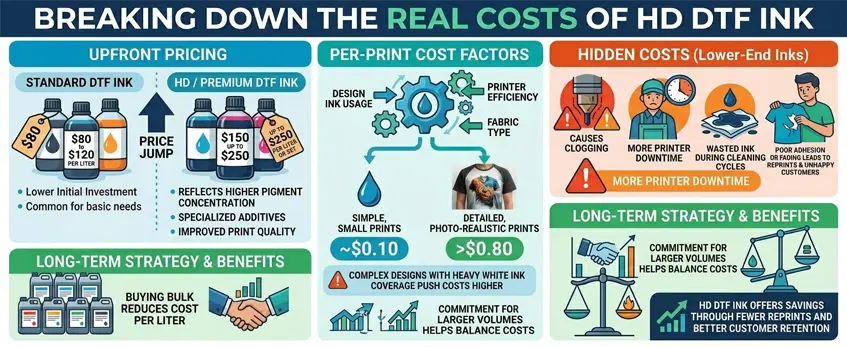
When it comes to upfront pricing, standard DTF ink typically runs between $80 to $120 per liter, while HD or premium DTF ink can range from $150 up to $250 per liter or set. This price jump reflects the higher pigment concentration and specialized additives that improve print quality. But understanding cost doesn’t stop there.
Per-print cost varies based on several factors: how much ink your design uses, printer efficiency, and fabric type. On average, ink cost per design can range from $0.10 for simple, small prints to over $0.80 for detailed, photo-realistic ones. Complex designs with heavy white ink coverage push costs higher, which is why efficient use and well-maintained printers matter.
Hidden costs also play a big role. Lower-end inks often cause clogging, leading to more printer downtime and wasted ink during cleaning cycles. Plus, poor adhesion or fading means reprints and unhappy customers, which increases your real expenses without showing up on the initial price tag.
Buying bulk and committing long-term often helps reduce costs per liter, especially for businesses printing larger volumes. It’s a balance between quality and expenses, where HD DTF ink offers savings through fewer reprints and better customer retention despite the higher upfront spend.
For those aiming for premium results, pairing HD inks with proper equipment pays off—not just in color vibrancy but through overall savings by minimizing waste and downtime. For more on optimizing your DTF workflow, check out our tips on what you need to know about DTF printers with white ink for dark fabrics.
Performance Comparison: Head-to-Head Testing Metrics
When comparing HD DTF ink vs standard DTF ink, the differences in key performance areas become clear. Here’s a quick breakdown:
| Metric | Standard DTF Ink | HD DTF Ink | Benefit |
|---|---|---|---|
| Color Vibrancy & Gamut | Good whites and blacks, limited gradient smoothness | Brighter whites, deeper blacks, smoother gradients | More vivid, eye-catching prints ideal for vibrant DTF prints on polyester |
| Durability & Wash Fastness | Holds up to 30–40 washes, some fading or cracking | 50+ washes with minimal fading or cracking | Longer-lasting prints reduce returns and increase customer satisfaction |
| Print Sharpness | Fine lines sometimes blurry, small text less clear | Excellent detail clarity, crisp fine lines and small fonts | Better for complex designs or photorealistic prints |
| Reliability Factors | Moderate nozzle clogging, occasional flow issues | Superior flow consistency, fewer nozzle clogs, less downtime | Saves time on maintenance, reducing printer downtime and ink waste |
Real-World Scenarios
- Small-Batch Custom Jobs: HD DTF ink\’s superior quality shows especially when printing complex, colorful designs or photographic images. The sharper details and richer colors justify the premium cost by impressing customers.
- High-Volume Production: For bulk orders, the durability and reduced downtime of HD DTF ink enhance productivity and lower reprint rates, improving overall ROI despite the higher upfront cost.
Using premium DTF ink also pairs best with quality DTF transfer films and adhesive powders to maximize vibrant color and durability. This combination is essential to fully leverage HD ink’s performance benefits in real-world printing conditions.
Pros and Cons of Choosing HD DTF Ink
When deciding between HD DTF ink vs standard DTF ink, it’s important to weigh the advantages against the drawbacks to see if the investment fits your business needs.
Advantages
- Superior End-Product Quality: HD DTF ink boosts color vibrancy and sharpness, delivering professional-looking prints with finer details and smoother gradients.
- Higher Customer Satisfaction: Prints hold up better over time, resisting fading and cracking even after multiple washes, leading to happier repeat customers.
- Premium Pricing Power: Offering top-tier print quality allows you to charge more for your products, increasing profit margins.
- Fewer Returns and Reprints: Improved adhesion and durability reduce the chances of failed prints or customer complaints, saving time and money in the long run.
Drawbacks
- Higher Initial Investment: HD DTF ink typically costs more upfront, impacting your budget especially if you’re just starting out or running a low-volume setup.
- Potential Overkill for Basic Designs: For simple one-color or low-detail prints, the enhanced features of HD ink may not justify the price difference.
Side-by-Side Comparison: Standard vs. HD DTF Ink
| Feature | Standard DTF Ink | HD DTF Ink | Best Use Cases |
|---|---|---|---|
| Cost per Liter | $30–$50 | $60–$90 | Simple designs, hobby projects |
| Color Quality | Good | Exceptional (wider gamut, deeper blacks, brighter whites) | Complex, photorealistic prints |
| Durability | Moderate (may fade/crack) | Superior (50+ washes with no cracking) | Apparel with frequent washing |
| Print Detail & Sharpness | Standard | High definition, fine lines preserved | High-detail logos, small text |
| Suitability | Budget-friendly, basic prints | Premium/custom work, dark/polyester fabrics | Businesses aiming for niche markets |
Choosing HD DTF ink gives you an edge in quality and durability that’s hard to beat. However, if your production involves mostly simple prints or you’re on a tight budget, standard ink could still serve you well.
For those interested in maximizing print quality and reliability, checking out expert advice on the best DTF ink for vibrant colors and durability can be a smart move. You can also explore how to maintain your printer properly to extend ink life and ensure consistent output by visiting resources like our DTF printer recommendations.
Is HD DTF Ink Worth It? Scenario-Based Verdict
Deciding if HD DTF ink is worth the extra cost depends on your printing needs.
Yes, if you are:
- Running premium or custom work that demands vibrant, sharp, and durable prints.
- Handling high-volume production where consistent quality and fewer rejects save time and money.
- Printing mostly on dark or polyester fabrics, which benefit most from HD ink’s improved opacity and color vibrancy.
- Building a brand reputation centered on top-tier results and customer satisfaction.
No or Maybe, if you are:
- A low-volume hobbyist or just experimenting with DTF printing.
- Creating basic, one-color designs where premium color range and detail are less critical.
- Working within very tight budgets with simple printing needs.
Break-even Analysis: Recouping the Premium
While HD DTF ink typically costs more upfront—sometimes noticeably so—the real cost difference begins to shrink with volume and efficiency. Thanks to better adhesion, reduced clogging, and fewer reprints, many users break even after a few hundred prints simply by avoiding waste and improving margins. If your operation faces issues with fading, cracking, or poor detail that leads to returns or dissatisfied customers, upgrading quickly pays back.
jinlong DTF Perspective
At Jinlong, we’ve developed HD DTF ink formulations designed to deliver that premium, high-definition printing quality without an excessive markup. Our inks maintain excellent pigment concentration and flow consistency, enabling vibrant, durable prints that minimize downtime and waste. This means you can enjoy the benefits of high-quality DTF ink with a better return on investment, especially when paired with our reliable DTF pigment inks.
Choosing HD DTF ink is about matching your print goals with your cost tolerance. For those aiming for standout prints and reliability, it’s usually worth the investment. For simpler or smaller-scale work, standard ink remains a solid option.
Tips to Maximize Value with HD DTF Ink
Getting the most out of your premium HD DTF ink means focusing on upkeep and smart usage. Here’s how to stretch your investment without sacrificing quality:
Printer Maintenance Best Practices
- Clean your print heads regularly to avoid clogging issues common with high pigment inks.
- Use proper flushing agents suited for HD DTF inks to maintain nozzle health and consistent flow, reducing downtime.
- Follow routine checks to spot early signs of ink buildup or mechanical wear that can drive up costs over time.
Pairing with Compatible Films and Powders
- Match your HD DTF ink with high-quality transfer films and powders designed for rich color retention and adhesion. For example, using a reliable DTF transfer film ensures your prints pop on dark polyester fabrics.
- Using the right powder density and coverage optimizes flexibility and wash durability, key factors in premium DTF ink performance.
Testing Protocols Before Full Adoption
- Run comprehensive test prints on different fabrics to check how your HD DTF ink performs with your specific setup. Assess color vibrancy, adhesion, and wash fastness before large runs.
- Keep detailed records of ink consumption and print quality for each batch to identify the sweet spot between cost and output quality.
Storage and Handling to Avoid Degradation
- Store HD DTF ink in a cool, dry place away from direct sunlight to maintain pigment stability.
- Seal containers tightly after every use to prevent contamination or drying, which can affect ink viscosity and clog printers.
- Shake ink bottles well before use to ensure pigment concentration stays consistent.
By following these steps, you minimize waste and maintain the high-quality output HD DTF ink promises—boosting your return on investment while delivering vibrant, long-lasting prints your customers will appreciate. For more details on keeping your printer running smoothly, check out our guide on common DTF printer head problems and fixes.


 English
  Español
  Deutsch
  Français