
No products in the cart.

Jinlong
Fluo Ink in DTF Printing Benefits and Challenges Explained
Fluo Ink in DTF Printing is gaining attention for its ability to push beyond the limits of the standard CMYK gamut—but is it truly worth the investment? If you’re managing a custom apparel business or a print shop, you’ve likely wondered whether adding fluorescent spot colors like Fluo Magenta and Yellow delivers enough visual impact to justify changes in printer setup, RIP software, and ongoing maintenance. This isn’t just about brighter colors—it’s a strategic choice that can unlock new markets and premium pricing but brings technical challenges too. In this post, we’ll break down exactly what using fluo ink in DTF printing involves and help you decide if upgrading is the right move for your operation.
The Visual Difference: Standard vs. Fluo DTF
When it comes to Fluo Ink in DTF printing, the visual impact is striking compared to standard DTF inks. Here’s what sets fluorescent spot colors apart:
| Feature | Standard DTF Ink | Fluo Ink in DTF Printing |
|---|---|---|
| Color Gamut | Wide, but limited to CMYK | Expanded with neon bright hues |
| Vibrancy (\”Pop\”) | Good, muted in natural light | Eye-catching, vibrant “pop” effect |
| UV Reactivity | None | Reacts under UV light for glow |
| Market Differentiation | Common in custom apparel | Premium, high-visibility products |
Color Gamut Expansion
Fluo inks like Fluo Magenta and Yellow ink broaden the DTF color spectrum. They make colors more vivid and allow designers to tap into neon DTF printing technology, which isn’t possible with standard inks. This opens doors for premium streetwear printing and high-visibility custom apparel.
The \”Pop\” Factor
The biggest selling point? The “pop.” Fluo inks deliver that bright, glowing look that naturally draws attention. On a crowded apparel market, this visual “pop” helps your products stand out, adding instant appeal.
UV Reactivity
Fluorescent pigments in fluo inks respond to UV light, creating a glowing effect in certain lighting. This feature is a game-changer for event wear and specialty prints, adding an interactive experience beyond print.
Market Differentiation
With many print shops offering traditional DTF transfers, using fluorescent spot colors sets your shop apart. It signals innovation and quality, raising your brand’s profile in a crowded marketplace.
In short, the visual difference from using fluo ink in your multi-channel DTF printer is not just brighter colors—it’s about creating high-impact pieces that catch the eye and open up fresh market opportunities.
Technical Requirements: It’s Not Just a Cartridge Swap
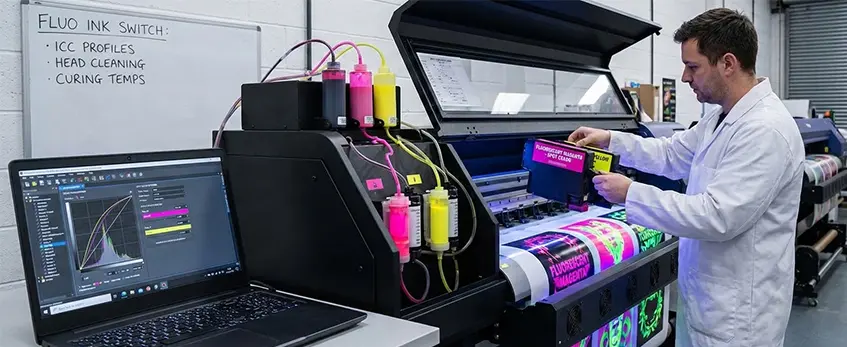
Switching to fluo ink in DTF printing means more than just swapping cartridges. There’s a technical side that demands attention to get the best results, especially when dealing with fluorescent spot colors like Fluo Magenta and Yellow ink.
| Aspect | What You Need to Know |
|---|---|
| Printer Configuration | Adjust printer settings to handle the thicker, sediment-prone fluo inks. Epson i3200 printhead configuration, for example, may require tweaking to avoid clogging. |
| Printhead Compatibility | Not all printheads support neon DTF printing technology. Multi-channel DTF printers designed for fluorescent pigment sedimentation offer better performance and durability. |
| RIP Software Mastery | Proper DTF RIP software settings for neon inks are crucial. Custom ICC profiles for direct to film printing help expand the DTF color gamut and maintain accurate color shifts. |
The shift to fluorescent inks involves a learning curve on setting your RIP software for vibrant, UV reactive textile printing without oversaturating the film or compromising detail. This means upgrading or refining your current workflow to manage these pigments and their unique flow properties.
Understanding these technical requirements early helps avoid downtime and preserves ink quality while supporting high-visibility custom apparel production. For a deeper dive into printer types and their setup, checking out the Jinlong DTF printer specifications can be really useful.
The Workflow Realities (Pros & Cons)
The Pros (Value Proposition)
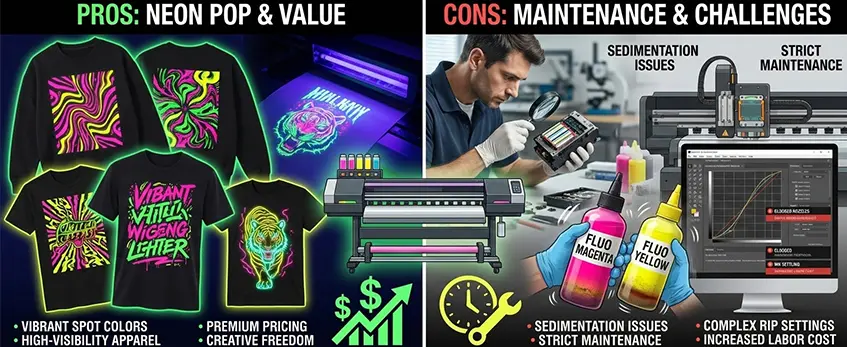
Using fluo ink in DTF printing brings a clear value for custom apparel shops aiming to stand out. Neon DTF printing technology offers vibrant fluorescent spot colors like fluo magenta and yellow ink that expand your DTF color gamut and add that sought-after “pop” to designs. This means your high-visibility custom apparel can really catch the eye, especially in premium streetwear or UV reactive textile printing markets. The brightness and depth you get with fluo inks aren’t just aesthetic—they can allow you to charge a premium for standout products. Plus, for businesses pushing creative boundaries, these fluorescent pigment colors open new design avenues and boost brand differentiation.
The Cons (The Challenges)
That said, using fluo ink isn’t just a simple cartridge swap. One of the biggest challenges is handling the fluorescent pigment sedimentation; fluo inks tend to settle quickly, so you need a strict DTF ink maintenance routine, including constant shaking or circulation during prints. Printer configuration, like the Epson i3200 printhead or other multi-channel DTF printers, often requires fine-tuning to accommodate these inks without clogging or color distortion. Additionally, there’s a learning curve with DTF RIP software settings for neon colors that demands extra time and attention. These workflow realities can slow down production and increase costs initially, so planning and staff training are essential to get the most ROI from fluo ink.
Balancing these pros and cons will help you decide if investing in fluo ink matches your shop’s priorities and market demands. For more guidance on equipment capabilities and workflow, checking the detailed specifications of Jinlong DTF printer models can be a valuable step.
ROI Analysis: Is It Worth the Investment?
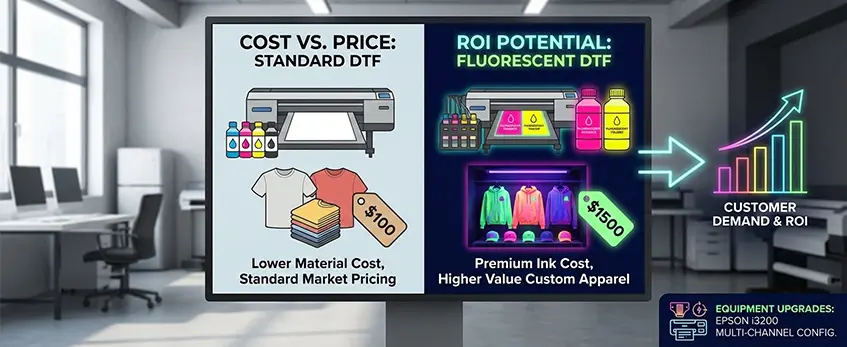
When considering fluo ink in DTF printing, the big question is whether the cost justifies the potential returns. Fluorescent spot colors like Fluo Magenta and Yellow ink typically come at a premium, so it’s crucial to weigh cost vs. price carefully. These inks expand your DTF color gamut, allowing you to offer vibrant, high-visibility custom apparel that commands higher price points.
Customer demand plays a huge role here. If your market—think premium streetwear or UV reactive textile printing—is hungry for neon DTF printing technology, investing in fluo ink and compatible equipment makes sense. But if your client base sticks to standard color palettes, the ROI might not be as strong.
Upgrading your equipment to handle fluo inks often means adjusting your printer’s configuration or even investing in a multi-channel DTF printer or an Epson i3200 printhead configuration that supports fluorescent pigment sedimentation control. These upgrades come with upfront costs, but they improve print quality and consistency, helping you maintain margins.
To get the best ROI, plan your equipment upgrade path carefully and aim to target niche markets willing to pay a premium for those eye-catching, neon DTF color effects. For more on balancing cost and efficiency in your print shop, check out our detailed DTF printer ink cost breakdown.
Best Practices for Printing with Fluo Inks
Using fluo ink in DTF printing isn\’t just about swapping cartridges—it takes care and precision to get the best results. Here are some top tips to make your fluorescent spot colors shine:
Shake and Circulate Regularly: Fluo inks, like Fluo Magenta and Yellow ink, tend to experience fluorescent pigment sedimentation. To avoid clogging and maintain consistent color output, make sure to shake or circulate the ink frequently. This keeps the pigments evenly suspended, especially crucial if you’re working with a multi-channel DTF printer or updating printhead settings, such as on the Epson i3200 printhead.
Design Considerations: When working with neon DTF printing technology, remember that fluorescent colors absorb light differently. Use bold, simple designs to maximize the \”pop\” factor. Avoid overly detailed artwork since fluo inks can sometimes blur fine lines. Also, be mindful of how these bright colors interact with your fabric choice for the best UV reactive textile printing effect.
Curing and Pressing Tips: Proper curing is key for durability and color vibrancy. Use the recommended heat press settings for curing DTF transfers printed with fluorescent spot colors to prevent color fading or cracking. Too much heat can dull the neon effect, so always test your temperature and time with your specific Direct to Film ICC profiles.
For more detailed guidance on DTF equipment and process optimization, check out the Jinlong DTF printer specifications page, which also covers maintenance routines essential for long-term success with fluo ink.


 English
 Español
 Deutsch
 Français