
No products in the cart.

Jinlong
Fluo Ink Explained How It Enhances Printing with Vibrant Neon Colors
The Science Behind the Glow: How Fluo Ink Works
Ever wonder what makes fluo ink glow so vividly on prints? The secret lies in fluorescence, which is very different from simple reflection. When light hits fluorescent pigments, like those in neon DTF printing, the ink absorbs UV or black light and then emits it at a visible wavelength, creating that bright, glowing effect you see. This UV reactivity is what makes fluorescent inks stand out, especially under black light.
Unlike regular inks that reflect light passively, fluo ink actively converts invisible UV rays into vibrant, eye-catching colors. This process leads to a remarkable color gamut expansion—meaning you get colors far more intense and bright than what standard CMYK or RGB inks can produce. Fluorescent Magenta and Fluorescent Yellow, for example, explode with brightness and punch, making them perfect for attention-grabbing applications.
In direct-to-film technology (DTF) and other textile pigment inks, this glow isn’t just a visual trick—it enhances design possibilities and pushes print quality higher. So when selecting inks for high-visibility apparel or custom garment decoration, understanding this glow science gives you an edge and empowers you to create truly stunning prints.
Fluo Ink in DTF Printing: The Workflow
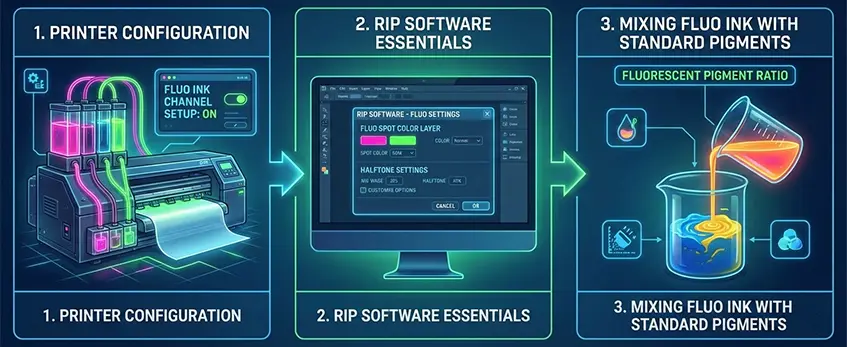
Using fluo ink in Direct-to-Film (DTF) printing requires some specific adjustments to get the best neon DTF printing results. First, printer configuration is crucial—make sure your printheads are compatible with fluorescent pigments and that your ink circulation system is set up to prevent sedimentation. Fluo inks tend to settle faster, so keeping the ink evenly mixed is key to vibrant prints.
Next, RIP software essentials come into play. Proper RIP software settings help manage spot color separation and layering of fluorescent magenta, yellow, and other UV reactive pigments. This ensures accurate placement and intensity of fluo colors, which often don’t conform to the typical CMYK vs. RGB color models. Configuring your RIP software for fluo ink allows you to expand your color gamut and properly simulate the brightness of fluorescent inks.
When it comes to using fluo ink, you have two main options: mixing fluo ink with standard pigments or using it as a pure spot color. Mixing can create softer neon effects but risks dulling vibrancy if not balanced well. Pure spot colors maintain that bold, eye-catching glow essential for high-visibility apparel or custom garment decoration but may require more precise color separation during design.
For those new to fluo ink, adapting your DTF workflow, from printer setup to software tweaking, is essential to harness the full potential of fluorescent inks while avoiding common pitfalls like color dulling or print inconsistency. If you want to optimize your process, consider integrating tools like a DTF printer shaker and oven in your workflow, which help maintain ink consistency and curing quality for the best results. You can explore the top benefits of using a DTF printer shaker and oven to enhance your fluorescent ink prints.
Design & File Preparation for Fluo Printing
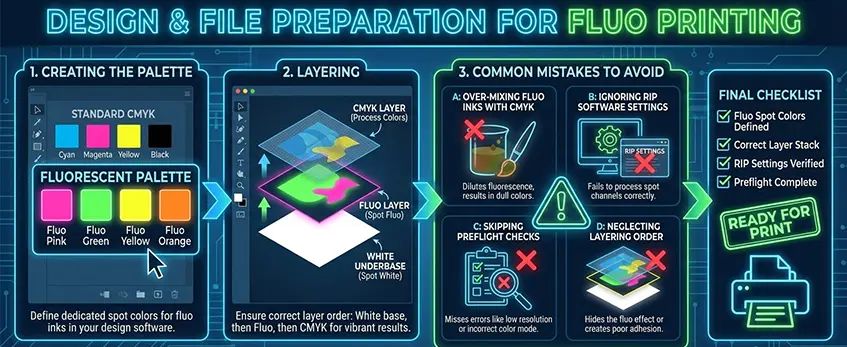
When working with fluo ink in Direct-to-Film technology, getting your design and file ready is crucial for vibrant results. Here’s how to approach it:
Creating the Palette
Fluorescent inks like Fluorescent Magenta and Fluorescent Yellow don’t behave the same as your standard CMYK or RGB colors. Instead of mixing these inks, it\’s best to set them up as pure spot colors in your design software. This keeps the neon brightness intact and avoids dulling effects common with blending. Use color gamut expansion techniques to make sure your fluo colors stand out on screen and in print.
Layering
Layer management is key. Position your fluo ink layers above the base CMYK colors to preserve their glow effect. If you’re printing multiple layers, make sure to separate fluorescent elements properly to avoid color bleed. Many RIP software offer spot color separation settings—use these tools to isolate fluo inks during workflow for clean, sharp output.
Common Mistakes to Avoid
- Over-mixing fluo inks with CMYK: This reduces vibrancy. Keep fluorescent colors as spot inks.
- Ignoring RIP software settings: Make sure spot color channels are configured correctly to avoid misprints.
- Skipping preflight checks: Fluo artwork files should be checked for resolution and color mode before printing to prevent surprises.
- Neglecting layering order: Brightness depends on placing fluo ink on top of darker backgrounds or base layers for maximum pop.
Following these steps will ensure your fluorescent printing projects come out bright and eye-catching, maximizing the unique qualities of neon DTF printing. For technical tips on screen preparation and printhead management, consider reviewing resources like how to identify low ink or clogged nozzles to keep your workflow smooth.
Applications and Market Opportunities
Fluo ink opens up exciting possibilities across a range of markets thanks to its bright, eye-catching glow and UV reactive properties. Here’s how it’s making an impact:
High-Visibility Safety Wear
One of the biggest uses of fluorescent inks is in high-visibility apparel. Workers, cyclists, and emergency responders rely on neon DTF printing with fluorescent yellow and magenta inks to boost safety in low-light or nighttime conditions. The ink’s black light reactive nature enhances visibility beyond traditional reflective gear, making it essential for protective clothing and gear.
Streetwear and Fashion
Fluo ink isn’t just practical—it’s trendy. Many designers in streetwear and custom garment decoration leverage its vibrant color gamut expansion to create standout pieces. The glowing effect under UV lights adds a unique twist to fashion, making it perfect for limited-edition collections and bold, artistic designs that pop in clubs or on the streets.
Event Merchandise
Event organizers and marketers love fluorescent ink for creating memorable merchandise. From concert tees to festival swag, neon colors printed with Direct-to-Film technology grab attention and deliver a striking look under black light environments. This makes your event gear not just wearable but an experience itself.
For those interested in expanding into custom goods, exploring the possibilities of what you can print with DTF can unlock new creative and commercial opportunities with fluo inks. Integrating fluo inks means tapping into markets that want vibrant, durable, and UV-reactive designs that stand out in everyday life and special settings alike.
Maintenance and Best Practices for Fluo Inks
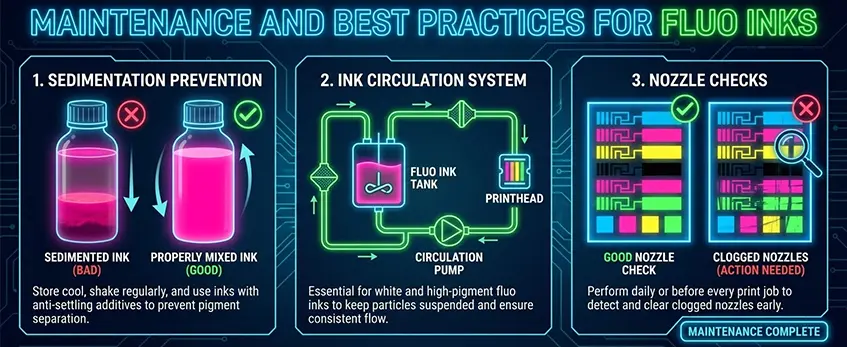
Using fluo ink in your DTF setup means staying ahead of common issues to keep prints vibrant and consistent. One of the main maintenance challenges with fluorescent inks is sedimentation. Fluo inks tend to settle faster than standard textile pigment ink, so it’s crucial to keep them well-mixed. Running an ink circulation system or frequently shaking the ink can prevent pigment buildup that clogs nozzles.
Regular nozzle checks are essential. Because fluorescent pigments are heavier, they can block printheads more easily. Schedule nozzle tests daily if you’re printing in high volumes to catch clogs early and avoid print defects.
Storage also plays a big role in shelf life. Keep fluo inks sealed tightly in a cool, dry place away from direct sunlight. Exposure to heat or UV light can degrade the UV reactive pigments inside, reducing their brightness over time. Always check the expiration date, as fluorescent yellow and fluorescent magenta inks often have shorter shelf lives compared to regular CMYK inks.
Proper maintenance extends the lifespan of your printer and keeps your prints shining under black light—the hallmark of neon DTF printing. For reliable ink performance, consider pairing your setup with high-quality formulations like Jinlong’s eco-friendly fluo inks designed specifically for durability and consistent output. For guidance on maintaining your equipment, see why every print shop benefits from a DTF printer with shaker and oven.
Why Choose Jinlong DTF Fluo Inks?
When it comes to fluorescent inks for Direct-to-Film technology, Jinlong’s DTF Fluo inks stand out for several reasons. Whether you’re printing high-visibility apparel or custom streetwear, these inks deliver strong vibrancy, lasting durability, and excellent compatibility with most DTF printers and films available in the U.S. market.
Vibrancy & Durability
- Bright, Neon Colors: Jinlong’s fluo ink pigments, like Fluorescent Magenta and Fluorescent Yellow, make your prints pop with intense, eye-catching hues that standard CMYK or RGB inks can’t match.
- UV Reactive & Long-Lasting: Their UV reactivity keeps prints glowing under black light for events and nightwear, while also resisting fading with everyday wear and washing.
- Color Gamut Expansion: Thanks to these inks, your color range expands beyond traditional limits, which is a game-changer in neon DTF printing.
Compatibility
- Works seamlessly with top DTF printers and transfer films, supporting smooth integration into existing workflows without extra hassle.
- Fully optimized for use with RIP software settings that handle spot color separation and layering, making your fluorescent prints crisp and vibrant.
- Suitable for a wide range of textile pigment ink requirements, whether you’re printing on cotton, polyester, or blends.
Eco-Friendly Aspects
- Formulated to be less toxic and more environmentally friendly than some traditional fluorescent inks, Jinlong DTF Fluo inks emphasize sustainability.
- Reduced sedimentation means less ink waste and fewer cleanup issues during printhead maintenance, saving time and materials.
- The inks’ longer shelf life and stable storage profile reduce waste, making them a smart choice for businesses focused on greener printing.
| Feature | Jinlong DTF Fluo Inks | Typical Fluo Inks |
|---|---|---|
| Neon Brightness | Ultra-vibrant, eye-catching | Moderate to high |
| UV Reactivity | Strong, lasting glow | Variable |
| Printer Compatibility | High, seamless integration | Often limited |
| Environmental Impact | Eco-friendlier formulation | May contain harsher chemicals |
| Sedimentation Risk | Low, better ink circulation system | Higher, requires frequent remix |
Choosing Jinlong’s DTF Fluo inks means you get the best mix of performance and responsibility, perfectly suited for the growing demand in U.S. custom garment decoration and high-visibility apparel markets. For details on pairing these inks with high-quality films, check out the best DTF film for professional printers to maximize your output’s vibrancy and durability.


 English
 Español
 Deutsch
 Français