


Por qué una temperatura DTF incorrecta provoca descascarillados o grietas Fijaciones
If you’re constantly battling DTF transfer peeling after washing or noticing your prints crack on stretch, the issue often boils down to one crucial factor: incorrect DTF temperature. It’s not just about guessing heat press settings—your Polvo adhesivo DTF needs the right temperature to melt and bond properly, or you’ll see edges lift and inks break down. Too low, and your transfers won’t stick; too high, and they become brittle, leading to frustrating failures that waste time and materials. In this post, we’ll cut through the confusion and show you exactly why temperature matters, how it causes peeling or cracking, and the practical fixes to get durable, professional results every time.
Understanding DTF Temperature Stages and Their Role
Getting the temperature right in DTF (Direct to Film) printing is critical to avoid issues like peeling or cracking later on. Let’s break down the key temperature stages and why each matters:
Pre-Print Curing (Powder Adhesion): After printing, a layer of adhesive powder is applied to the wet ink. This powder must partially melt so it sticks firmly to the ink before the heat press step. The melting point of the adhesive powder is usually around 310–330°F (155–165°C), which allows it to bond properly without fully curing yet.
Heat Press Application: This is where the critical bonding occurs. Applying the right temperature and pressure melts the adhesive powder completely, allowing it to penetrate the fabric fibers, locking the ink to the garment. This step typically uses settings within the same 310–330°F (155–165°C) range for 12–18 seconds. Even small deviations outside this range can weaken the bond or damage the print.
Post-Press Curing: After the transfer is applied, the adhesive continues to cure as it cools. Proper curing ensures print durability and flexibility. If the temperature was off in earlier steps, this curing won\’t perform as expected, leading to issues down the line.
In sum, the adhesive powder’s melting point is key—it must fully activate but not overheat. Understanding and controlling these temperature stages ensures strong adhesion, preventing common problems like DTF transfer peeling after washing o DTF print cracking causes. Keeping your heat press within the right temperature range is your first step to consistent, reliable results.
How Low Temperature Leads to Peeling
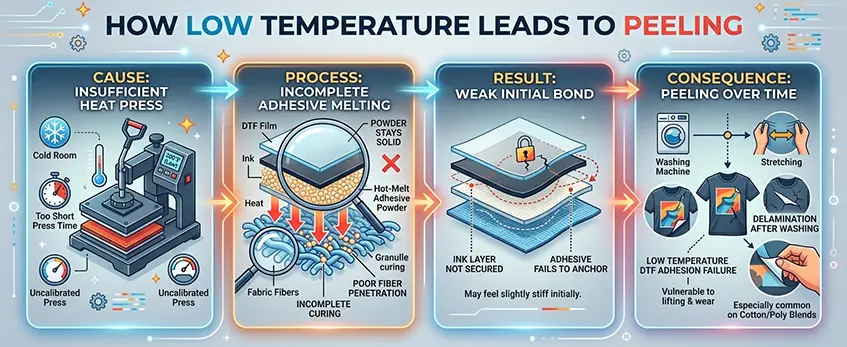
When the heat press temperature is too low, the adhesive powder in your DTF transfer doesn\’t fully melt and penetrate the fabric fibers. This incomplete curing means the bond between the ink and fabric is weak right from the start.
As a result, you’ll notice the edges of the transfer lifting or even delaminating after washing or stretching. This peeling issue is especially common on cotton/poly blends, where the transfer might feel stiff initially but comes off easily over time.
Several factors can lead to low temperature problems, including an uncalibrated heat press, a cold room environment, or simply not pressing long enough. These mistakes cause low temperature DTF adhesion failure, making your prints vulnerable to lifting and premature wear.
For ensuring proper powder curing and avoiding these peeling issues, using quality adhesive powders designed for reliable melting is critical, like the TPU DTF hot-melt adhesive powders from jinlongprints.com. Proper heat press calibration and timing will help prevent DTF transfer peeling after washing, keeping your prints vibrant and intact.
How High Temperature Causes Cracking
When the DTF heat press temperature is too high, it over-cures the adhesive powder. This excessive heat makes the adhesive brittle, causing it to crack and fracture easily, especially in areas that bend or stretch frequently. Overheating can also damage the PET film by scorching or warping it, and burn the ink layers beneath. These issues lead to visible cracks appearing around folds, elbows, or after the garment stretches.
Common signs of overheating include shiny or burnt spots on the fabric surface. The risk of cracking is especially high when pressing synthetic fabrics without adjusting for their lower heat tolerance. Ignoring material-specific limits or over-pressing can ruin transfers, making temperature control essential to avoid DTF print cracking causes.
For reliable results, always consult a trusted DTF powder guide to match your adhesive and ink with the right temperature settings.
Other Temperature-Related Factors That Amplify Issues
Even when your heat press temperature is set right, other factors can make DTF transfer peeling or cracking worse. Uneven heat distribution from a faulty press platen or skipping the pre-press step can cause inconsistent adhesive powder melting, leading to weak spots in the transfer. This often results in partial lifting or cracking after washing or stretching.
Timing the peel incorrectly—using a hot peel instead of a cold peel, or vice versa—can also disrupt the curing process. The wrong peel timing affects how well the adhesive bonds to the fabric, so matching peel technique with your heat press temperature and powder type is crucial.
Humidity, fabric type, and powder thickness further impact adhesive curing. High moisture levels or thick powder layers can interfere with proper melting and bonding, causing failures like transfer lifting or cracking. For best results, control your workspace environment and adjust powder application based on the fabric to avoid these temperature-related DTF adhesion issues.
For consistent prints, check out the heat press settings guide from Jinlong DTF, which covers ideal practice options and maintenance tips to minimize these common problems.
Optimal Temperature Guidelines from jinlong DTF
To avoid common issues like DTF transfer peeling after washing or DTF print cracking causes, following the right temperature settings is crucial. jinlong DTF recommends a heat press temperature range of 315–325°F (157–163°C) con un tiempo de prensado de 12–18 seconds and medium-high pressure. These settings may need slight adjustments depending on the fabric type to ensure the adhesive powder cures properly and ink bonds well.
For consistent results, using a curing oven or powder station at stable temperatures helps maintain uniform powder adhesion and ink curing. Regular calibration of your heat press is key. Use thermometer strips or an infrared (IR) gun to verify the platen temperature matches the set value—this ensures you don’t under- or overheat your transfers, which can cause low temperature DTF adhesion failure or overcuring DTF transfers brittle problems.
Material-specific tweaks also make a difference:
- Algodón: Stick to the middle of the recommended range and apply medium-high pressure to avoid scorching.
- Poliéster: Lower the pressing time slightly to prevent PET film damage.
- Blended fabrics: Adjust temperature and time based on the blend ratio; test small batches first.
Following these guidelines reduces the risk of issues like DTF hot peel vs cold peel temperature mismatches and helps maintain print durability through wash test failures temperature challenges.
For more on choosing the right powder for different fabrics, check out this detailed guide on the el mejor polvo DTF para tejidos de algodón, poliéster y mezclas.
Step-by-Step Fixes for Existing Peeling or Cracking Problems
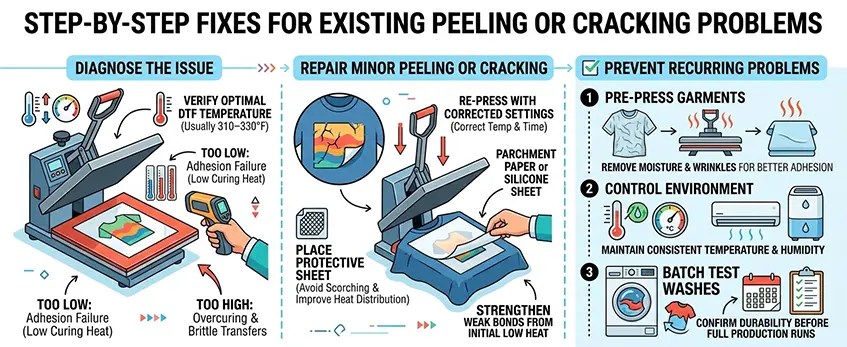
If you’re dealing with DTF transfer peeling after washing or print cracking causes, start by diagnosing the issue with a fresh test run on your heat press. Use a reliable thermometer strip or an IR gun to check if your temperature falls within the optimal DTF heat press temperature range (usually 310–330°F). This will help identify if your current settings are too low, causing low temperature DTF adhesion failure, or too high, leading to overcuring DTF transfers brittle issues.
For minor peeling or cracking, try re-pressing the affected prints using corrected temperature and time settings. Always place a parchment paper or silicone sheet over the transfer to avoid scorching and improve heat distribution. This can often repair weak bonds caused by initial low curing heat.
To prevent recurring problems, follow this simple checklist:
- Pre-press garments to remove moisture and wrinkles
- Control your environment’s temperature and humidity para obtener resultados coherentes
- Batch test washes to confirm durability before full production runs
These steps align with best practices from the jinlong DTF heat press settings guide, helping protect your prints from peeling or cracking and ensuring long-lasting adhesion.
Best Practices to Avoid Temperature Mistakes Long-Term
Avoiding DTF temperature issues starts with investing in quality equipment calibration. Regularly check your heat press settings using reliable thermometer strips or an IR gun to ensure accuracy. This prevents common problems like low temperature DTF adhesion failure or overcuring DTF transfers brittle results.
Using jinlong DTF films, inks, and powders made for wide temperature tolerance is another smart move. These products are engineered to handle slight temperature variations without cracking or peeling, giving you more wiggle room during your heat press runs. For premium results, explore our range of jinlong DTF ink options designed specifically for consistent performance.
A solid maintenance routine is essential for heat press consistency. Keep the press clean, inspect platen evenness, and avoid overheating by following recommended cycle limits. Small tweaks help maintain the correct curing environment, preventing issues like DTF print cracking causes linked to uneven heat.
Finally, implement a wash test protocol to catch problems early. Always wash printed garments inside-out in cold water and air dry. This minimizes stress on transfers and avoids peeling after washing—key to preventing DTF transfer lifting in your finished products.
By following these steps, you can reduce temperature-related mistakes and keep your transfers looking sharp and durable over time.


 English
  Español
  Deutsch
  Français