


DTF Paper vs Sublimation Paper for Inkjet Printers Which Is Better
Understanding DTF Paper for Inkjet Printers: Process and Materials
Direct-to-Film (DTF) printing has become a popular transfer method for inkjet printers, especially for small businesses and hobbyists looking to print vibrant designs on various fabrics. Unlike traditional heat transfers or vinyl, DTF printing uses a special DTF paper and powder adhesive to create durable, detailed prints.
Cómo funciona la impresión DTF
- Imprimir: A digital design is printed in reverse on DTF paper using specific DTF inks, which include a white ink layer for opacity.
- Aplicación en polvo: A hot-melt adhesive powder is applied to the printed film while the ink is still wet.
- Curado: The powder is melted onto the print with a heat source, bonding to the ink.
- Traslado: The film is heat pressed onto fabric, adhering the ink and adhesive to the garment.
This process is compatible with many inkjet printers designed or modified for DTF printing, offering excellent color vibrancy and durability.
Why Jinlong DTF Films Stand Out
When choosing DTF paper, quality matters. Jinlong DTF films are recognized for:
| Característica | Jinlong DTF Films |
|---|---|
| Absorción de tinta | Superior, ensuring sharp and vibrant prints |
| Adhesive Compatibility | Optimal bonding with powder adhesive for strong transfers |
| Durabilidad | Resistant to cracking and peeling after washing |
| Compatibilidad de impresoras | Works well with popular inkjet printers and DTF inks |
| Ease of Handling | Less curling and straightforward powder application |
Using premium DTF films like Jinlong’s can reduce common printing issues and improve final print quality, making them a smart choice for anyone diving into direct-to-film printing on inkjet printers.
Understanding Sublimation Paper: Workflow and Material Requirements
Sublimation paper is specifically designed for use with sublimation ink and printers, where the ink turns into gas under heat and transfers directly onto polyester or polymer-coated substrates. The workflow typically involves printing your design onto the sublimation paper using a sublimation inkjet printer, then using a heat press to transfer the design onto the fabric or object. Precise heat, pressure, and timing settings are key to achieving vibrant, lasting results.
Sublimation works best on polyester fabrics or items coated with polyester-based materials, like mugs, phone cases, and metal sheets. This makes sublimation paper a go-to choice for producing colorful, high-detail prints on light-colored polyester garments and hard substrates. Popular uses include sportswear, promotional products, and custom accessories where durability and vivid colors are crucial.
Because sublimation requires specific polyester or polymer-coated surfaces, it’s not suitable for natural fabrics like cotton without special treatments. However, on the right materials, sublimation delivers sharp images with excellent color vibrancy and a soft hand feel. For those focused on polyester apparel and coated items, sublimation paper remains a top contender.
For optimized results, use quality sublimation papers and printers designed to work seamlessly together, ensuring your prints don’t fade or peel over time.
Head-to-Head Comparison: Key Differences Between DTF Paper for Inkjet Printer and Sublimation Paper
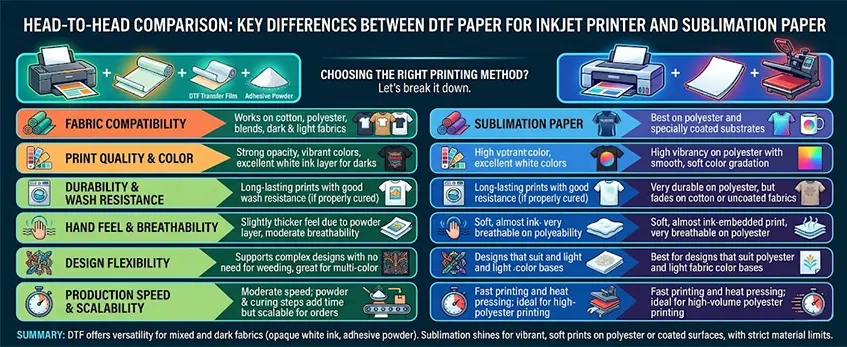
When it comes to printing methods, understanding how DTF paper for inkjet printers stacks up against sublimation paper is key for picking the right option. Let’s break it down across critical factors:
| Característica | DTF Paper for Inkjet Printer | Papel para sublimación |
|---|---|---|
| Compatibilidad de tejidos | Funciona en algodón, poliéster, mezclas, tejidos oscuros y claros | Best on polyester and specially coated substrates |
| Calidad de impresión y color | Strong opacity, vibrant colors, excellent white ink layer for darks | High vibrancy on polyester with smooth, soft color gradation |
| Durabilidad y resistencia al lavado | Long-lasting prints with good wash resistance if properly cured | Very durable on polyester, but fades on cotton or uncoated fabrics |
| Hand Feel & Breathability | Slightly thicker feel due to powder layer, moderate breathability | Soft, almost ink-embedded print, very breathable on polyester |
| Flexibilidad de diseño | Supports complex designs with no need for weeding, great for multi-color | Best for designs that suit polyester and light fabric color bases |
| Velocidad de producción y escalabilidad | Moderate speed; powder and curing steps add time but scalable for orders | Fast printing and heat pressing; ideal for high-volume polyester printing |
DTF printing with inkjet printers brings versatility, especially for mixed and dark fabrics, thanks to its opaque white ink layer and strong adhesive powder. Sublimation paper shines when vibrant, soft prints are needed on polyester or coated surfaces but has strict material limits.
For those curious about how DTF printers manage color control and white ink layers, check out this detailed guide on Explicación del software DTF RIP. It sheds light on some unique features that help make DTF printing stand out.
In short, your fabric choice and production scale will heavily influence whether DTF paper or sublimation paper is the better tool for the job.
Pros and Cons of DTF Paper for Inkjet Printers
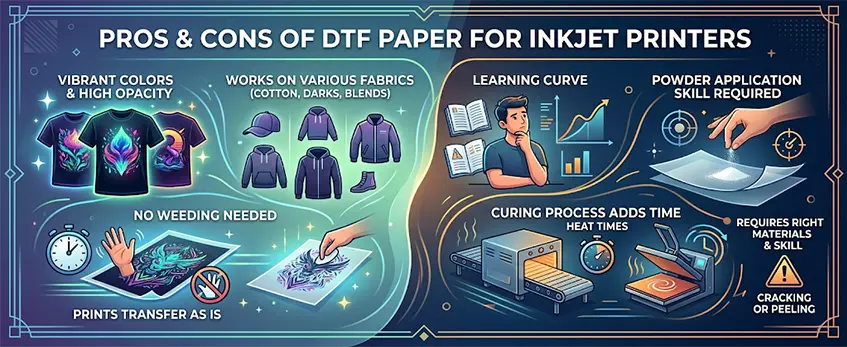
DTF paper for inkjet printers offers a versatile way to print on a variety of fabrics, especially dark colors, thanks to its opaque white ink layer. One major plus is that it requires sin deshierbe, saving time compared to vinyl transfers. You print, apply the adhesive powder, cure, and heat press — all straightforward once you get the hang of it.
But let’s be real — DTF comes with a bit of a learning curve. Managing the powder application and curing steps takes practice to get perfect adhesion and durability. And without the right materials, prints may crack or peel over time.
Here’s a quick look at the pros and cons:
| Pros | Contras |
|---|---|
| Works on various fabrics, including cotton and dark garments | Powder application requires skill |
| No weeding needed—prints transfer as is | Curing process adds time |
| Vibrant colors and strong opacity on darks | Initial setup and learning curve |
When it comes to quality and consistency, Películas Jinlong DTF stand out. They deliver smooth, reliable transfers with excellent color vibrancy and durability, making them a favorite among small businesses and hobbyists alike. Using premium films like Jinlong also minimizes issues during heat pressing, such as sticking or uneven transfers. For more detailed tips on working with DTF, check out our comprehensive DTF printer guide for custom apparel.
In short, if you\’re looking for a versatile, no-weeding print method that handles dark fabrics well, DTF paper from Jinlong is a solid choice—just be ready to invest some time learning the process.
Pros and Cons of Sublimation Paper
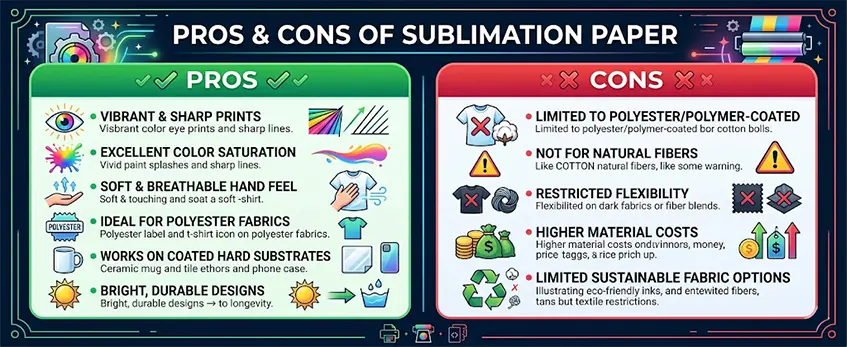
Sublimation paper is well-known for producing vibrant, sharp prints with excellent color saturation. The final prints feel soft and breathable, making sublimation a top choice when a natural hand feel is important. This method really shines on polyester fabrics and specially coated hard substrates, delivering bright, durable designs that don’t add extra weight or stiffness.
However, sublimation paper has some key limitations. It only works effectively on polyester or polymer-coated materials, so it\’s not suitable for natural fibers like cotton. This restriction limits design flexibility, especially if you want to print on dark fabrics or blends. Also, sublimation materials tend to be pricier compared to other printing supplies, which could impact your costs. While sublimation inks and papers are generally considered eco-friendlier than some alternatives, the requirement for polyester limits sustainable fabric options.
For businesses focusing on polyester apparel or hard substrates, sublimation remains a fantastic option due to its vibrant output and soft hand feel. But if you want versatility across fabric types, especially with dark and cotton garments, other methods like DTF printing might be better suited.
Cost Breakdown: Equipment, Materials, and Ongoing Expenses
Al comparar DTF paper for inkjet printer setups versus sublimation paper, the initial investment and ongoing costs can vary significantly depending on your business size and needs.
Upfront Printer and Ink Costs
DTF printing requires a compatible inkjet printer capable of handling white ink layers, plus specialized DTF inks. These setups often cost more upfront compared to typical sublimation printers but offer broader fabric compatibility. For example, high-quality Tintas DTF and printers from reliable brands help ensure vibrant, durable prints but come with a higher sticker price. Sublimation printers and inks tend to be less expensive initially but are limited mainly to polyester and coated substrates.
Material and Maintenance Expenses
DTF materials, including powder adhesive and Película de transferencia DTF, add ongoing costs. Proper maintenance for DTF printers is crucial to avoid clogging and prolong equipment life, resulting in some extra expenses. Sublimation consumables, mostly sublimation paper and ink, are generally more affordable and require less maintenance, making them budget-friendly for low to medium volume runs.
Value Differences by Business Scale
- Small Businesses & Beginners: Sublimation is often simpler and cheaper to start with if you focus on polyester apparel or hard substrates.
- Growing & High-Volume Operations: DTF printing shines when you need versatility across multiple fabric types, including cotton and dark garments, making it a better long-term investment despite higher initial costs.
For those aiming for top-notch results, options like película de transferencia jinlong DTF provide reliable quality that helps balance cost with print performance. Choosing the right materials and understanding your scale will help optimize costs and output quality effectively.
Which Method Is Better for Common Use Cases?
When deciding between DTF paper for inkjet printer and sublimation paper, it largely depends on your specific needs and materials.
DTF Printing for Cotton and Dark Fabrics
DTF excels on cotton and dark garments, delivering vibrant colors without the need for pre-treatment. It’s perfect if you’re printing on mixed fabric types or want strong opacity on dark backgrounds. The versatility of DTF makes it ideal for small businesses or hobbyists expanding beyond polyester.
Sublimation Paper for Polyester and Hard Substrates
Sublimation shines when used on polyester fabrics or specially coated hard substrates, offering incredibly bright colors and a soft hand feel. However, it’s limited to light-colored or white polyester materials, so it’s less flexible if your inventory includes cotton or darker fabrics.
Beginner and Small Business Considerations
For beginners, sublimation has a gentler learning curve but limits product variety. DTF printing involves steps like powder application and curing but pays off with wider fabric compatibility and no weeding. Products like jinlong DTF films help simplify this process for newcomers.
Hybrid and High-Volume Scenarios
For high-volume or hybrid workflows, combining both methods can optimize output—use DTF for cotton and dark items, and sublimation for polyester or promotional hard goods. This approach maximizes production flexibility and meets diverse client demands efficiently.
Choosing between DTF transfer film vs sublimation paper ultimately comes down to your fabric choices and business goals. Both have their strengths, but for versatile apparel printing methods in 2026, DTF offers broader material compatibility, while sublimation wins on color vibrancy for polyester garments.
Practical Tips for Success with Each Method
Getting the best results with DTF paper for inkjet printers and sublimation paper means dialing in your process and using the right materials.
Heat Press Settings and Troubleshooting
- DTF printing: Set your heat press to around 320-330°F (160-165°C) with a medium pressure for 15-20 seconds. Press longer or hotter, and you risk discoloration or soft prints. If adhesion fails, check your powder application and curing times—both are crucial in DTF transfers.
- Sublimation printing: Generally requires higher temperatures around 375-400°F (190-205°C) and about 45-60 seconds, especially on polyester substrates. Keep your timing tight and temperature steady to avoid blurry or faded colors.
- Common fix for both: clean your heat press platen regularly to avoid transfer blemishes and test on scrap fabric first.
Storage and Maintenance Best Practices
- Store DTF films and sublimation papers in a cool, dry place away from direct sunlight to prevent ink and film degradation.
- Keep DTF powders sealed tightly after opening to maintain their adhesive quality.
- Use inkjet DTF inks and sublimation inks within recommended shelf lives and shake inks before use to ensure smooth prints.
- Regularly clean your printer heads—this avoids clogged nozzles that would ruin print quality.
Recommendation of Premium Materials Like jinlong DTF
For reliable, vibrant, and durable results, using high-quality products like película de transferencia jinlong DTF is a smart move. Their films offer better powder adhesion, consistent print results, and fewer application issues—great if you want to avoid the learning curve common with entry-level materials. Pair these films with jinlong’s high-concentration DTF inks to maximize color vibrancy and print durability.
With the right heat press settings, proper storage, and top-tier materials, you’ll get a smoother, more professional workflow—whether you’re working with DTF or sublimation printing on your projects.
Making the Right Choice for Your Business
Choosing between DTF paper for inkjet printer and sublimation paper comes down to evaluating your project volume, fabric types, and long-term budget. If you mostly work with cotton or dark fabrics, DTF printing is your go-to because it shines on those materials without needing pretreatment. On the other hand, sublimation paper is unbeatable for polyester and coated substrates, offering vibrant colors and a soft hand feel.
When planning growth, consider equipment costs and materials. DTF setups typically require investment in DTF powders and films, but they offer versatility across fabric blends, including cotton and polyester blends. Sublimation, while excellent for polyester, restricts your materials, which can limit expanding print options.
To maximize profitability and flexibility, many businesses find that choosing high-quality, versatile solutions like premium jinlong DTF films not only enhances print durability but also streamlines production. For detailed advice on selecting the right materials and kits to match your business scale, check out our guide on cómo elegir el kit DTF adecuado para su imprenta.
Planning your budget with an eye toward material costs, equipment upkeep, and the fabrics you work with will help you pick the best printing method that suits your current needs and allows room for growth.


 English
  Español
  Deutsch
  Français