



Why Is My DTF Not Sticking? 7 Common Heat Press Mistakes
Understanding DTF Adhesion: How Heat, Pressure, and Time Work Together
When working with jinlong DTF films, getting your transfer to stick properly depends on a careful balance of three key factors: heat, pressure, and time. The secret lies in the hot-melt adhesive powder embedded in the film. During heat pressing, this powder melts and bonds firmly with the fabric fibers, creating a durable and vibrant print.
Here’s how each element plays a role:
Heat: The right temperature activates the adhesive powder. For jinlong DTF films, aim for 320°F to 350°F (160°C to 177°C) depending on your fabric type. Too low, and the powder won’t melt fully; too high, and you risk damaging your fabric or print.
Pressure: Uniform pressure ensures the adhesive melts evenly and bonds across every fiber. Use a medium to firm pressure—about 30 to 40 psi is ideal—to avoid gaps or bubbles. Uneven pressure can cause poor adhesion and peeling.
Time: The adhesive powder needs enough dwell time to cure fully. Typically, 12 to 20 seconds works best on cotton and polyester blends. Shorter presses lead to weak bonding; pressing too long can overheat and damage the material.
To find your perfect combo:
- Test on a fabric scrap with different temperature and time settings.
- Use an infrared thermometer to verify your heat press’s surface temperature for consistency.
- Adjust pressure by checking for impression marks or uneven areas after pressing.
By carefully controlling heat, pressure, and time, you’ll fix common DTF adhesion problems and produce durable, professional-quality transfers every time.
The 7 Common Heat Press Mistakes (and Proven Fixes)
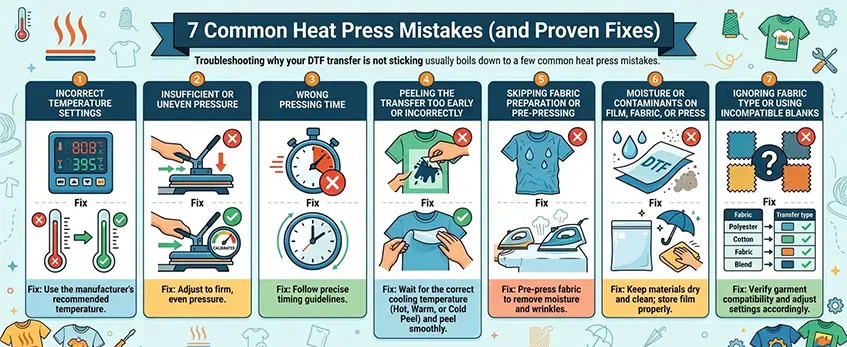
Troubleshooting why your DTF transfer is not sticking usually boils down to a few common heat press mistakes. Here’s a quick rundown of the top 7 problems and how to fix them for strong, lasting adhesion:
1. Incorrect Temperature Settings
Using the wrong heat press temperature is a major cause of DTF adhesion problems. If it’s too low, the hot-melt adhesive powder on jinlong DTF films won’t properly bond with fabric fibers. Too high, and you risk scorching the fabric or melting the film.
Fix: Check your heat press’s temperature with an infrared thermometer to ensure accuracy. Typical settings are around 320°F to 340°F depending on fabric. Adjust based on testing different materials like cotton or polyester.
2. Insufficient or Uneven Pressure
If your pressure is too light, or uneven across the platen, you’ll see gaps, wrinkles, or bubbles under the film. This causes weak bonds and peeling after washing.
Fix: Aim for firm, even pressure—usually about 40-50 psi. Consider using pressure-distributing tools like heat pillows or silicone pads to avoid hotspots and pressure points.
3. Wrong Pressing Time
Pressing too briefly means the adhesive doesn’t fully cure, while pressing too long can degrade the print or fabric. Both lead to poor DTF transfer adhesion.
Fix: Use a stopwatch and stick to recommended dwell times—generally 15-20 seconds for common fabrics. Adjust timing through trial tests.
4. Peeling the Transfer Too Early or Incorrectly
DTF films can be cold peel or hot peel types, and peeling them incorrectly will cause the print to come off partially or entirely.
Fix: Know your film type. For hot peel, remove immediately while warm. For cold peel, wait until completely cooled. Follow the peeling method outlined by your jinlong DTF supplier.
5. Skipping Fabric Preparation or Pre-Pressing
Wrinkles, moisture, or residues on the garment surface prevent proper bonding of the adhesive.
Fix: Always pre-press garments for 5-10 seconds to remove moisture, wrinkles, and dust. Clean your heat press platens regularly for consistent results.
6. Moisture or Contaminants on Film, Fabric, or Press
Spotty adhesion or peeling can come from oils, dirt, or humidity affecting the print or fabric surface.
Fix: Store DTF films in a dry environment. Avoid touching the adhesive side of the film. Keep fabrics clean and dry before pressing.
7. Ignoring Fabric Type or Using Incompatible Blanks
Synthetic fabrics like polyester require different press settings than cotton or blends. Using one-size-fits-all settings leads to poor results.
Fix: Tailor temperature, pressure, and time to your fabric type. For sensitive synthetics, lower temperature and pressure slightly. Avoid incompatible blanks that don’t bond well with DTF transfers.
By nailing these basics, you’ll drastically reduce DTF transfer issues like peeling or weak bonds. For more tips on avoiding common DTF heat press mistakes and improving durability, check out our detailed jinlong DTF application guide.
Advanced Troubleshooting: When the Basics Aren’t Enough
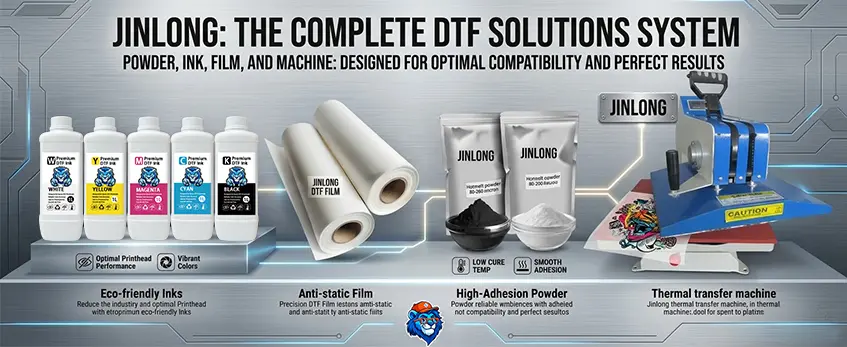
If your DTF transfer isn’t sticking despite following the basic steps, it’s time to dig deeper. Some less obvious issues can cause adhesion problems, so here’s a quick guide to help you troubleshoot like a pro.
Common advanced problems and fixes:
Over-powdered prints: Too much hot-melt adhesive powder can create uneven bonding, leading to peeling or weak spots. Use the right powder amount recommended for your jinlong DTF films and shake off excess before pressing.
Cold spots on the heat press: Uneven heating causes parts of the transfer not to bond properly. Use an infrared thermometer to check your press plate’s temperature, and if needed, invest in a heat pillow to even out pressure and heat.
Multiple presses: Pressing the same area repeatedly can damage the film or fabric surface, weakening adhesion. Follow the recommended pressing cycle strictly to avoid overworking the transfer.
Improper wash care: DTF transfers that peel or fade after washing often suffer from incorrect heat pressing or low-quality powder curing. Always follow wash instructions for durability, and confirm powder curing time matches jinlong’s guidelines.
To pinpoint the root cause, use this quick decision tree:
Was powder applied evenly and not in excess?
- No: Reapply powder carefully.
- Yes: Proceed to 2.
Is the heat press temperature and pressure consistent across the entire surface?
- No: Adjust for even heat and correct pressure.
- Yes: Proceed to 3.
Is the dwell time correct for the fabric type?
- No: Adjust pressing time accordingly.
- Yes: Proceed to 4.
Are you using the right peel method (cold peel vs hot peel) based on your DTF film?
- No: Follow proper peeling technique.
- Yes: Consider equipment calibration or powder quality check.
If you need more help, Jinlong provides detailed guides and resources such as their jinlong DTF application guide to help optimize your setup and eliminate common DTF adhesion problems. Mastering these advanced steps will get you closer to professional, durable transfers.
Pro Tips for Consistent, Professional Results with jinlong DTF
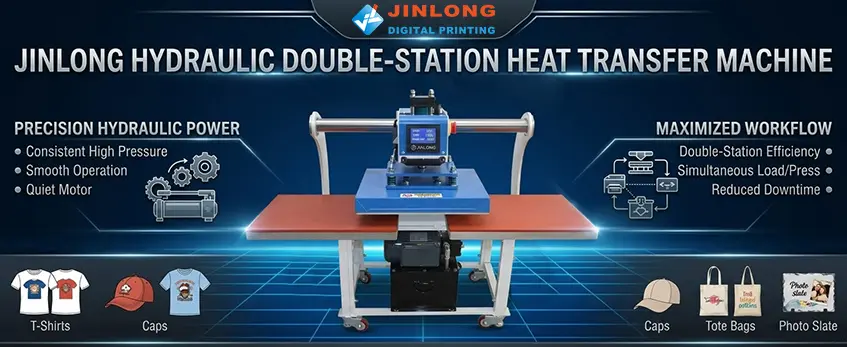
Getting your DTF transfers to stick perfectly every time starts with the right tools and habits. Here are some pro tips to help you nail consistent, high-quality results using jinlong DTF products:
Use Recommended Accessories: Protect your prints and heat press with essentials like Teflon sheets to prevent scorching, heat pillows to ensure even pressure on seams or tricky areas, and an infrared thermometer for accurate temperature readings. These tools help avoid common DTF adhesion problems caused by uneven heat or pressure.
Batch Testing & Record Keeping: When trying new fabrics or settings, test small batches first. Keep notes on heat press temperature for DTF, pressure settings, and dwell times that work best. This helps you replicate perfect transfers every time and avoid guesswork.
Washing & Durability Best Practices: To keep your prints looking fresh, wash garments inside-out in cold water and avoid bleach or harsh detergents. Follow the recommended curing time for DTF powder on jinlong films to ensure durable DTF transfers that won’t peel or fade after washing.
Choose Quality Supplies & Support: Reliable supplies make a big difference in adhesion and durability. For the best experience, use authentic jinlong DTF components, like their films and powders shown in the jinlong DTF application guide. Don’t hesitate to reach out to their support team if you run into any issues—they can help troubleshoot and fine-tune your process.
Safety & Maintenance: Keep your heat press clean and calibrated regularly. Avoid moisture and contaminants on the film, fabric, or press to fix weak DTF bonds. Always handle powders and films in well-ventilated areas, and wear protective gloves when needed.
These simple steps will elevate your DTF transfer game, ensuring professional results that last and keep your customers happy.



 English
  Español
  Deutsch
  Français