


What Is DTF Printing on Shirts Why It’s the Top Custom Apparel Choice
If you’re diving into custom apparel in 2025, you’ve probably heard the buzz about DTF printing on shirts—and for good reason. This game-changing technique is rapidly reshaping how brands and print-on-demand sellers bring designs to life, outpacing traditional methods like DTG and screen printing. Whether you’re curious about what DTF printing actually is, how it stacks up on quality, cost, and versatility, or why it’s quickly becoming the #1 choice for custom t-shirts, you’re in the right place. Stick around, and by the end, you’ll know exactly why smart apparel businesses are making the switch—and how you can too.
What Does DTF Actually Stand For? (Direct-to-Film Explained)
DTF stands for Direct-to-Film printing, a process where designs are printed onto a special film before being transferred to a shirt. Unlike printing directly on fabric, DTF uses this film as a middleman to create vibrant, durable prints.
DTF vs Direct-to-Garment (DTG)
| Feature | Direct-to-Film (DTF) | Direct-to-Garment (DTG) |
|---|---|---|
| Printing Surface | Special film | Directly on fabric |
| Fabric Types | Works on almost any material | Best on 100% cotton |
| Pretreatment Required | No pretreatment needed | Requires fabric pretreatment |
| Durability | Extremely durable, long-lasting | Less durable; can fade or crack with wash |
| Cost Efficiency | Low setup cost; good for small to large runs | Higher cost for small runs |
A Quick History of DTF Printing
Originally developed as a niche printing method in parts of Asia, DTF printing has exploded in popularity worldwide. Over the past three years, it evolved from a little-known technique to the global standard for custom apparel, thanks to its versatility and quality. Today, it\’s quickly becoming the go-to choice for printers who want fast, affordable, and durable t-shirt printing.
How DTF Printing Works – Step-by-Step Process

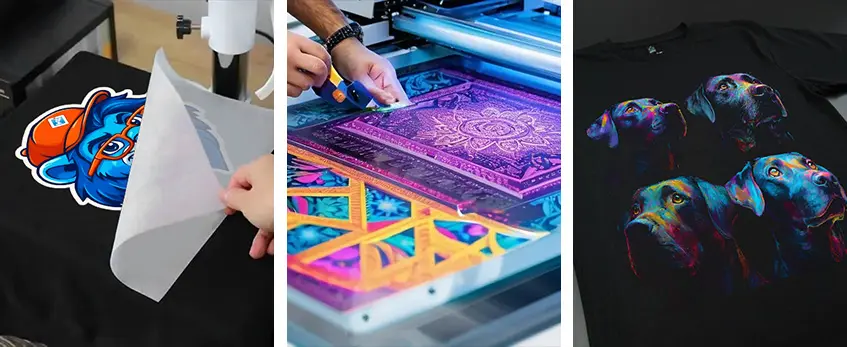
DTF printing starts with creating your design on a computer, usually in full color. Next, the design is printed onto a special clear film using CMYK inks plus an opaque white ink layer to make colors pop, especially on dark shirts.
After printing, a special adhesive powder is evenly applied to the wet ink on the film. This powder sticks to the ink and is then cured by passing the film through a heat tunnel or oven, bonding the adhesive to the design.
Once cured, the film is ready for transfer. The design is placed face-down on the shirt, then pressed with a heat press at the right temperature and pressure. After pressing, the film is peeled off while warm, leaving the design perfectly adhered to the fabric.
A final heat press step, called curing, ensures the print’s durability and wash fastness, locking in vibrant colors and strong adhesion. This whole DTF heat transfer process creates a smooth, flexible print that works well on a wide range of fabrics.
For anyone starting out, using high-quality DTF transfer film like the options available from jinlongprints.com can make all the difference in print quality and durability.
Why DTF Is Becoming the #1 Choice for Custom T-Shirts in 2026
DTF printing is taking over the custom apparel world—and for good reasons. Here’s why it’s the go-to option in 2026:
1. Insane Durability & Wash Fastness
DTF prints can survive 50+ washes without cracking or fading, easily beating DTG’s tendency to fade after fewer washes. Real-world tests show DTF holds up like a champ, even through rough laundry cycles.
2. Works on Virtually Any Fabric
Whether it’s cotton, polyester, blends, nylon, leather, or dark synthetics, DTF sticks without any pretreatment needed. This versatility means you can print on almost anything, making it perfect for diverse apparel lines.
3. Vibrant Colors & Fine Details on Dark Garments
Thanks to its opaque white underbase, colors pop like neon on dark shirts. Fine lines and photographic-quality images come through crystal clear, perfect for eye-catching designs that stand out.
4. Lower Cost at Almost Any Order Size
No screen setups, no minimums, and for orders above 25–50 pieces, DTF is cheaper than traditional screen printing. Here’s a quick cost comparison per shirt based on order quantity:
| Order Size | DTF Cost | Screen Printing Cost | DTG Cost |
|---|---|---|---|
| 1 pcs | $7.50 | $15.00 | $8.00 |
| 10 pcs | $6.00 | $9.00 | $7.00 |
| 100 pcs | $4.00 | $3.50 | $5.50 |
| 500 pcs | $3.50 | $2.50 | $5.00 |
Note: Costs vary by supplier and design complexity.
5. Lightning-Fast Production & Turnaround
DTF’s print-cut-powder-press workflow takes under 5 minutes per shirt. This speed makes it perfect for print-on-demand (POD) stores and rush orders that need quick delivery.
6. Eco-Friendly Edge (Less Water & Waste)
Unlike DTG, DTF doesn’t require water-heavy pretreatment, cutting water waste drastically. Plus, it uses less plastic than traditional heat transfer vinyl. For more on eco-friendly materials, you can check out this detailed look at DTF powder adhesive.
In short, DTF printing delivers durability, versatility, vibrancy, cost savings, speed, and eco benefits, making it the best choice for custom t-shirts in 2026.
DTF vs DTG vs Screen Printing vs Vinyl – Side-by-Side Comparison (2026)
Here’s a clear comparison of the main custom shirt printing methods in 2026. This will help you pick the best option for your needs based on durability, cost, fabric compatibility, and more.
| Method | Best For | Durability | Fabric Versatility | Cost (Low Volume) | Cost (High Volume) | Softness | Setup Time | Eco Impact |
|---|---|---|---|---|---|---|---|---|
| DTF Printing | Small to large orders, dark & tricky fabrics | Very High (50+ washes) | Almost any fabric, no pretreatment | Low to Moderate | Very Low | Very Soft | Fast (<5 min/shirt) | Low (less water/waste) |
| DTG Printing | Detailed photos on cotton | Moderate (fades after ~20 washes) | Mostly cotton & blends, needs pretreatment | Moderate | Moderate | Soft | Moderate (~10 min/shirt) | Moderate (water use) |
| Screen Printing | Large runs, simple designs | Very High | Limited by fabric types | High (setup costs) | Very Low | Soft to Medium | Long (setup & cleanup) | Moderate (ink waste) |
| Vinyl Printing | Small runs, custom names/numbers | High (peeling risk over time) | Limited (best on smooth fabrics) | Moderate | Low | Medium to Stiff | Moderate | Moderate (plastic use) |
Key Takeaways:
- DTF printing stands out for fabric versatility and wash durability with low setup time, making it perfect for print-on-demand and rush orders.
- DTG is best if you need detailed photo prints on cotton but struggles with durability and fabric types.
- Screen printing shines in high volume runs but has higher upfront costs and longer setup.
- Vinyl works for small batches and numbers but feels less soft and can peel over time.
For an in-depth look at DTF printing options and supplies, check out this complete guide to starting a custom apparel business.
If you’re diving into DTF printing for the first time, the DTF printing for beginners resources can help you get up to speed quickly.
Common Myths About DTF Printing – Busted
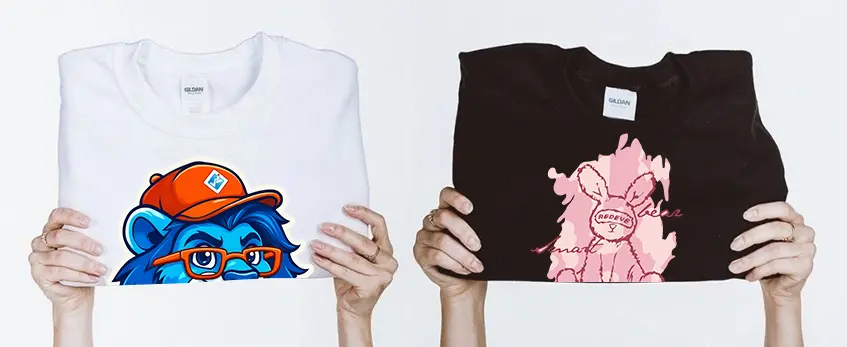
There are some common misconceptions about DTF printing that just don’t hold up anymore. First, many think “it feels plasticky” — but modern DTF prints are actually buttery soft and flexible, much like traditional screen prints. Second, the myth that “colors fade fast” is outdated. Thanks to improved adhesive powders and curing methods, today’s DTF prints hold vibrant colors through 50+ washes without cracking or fading. Finally, some believe DTF is “only for small runs,” but recent advances have made it cost-effective for thousands of shirts, making it a great option from small boutiques to large orders. If you want to dive deeper into the latest materials, explore high-quality DTF transfer films and powders trusted by 10,000+ shops worldwide.
Who Should Switch to DTF Printing Right Now?
DTF printing is a game-changer for a wide range of businesses and creators. If you run a print-on-demand (POD) store, switching to DTF means faster turnaround, better colors on dark shirts, and no more headaches with pretreatment or clogged DTG heads. For local print shops looking to expand their services without breaking the bank on new equipment or complex setups, DTF offers a simple, reliable way to boost capacity and take on more orders.
Streetwear and boutique brands will love DTF for its ability to deliver vibrant, durable designs on all kinds of fabrics—perfect for limited runs and eye-catching collections. It’s also ideal for sports teams and workwear because it handles polyester and performance fabrics without any extra prep, plus the prints hold up through countless washes and rough use.
Finally, anyone frustrated with the regular mess and maintenance of DTG machines or the high upfront costs of screen printing setups will find DTF an easier, more flexible option that fits almost any order size. If you want smooth workflows, lower costs, and top-quality results across the board, it’s time to make the switch.
For those interested in gearing up, check out the best DTF supplies like reliable DTF transfer films from jinlong to get started with confidence.
Pro Tips to Get the Best DTF Results
Getting top quality DTF prints comes down to a few key steps. Here’s what you should focus on:
Heat-press settings: Aim for around 320°F (160°C) with medium to firm pressure. Press your transfer for 15-20 seconds when applying to the shirt, then do a final cure for about 10 seconds after peeling. This locks the design in and boosts wash durability.
Choose high-quality film & powder: Using premium materials like jinlong DTF transfer film and adhesive powder makes a big difference. They ensure smooth print surfaces, vibrant colors, and better bonding on fabric.
Curing techniques: After printing and applying powder, cure the film with a heat source (usually a curing oven or heat press) to melt the adhesive powder evenly. Proper curing is critical to avoid flaking and to ensure your print holds up through 50+ washes.
Storage tips for printed films: To keep your printed films fresh before pressing, store them flat in a cool, dry place. Avoid stacking heavy items on top to prevent marks or distortion. Proper storage helps maintain vibrant colors and consistent adhesive activation.
Following these tips will give you soft, durable, and professional-looking custom DTF prints every time.
Why jinlong DTF Is the Brand Trusted by 10,000+ Shops Worldwide
Jinlong DTF has earned its reputation thanks to premium inks and top-quality adhesive powder that deliver vibrant, long-lasting prints. Their consistent quality film rolls ensure every transfer looks sharp and professional, batch after batch. Plus, with fast global shipping and reliable customer support, shops across the U.S. and beyond keep their production lines running smoothly.
What sets jinlong apart is the commitment to a 100% satisfaction guarantee, giving users confidence in every order. For anyone looking to maximize profits and print quality, investing in a top DTF printer and supplies from jinlong is a smart choice. For more detailed guidance, check out their clear resources on how to cure DTF powder with a heat press or explore why investing in a top DTF printer can boost your printing profits.


 English
  Español
  Deutsch
  Français