
No products in the cart.

Jinlong
What Is DTF Printing on Clothes and Why It’s So Popular in 2026
What Is DTF Printing? A Clear Definition
DTF printing, or Direct to Film printing, is an innovative method for decorating clothes. Instead of printing directly on fabric, designs are first printed on a special PET film using vibrant, pigmented inks. This film is then coated with a heat-activated adhesive powder, cured, and finally transferred onto garments through heat pressing.
A Quick Look at DTF Printing\’s History
- Originated as a versatile alternative to direct-to-garment (DTG) and screen printing
- Rapid growth in custom apparel due to flexibility and efficiency
- Evolved with improvements in inks, films, and adhesives
How DTF Differs from Direct Printing
| Feature | DTF Printing | Direct Printing (DTG) |
|---|---|---|
| Printed on film, then transferred | ✔ | ✘ |
| Works on various fabrics | ✔ | Limited, often needs cotton |
| Uses powder adhesive | ✔ | ✘ |
| Produces thin, flexible prints | ✔ | Prints can be thicker |
Why DTF Prints Work So Well on Clothes
- Produces a thin, flexible, and durable layer that moves with fabric
- The adhesive powder ensures strong bonding, making prints last over 50+ washes
- Ideal for diverse fabrics: cotton, polyester, blends, and even nylon
DTF’s unique method ensures shirt prints don\’t crack or peel easily, making it perfect for everyday wear. This explains why DTF printing on clothes is booming among small businesses and big brands alike.
How DTF Printing Works on Clothes: Step-by-Step Process
DTF printing on clothes starts with preparing your design digitally, usually in full color and high resolution. The design gets printed onto special PET DTF film using a DTF printer equipped with vibrant, durable inks made just for this process.
Next, a hot-melt adhesive powder is evenly applied over the wet ink on the film. This powder sticks to the ink and is then cured in a curing oven or with heat to bond the adhesive properly. After curing, the printed film goes through cutting and weeding, where excess film is removed, leaving only the design.
For transferring the design onto fabric, a heat press is used with specific settings: typically around 320–350°F (160–177°C), 15–25 seconds of pressing time, and moderate pressure. After pressing, the transfer can be peeled hot or cold, depending on the recommendation for that particular film and powder combination, followed by careful post-press care to ensure durability and softness.
Essential equipment includes a reliable DTF printer, quality PET DTF films, premium DTF powder adhesive, and a heat press with precise temperature and pressure control. Jinlong DTF films and powders stand out because they deliver consistent, high-quality results with vibrant colors and excellent wash resistance, making them a top pick for apparel decorators looking for dependable performance.
For those exploring equipment and consumable options, checking out detailed guides like the best DTF kit in 2026 can be a helpful resource to ensure you’re using the right materials for vibrant DTF prints on polyester and other fabrics.
Key Benefits of DTF Printing for Apparel
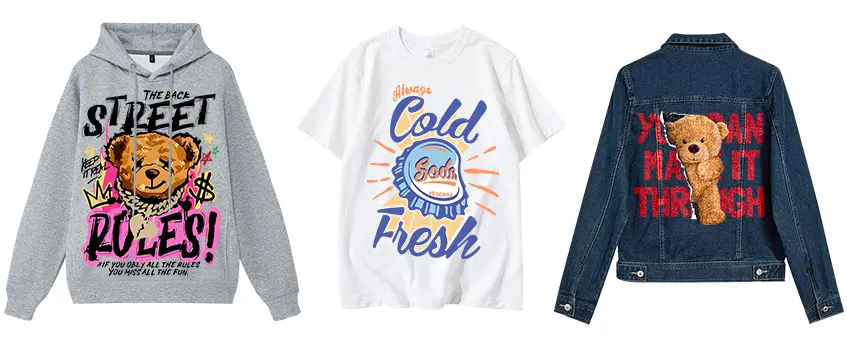
DTF printing on clothes offers a range of benefits that make it a top choice for custom apparel in the U.S. market. Here’s why it stands out:
| Benefit | Details |
|---|---|
| Fabric versatility | Works well on cotton, polyester, blends, nylon, and even non-traditional fabrics, expanding your product options. |
| Vibrant full-color prints | Produces bright, opaque designs that look great on dark garments, perfect for eye-catching custom tees and hoodies. |
| High durability | Prints last through 50+ washes without cracking, fading, or peeling, making your apparel long-lasting. |
| Soft hand feel | Unlike thicker heat transfers, DTF leaves a breathable, soft layer that feels comfortable to wear. |
| No minimum order size | Ideal for small batch runs or prototypes, perfect for startups or on-demand printing businesses. |
| Fast production & low set-up | Quicker turnaround compared to screen printing, with lower setup costs and less waste. |
| Reliable consumables | Using quality supplies like jinlong DTF film and powder ensures consistent, high-performance results every time. |
These benefits highlight why many U.S. custom apparel businesses prefer DTF printing. For the best results, consider premium options like jinlong DTF transfer film and adhesive powders that deliver on quality and durability.
Why DTF Printing Has Become So Popular
DTF printing on clothes has skyrocketed in popularity thanks to the growing demand for personalized and on-demand apparel. Unlike traditional methods, DTF is cost-effective for short runs, eliminating the need for expensive screens or leftover waste. This makes it ideal for small batch custom clothing or one-off designs without breaking the bank.
One big reason why DTF transfers for apparel stand out is their fabric-agnostic nature. Whether you’re printing on tees, hoodies, hats, or bags, DTF works well across cotton, polyester, blends, nylon, and even non-traditional fabrics. This versatility opens up new product lines and creative possibilities for brands and hobbyists alike.
Turnaround times are faster too. From printing to pressing, the process scales smoothly — perfect for everyone from home crafters to professional print shops. Plus, DTF offers superior color vibrancy, especially on tricky fabrics like polyester, where other methods sometimes fall short.
Looking ahead, 2026 trends favor sustainability, hybrid workflows mixing different printing techniques, and a micro-batch economy focused on smaller, flexible production runs. Many print shops, brands, and Etsy sellers are already scaling up using DTF, benefiting from its efficiency and quality.
If you\’re looking to dive into DTF printing, starting with quality materials like the high-performance TPU powder can make a real difference in your results and durability.
DTF vs. Other Popular Printing Methods: A Practical Comparison
Here’s a clear look at how DTF printing on clothes stacks up against other popular custom t-shirt printing methods:
| Feature | DTF Printing | DTG Printing | Screen Printing | Sublimation |
|---|---|---|---|---|
| Fabric Range | Works on cotton, polyester, blends, nylon, and more | Mostly cotton & light fabrics (pre-treatment needed) | Best on cotton or cotton blends | Only polyester or polymer-coated |
| Pre-Treatment Needed | No pre-treatment required | Yes, especially for dark garments | No pre-treatment | No pre-treatment |
| Color Vibrancy | High opacity, vibrant on dark & light | Very vibrant on cotton fabrics | Vibrant with spot colors, less on dark backgrounds | Vibrant but limited to light fabrics |
| Durability | Up to 50+ washes, no cracking | Moderate, can fade/crack over time | High durability, especially with plastisol inks | High, but only on polyester |
| Setup Costs | Low — no screens or bulky equipment | Moderate — expensive printer | High initial cost (screens, setup) | Moderate — requires sublimation printer |
| Order Sizes | Great for small to medium runs | Best for small runs | Best for large bulk orders | Best for small to medium runs |
| Design Complexity | Supports full-color, photo-realistic, gradients | Full-color, good detail | Best with simpler, fewer colors | Full-color, photo-quality prints |
| Material Limitations | Flexible on fabric types | Limited on dark polyesters | Limited by ink type and fabric | Limited strictly to polyester |
| Softness & Feel | Soft, breathable prints | Soft prints | Often heavier feel with thicker layers | Soft but only on polyester |
Ideal Use Cases for DTF
- Mixed fabric batches: Perfect for blends and different materials.
- Vibrant multi-color designs: Photo-realistic images, logos, and complex art.
- Variable order sizes: From single pieces to small runs without high setup.
- Dark and light garments: Excellent opacity without pre-treatment.
Drawbacks & Solutions
- Early issues with DTF included powder clumping and peeling; however, premium consumables like Jinlong DTF films and powders greatly reduce these problems.
- Slightly thicker finish than DTG but softer than screen prints.
- Requires proper curing and peeling techniques for optimal durability.
For anyone comparing options in the custom apparel market, DTF offers versatility and reliability, especially with quality supplies, making it a top choice for many printers. Learn more about choosing the best DTF materials with high-quality matte DTF transfers to maximize results.
Practical Applications and Use Cases for DTF on Clothes
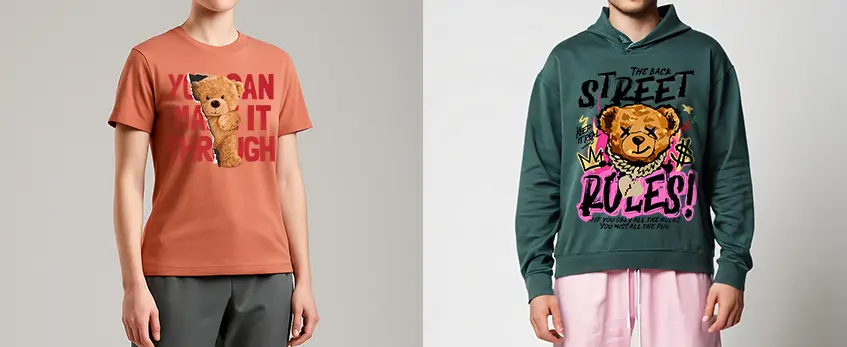
DTF printing on clothes is a go-to choice for a wide range of apparel needs. Custom t-shirts and hoodies are the most popular items, but it goes far beyond that. Promotional apparel for events, corporate merchandise, and even sportswear benefit from the vibrant, durable DTF transfers for apparel.
Fashion brands often turn to this method because it works well on diverse fabrics like nylon and polyester blends. Small businesses and side hustles—think print-on-demand (POD) shops, boutiques, and uniform suppliers—love DTF for its flexibility and cost-effectiveness on small runs. You can easily produce unique designs with photo-realistic images, smooth gradients, logos, and full or all-over prints without worrying about setup costs.
To get the best results, focus on a few success tips:
- Pick garments that suit DTF printing well, such as cotton blends or polyester fabrics.
- Use gang sheeting to print multiple designs on one film to save time and reduce waste.
- Follow recommended post-care instructions to keep prints lasting through washes and wear.
With its versatility and quality, DTF printing has become a staple for creative, scalable apparel decoration that fits many uses—from casual gear to professional merchandise.
Tips for Getting the Best Results with DTF Printing
To get top-quality prints with DTF printing on clothes, focus on these key areas:
Choose Quality Consumables
- Use premium DTF powder adhesive and PET DTF film like those from Jinlong.
- Quality films and powders ensure better ink adhesion, color vibrancy, and wash resistance.
- Check out the reliable Jinlong DTF transfer film for consistent results.
Avoid Common Mistakes
| Step | Common Error | How to Fix It |
|---|---|---|
| Printing | Incorrect ink settings | Calibrate your DTF printer colors |
| Powdering | Uneven powder application | Use a consistent shaking method |
| Heat Pressing | Wrong temp or pressure | Follow recommended settings closely |
Maintenance & Workflow Tips
- Clean your DTF printer heads regularly to avoid clogging.
- Store films and powders in cool, dry places.
- Establish a clear step-by-step workflow from design to pressing for smooth production.
Scaling Up Production
- Start with a home setup and expand by upgrading to larger DTF printers and heat presses when demand grows.
- Use gang sheeting to print multiple designs efficiently on one film sheet.
- Consider investing in Jinlong’s complete DTF printer A3 guide for scaling tips.
With the right consumables and careful handling, your DTF printing on clothes will shine in both quality and durability, perfect for small batch custom clothing or larger production runs.


 English
 Español
 Deutsch
 Français