


Types and Properties of Hot Melt Powder White vs Black for DTF Printing
If you’re working in DTF printing, choosing the right hot melt powder can make or break your final print quality, especially when deciding between white powder and black powder. These two types aren’t interchangeable—they each bring unique properties, adhesion strengths, and durability traits that directly impact your results on light versus dark garments. Whether you’re a seasoned printer or just stepping into the DTF world, understanding the key differences and applications of these powders will help you boost color vibrancy, improve wash fastness, and optimize cost-efficiency. In this guide, you’ll get the lowdown on everything you need to pick the perfect hot melt powder for your projects, backed by real-world insights and industry-standard details. Let’s get into it.
What Is DTF Hot Melt Powder and How Does It Work?
DTF hot melt powder is a specialized adhesive used in Direct-to-Film (DTF) printing to bond printed designs onto fabrics. This powder plays a crucial role by sticking to the wet ink on the printed PET film and then melting during curing to create a durable, flexible bond with the garment.
Role of Adhesive Powder in DTF Process
After printing the design onto the film using DTF inks, the hot melt powder is applied evenly over the print. The powder adheres only to the wet ink areas, serving as the glue that will transfer the design onto fabric during heat pressing. This step is key to ensuring the print stays intact after multiple washes.
TPU-Based Hot Melt Fundamentals
Most DTF powders are made from TPU (Thermoplastic Polyurethane), prized for its excellent elasticity and durability. TPU melts cleanly without burning and provides strong adhesion on various fabrics, including cotton and polyester blends. TPU’s versatility makes it the top choice for high-quality DTF adhesives.
Melting Point Range and Curing Requirements
Typically, DTF hot melt powders melt between 110°C to 130°C (230°F to 266°F). For complete curing and maximum durability, heat pressing is done at around 160°C to 170°C (320°F to 338°F) for 10-15 seconds. This heating step melts the powder, fuses the ink to the fabric, and creates a long-lasting, soft-to-the-touch print.
In short, without hot melt powder, the ink can\’t properly transfer or stick to garments. Understanding TPU powder’s melting properties and curing needs is essential for optimum print quality and wash resistance in DTF printing.
Main Types of DTF Hot Melt Powder
DTF hot melt powder mainly comes in two common types: white and black. White hot melt powder is the go-to choice for light-colored and white garments, offering excellent adhesion and vibrant color clarity. Black hot melt powder, on the other hand, contains black pigments designed for dark fabrics, helping to boost opacity and make colors pop on black or dark garments.
Besides these, there are less common variants like gray and clear powders. Gray powder is sometimes used for medium-tone fabrics, while clear powder offers a low-visibility adhesive layer suitable for special applications where print feel and transparency matter.
Each type is formulated with TPU-based hot melt adhesives that melt and cure to create durable, flexible prints tailored for different fabric colors and end-use needs.
For a deeper dive into transfer films that pair perfectly with these powders, check out the DTF transfer film Double Pro Series.
Side-by-Side Comparison: White Powder vs Black Powder

Here’s a quick rundown comparing white DTF powder and black DTF powder across key factors you care about:
| Feature | White Powder | Black Powder |
|---|---|---|
| Color & Opacity | Bright white, great opacity on light fabrics | Deep black, best opacity on dark garments |
| Adhesion Strength | Strong on light/white fabrics | Superior on black/dark fabrics |
| Hand Feel / Softness | Soft, smooth hand feel | Slightly firmer but comfortable |
| Stretch & Elasticity | Good stretch, ideal for sportswear | Good, can be slightly less stretchy |
| Wash Durability (cycles) | Lasts 30-50 washes with minimal cracking | Similar durability, better for darks |
| Color Vibrancy & White Ink | Perfect for vibrant pastel & white ink designs | Enhances color pop on dark fabrics |
| Opacity on Black Garments | Low opacity, can bleed through | High opacity, blocks fabric color |
| Cost per kg | Usually lower cost | Slightly higher price due to pigmentation |
| Printing Speed Impact | Works well with standard speeds | Might need slower speed for best results |
| Environmental Resistance | Good resistance to sweat & UV | Strong resistance, better for outdoor use |
White powder is typically your go-to when printing on light or pastel shirts, thanks to its soft feel and crisp opacity on white bases. On the other hand, black powder is engineered for dark tees, enhancing opacity and color vibrancy while offering good durability and a solid hand feel.
This quick comparison helps you decide the best powder for your project based on fabric color, desired finish, and budget. For optimal results, consider matching your powder choice with the right TPU hot melt powder properties and equipment.

Detailed Properties of White DTF Hot Melt Powder
White DTF hot melt powder is typically made from TPU (thermoplastic polyurethane) with a fine particle size, usually ranging from 80 to 120 microns. This fine granularity helps ensure smooth melting and uniform adhesion during the curing process. The chemical makeup includes a white pigment that boosts opacity and ensures vibrant print results on light-colored garments.
White powder performs best on white or pastel fabrics where brightness and detail matter most. It’s ideal for high-detail designs, offering excellent print clarity and sharp edges. Because of its opacity, it enhances white ink layers, resulting in crisp, clean whites that make colors pop on lighter backgrounds.
Advantages:
- Superior vibrancy on light-colored garments
- Soft hand feel and good stretchability
- Great for intricate and high-resolution prints
- Balanced curing temperature, typically between 140–160°C
Limitations:
- Less effective on dark or black textiles due to translucence
- Slightly lower opacity compared to black powder on darker fabrics
- May need more careful powder application on mixed-fabric blends
Overall, white DTF powder is a go-to for customers focusing on lighter apparel with detailed, colorful prints. For product supply, trusted options like the jinlong DTF White Powder deliver consistent quality and ultra-fine particles that suit these uses perfectly.
Detailed Properties of Black DTF Hot Melt Powder
Black DTF hot melt powder includes black pigment primarily to enhance opacity and deliver superior print quality on dark or black fabrics. This pigment boosts the powder\’s ability to block the underlying garment color, allowing inks to appear more vibrant and true-to-design on dark textiles.
Thanks to this added pigment, black powder offers a higher opacity compared to white powder, which means your prints achieve better color pop and sharper details on black or very dark materials. This makes it the go-to choice when printing on dark shirts or fabrics where white powder simply won’t provide enough coverage or vibrancy.
There’s a common belief that black powder feels stiffer or less soft than white powder. In reality, the difference in hand feel is minimal. Modern TPU hot melt powders, like those in the jinlong DTF powder series, are formulated for flexibility and softness, so performance stays comfortable even with black pigment. Any perceived firmness often comes down to curing temperature or excess powder on the garment, not the powder color itself.
Advantages of black DTF powder:
- Excellent opacity on black/dark garments
- Enhanced color vibrancy and detail clarity
- Strong adhesion and wash durability on polyester and cotton blends
Limitations to consider:
- Slightly higher cost than white powder due to added pigment
- Not ideal for light or pastel garments (white powder performs better here)
- Careful curing needed to avoid any stiffness or rough texture
Choosing black hot melt powder is essential when printing bold, vibrant designs on dark clothes, ensuring your colors stand out and endure through multiple washes. For more details on powder types and applications, check out the jinlong DTF Hot Melt Powder Series.
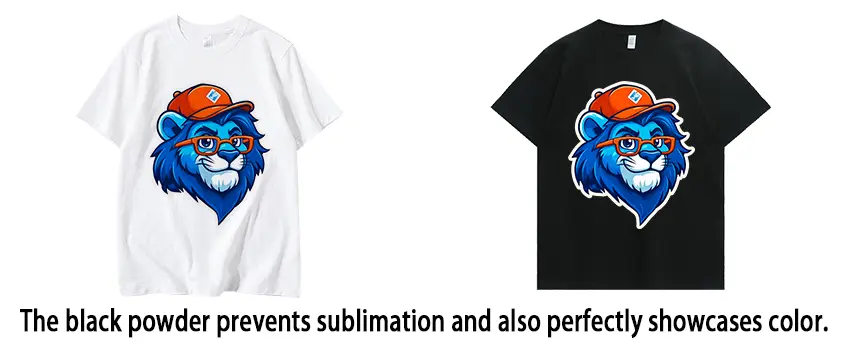
Application Guide – When to Choose White vs Black Powder
Choosing the right DTF hot melt powder is key to getting the best print results and durability. Here’s a quick guide to help you pick white or black powder based on your application:
| Garment Type | Recommended Powder | Why? |
|---|---|---|
| Light-colored shirts | White powder | Maintains brightness & detail; softer hand feel |
| Black and dark garments | Black powder | Higher opacity; better color pop on dark fabrics |
| Mixed color runs | Use white mainly; spot black if needed | Cost saving; flexibility in production |
| High-stretch sportswear | White powder preferred | Softer and more elastic with stretch fabrics |
| Baby clothing | White powder | Ultra-soft feel and safe for sensitive skin |
| Outdoor/workwear | Black powder | Superior durability & resistance to sweat, UV |
Key Tips
- For black or very dark garments, always go with black powder to avoid print dullness and loss of opacity.
- White powder shines with pastel or light colors and detailed designs.
- If you print mixed batches, consider mixing white and black powders or stock both to balance cost and quality.
- For athleisure and high-stretch apparel, white powder offers a softer, more flexible finish.
- Baby and kidswear benefit from white powder’s softness and gentle adhesion.
- Outdoor and workwear demand the toughness and longevity found with black powder.
Want more insights on choosing the right powder for your DTF setup? Check out this detailed guide on choosing the right DTF printer—it also covers powder compatibility and workflow tips to boost your prints.
Compatibility with Different DTF Inks and Films
Choosing the right DTF hot melt powder depends heavily on the type of ink and film you use. Here\’s a quick guide to compatibility with popular setups:
| Aspect | Details |
|---|---|
| Epson Printheads | Works well with i3200, XP600, XP15000, and similar Epson models. These printheads handle CMYK + White inks smoothly, ensuring sharp prints that match well with TPU hot melt powders. |
| Ink Systems | White DTF powder pairs best with CMYK + White ink setups to boost opacity and color vibrancy, especially on light garments. Black powder complements CMYK + White too but shines on dark fabrics for better contrast. |
| DTF Films | Both white and black powders adhere nicely to matte and gloss DTF films. Matte films tend to hide powder texture better, while gloss films boost color saturation. Your choice depends on the desired finish. |
Using the right DTF transfer film along with quality hot melt powder significantly improves adhesion and print durability. Ensuring your powder matches your ink and film choice helps avoid issues like cracking or poor wash fastness.
For specific powder options offering excellent ink compatibility, check out the jinlong TPU DTF hot melt adhesive powder series.
Washing and Durability Test Results (2025 Data)
Recent 50-wash tests in 2025 reveal clear differences between white and black DTF hot melt powders in terms of durability. Both powders showed excellent resistance to cracking and peeling after repeated wash cycles, proving their strong adhesion to fabrics like cotton and polyester.
- White powder maintained great print vibrancy and softness over multiple washes, especially on light-colored garments. Minimal fading and no peeling were observed after 50 cycles, making it ideal for everyday wear and pastel designs.
- Black powder demonstrated superior durability on dark fabrics, holding up well against heavy wear and repeated laundering. The powder’s higher opacity and strong TPU bonding helped prevent cracking and color loss even after extended use.
Both types showed strong resilience to sweat and UV exposure, confirming their suitability for activewear and outdoor clothing. These results reflect the improved TPU hot melt powder properties available today, combining long-lasting adhesion with flexibility to handle garment stretch and movement.
For best wash fastness, it’s important to follow recommended curing temperatures and times closely during production, such as those advised for jinlong DTF powder series. Proper curing ensures the adhesive fully bonds to the fabric for maximum durability, preventing early degradation after washing.
Price Comparison and Cost-Effective Tips
When comparing white DTF powder vs black powder, price is an important factor for many print shops. Generally, black hot melt powder costs slightly more due to the added pigment and enhanced opacity needed for dark garments. Here’s a quick market overview:
| Powder Type | Average Price per kg (USD) | Notes |
|---|---|---|
| White DTF Powder | $15 – $20 | More widely used; lower pigment cost |
| Black DTF Powder | $18 – $24 | Contains black pigment for opacity |
Tips to Reduce Powder Use Without Losing Quality
- Apply evenly: Use a fine mesh shaker to avoid clumps and reduce powder waste.
- Shake off excess: Gently tap off loose powder before curing to prevent over-application.
- Control curing temperature: Proper curing reduces powder residue and improves adhesion.
- Optimize printing designs: Less ink coverage means using less powder overall.
- Use high-quality powder: Reliable powders like the jinlong DTF hot melt adhesive powders provide strong bonding even at lower application rates.
By paying attention to these factors, you can keep costs down without sacrificing print durability or hand feel.
Common Myths About Black DTF Powder
There are a couple of persistent myths around black DTF hot melt powder that can trip up those new to DTF printing.
“Black powder always feels stiff” – debunked:
Many assume black powder results in a rougher or stiffer hand feel compared to white powder. In reality, modern black DTF powders—especially TPU-based formulas—offer softness and flexibility very close to white powders. The difference is minimal and often exaggerated. Quality black powders like jinlong’s series are engineered to maintain stretch and comfort on garments, debunking the stiff feel myth.
“You can always use white powder on black shirts” – why it fails:
Using white powder on black or dark garments doesn’t work well despite its popularity. White powder lacks the opacity needed to make colors pop on dark fabrics. Prints often appear dull or faded, and white powder can cause color bleeding or not fully bond with dark textiles. Black DTF powder is formulated for these challenges, providing higher opacity and better adhesion on dark shirts, ensuring vibrant and durable prints.
Understanding these myths helps you pick the right powder for your DTF projects and avoid print quality issues. For more on curing and using powder properly, check out our detailed guide on how to cure DTF powder with a heat press.
jinlong DTF Hot Melt Powder Series Recommendation
For those looking for reliable hot melt adhesive powders, the jinlong DTF Hot Melt Powder series stands out in the U.S. market for quality and consistency. The jinlong DTF White Powder is ultra-fine and super soft, making it ideal for detailed prints on light-colored garments where a smooth hand feel is essential. On the other hand, the jinlong DTF Black Powder is specially formulated for maximum opacity and superior color pop on dark and black fabrics, ensuring your designs stand out with vibrant colors and sharp contrast.
Both powders come in various particle sizes to fit different printer settings and application needs, optimizing coverage and adhesion without excess waste. Importantly, these powders are certified by OEKO-TEX, guaranteeing they meet strict environmental and skin safety standards—perfect for apparel makers focused on safe, wearable products.
For complete performance, pair these powders with compatible TPU films and proven Epson printheads like the i3200 or XP600 models. You can explore the full range and technical details on reliable sources such as the jinlong TPU DTF hot melt adhesive powder 500g Basic Series, where detailed specs and certifications are listed.
Pro Tips for Perfect Powder Application
Getting the best results with DTF hot melt powder means applying it just right and curing properly. Here are some straightforward tips to help you nail the process every time:
Shaking Technique: Gently but thoroughly shake the powder onto your printed film to achieve even coverage. Avoid dumping too much powder at once — a light, uniform layer sticks better and reduces waste.
Excess Powder Removal: After shaking, tap or blow off any loose powder that’s not sticking. Excess powder can cause rough textures or spotting after curing, so clean off anything that doesn\’t properly adhere.
Curing Temperature and Time: Follow your powder’s melting point range precisely. Most TPU-based hot melt powders cure best around 140-160°C (284-320°F) for 15-25 seconds. Use a heat press with consistent temperature and pressure to ensure strong adhesion without scorching the film or garment.
Storage and Shelf-Life: Keep your powder sealed in a dry, cool place away from moisture and direct sunlight. Exposure to humidity can cause clumps and reduce performance. Proper storage extends shelf life and ensures the powder flows smoothly during application.
Mastering these basics will boost powder adhesion, print durability, and overall garment feel, giving you professional-quality DTF prints every time.
For more details, check out the TPU powder DTF fundamentals to optimize your curing process.


 English
  Español
  Deutsch
  Français