


DTF vs DTG Printing Comparison for Apparel Business Profits 2026
Choosing between DTF or DTG for your apparel printing business in 2026 isn’t just about technology—it’s about what drives your profitability, efficiency, and growth. Whether you’re running a small shop, scaling up a print-on-demand brand, or expanding product variety, understanding the real-world trade-offs between Direct-to-Film and Direct-to-Garment is crucial. This guide cuts through the noise with a no-nonsense, head-to-head comparison focused on costs, print quality, fabric versatility, and production speed. If you want to know which printing method truly delivers value for your business—and why DTF is gaining momentum in 2026—you’ve come to the right place. Let’s get right into the essentials for making a smart investment.
What Is DTG Printing? How It Works
Direct-to-Garment (DTG) printing is a popular apparel printing method that involves inkjet technology to apply designs directly onto pretreated garments. The core process starts with preparing the fabric—usually a cotton or cotton-blend shirt—by applying a pretreatment solution that ensures optimal ink adhesion and vibrant color reproduction. Once pretreated, the garment is loaded into a DTG printer where specialized water-based inks are precisely sprayed onto the fabric, producing detailed, full-color images with smooth gradients.
The key equipment for DTG printing includes the DTG printer itself, pretreatment machines or spray systems, and curing tools such as heat presses or conveyor dryers to fix the ink. High-quality pretreatment chemicals and maintenance supplies are also critical to maintain consistent results and reduce downtime.
DTG works best on 100% cotton or high-cotton blend fabrics and excels in applications that demand intricate, photo-realistic prints. Common uses include premium t-shirts, high-end streetwear, and custom apparel where softness and print detail are top priorities. Because of its direct application method, DTG is ideal for small runs, personalized designs, and detailed artworks that require sharpness and vibrant colors.
What Is DTF Printing? How It Works
DTF printing, or Direct to Film, is a process where designs are first printed onto a special PET film instead of directly onto the garment. After printing, an adhesive powder is applied to the wet ink on the film. This powder is then cured to form a strong bond. Finally, the design is transferred to the apparel using a heat press.
The typical DTF workflow involves these main steps: printing onto high-quality PET film, evenly applying TPU adhesive powder, curing the powder in a hot air tunnel or oven, and heat-pressing the transfer onto the fabric. This setup allows quick, versatile production — especially great for multi-fabric and multi-color printing.
One of DTF’s biggest advantages is its compatibility with various materials including cotton, polyester, blends, and even dark fabrics. This makes it a go-to for businesses needing flexibility across diverse apparel products.
Jinlong DTF stands out by offering reliable transfer films, vibrant inks, and premium adhesive powders designed for consistent prints with excellent durability. You can check out their DTF transfer film options and high-quality DTF inks that ensure your prints look sharp and last wash after wash. Plus, their specially formulated powders help achieve a soft hand feel with every transfer, reducing common issues seen in standard DTF setups. For example, their TPU powder for soft-hand feel minimizes the stiff texture often associated with adhesive layers.
In short, DTF printing offers a streamlined, cost-effective way to handle complex, colorful designs on a wide range of fabrics, making it ideal for apparel businesses looking for versatility and efficiency.
Head-to-Head Comparison: Key Factors for Apparel Businesses
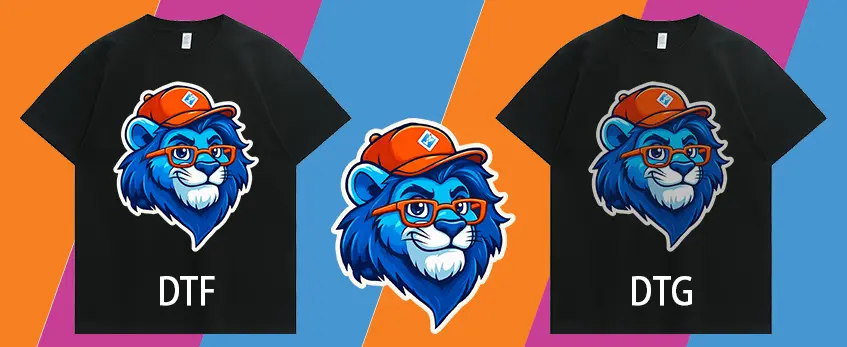
When deciding is DTF or DTG better for your apparel printing business, here’s a clear breakdown of how these two popular methods stack up on the most important factors:
| Factor | DTG (Direct to Garment) | DTF (Direct to Film) |
|---|---|---|
| Print Quality & Detail | Excellent for high-detail, photo-quality prints | Vibrant colors, sharp lines; slightly less fine detail |
| Durability & Washability | Good with proper pretreatment, but slight fading over time | Very durable, holds up well on dark & polyester fabrics |
| Hand Feel & Comfort | Soft, almost like the ink is part of the fabric | Slight texture due to adhesive powder but improving with quality powders like jinlong DTF powder |
| Fabric Compatibility | Best on 100% cotton; struggles on polyester & blends | Works great on cotton, polyester, blends, and dark garments |
| Production Speed | Slower due to pretreatment and drying steps | Faster with batch film transfers, ideal for bulk runs |
| Cost Breakdown | Higher initial investment; moderate per-print cost; pretreatment adds cost/waste | Lower startup cost; efficient per-print cost; less waste; see bulk order transfer options |
| Scalability | Better suited for small runs, custom jobs | Easily scales from small runs to high-volume orders |
| Ease of Use & Learning | Steeper learning curve, especially with pretreatment | Easier to learn; fewer variables impact final print |
| Maintenance & Downtime | Risk of ink clogging, pretreatment errors | Lower maintenance risk; consistent results with quality films and inks like jinlong DTF ink |
| Environmental Considerations | Pretreatment chemicals require careful handling | Less chemical waste; powder needs proper curing |
In short, DTG is favored for premium, soft-hand photo prints on cotton, where quality detail matters most. DTF shines in versatility, speed, durability, and cost-effectiveness — especially for mixed fabrics, dark garments, and larger batch jobs.
This comparison will help you weigh options to match your business needs, fabric types, order volumes, and budget.
Pros and Cons of DTG Printing
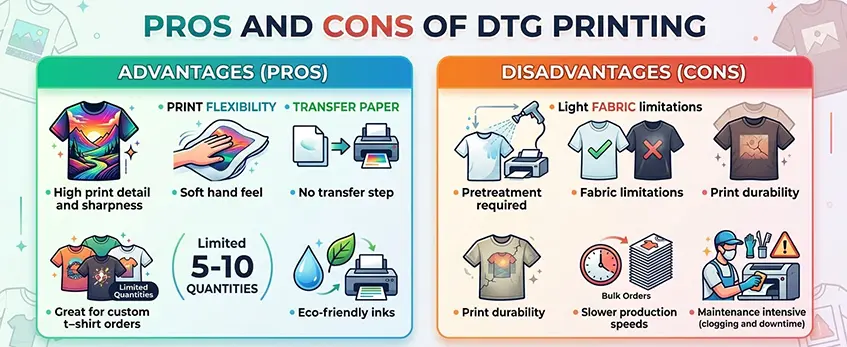
Direct to Garment (DTG) printing offers a premium feel that appeals to high-end streetwear and custom apparel businesses focused on quality. It delivers vibrant, detailed prints directly onto 100% cotton fabrics, making it ideal for photo-quality images and intricate designs. However, the process has some real-business implications worth considering:
Pros:
- High print detail and sharpness: Perfect for complex, colorful artwork and gradients.
- Soft hand feel: Prints feel like part of the fabric, excellent for premium clothing.
- No transfer step: Direct printing speeds up handling after pretreatment.
- Great for small runs: Low setup time makes it cost-effective for limited quantities.
- Eco-friendly inks: Water-based DTG inks are generally more environmentally friendly.
Cons:
- Pretreatment required: Garments must be pretreated before printing, adding time, cost, and a potential bottleneck in production.
- Fabric limitations: Works best on light-colored cotton; struggles with dark or synthetic fabrics.
- Print durability: While good, DTG prints can fade faster than some alternatives, especially on lower-quality garments.
- Slower production speeds: Compared to other methods, DTG can be slower for bulk orders.
- Maintenance intensive: Frequent cleaning required to avoid clogging and ink waste, increasing downtime and costs.
Understanding these pros and cons helps apparel businesses decide if DTG printing matches their product goals, especially for those targeting a high-quality, soft-hand feel on cotton garments. For a closer look at some of the common maintenance issues and pretreatment insights, check out best practices on avoiding DTG pitfalls specific to your workflow.
Pros and Cons of DTF Printing
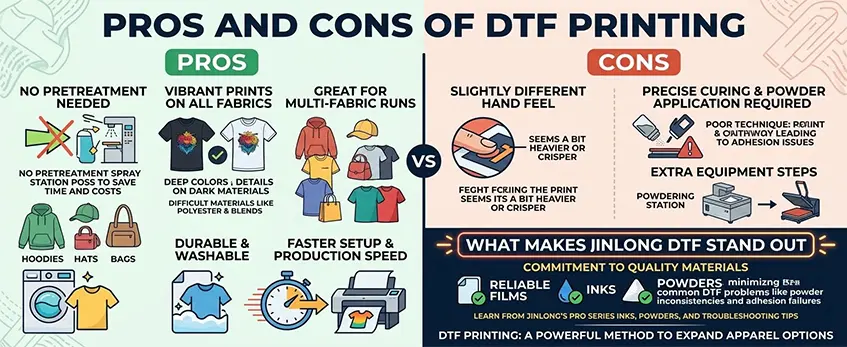
DTF printing offers some real advantages for apparel businesses, especially when you need versatility and efficiency. Here’s a quick rundown:
Pros:
- No pretreatment needed, which saves time and cuts prep costs.
- Vibrant prints on dark and light fabrics alike, including difficult materials like polyester and blends.
- Great for multi-fabric and multi-color runs, making it perfect for diverse product lines like hoodies, hats, and bags.
- Durable prints that wash well when cured properly, keeping designs looking fresh longer.
- Faster setup and production speed compared to DTG in many cases.
Cons:
- Slightly different hand feel and texture, sometimes a bit heavier or crisper than DTG’s soft print.
- Requires precise curing and powder application—poor technique can lead to adhesion issues.
- Can involve extra equipment steps for powder and heat pressing.
What really makes jinlong DTF stand out is their commitment to quality materials. Their reliable films, inks, and powders minimize common DTF problems like powder inconsistencies and adhesion failures. This means smoother production, fewer rejects, and consistent results every time. If you want to avoid typical rookie mistakes and get the best from your DTF setup, checking out jinlong’s pro series inks and powders and learning from their common troubleshooting tips is a smart move.
DTF printing is a powerful method to expand your apparel printing options—especially if your business demands efficiency, fabric variety, and vibrant colors across your lineup.
When to Choose DTG Over DTF (and Vice Versa)
Deciding which printing method fits your apparel business depends on the type of products, fabric, and order volume you\’re working with. Here\’s a quick guide to help:
| Factor | Best for DTG | Best for DTF |
|---|---|---|
| Print Detail | High-detail photo prints | Bold, vibrant multi-color designs |
| Fabric Type | 100% cotton | Mixed fabrics including polyester & blends |
| Garment Colors | Light-colored garments | Dark and light garments equally well |
| Feel and Softness | Soft-hand premium feel | Slight texture trade-off but durable |
| Order Size | Small runs and custom orders | Higher volumes and bulk orders |
| Product Range | T-shirts, premium streetwear | Hoodies, hats, bags, and diverse apparel types |
| Turnaround Speed | Moderate production speed | Faster throughput especially for multi-color |
Hybrid Approach Tips for Growing Businesses
Many growing shops benefit from blending both methods:
- Use DTG for premium, photo-realistic prints on 100% cotton, soft-feel merchandise.
- Switch to DTF for faster jobs involving mixed fabrics, dark colors, or bulk orders.
- Leveraging DTF transfers can reduce wear on your DTG printer and expand product options. For a smooth workflow with quality films and powders, check out jinlong DTF’s reliable supplies.
By understanding the strengths of DTG vs DTF printing, you can optimize costs and quality to match your customers’ needs while scaling smartly.
Cost and Profitability Analysis for 2026
When weighing DTF vs DTG printing cost-wise, it\’s important to break down realistic per-shirt expenses based on volume. For low-volume runs (under 50 shirts), DTG’s minimal setup and direct printing on cotton often keep costs manageable despite the pretreatment. Medium volumes (100–500) start to highlight DTF’s advantages, thanks to faster production speeds and no need for garment pretreatment. At high volumes (1,000+), DTF typically lowers per-print costs due to efficient transfer application and bulk material savings.
ROI timelines for DTG can be longer because of higher maintenance and consumable expenses like pretreatment liquid and frequent printhead care. In contrast, DTF often achieves faster break-even points in mid-to-large operations since the initial investment in film, adhesive powder, and inks (like those from reliable suppliers such as jinlong DTF) enables more consistent output and less downtime.
Overall, for businesses scaling up in 2026, DTF often edges out DTG in profitability by balancing lower ongoing costs with greater throughput—especially for mixed fabrics and bulk orders. This makes DTF the smarter investment for many apparel businesses targeting efficient, high-volume production without sacrificing print quality or durability.
For guidance on setting up cost-effective, bulk production workflows, consider exploring jinlong’s DTF rolls for bulk orders with speed and waste reduction.
Common Mistakes and How to Avoid Them
Both DTG and DTF printing come with challenges that can trip up apparel businesses if overlooked. Here’s what to watch out for and how to sidestep these issues.
DTG Pitfalls: Clogging and Pretreatment Errors
- Inkhead clogging: DTG printers are notorious for nozzle clogs, especially if idle for too long. Regular cleaning cycles and quality inks help prevent this.
- Pretreatment mistakes: Uneven or excessive pretreatment can cause print defects or stiffness. Use precise application methods and always let garments dry thoroughly before printing.
DTF Pitfalls: Poor Curing and Adhesion Failures
- Incomplete curing: If the adhesive powder or film isn’t properly cured, prints can peel or fade quickly. Control heat press time and temperature accurately to avoid this.
- Adhesion issues: Low-quality powders or incompatible fabrics can lead to poor transfer adhesion. Choosing reliable materials, like jinlong DTF’s specifically formulated powders and films, ensures consistent bonding and longevity.
Tips for Success with jinlong DTF Solutions
- Use jinlong’s high-grade DTF transfer films (60cm double pro series) and TPU adhesive powders for top-notch print durability and feel.
- Maintain proper curing with consistent heat press settings tailored to your substrate.
- Regularly clean your printers and manage powder application to avoid build-up and clumping.
Avoiding these common mistakes boosts your production speed, print quality, and ultimately your profitability in apparel printing with both DTG and DTF methods.


 English
  Español
  Deutsch
  Français