


Cheap DTF Printer vs Premium Models Compare Print Quality and Costs
Understanding DTF Printer Price Tiers in 2026
When diving into the world of DTF printers in 2026, it\’s crucial to know how price tiers break down—especially if you\’re weighing a budget DTF printer against premium options. Here’s a quick overview:
Entry-Level / Budget ($500–$3,000)
- Mostly basic imports or desktop models converted for DTF printing
- Ideal for beginners or hobbyists testing the waters
- Limited durability and slower speeds
- Minimal tech support and fewer features
- Often known as the imprimante DTF bon marché segment
Mid-Range ($3,000–$8,000)
- Balanced components combining decent build quality with reliable performance
- Better support and warranty options
- Suitable for small businesses aiming for consistent output
- Offers improved print specs and somewhat efficient ink use
Premium / Professional ($8,000–$20,000+)
- Industrial-grade build designed for heavy daily use
- Advanced print heads, superior ink systems, and automation like auto-cleaning
- High resolution, faster print speeds, and exceptional color and white ink consistency
- Top-tier brand reputation, extensive support, and longer durability
- Represents the best value for businesses scaling operations
Why the Price Gap?
The reasons behind these price differences boil down to a few key factors:
- Components: Premium models use higher-grade print heads, pumps, and powder systems for reliability.
- Build Quality: Sturdier frames and materials mean less downtime and longer machine life.
- Marque : Trusted brands command higher prices due to proven support and service.
- Print Specs: Resolution, speed, and ink consistency vary significantly across tiers.
Understanding these basics will help you figure out whether a cheap vs expensive DTF printer matches your current and future needs without getting surprised by hidden costs or performance issues.
Key Differences: Cheap DTF Printers vs. Premium Models Head-to-Head
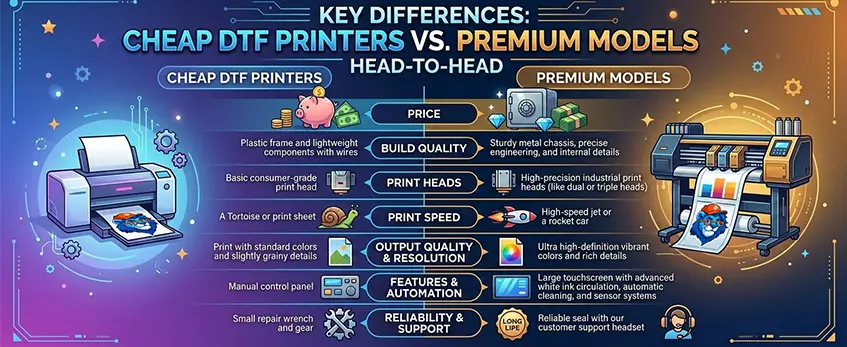
When comparing cheap DTF printers to premium models, several factors stand out. Here’s a quick breakdown of the main differences you’ll notice between budget DTF printers and high-end options in terms of print quality, build, speed, and overall value.
| Fonctionnalité | Cheap DTF Printers | Premium DTF Printers |
|---|---|---|
| Qualité et régularité de l'impression | Lower resolution, inconsistent colors, and weaker white ink coverage | High-resolution printing with vibrant colors and reliable white ink layers |
| Build Quality & Durability | Basic print heads, cheaper ink systems, and manual powder integration prone to errors | Industrial-grade print heads, advanced ink circulation, and well-integrated powder shaking systems like those referenced in Jinlong DTF powder shaker upgrades |
| Speed & Production Capacity | Slower print times and limited daily output | Faster printing speeds, suited for high-volume production without quality loss |
| Maintenance & Reliability | Frequent clogs, more downtime, minimal auto-cleaning features | Automated cleaning cycles, fewer clogs, and higher uptime |
| Ink & Consumable Efficiency | More ink and powder waste, higher cost per print | Efficient ink use, reducing waste and lowering long-term costs |
| Assistance et garantie | Limited or no local service, shorter warranties | Strong customer support, training options, and extended warranties |
User Pain Points vs. Premium Benefits
- Cheap DTF printers often cause frustration with frequent maintenance and inconsistent results.
- Premium models save time and give peace of mind thanks to reliable performance and solid support.
- For a smart balance, some choose mid-range or brands like Imprimantes Jinlong DTF that offer consistent ink flow and build quality without extreme prices.
Understanding these differences helps when deciding between a budget DTF printer or investing in a premium setup, ensuring your business or project runs smoothly.
The Hidden Costs of Going Cheap
Buying a cheap DTF printer might look like a great deal upfront, but the hidden costs can quickly add up. Frequent part replacements—like print heads, dampers, and tubes—are common with entry-level models and can drain your budget fast. On top of that, wasted ink, film, and powder from failed prints not only hike your expenses but also slow down your workflow.
Downtime is another huge problem. When your printer stalls or needs repairs, orders pile up, and customer satisfaction takes a hit. Plus, inexpensive models often come with a steeper learning curve, causing delays and frustrations as you figure out how to get consistent results.
Don’t forget, cheap printers usually have poor resale value and depreciate quickly, meaning you won’t recover much if you want to upgrade. In fact, a $1,500 DTF printer can easily cost between $4,000 and $6,000 in total expenses during the first year once you factor in repairs, supplies, and lost time.
If you want to keep your overall costs down and avoid these pitfalls, it’s worth considering affordable DTF printing setups that balance price with reliability for steady performance.
When a Cheap DTF Printer Actually Makes Sense
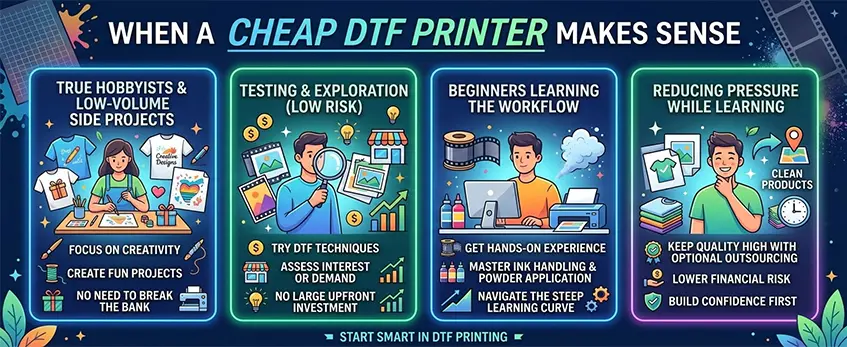
A cheap DTF printer can be a smart choice in certain situations. True hobbyists or those with very low-volume side projects often find budget DTF printer models fit their needs without breaking the bank. If you\’re just testing DTF printing and don’t want to make a large investment upfront, an entry-level setup lets you explore the process without major risk.
Beginners learning the printing workflow will appreciate starting with affordable equipment to get hands-on experience. Since the learning curve can be steep, a cheaper printer reduces pressure while figuring out print techniques, especially for white ink handling and powder application. For many, outsourcing most of the actual printing during this phase is a practical way to keep quality high without a big commitment.
Starting small to validate market demand also makes sense with a low-cost DTF printer. This approach allows you to test customer interest and order volume before deciding if it’s worth upgrading to a more reliable mid-range or premium model. For detailed best practices on working with white ink, you can explore the DTF printing with white ink guide, which helps new users avoid common pitfalls during their initial runs.
In these cases, a cheap DTF printer meets the needs of hobbyists and learners, offering an affordable entry point into DTF printing without overspending.
When Premium or Mid-Range Models Deliver Better Value
For small-to-medium businesses handling 50+ orders a week, investing in a premium or mid-range DTF printer often makes more sense than going cheap. These machines deliver consistent, professional transfers that help maintain your brand’s reputation and keep customers coming back. Reliability is key when scaling—downtime with entry-level models can lead to lost orders and unhappy clients.
Mid-range and premium printers also offer better ink and consumable efficiency, which lowers your cost per print over time. This translates to improved long-term profitability despite the higher upfront price. Many businesses find they break even faster because these models reduce waste, maintenance, and reprints.
A solid return on investment (ROI) comes from faster print speeds, dependable quality, and reduced downtime, helping you meet growing demand while protecting your margins. For those serious about scaling, choosing a printer that supports steady growth is crucial to sustainable success.
For insights on optimal printing equipment for small businesses, check out our guide on the best DTF printer for clothes for small businesses and startups.
jinlong DTF: A Smart Middle-Ground Option
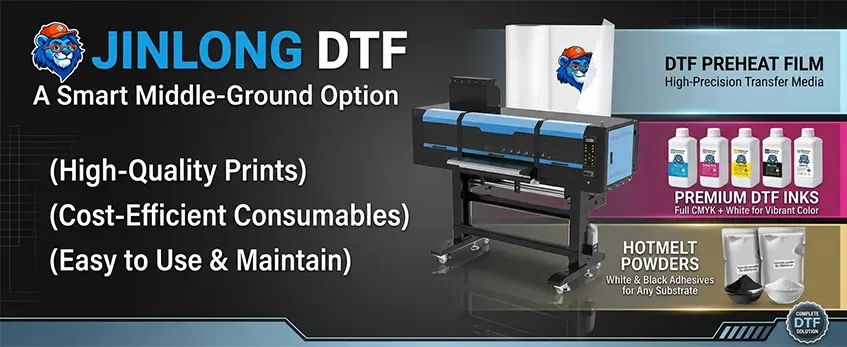
If you’re looking for reliable performance without the steep price tag of premium models, the jinlong DTF printer is a solid choice. It offers consistent ink flow and a durable build designed for daily use, striking a great balance between quality and affordability.
Compared to ultra-cheap imports that often struggle with reliability and overpriced brands that push costs beyond practicality, jinlong delivers good support and cost-efficiency. This makes it an ideal option for businesses wanting affordable DTF printing setup with dependable output and manageable maintenance.
For those interested, jinlong also offers a full DTF printer setup with powder shaker and accessories plus professional DTF white ink, which enhances print quality and consistency in everyday production.
How to Decide: A Practical Checklist
Choosing the right DTF printer starts with a few key questions:
Estimate your expected monthly print volume. Knowing whether you’ll be doing 10, 50, or 200+ transfers a month helps narrow down your options between budget DTF printers and premium models.
Budget total first-year costs, not just the printer price. Don’t forget ink, powder, films, maintenance, and potential part replacements. A cheap DTF printer might cost less upfront but rack up expenses later.
Assess your technical comfort and skill level. Entry-level machines can be great for beginners, but if you want fast, reliable output without constant troubleshooting, mid-range or premium options make sense.
Check local support availability. Having easy access to repairs and parts saves downtime and frustration, especially in the US market where quick service can make a big difference.
Plan for growth over 12–24 months. Start with a printer that fits your current needs, but have a plan to upgrade once you pass about 50 orders per week. This volume is often the tipping point where a premium or reliable mid-range DTF printer pays off.
Recommendation: If you’re printing under 30–40 transfers monthly, a budget DTF printer or an entry-level model (like those discussed in choosing the right DTF kit) can work well to keep costs low initially. When scaling beyond that, upgrading prevents hidden costs from eating into your profits.
This approach balances cost, performance, and growth, helping you avoid common pitfalls in cheap vs expensive DTF printer choices.


 English
  Español
  Deutsch
  Français