


What Is DTF Printer Ink and How Does It Work Complete Guide
If you’re new to custom apparel printing, you’ve probably heard about DTF printer ink shaking up the industry—and for good reason. This specialized direct to film ink offers vibrant, durable prints on a wide range of fabrics without the hassles of pretreatment or complex setups. Whether you’re a small business owner, hobbyist, or print-on-demand entrepreneur, understanding what DTF printer ink is and how it works is essential before investing in equipment or supplies. In this guide, we’ll break down the science behind DTF ink composition, walk you through the entire DTF process step by step, and highlight why inks like jinlong DTF are becoming a go-to for quality and reliability in 2026. Ready to discover why DTF printing could be the game-changer you’ve been looking for? Let’s get started.
What Exactly Is DTF Printer Ink?
DTF printer ink is a specialized water-based pigment ink designed specifically for Impresión directa en película (DTF). Unlike ordinary inks, it’s engineered to deliver vibrant colors and strong adhesion on a wide range of fabrics through a unique transfer process.
Key Components of DTF Ink
| Componente | Propósito |
|---|---|
| Pigmentos | Provide brilliant, long-lasting color |
| Water base | Eco-friendly, less toxic, quick drying |
| Carpetas | Help ink stick firmly to PET film and fabric |
| Aditivos | Enhance adhesion, durability, and flexibility |
CMYK + White Ink System
DTF ink uses the standard CMYK colors (cyan, magenta, yellow, black) plus a crucial capa de tinta blanca. This white layer acts as a base o undercoat on dark or colored fabrics, giving colors vivid opacity and preventing dull or faded prints. Without white ink, colors printed on dark materials would lose brilliance and clarity.
How DTF Ink Differs from Other Inks
| Tipo de tinta | Aplicación | Diferencia clave |
|---|---|---|
| Regular Inkjet Ink | Paper printing | Not durable on fabrics, lacks pigment strength |
| Tinta DTG | Direct-to-Garment | Requires fabric pre-treatment, often water-based pigment |
| Tinta de sublimación | Sólo tejidos de poliéster | Dye-based, limited to synthetic fabrics, no white layer |
DTF printing ink stands out because it’s formulated for direct transfer onto PET film, then heat-pressed onto fabric, combining the color brightness of pigment inks with the versatility to print on almost any material.
By offering eco-friendly water-based pigment ink and a reliable white overlay, DTF ink enables vibrant, durable prints on cotton, polyester, blends, and more – giving it an edge over traditional inks used in DTG or sublimation printing.
How Does DTF Printer Ink Work? The Complete Process Explained
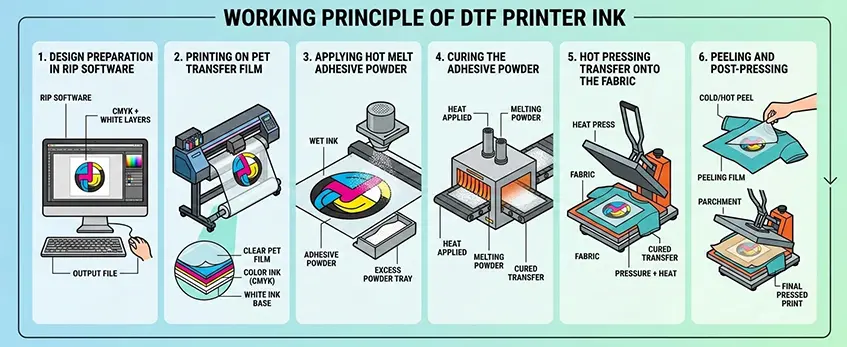
DTF printer ink is a key part of a multi-step printing process that delivers vibrant, durable prints on a variety of fabrics. Here’s how it works step-by-step:
Step 1: Design Preparation in RIP Software
First, you prepare your design using RIP software, which manages color profiles and ensures the correct color output. This software also creates a white underbase layer—a crucial step that helps colors pop, especially on dark fabrics. Proper color management here prevents dull prints and keeps the final image sharp.
Step 2: Printing Onto PET Transfer Film
Using a DTF printer, the design is printed directly onto a PET film. The printing process typically starts with the CMYK color inks applied first, followed by a layer of white ink on top or beneath—depending on your design requirements—ensuring excellent opacity and vivid color contrast. This layering of color and white inks is essential in DTF printing for vibrant and high-opacity images.
Paso 3: Aplicación del polvo adhesivo termofusible
While the printed PET film is still wet with ink, hot-melt adhesive powder is evenly sprinkled over the white ink layer. This powder is specially formulated to bond the ink to the fabric during heat pressing.
Paso 4: Curar el polvo adhesivo
Next, the film with adhesive powder goes into an oven or shaker dryer to cure the powder. This step melts and bonds the powder to the ink, creating a tacky surface that will stick firmly to your garment during transfer.
Step 5: Heat Pressing the Transfer Onto Fabric
Now, the prepared film is heat pressed onto the fabric. Ideal conditions vary, but typically involve temperatures around 320°F (160°C), pressure applied evenly, and a pressing time of 15-20 seconds. This fuses the design and adhesive powder with the garment’s fibers.
Step 6: Peeling and Post-Pressing
After heat pressing, peel the PET film off while still warm or cold, based on ink specifications. Then, a quick post-press applies final heat to enhance durability and wash resistance of the print.
Simple Flow Diagram Description
- Diseño en software RIP → 2. Print on PET transfer film (color + white ink) → 3. Apply hot-melt powder → 4. Cure powder in oven/dryer → 5. Heat press onto fabric → 6. Peel and post-press
This systematic process ensures vibrant, durable prints with high wash fastness and excellent color accuracy, making DTF printing a versatile choice for various textile applications.
For a closer look at how white ink improves print vibrancy and durability in the DTF process, check out this detailed guide on cómo la tinta blanca mejora la cobertura de impresión y la intensidad del color.
Why Choose DTF Ink? Key Benefits and Advantages
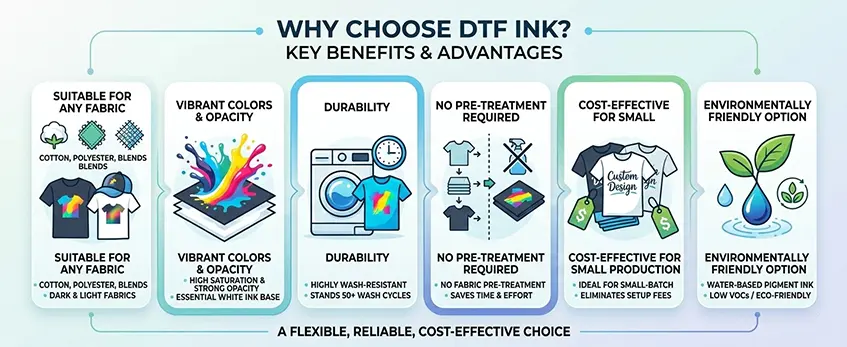
DTF printer ink stands out for its versatilidad and performance, making it a smart choice for many printing needs. Here’s why:
| Beneficio clave | Explicación |
|---|---|
| Funciona en cualquier tejido | Whether it’s cotton, polyester, blends, or even non-textile materials, DTF inks deliver consistent results on dark and light fabrics alike. |
| Vibrant Colors & Opacity | Thanks to the essential white ink base, colors pop with high saturation and opacity, resulting in sharp, eye-catching prints every time. |
| Durabilidad | Prints withstand washing like champs—expect over 50 wash cycles without fading when using quality DTF inks. |
| No Pre-Treatment Needed | Unlike DTG, DTF printing skips fabric pre-treatment, saving time and effort while expanding fabric compatibility. |
| Cost-Effective for Small Runs | Perfect for short runs or custom, full-color designs with no setup fees or complex preparation. |
| Eco-Friendly Options | Modern DTF inks are often water-based and low in VOCs, making them a greener alternative for conscious businesses. |
DTF ink’s water-based pigment formulation means you get vibrant, durable prints without harmful solvents, aligning well with today’s eco-conscious markets. Also, choosing the right PET film, like the Película de transferencia DTF specially designed for this process, enhances print quality and ease of use.
All these factors combined make DTF printing ink a flexible, reliable, and cost-effective choice for U.S. businesses looking to deliver high-quality, eco-friendlier custom prints.
Common Challenges with DTF Ink and How to Solve Them
Working with DTF printing ink comes with some common hurdles, but knowing how to handle them can keep your prints looking great and your equipment running smoothly.
White ink settling or clogging: White ink in DTF inks tends to settle quickly because of its heavy pigments. To prevent clogging, make sure you stir or circulate the ink regularly, especially if your printer has a white ink circulation system. Performing routine printhead cleaning and maintenance also helps keep ink flow consistent.
Problemas de adherencia de la tinta: Poor adhesion often comes down to mismatched or low-quality hot-melt powder and incorrect curing temperatures. Always use a powder designed to work with your specific ink and follow manufacturer guidelines for curing. Oven or shaker dryer settings should be checked carefully to ensure the powder properly melts and bonds to the ink.
Color accuracy problems: Getting vibrant durable DTF prints requires good RIP software calibration. Adjusting color profiles and managing the white underbase properly during print preparation helps avoid dull or off-tone colors.
Storage and shelf life tips: Keep your DTF ink sealed tightly in a cool, dry place away from direct sunlight. Avoid storing ink near heat sources to extend shelf life and prevent premature drying or thickening.
By addressing these common issues with proper care—circulation for white ink, matching powder and curing, RIP calibration, and smart storage—you’ll get the most out of your water-based pigment ink DTF printing setup.
Choosing the Right DTF Ink in 2026
When picking the best DTF printing ink in 2026, focus on these crucial factors:
- Pigment quality: High-quality pigments mean richer, more vibrant colors that stand out on any fabric.
- Flow consistency: Smooth ink flow helps avoid nozzle clogs and ensures sharp prints without interruptions.
- Solidez al lavado: Look for inks offering excellent durability—ideally 50+ wash cycles—so your designs stay vibrant longer.
- Printer compatibility: Most DTF setups are Epson-based, so choosing an ink made for these printers guarantees the best performance.
The trend is moving toward eco-certified, water-based pigment inks with low maintenance requirements. This means less downtime and a smaller environmental footprint, which is a big plus for many users in the US market.
For reliable results, consider tintas jinlong DTF, known for their superior color saturation and consistent white ink performance—the key for vibrant, high-opacity prints. They’re specially formulated to reduce clogging and work seamlessly with leading DTF printer setups. Their range includes eco-friendly options that keep your process smooth and your prints looking fresh. You can find top-quality products like the jinlong DTF ink CMYK Serie básica to get started with trusted supplies.
Choosing the right ink is not just about color—it’s about longevity, ease of use, and compatibility. That’s why staying with a reliable brand like jinlong helps you keep your DTF printing running efficiently year-round.
DTF Ink vs. Other Printing Methods: Quick Comparison
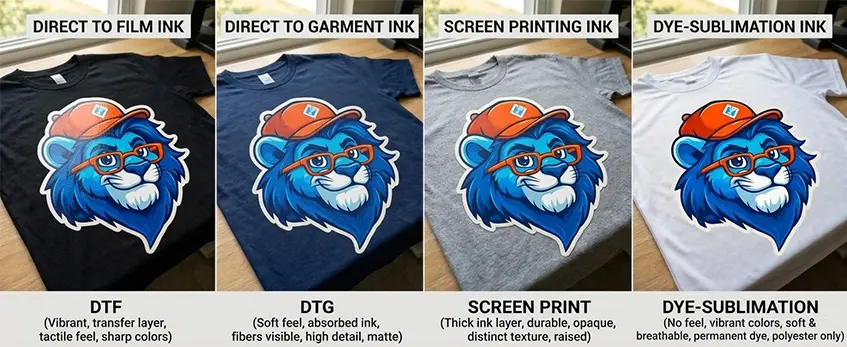
When deciding on the best printing method, it helps to see how DTF ink stacks up against other popular options like DTG, screen printing, and sublimation. Here’s a straightforward rundown with key points:
| Característica | Tinta DTF | Tinta DTG | Serigrafía | Tinta de sublimación |
|---|---|---|---|---|
| Pretratamiento necesario | Sin tratamiento previo | Requires pretreatment, especially for dark fabrics | None, but setup intensive | None, but only for polyester |
| Compatibilidad de tejidos | Works on cotton, polyester, blends, even some non-textiles | Mejor en algodón | La mayoría de los tejidos | Only polyester and poly blends |
| Print Colors | Full CMYK + white for vibrant, opaque colors | Full color, no white ink | Limited colors per setup | Full-color, but limited to polyester |
| Durabilidad | Strong wash resistance (50+ cycles with good ink) | Moderate, can fade faster | Muy resistente | Very durable, but fabric limited |
| Cost for Small Runs | Cost-effective—no setup fees | Can be costly due to pretreatment | High setup cost, not ideal for small runs | Moderate cost, fabric limited |
| Speed & Setup | Faster setup, print-on-demand | Slower due to preparation | Configuración lenta | Fast once ready, limited fabrics |
| Lo mejor para | Custom, full-color on varied fabrics including darks | White/light cotton garments | Bulk orders with few colors | Polyester sportswear, mugs, etc. |
Why Choose DTF Over Others?
- No necesita tratamiento previo unlike DTG, saving time and avoiding extra costs.
- Works great on dark and light fabrics, delivering vibrant colors with its essential white ink layer.
- Quick and cost-effective for custom or small batch prints, unlike screen printing which requires setup fees.
- Full-color printing on almost any fabric type, unlike sublimation limited to polyester.
For those interested in exploring DTF setups and finding the right supplies, reliable printers and ink like jinlong DTF inks make a big difference in performance and durability.
This comparison shows why DTF printing ink is becoming the go-to for versatile, vibrant, and durable prints across the US market.
Getting Started with DTF Ink: Practical Tips
If you’re new to DTF printer ink, getting the right gear and setup is key for smooth, vibrant prints. Here’s what you need to know to start strong:
Recommended Printer Models and Setups
Most users go for Epson-based printers modified for DTF printing since these support water-based pigment ink DTF well. Popular models include Epson EcoTank series and certain SureColor lines because they handle thick white ink reliably. Pair your printer with quality RIP software to manage color and white base with precision.
Essential Supplies
- Película de transferencia DTF: Opt for high-quality PET film designed for DTF transfers to ensure excellent ink absorption and release. Check out reliable options like the single pro series DTF transfer film para obtener resultados coherentes.
- Hot-melt Powder: This powder bonds the ink to fabric and requires proper curing. Make sure you use powder compatible with your ink to avoid adhesion issues.
- Prensa térmica: Vital for transferring your designs from film to fabric, your heat press should offer adjustable heat, pressure, and time settings for different materials.
Buenas prácticas de mantenimiento
Keep your printheads and nozzles clog-free and in top shape by:
- Regularly stirring or circulating the DTF white ink to prevent settling.
- Running cleaning cycles as recommended by your ink brand.
- Using fresh ink to avoid degradation or sediment build-up.
- Storing inks in a cool, dry place to extend shelf life and performance.
Sourcing Reliable Supplies
To keep your prints vibrant and consistent, rely on trusted suppliers like jinlong DTF. They offer top-tier DTF inks with excellent color saturation, smooth flow, and sturdy white ink formulations that minimize clogging. Coupled with their transfer films and powders, jinlong products help maintain steady production quality and reduce downtime.
By investing in quality equipment and following these practical tips, your DTF printing setup will deliver professional, durable results with ease.


 English
  Español
  Deutsch
  Français