


Por qué las impresoras de tinta DTF son el futuro de la tecnología de impresión de ropa
Decoding DTF Ink Printer Technology
Wondering how DTF ink printers deliver such vibrant, durable designs? It all starts with a smart, simple process that sets them apart in apparel customization technology.
The Process Flow: Step-by-Step
- Impresión en película PET: The design is first printed using specialized textile pigment ink onto a transparent PET transfer film. This film serves as the medium between the printer and fabric.
- Applying Hot Melt Powder: Right after printing, hot melt powder is evenly applied to the wet ink. This powder sticks firmly to the ink and plays a crucial role in adhesion.
- Curado: The film with powder moves through a curing station where heat melts the powder, bonding it to the ink and creating a flexible, durable layer ready for transfer.
The Role of Specialized DTF Ink
DTF ink is more than just color. Its unique chemical composition includes:
- Elasticidad: Ensures the print stretches with the fabric without cracking.
- Lavable: Provides excellent wash fastness rating to resist cracking and peeling, even after multiple washes.
- White Ink Layer: A separate white ink circulation system prints an opaque underbase, especially important for vibrant colors on dark fabrics.
Equipment Synergy: How It All Works Together
The magic happens through precise interaction:
- En Impresora de tinta DTF applies the textile pigment ink in CMYK+W colors.
- Polvo termofusible adheres to the freshly printed film, ready to bond.
- En Película de transferencia PET carries the freshly printed, powdered, and cured image for a clean heat press transfer onto fabric surfaces.
This synergy enables fast, pretreatment-free printing with consistent, high-quality results on various substrates.
By understanding this technology, it’s clear why DTF ink printers are leading the market — they combine innovation, efficiency, and versatility in one system.
Unmatched Versatility: Breaking Fabric Barriers
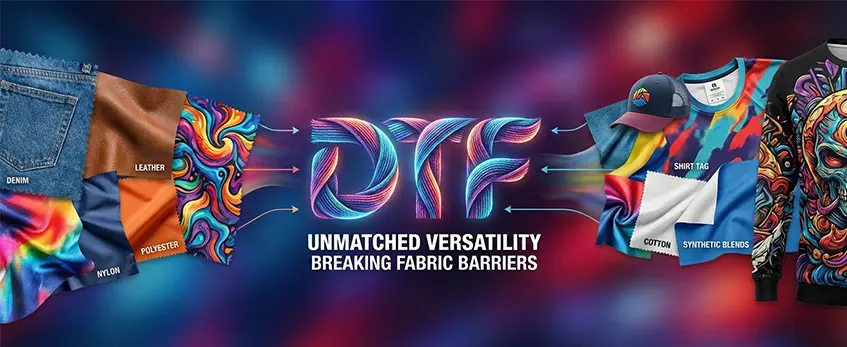
DTF ink printers shine when it comes to printing on a wide range of fabrics beyond just cotton. Whether it’s polyester, nylon, leather, blends, or synthetic fibers, DTF technology handles these materials with ease, opening up new possibilities for apparel customization. One of its standout benefits is the ability to achieve vibrant, full-color prints on dark fabrics thanks to a white ink underbase that boosts opacity and color pop.
Another big plus is the freedom to print on hard-to-reach areas like sleeves, tags, and hats. Using heat press transfer techniques, you can place designs almost anywhere on the garment, making DTF printing incredibly flexible for bespoke orders or complex branding projects. The versatility combined with rich color vibrancy truly sets DTF apart in today’s apparel printing market.
For best results with different fabrics, consider the quality of PET transfer film—both 50cm and 60cm double pro series films are optimized for vibrant and durable prints, perfect for diverse substrates. You can find these options at Jinlong’s DTF transfer film product pages to get started.
The Economic Advantage: ROI and Scalability
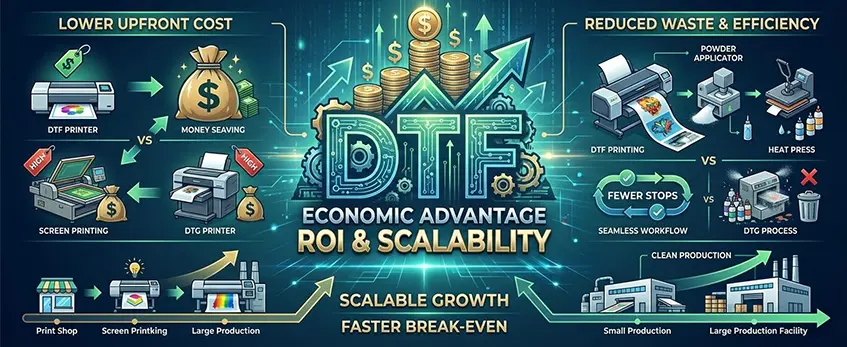
DTF ink printers stand out for their impressive return on investment and scalable potential, especially for U.S. businesses looking to grow without breaking the bank. Compared to Direct-to-Garment (DTG) and traditional screen printing, DTF equipment has notably lower upfront costs. This means you can get started faster and invest more in growing your apparel printing operation.
Another big win is how DTF reduces consumable waste. Unlike DTG, which demands costly pretreatment sprays, DTF printing works virtually pretreatment-free, cutting down on material waste and ongoing expenses. Plus, the efficiency of the process reduces downtime caused by cleaning or reapplying pretreatment, keeping your workflow smooth.
Speed is crucial in today’s on-demand market. DTF shines by supporting quick print-on-demand (POD) workflows, letting you
Durability and Quality: Busting the \”Plastic Feel\” Myth
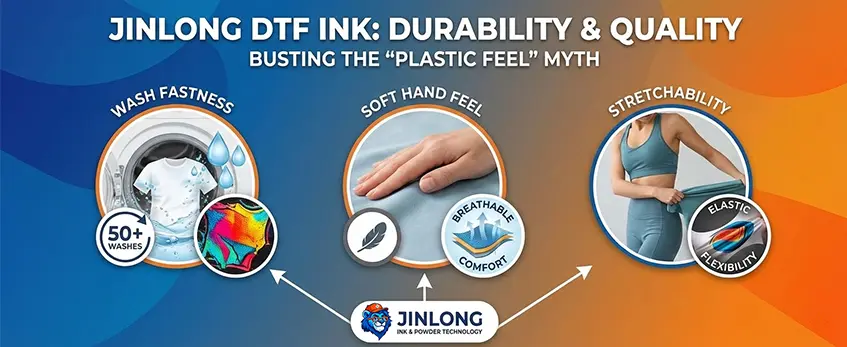
One big concern with DTF ink printers has been the dreaded \”plastic feel\”—that stiff, uncomfortable texture on printed apparel. Thanks to advances in Jinlong DTF ink and hot melt powder technology, this is becoming a thing of the past.
Solidez al lavado: Compared to vinyl, prints created with Jinlong’s DTF inks show impressive resistance to cracking, peeling, and fading—even after multiple washes. The specialized textile pigment ink formulation locks onto fabric fibers securely, giving garments a longer lifespan without compromising quality.
Sensación en la mano: What really sets Jinlong DTF printing apart is the soft, breathable finish. The unique chemistry of the ink and powder delivers a natural stretch and comfort, eliminating that heavy plastic layer. Whether it’s cotton tees or polyester activewear, the print remains smooth and lightweight on the skin.
Elasticidad: Activewear and stretch fabrics often cause printing challenges, but Jinlong’s ink elasticity keeps prints intact through movement. This flexibility ensures vibrant, durable designs that stretch without cracking or distortion.
For anyone investing in apparel customization technology, choosing high-quality inks like Jinlong’s makes a huge difference in durability and comfort—putting to rest the “plastic feel” myth once and for all.
Comparative Analysis: DTF vs. The Competitors
When comparing DTF ink printers to other apparel printing methods, several advantages stand out that make DTF a frontrunner in the market.
DTF frente a DTG:
DTF printing skips the pretreatment step required in Direct to Garment (DTG) printing, saving time and cutting costs. Plus, DTF excels on polyester and blended fabrics, where DTG struggles. Its ability to print vivid colors quickly on polyester makes it a perfect choice for activewear and sports uniforms.
DTF frente a serigrafía:
For short runs, DTF is more cost-effective because you don’t need to create screens for each design or color. It also handles full-color gradients and complex images effortlessly, which can be tricky and expensive with traditional screen printing.
DTF vs. White Toner Printing:
Compared to white toner printers, DTF offers better durability and a noticeably softer hand feel. The specialized DTF ink used in printers like Jinlong’s provides stretchability and wash fastness, while white toner often results in a stiffer, less breathable print.
Overall, DTF combines versatility, speed, and quality, making it a market leader in widespread apparel customization technology. For those looking to step into efficient, pretreatment-free printing with impressive color vibrancy, exploring high-quality DTF ink printers is key. You can check out detailed features in the Guía del comprador de impresoras DTF to see what suits your business needs.
Choosing the Right Partner: The Importance of Quality Consumables
When it comes to DTF ink printers, quality consumables make all the difference. Using low-quality inks often leads to clogging issues, poor washability, and fading after just a few washes. This doesn’t just affect prints—it shortens your machine’s life and increases downtime, hurting your bottom line.
That’s why partnering with a trusted supplier like Jinlong is key. Their premium DTF ink formulations offer excellent elasticity and wash fastness, ensuring prints stay vibrant and soft over time. Plus, their inks are designed to keep your printhead healthy, preventing clogging and extending equipment longevity. Alongside reliable hardware and a consistent supply chain, Jinlong supports smooth operations and high-quality output.
For anyone serious about long-term apparel customization success, investing in quality consumables from a trusted name guarantees better prints, less hassle, and maximized ROI. Discover how their advanced Impresora DTF con agitador de polvo can boost your workflow while maintaining print quality.


 English
  Español
  Deutsch
  Français