


Ready to Press DTF Transfers Tips for Strong Adhesion and Long-Lasting Durability
If you’ve ever dealt with ready to press DTF transfers that just won’t stick or fade after a few washes, you know how frustrating it can be to lose time and money on weak prints. The truth is, strong adhesion and durability don’t happen by accident—they come down to mastering the right heat press settings, fabric prep, and aftercare. In this guide, you’ll discover proven tips to get vibrant, long-lasting results every time with ready to press DTF transfers, especially when working with trusted suppliers like jinlong DTF. Ready to elevate your custom apparel game? Let’s get into the must-know techniques that keep your designs looking fresh through 50+ washes.
Understanding Ready-to-Press DTF Transfers and Why Adhesion Matters
Ready-to-press DTF transfers are pre-made designs printed on a special film, ready for immediate application with a heat press. Unlike traditional methods like screen printing or direct-to-garment printing, these transfers simplify production by eliminating on-demand printing steps. They offer fast turnaround, consistent quality, and reduced mess, making them ideal for small businesses and custom orders.
A key element of ready-to-press DTF transfers is the adhesive powder layer fused onto the design. This fine TPU (thermoplastic polyurethane) powder acts as a bonding agent between the printed colors and the fabric. When heated under pressure, the adhesive melts and securely attaches the TPU film to the garment’s fibers. This precise bonding process ensures the design adheres firmly without cracking or peeling.
Several factors influence DTF adhesive bonding and overall transfer durability:
- Transfer quality: High-grade inks and adhesive powder improve adhesion and color vibrancy.
- Tipo de tejido: Natural fibers like cotton bond best; polyester and blends require adjusted heat press settings.
- Application technique: Correct temperature, pressure, and timing during heat pressing enhance the bond strength.
Achieving strong initial adhesion is crucial. Well-applied transfers can withstand 30–50+ wash cycles without damage, maintaining color accuracy and flexibility. This durability stems from the optimized combination of adhesive powder, TPU film, and consistent heat press settings—all contributing to long-lasting, professional DTF prints.
Preparing Your Workspace and Garments for Optimal Results
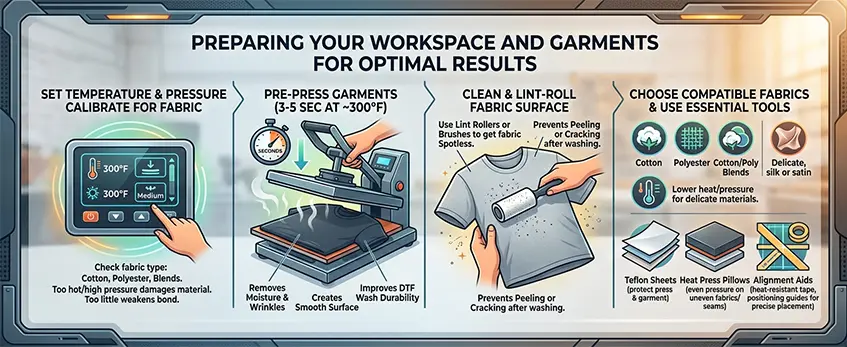
To get strong adhesion with ready to press DTF transfers, start by carefully setting up your workspace and prepping your garments. First, select the right temperature and pressure on your heat press. Calibrate these settings based on your fabric type—too hot or too much pressure can damage the material, while too little weakens the bond.
Pre-pressing garments is a crucial step. It removes moisture and wrinkles and creates a smooth surface for the transfer. A quick 3–5 second press at around 300°F works well for most cotton and polyester blends. This step helps improve DTF wash durability by ensuring better adhesion.
Always clean and lint-roll the fabric surface before application. Any dust or fibers can interfere with adhesive bonding and lead to peeling or cracking after washing. Use lint rollers or brushes to get the fabric spotless.
Choosing compatible fabrics is also key. Cotton, polyester, and cotton/poly blends work best. For delicate or performance materials, lower your heat press temperature and pressure to avoid damage. Adding heat press pillows can help apply even pressure on uneven fabrics or seams.
Don’t skip using essential tools like Teflon sheets to protect your heat press and garments from scorching. Alignment aids, such as heat-resistant tape or positioning guides, ensure precise placement of your DTF transfers every time. Protective barriers can also prevent unwanted marks on your heat press platens.
For detailed guidance on temperature and pressure settings tailored to your material and the best DTF transfer film, check out the Opciones de película de transferencia Jinlong DTF which provide excellent results when paired correctly.
By preparing your workspace and garments thoroughly, you set the stage for long-lasting, vibrant DTF prints that stick strong and last wash after wash.
Mastering Heat Press Settings for Strong Adhesion
Getting your heat press settings right is key to improving DTF adhesion and locking in a durable bond. Based on testing with jinlong DTF transfers, here are the top guidelines for temperature, time, and pressure:
- Temperatura: Aim for around 320–340°F (160–170°C). This range ensures the adhesive powder fully melts and bonds with the fabric without scorching.
- La hora: Press for 8–15 seconds depending on fabric type and thickness. Thinner cotton blends need less time, while thicker or polyester-heavy fabrics may require more.
- Presión: Use firm, even pressure. Too light means poor bonding; too heavy can damage the garment or transfer.
Whether you peel your transfer cold or hot affects bond strength:
- Exfoliación en frío: Remove the film after it fully cools. This method often strengthens adhesion and reduces the chance of cracking.
- Exfoliación en caliente: Peeling while still warm speeds up production but may weaken the initial bond if not done carefully.
For consistent pressure distribution, try these calibration tips:
- Business Card Test: Place a business card under the platen and press. It should slide out with some resistance but not be crushed.
- Heat Press Pillows: Use these to level out uneven surfaces, especially with seams or textured fabrics.
Avoid these common heat press mistakes:
- Under-Pressing: Insufficient time or pressure leads to transfers lifting or peeling.
- Over-Pressing: Too much heat or pressure can cause stiffness, cracking, or color fading.
- Ignoring Garment Thickness: Adjust pressure and time for thick or layered garments to get an even bond.
For fine-tuning your process with jinlong DTF transfers, check out the best heat press settings for A3 DTF printer, ink, film, and temperature guide to maximize your results and avoid guesswork.
Step-by-Step Application Process for Reliable Transfers
Getting your ready to press DTF transfers applied perfectly every time takes some practice but following these steps will help ensure strong adhesion and durability:
Accurate positioning: Use fabric creases, heat-resistant tape, or alignment tools to place your transfer exactly where you want it. Precise placement avoids shifts and uneven prints.
Protective sheets: Always place a Teflon sheet or parchment paper over your transfer to prevent scorching your garment and protect your heat press from adhesive residue.
Consistent pressing: Apply even pressure, temperature, and time according to your DTF heat press settings—avoid lifting or sliding the transfer during pressing to maintain bonding integrity.
Proper cooling: Let the design cool completely if you’re doing a cold peel transfer. For hot peel transfers, peel right after pressing as advised. Cooling time affects bond strength significantly.
Post-press reflow: After peeling, press the garment again at a lower temperature for 5–10 seconds to re-melt the adhesive and improve durability. This step reduces cracking and enhances the finish.
Tips for tricky transfers:
- Para multi-color or detailed transfers, ensure each color layer is fully cured before applying the next to prevent blending.
- Para small designs, handle gently and consider pressing with a heat press pillow or under a protective barrier to avoid fabric imprint.
Following these application steps helps improve DTF adhesion and avoids common issues like peeling or cracking. If you want to dive deeper into heat press settings or DTF transfer application tips, check out Jinlong’s trusted guides and product resources for professional-grade results.
Troubleshooting Poor Adhesion and Common Failures
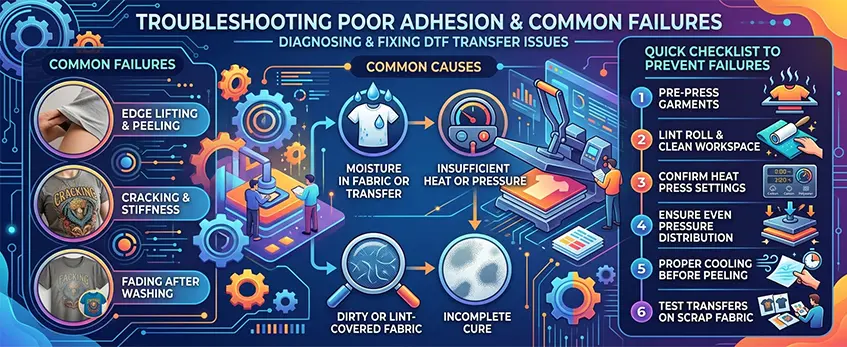
When your ready to press DTF transfers start showing edge lifting, peeling, cracking, stiffness, or fading, it’s usually a sign of poor adhesion or improper curing. These issues can cut short the life of your prints and hurt overall quality.
Common Causes to Watch For:
- Moisture in fabric or transfer: Dampness before pressing can stop proper bonding.
- Insufficient heat or pressure: Not hitting the right temperature or press force weakens the adhesive bond.
- Dirty or lint-covered fabric: Any debris prevents the adhesive powder from gripping well.
- Incomplete cure: Peeling or cracking happens if the adhesive wasn’t properly melted or pressed.
Quick Checklist to Prevent Failures:
- Always pre-press garments to avoid moisture and wrinkles.
- Use a lint roller and clean workspace for a spotless surface.
- Confirm your DTF heat press settings match fabric type and transfer specs (heat press temperature for DTF transfers).
- Ensure even pressure distribution—use pillows or test pressure with a business card.
- Avoid pressing too quickly; allow for proper cooling before peeling the film.
- Test new transfers on scrap fabric to identify issues before full runs.
Taking these steps will help you avoid common pitfalls like DTF peeling or cracking after washing and keep your transfers looking sharp longer. If problems persist, revisiting your press calibration or rechecking transfer quality can save frustration down the line.
Maximizing Durability Through Proper Curing and Aftercare
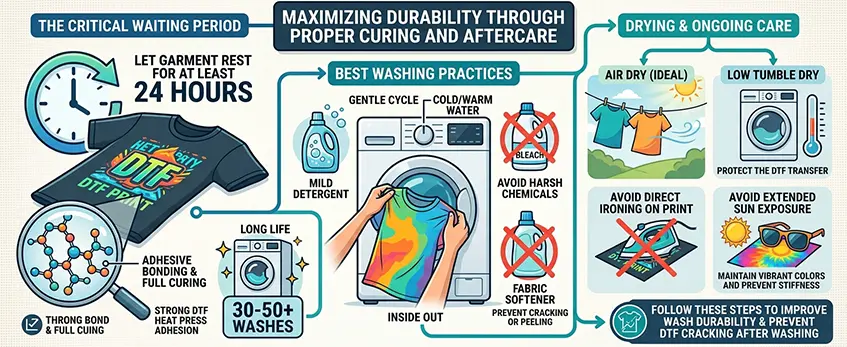
To get the longest life out of your ready-to-press DTF transfers, proper curing and aftercare are key. After pressing, let your garment rest for at least 24 hours before the first wash. This waiting period allows the adhesive bonding to fully cure, ensuring strong DTF heat press adhesion that lasts through 30 to 50+ washes.
When it\’s time to wash, turn the garment inside-out and use cold or warm water with a mild detergent on a gentle cycle. Avoid bleach and fabric softeners, as harsh chemicals can weaken the print and cause early cracking or peeling. For drying, air drying is ideal, but if you must use a machine, choose a low tumble setting to protect the DTF transfer.
Additional care tips include avoiding direct ironing on the print and steering clear of extended sun exposure to maintain vibrant colors and prevent stiffness. Following these simple steps helps avoid common issues like DTF cracking after washing and improves overall wash durability.
Using premium jinlong DTF transfers combined with proper aftercare means you can expect long-lasting, professional-quality prints that hold up over time, perfect for both individual creators and small production runs. For the best results, check out jinlong’s trusted Opciones de película de transferencia DTF tailored for durability and ease of use.
Advanced Tips for Professional Results and Scaling Your Production
Taking your DTF transfer game to the next level means focusing on consistency, fabric handling, and gear upkeep. Here’s how to get professional results and scale smoothly with jinlong DTF transfers:
Consistent Batch Production Methods
- Batch pressing: Group similar fabrics and designs to keep settings steady.
- Standardize heat press settings: Use the same temperature, pressure, and timing to avoid surprises.
- Label transfer batches: Track which batch each transfer came from to spot issues quickly.
Handling Different Fabric Textures
Fabric type affects adhesion and feel—adjust as needed:
| Fabric Type | Adjustments Needed |
|———————|——————————————–|
| Cotton | Standard pressure, pre-press to remove wrinkles |
| Polyester | Slightly lower temp to avoid scorching |
| Mixed blends | Moderate pressure, test on scrap fabric |
| Delicate/silky | Use heat press pillows, reduce pressure |
| Performance wear | Use TPU-friendly films, avoid over-pressing |
Equipment Maintenance
- Clean your heat press regularly—lint and residue can cause adhesion problems.
- Calibrate pressure and temperature monthly.
- Replace worn-out Teflon sheets and pillows promptly to protect transfers and garments.
Benefits of Premium jinlong DTF Transfers
Using high-quality Transferencias DTF Jinlong reduces variables like inconsistent adhesive bonding and cracking after washing. These premium transfers deliver:
- Stronger initial adhesion
- Longer wash durability (30–50+ cycles)
- Enhanced color vibrancy and flexibility
Testing New Fabrics and Batches
Before full production, always test:
- Adhesion strength on fabric scraps
- Heat press settings for best results
- Peel type (cold peel vs hot peel) for durability
Following these tips ensures you avoid common pitfalls and produce long lasting DTF prints that keep customers coming back. For scaling your custom apparel business, check out how an Impresora DTF A3 can boost efficiency and consistency.


 English
  Español
  Deutsch
  Français