


PET Film Printing Explained Materials Process Benefits Guide
Si se sumerge en impresión de ropa personalizada, you’ve probably heard about Película PET and its crucial role in Impresión directa en película (DTF). But what exactly makes Película PET DTF a game-changer for vibrant, durable prints—especially on tricky fabrics like dark or blended textiles? Whether you’re a beginner or a seasoned printer exploring versatile transfer methods, understanding the materials, process, and benefits of Impresión de películas PET is key to unlocking professional-quality results with less hassle. In this guide, you’ll get a clear, insider look at how Película PET works as your design’s carrier, why its special coatings matter, and how the complete Proceso de impresión DTF comes together—all to help you decide if this innovative technology fits your printing needs. Let’s get started!
What Is PET Film in Printing?
Polyethylene Terephthalate, or PET, is a durable, transparent plastic film widely used in printing—especially in Direct to Film (DTF) printing. Unlike standard PET film, which is often used for packaging or laminating, Película PET DTF is specially designed as a transfer medium for textile printing. This means it serves as the critical carrier for your printed design before heat-pressing onto garments.
In the Direct to Film printing process, PET film acts like a canvas. The design is printed directly onto the film, which holds the ink securely thanks to specially developed coatings. These coatings are vital because they ensure DTF ink on PET film sticks perfectly and releases cleanly when transferred. Without this, you’d risk smudges, uneven prints, or sticky residues during heat press transfer.
So, what makes DTF PET transfer film stand out? It’s all about the special coatings: they grab the CMYK and white inks firmly while allowing smooth peeling after curing. This balance delivers sharp, vibrant prints with excellent durability, making PET film indispensable in modern fabric decoration.
Materials and Structure of DTF PET Film
DTF PET film is carefully engineered with several layers to ensure top performance during the direct to film printing process. Here’s a quick breakdown of its layered composition:
- Base PET Layer: This is the backbone of the film, made from polyethylene terephthalate. It offers excellent dimensional stability and heat resistance, key for maintaining shape during printing and the heat press transfer.
- Ink-Receptive Coating: Applied on top of the base, this layer is specially formulated to hold CMYK and white inks securely, ensuring vibrant colors and sharp details. White ink adhesion is critical here because it forms the base for bright, opaque designs.
- Capa de liberación: This coating allows the printed film to peel cleanly from the garment. Depending on the product, it supports either hot peel or cold peel, giving flexibility for different transfer methods.
- Optional Coatings: Some DTF PET films also include anti-static treatments or protective layers to prevent dust buildup and improve feeding smoothness during printing.
Common specifications for DTF PET film usually range around 100 to 150 microns thick, available in various sheet sizes or rolls to fit different printer formats. Different coating variants exist to optimize ink compatibility and print durability.
Quality matters a lot here—better coatings boost color density and ensure smooth ink bonding, while poor-quality films can cause ink smears or uneven transfers. Plus, many PET films today are recyclable, making them a better choice environmentally compared to some other plastics.
For reliable print results, selecting the right PET film structure with consistent thickness and coatings is essential—this directly impacts the overall print quality and durability on cotton and polyester blends.
You can explore options like the Película de transferencia DTF Serie A3 Double Pro for excellent coating quality and film stability.
The Complete DTF PET Film Printing Process: Step by Step
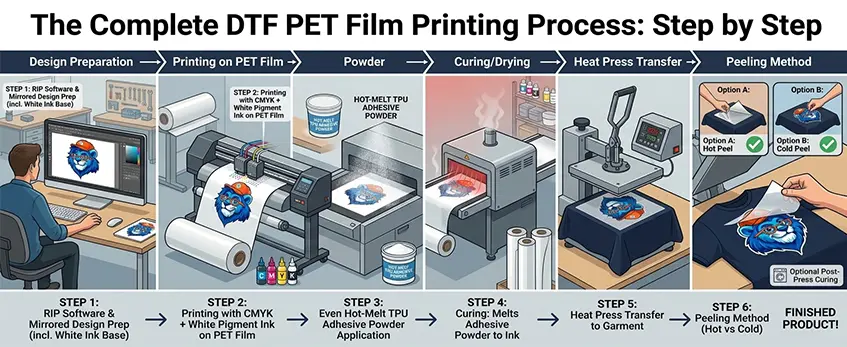
The direct to film printing process on DTF PET film is straightforward but requires attention to detail for the best results. Here’s how it goes:
Preparación del diseño
Start by preparing your artwork in RIP software. Make sure the design is reversed (mirrored) because it transfers face down. Include a white ink base layer beneath your CMYK colors to make colors pop on any fabric.
Impresión en película PET
Print your mirrored design directly onto the PET film using textile pigment ink sets—CMYK plus white ink. The white base ink enhances vibrancy and opacity, critical for printing on darker or colored garments.
Hot-Melt TPU Adhesive Powder Application
While the inks are still wet, evenly apply hot-melt TPU adhesive powder over the printed film. This powder ensures the design sticks firmly to the fabric during transfer and wash cycles.
Curing/Drying
The next step is curing the powder and ink, usually with a heat tunnel or dryer. This melts and bonds the adhesive powder to the ink, preparing the film for transfer.
Transferencia con prensa térmica
Place the cured film design-side down on the garment. Use a heat press at the right temperature and pressure to transfer the ink and adhesive onto the fabric.
Peeling Method: Hot Peel vs Cold Peel
After pressing, peel the PET film off either hot or cold — your choice depends on the film type and desired finish. Hot peel is faster; cold peel often gives a softer feel and better durability.
Optional Post-Press Curing
For extra durability, especially for sportswear or heavy-use items, consider a quick second press without the film to fully cure the print.
Practical Tips and Troubleshooting
- Ensure Design is Mirrored: Double-check artwork orientation to avoid mirrored prints on finished garments.
- Consistent Application of Adhesive Powder: Use even, not excessive, powder to prevent clumps or weak bonding.
- Monitor Heat Press Settings: Calibrate temperature and time for your particular fabric to avoid scorching or incomplete transfer.
- Control Humidity: Ink and powder are sensitive to moisture, so store materials properly.
- Troubleshoot Ink Smearing or Powder Clumps by adjusting curing times and temperatures or switching to premium powders like those recommended in this guide on choosing high-quality DTF powder.
- Regularly Clean Printer Heads to prevent clogging and maintain crisp prints.
Following these steps and tips ensures you get vibrant, durable prints with your DTF printing on PET film, making it a great option for custom apparel businesses or small batch production.
Key Benefits of PET Film Printing (DTF)
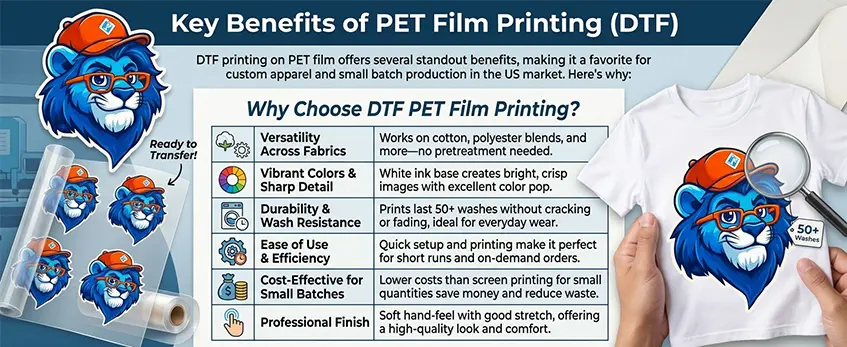
DTF printing on PET film offers several standout benefits, making it a favorite for custom apparel and small batch production in the US market. Here’s why:
Why Choose DTF PET Film Printing?
| Beneficio | Detalles |
|---|---|
| Versatilidad entre tejidos | Works on cotton, polyester blends, and more—no pretreatment needed. |
| Vibrant Colors & Sharp Detail | White ink base creates bright, crisp images with excellent color pop. |
| Durabilidad y resistencia al lavado | Prints last 50+ washes without cracking or fading, ideal for everyday wear. |
| Ease of Use & Efficiency | Quick setup and printing make it perfect for short runs and on-demand orders. |
| Cost-Effective for Small Batches | Lower costs than screen printing for small quantities save money and reduce waste. |
| Professional Finish | Soft hand-feel with good stretch, offering a high-quality look and comfort. |
Quick Comparison: DTF vs. DTG and Screen Printing
| Característica | DTF (PET Film Printing) | DTG (directo a prenda) | Serigrafía |
|---|---|---|---|
| Fabric Support | All types (cotton, polyester blends) | Mainly cotton or high cotton blends | Best on cotton, polyester blends require special inks |
| Vibración del color | High, thanks to white ink base | Good, struggles with bright whites | Excellent, especially on light fabrics |
| Durabilidad | Very high, 50+ wash cycles | Moderate, can fade over time | Very high, especially with plastisol inks |
| Tiempo de preparación | Low, ideal for short runs | Moderate, printing process slower | High, setup intensive, not cost-effective for small runs |
| Tacto de la mano | Soft and stretchy | Soft, but depends on ink and fabric | Can be heavy, depending on ink layers |
| Eficiencia de costes | Great for small to medium orders | Best for single or small lots | Best for large volume |
DTF printing using PET film simplifies production while delivering lasting, vibrant prints. It’s a great choice for businesses wanting quality without the setup hassle of traditional methods. Plus, it plays nicely across various fabrics, making it versatile for different kinds of apparel.
For insights on handling issues like white ink and powder application, explore tips on DTF printer head problems caused by white ink and solutions and compare powder techniques in Impresora DTF y agitador frente a la aplicación manual de polvo.
Applications and Use Cases
PET film printing, especially with DTF PET film, shines across a wide range of applications. It’s perfect for custom apparel like t-shirts, hoodies, and sportswear because it works well on cotton, polyester blends, and more without needing pretreatment. Beyond clothing, promotional items, fashion accessories, and durable workwear also benefit from this versatile printing process.
Small businesses and print-on-demand shops appreciate how accessible and cost-effective PET film printing is for short runs and custom jobs. Home operators find it easy to scale up as well, thanks to the straightforward setup and reliable materials. Using high-quality PET films and inks ensures consistent, vibrant color results and increased durability across all projects.
For best results, optimize your setup with proven combinations of DTF PET transfer film, TPU hot melt powder, and pigment inks. This approach minimizes issues and delivers a professional finish every time. To troubleshoot common challenges or fine-tune your heat press transfer from PET film, exploring detailed guides on adhesive powder melting temperatures and printer maintenance can be a big help. For instance, understanding the correct Temperatura de fusión del polvo de TPU y ajustes de la prensa térmica is key to perfect transfers that last.
Choosing the Right PET Film and Best Practices
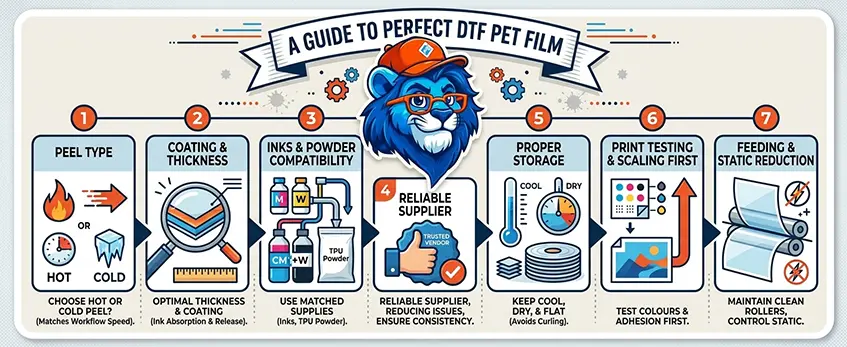
Picking the right DTF PET film is key to getting great prints every time. Here’s what to keep in mind:
Tipo de pelado: Decide between hot peel vs cold peel DTF film based on your workflow. Hot peel films release the transfer immediately after heat pressing, while cold peel films require cooling before peeling—each affects speed and finish.
Thickness & Coating Quality: Look for PET film thickness and coating designed to hold ink well and release cleanly. A good ink-receptive coating ensures vibrant colors and sharp details with your white ink base, while the release layer helps avoid smudging.
Compatibilidad con impresoras: Make sure the PET film matches your printer’s specifications, especially if you’re using textile pigment ink sets like CMYK + White. Using recommended products, such as premium DTF inks, can boost print durability and quality. For trusted ink options, check out reliable supplies like DTF ink CMYK sets y Polvos adhesivos termofusibles TPU.
Supplier Reliability: Source your PET film from trusted vendors who offer consistent quality and support. This reduces issues like film curling or incomplete transfers.
Storage Tips: Store film rolls in a cool, dry place to control moisture and heat exposure. This keeps the film smooth and flat, preventing static buildup and feeding problems during printing.
Print Testing & Scaling: Always do test prints to check color density, adhesion, and peel behavior before running large batches. Scale up gradually to catch any issues early.
Smooth Feeding & Static Reduction: Ensure your printers and film feeders are clean and well-maintained. Static can cause ink smearing or powder clumping, so controlling humidity and using anti-static coatings on PET film help keep prints flawless.
Following these best practices will make your DTF film printing process smoother, more efficient, and deliver professional results every time. For tips on common problems and solutions, see our guide on problemas habituales de las películas DTF y cómo solucionarlos.
Common Challenges and How to Overcome Them
Working with DTF PET film printing can come with a few common headaches like film curling, ink smearing, incomplete transfers, and issues with the hot melt adhesive powder. These problems usually stem from environmental factors, material quality, or process settings—but they\’re totally fixable.
Film Curling: This often happens when humidity levels are off or the PET film hasn\’t been stored properly. Keep your film in a cool, dry place and consider using anti-static sprays or coatings to reduce static buildup. Maintaining proper humidity around 40-60% helps keep the film flat and smooth during printing.
Ink Smearing: Smearing usually results from insufficient drying or using incompatible or low-quality inks. Make sure your DTF ink on PET film is fully cured before moving on to powder application. Using premium ink, like reliable textile pigment inks designed for DTF, guarantees better adhesion and vibrancy. For reference, you can check out high-quality options like the Tinta DTF blanca 100ml Pro Series.
Transferencias incompletas: This is typically due to improper heat press temperature, pressure, or time settings. Calibrate your heat press regularly and follow recommended settings for your specific PET film thickness and garment type. Also, choosing the right peel method—hot peel versus cold peel—can impact transfer quality. For detailed heat press transfer tips, see our guide on cómo utilizar los transfers termoadhesivos DTF para camisetas paso a paso.
Powder Issues: Problems like uneven application or clumping of the TPU hot melt adhesive powder can ruin the final print. Use a shaker or powder applicator to ensure even, light coverage over wet ink. Remove excess powder thoroughly before curing to avoid texture problems.
of Solutions:
- Maintain consistent humidity and store film properly
- Use premium inks and powders compatible with your DTF PET film
- Calibrate your temperature, pressure, and timing on the heat press
- Use anti-static measures and proper peel techniques
By addressing these factors, you’ll achieve sharp, vibrant, and durable prints—making your direct to film printing process smooth and efficient every time.


 English
  Español
  Deutsch
  Français