


DTF vs Heat Transfer Print-on-Demand Which is Best for Your Business
The Basics: Understanding the Technology
What is Traditional Heat Transfer?
Traditional heat transfer has been a go-to method in garment decoration for years, especially in print-on-demand businesses. It typically involves Vinilo de transferencia térmica (HTV) or standard transfer papers. Here’s how it works:
- Cortando: Designs are cut from vinyl sheets using a vinyl cutter, which creates precise shapes or letters.
- Deshierbe: This is the manual process of removing excess vinyl from around the design—it can be time-consuming and tricky, especially with intricate or small details.
- Presionando: Once weeded, the vinyl or transfer paper is heat-pressed onto the garment, bonding the design through heat and pressure.
Although HTV is reliable, the weeding step often creates a bottleneck in production speed and limits design complexity.
¿Qué es DTF (Direct-to-Film)?
DTF is changing the game in print-on-demand with its no-weed transfer technology. Instead of cutting and weeding, DTF prints your design directly onto a special Película PET using textile pigment ink in a CMYK+White ink configuration. The workflow is simple:
- Imprimir: High-quality inkjet printers print detailed, full-color designs directly onto the film.
- Polvo: A special adhesive powder is evenly applied to the printed film.
- Prensa: The film is heat-pressed to cure the powder and bond the design to the garment.
This method skips the tedious weeding step altogether, streamlining your garment decoration workflow.
The Role of High-Quality Consumables Like Jinlong DTF
Not all DTF consumables are created equal. High-quality PET films, powders, and inks—like those from Jinlong DTF—ensure consistent transfer performance, excellent color vibrancy, and strong adhesion without clogging or peeling issues. Choosing premium supplies protects your brand reputation and enhances your print-on-demand ROI.
The Core Comparison: Feature by Feature
| Característica | Vinilo de transferencia térmica (HTV) | Directo al cine (DTF) |
|---|---|---|
| Workflow & Speed | – Requires cutting and weeding | – No weeding needed |
| – Weeding intricate designs slows down production | – Print, powder, cure, skip labor-intensive steps | |
| – Limited by complex shapes and small details | – Fast turnaround, ideal for scaling | |
| Capacidades de color | – Best with solid colors and simple shapes | – Unlimited color gamut with CMYK+White ink |
| – Struggles with gradients and detailed shading | – Supports photorealistic gradients and floating text | |
| Complejidad del diseño | – Challenging with complex geometries | – Handles complex, multi-color designs easily |
Heat transfer vinyl (HTV) workflow often hits a snag with the proceso de escarda, where every tiny cut needs manual removal. This step is a real bottleneck, especially when working with intricate or delicate designs. If your design has lots of fine details or curved shapes, heat transfer slows you down.
On the other hand, DTF technology shines with its no-weed transfer process. Printing directly onto PET film, applying adhesive powder, and curing eliminates the need for weeding altogether. This instant skip in labor cuts down your production time and means faster delivery without sacrificing quality.
When it comes to colors and design complexity, heat transfer methods are somewhat limited. HTV works best with solid colors or background blocks, making it tricky to reproduce smooth color transitions or gradients. Photorealistic prints are tough since HTV can’t handle the subtlety of shades and blends well.
DTF opens up a whole new palette with its CMYK+White ink setup, delivering unlimited color range. From smooth gradients to floating, fine text, DTF supports richly detailed and colorful designs that HTV just can’t match.
This combination of speed, simplicity, and vibrant output makes DTF a standout choice for print-on-demand businesses looking to scale or diversify their product range efficiently.
Learn more about managing high-quality transfers efficiently with Jinlong DTF’s industrial-grade consumables.
Versatilidad del tejido
When it comes to fabric compatibility, Vinilo de transferencia térmica (HTV) can struggle a bit. It often faces issues with certain synthetic materials where the vinyl doesn’t stick well or causes texture bleed, affecting the garment’s feel and look. This makes it less ideal for polyester or tricky blends without special adjustments.
Por otro lado, DTF (Directo al cine) printing shines in fabric versatility. It bonds directly with a wide range of textiles—including cotton, polyester, nylon, leather, and 50/50 blends—usually without any pre-treatment needed. This ability to work seamlessly on different fabric types gives DTF a clear advantage for print-on-demand businesses aiming to offer diverse product ranges. For high-quality results, using premium consumables like the Serie de películas de transferencia Jinlong DTF ensures strong adhesion and vibrant prints across all these fabrics.
Durability & Washability: Which Lasts Longer?

When it comes to durability, traditional heat transfer has its limits. Heat Transfer Vinyl (HTV) and standard transfer papers often start to show signs of wear after 10–20 washes, with common issues like cracking, peeling, or fading. This happens because the vinyl layer sits on top of the fabric rather than bonding deeply with the fibers.
On the other hand, DTF (Direct-to-Film) prints are known for their impressive durability. Thanks to the way the ink penetrates fabric fibers and the curing process involving DTF powder, these prints remain elastic and stretch-tested. This means they can easily handle 50 or more wash cycles without degradation. The print stays vibrant, flexible, and integrated right into the garment.
For businesses focusing on washability and longevity, especially in custom apparel with high-quality standards, DTF offers a significant edge. Using premium consumables like those from Jinlong ensures that durability and wash resistance meet professional needs without risking peeling or cracking over time. For more on quality materials, check out Jinlong’s Opciones de película de transferencia DTF designed for reliable wear.
The Hand (Feel of the Print)
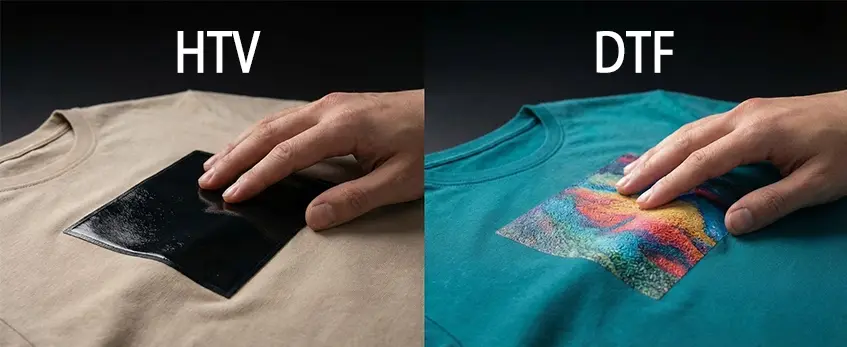
When it comes to the feel of your finished print, heat transfer and DTF offer very different results. Traditional heat transfer prints often have a thick, plastic-like patch feel on the fabric. This can make the design feel heavy and less breathable, which might not be comfortable for everyday wear—especially on larger or more detailed prints.
On the other hand, DTF prints are known for their soft hand feel. Thanks to the fine DTF powder curing process that bonds ink directly into the fabric fibers, the result is lightweight and breathable. This soft, flexible finish feels more like part of the garment itself rather than an added patch. Using high-quality consumables like Jinlong DTF powder further enhances this softness and durability, giving a professional look and feel without that stiff texture common in heat transfer vinyl.
This difference in texture can be a game-changer for customer satisfaction and product quality, especially in custom apparel businesses where comfort is key.
The Business Perspective: Cost and ROI
When comparing DTF vs heat transfer from a business standpoint, setup costs and ongoing expenses play a huge role in your return on investment.
Gastos de instalación:
Heat Transfer requires a vinyl cutter, which can be affordable but limited in scope. On the other hand, setting up a DTF printer involves a higher initial investment, including the printer itself, PET films, inks, and curing powder. But this upfront cost pays off quickly if you plan to scale your print-on-demand (POD) business.
Cost Per Print:
Heat Transfer Vinyl rolls aren’t cheap—especially when factoring in the time-consuming process of cutting and weeding. In contrast, DTF printing’s costs come mainly from consumables like ink, film, and powder. These tend to balance out but provide greater flexibility in design and quicker turnaround times. With quality consumables like Jinlong DTF products, you get consistent results that cut down waste and increase profit margins. For an in-depth look at choosing reliable materials that boost your ROI, explore the details on how to pick a trustworthy DTF consumables manufacturer.
Escalabilidad:
If your business volume jumps from a handful of orders to hundreds or even thousands, DTF’s no-weed transfer technology shines. It streamlines the garment decoration workflow, eliminates bottlenecks caused by complex cutting and weeding, and supports high-speed production without sacrificing quality. Heat Transfer often struggles here due to manual labor limits.
In short, for POD shops eyeing growth and diversity in design while keeping costs manageable, DTF is the smarter choice. It balances skill demands, speed, and material costs in a way heat transfer can’t match.
Decision Guide: Which Method Fits Your Business?
Choosing between DTF vs Heat Transfer comes down to your specific needs, budget, and design complexity. Here’s a quick guide to help you pick the right method for your print-on-demand setup:
| Choose Heat Transfer if: | Choose DTF if: |
|---|---|
| Hobbyist or small-scale projects | Running a POD business with high order volume |
| Printing simple text, numbers, or basic logos | Need multi-color or photorealistic gradient designs |
| Want to use special effects like glitter, puff, or flock | Hate weeding and want a no-weed transfer technology |
| Mostly light-colored garments | Printing on dark garments without heavy background |
| Prefer using Heat Transfer Vinyl (HTV) or standard papers | Desire soft hand feel and durable prints with excellent washability |
Heat Transfer remains popular with DIYers and those who value special effects for custom apparel profit margins. But if you want to streamline your garment decoration workflow and scale efficiently, DTF is the better choice—no cutting or weeding means faster turnaround and more design freedom.
For more insights on scaling with printers designed for this purpose, check out this overview of mejor impresora de transferencia DTF características clave que debe buscar en 2026.
Why Quality Matters: The Jinlong DTF Advantage
Not all DTF consumables deliver the same results. Low-quality film or powder can cause serious issues like clogging your Direct-to-Film printer or prints peeling after just a few washes. These problems not only slow down your garment decoration workflow but can also hurt your brand reputation.
Jinlong DTF stands out by offering industrial-grade films and inks designed for consistent performance. Their PET film printing and specially formulated DTF powder curing processes ensure your prints stay vibrant and durable wash after wash. Choosing Jinlong means fewer headaches with printer maintenance and a soft hand feel that keeps customers coming back.
Investing in quality consumables like Jinlong helps protect your profit margins and supports scaling your POD business without compromise. For more details on reliable consumables, check out the Opciones de película de transferencia Jinlong DTF that deliver consistent, professional results.


 English
  Español
  Deutsch
  Français