


DTF Printing on Clothes Explained A Beginner’s Guide to Custom Apparel
What Is DTF Printing and Why It Matters for Clothing
DTF printing, or Direct to Film printing, is a game-changer in custom clothing. Instead of printing directly on fabric, this method prints your designs onto a special PET film. From there, the design is transferred onto the garment using adhesive powder and heat pressing. This approach unlocks new possibilities that traditional printing methods often can’t match.
Here’s how DTF differs from the usual suspects:
- Serigrafía: While great for large batches, screen printing has high setup costs and limited color flexibility. You need separate screens for every color, making it less ideal for small runs or full-color designs.
- DTG (directo a prenda): DTG prints directly on fabric but struggles with dark fabrics and certain materials like polyester. It’s more limited in fabric compatibility and requires pretreatment to avoid dull prints.
- Vinyl/HTV (Heat Transfer Vinyl): Vinyl is excellent for simple one- or two-color designs but becomes complex and heavy with full-color or gradient graphics. It also tends to feel thicker on clothing.
Why DTF Printing Rocks for Clothes
DTF printing works on virtually any fabric color — yes, both light and dark — without losing vibrancy. The prints deliver rich, full-color results with a soft, stretchable, and durable finish that feels natural, not rubbery or stiff. Whether it’s cotton, polyester, blends, hoodies, or hats, DTF creates vibrant, long-lasting designs. That means your t-shirts or merch stay looking sharp wash after wash.
Usos en el mundo real
From personal projects to small business custom tees, event merch, and promotional apparel, DTF printing fits perfectly. It’s accessible for hobbyists and efficient enough for small to medium businesses. Whether you’re outfitting a team or launching your own clothing line, DTF offers performance and versatility hard to beat.
In short, Direct to Film printing is a flexible, cost-effective, and high-quality solution, ideal for anyone serious about custom apparel.
How DTF Printing Works Step-by-Step
DTF printing on clothes starts with design creation and file preparation. Use software like Adobe Illustrator or Photoshop to create your artwork. Make sure your design is high resolution (300 dpi or higher) for crisp results. Remember to mirror your design because it prints backward on the PET film before transfer.
Next, you print the design onto PET film using specialized DTF inks, including a crucial base de tinta blanca. This white layer ensures vibrant colors show clearly on any fabric color, especially dark garments. For smooth and consistent prints, using quality inks like jinlong DTF ink CMYK es esencial.
Once printed, apply polvo adhesivo evenly over the wet ink. This powder sticks to the ink and bonds the design to the fabric during heat pressing. Then, cure the powder by passing the film through a drying tunnel or oven until it solidifies.
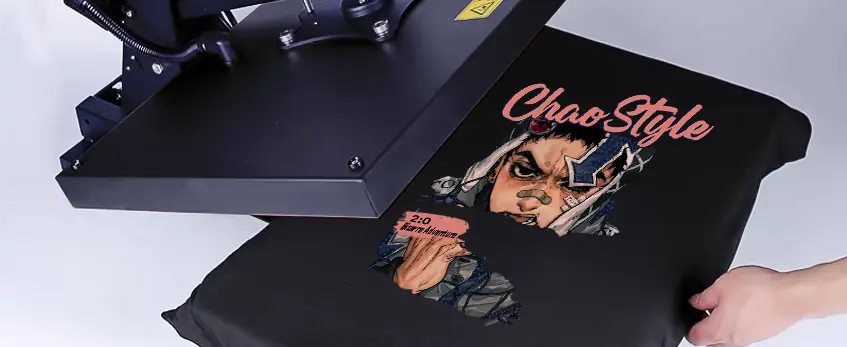
The next step is heat pressing the transfer onto the garment. Pre-press the fabric to remove moisture and wrinkles. Carefully position the PET film on the clothing, then press using recommended Ajustes de la prensa térmica DTF—usually around 320°F (160°C) for 15-20 seconds with medium pressure. After pressing, peel the film off either hot or cold depending on your specific transfer—this prevents damage and preserves detail.
Por último, un post-press curing step enhances durability. Some prefer an additional quick press to lock the print and extend wash resistance. This step helps the design hold up through repeated wears and washes.
For clarity, a visual flow diagram placing these steps in order—from design to finished garment—makes the process easy to follow, especially for beginners learning how to apply DTF transfers successfully.
Essential Equipment and Supplies for Getting Started with DTF
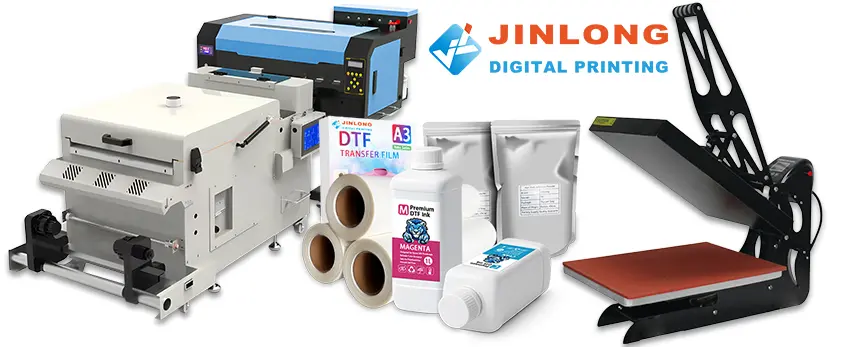
To kick off your DTF printing on clothes journey, you’ll need several core items: a reliable DTF printer, compatible inks (including white ink for the underbase), PET film for transfers, adhesive powder, a heat press, and curing tools. Each part is crucial—your printer and inks create the design on the PET film, the adhesive powder helps the print stick, and the heat press cures it onto garments.
For beginners, budget-friendly DTF printers and starter kits are available, offering a great balance between price and quality. You can look for models with good customer support and straightforward software to get up and running quickly. It’s also smart to plan your workspace with ventilation and proper lighting for safety and precision.
Optional upgrades like automatic powder shakers can speed up production and ensure even adhesive coverage, while RIP software enhances color management and print quality for complex designs. To simplify your setup, consider using jinlong DTF supplies—they provide high-quality inks, PET films, and powders designed to work seamlessly together, ensuring consistent results without headaches. For a detailed look at how jinlong’s products can streamline your process, check out their DTF printer with white ink for small businesses.
By preparing the right equipment and supplies, you’ll set yourself up for smooth, cost-effective DTF printing with vibrant, durable results on a variety of fabrics.
Advantages of DTF for Custom Clothing Projects
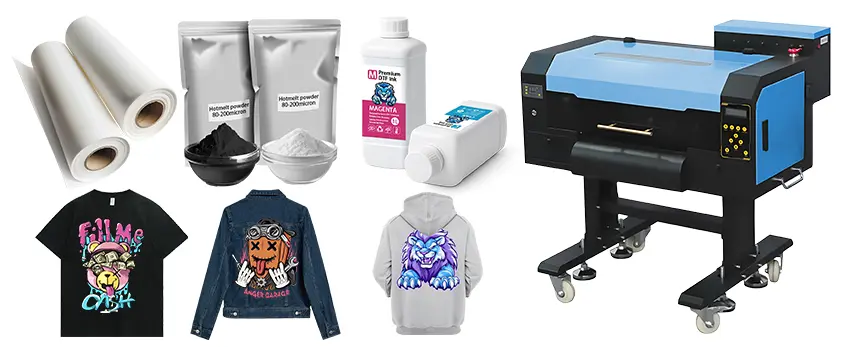
DTF printing on clothes offers impressive versatility, working smoothly on almost any fabric—cotton, polyester, blends, hoodies, hats, and more. Whether you’re tackling light or dark fabrics, DTF transfers deliver vibrant full-color designs that really pop.
For small to medium batches, DTF is speedy and scalable. Unlike screen printing, which demands costly setup for large runs, DTF allows you to produce high-quality custom apparel efficiently, making it perfect for personal projects or growing small businesses.
Color vibrancy and detail retention in DTF printing are top-notch. The white ink underbase and specialized inks ensure your designs stay bright and sharp, even after multiple washes. Plus, the prints have a soft, stretchable hand feel that keeps garments comfortable and wearable.
Cost-wise, DTF is more budget-friendly than alternatives like DTG or screen printing when working with low volumes. You save on expensive screens and setup, and the equipment needed is surprisingly accessible for beginners.
Durability is another win — DTF transfers withstand washing well without cracking or peeling. Their flexibility means the design moves naturally with the fabric, ensuring your custom tees and merch look great longer. For more on reliable supplies and quality results, consider checking out the jinlong DTF supplies that integrate perfectly with your setup.
Posibles inconvenientes y cómo superarlos
DTF printing on clothes does come with a few challenges, but none are deal-breakers if you know how to handle them.
Initial Learning Curve and Equipment Investment
Getting started requires understanding the process steps and investing in the right gear. DTF printers, like those used in beginner setups, can seem pricey at first. The good news? Once you’re past the learning phase and familiar with your equipment, the workflow becomes smooth and efficient.
Powder and Curing Considerations
Using adhesive powder correctly is crucial. Too much or too little powder affects the bond and finish. Curing also needs careful attention—incorrect heat press settings might cause cracking or peeling. Beginners should practice with test prints and follow recommended Ajustes de la prensa térmica DTF closely to avoid common issues.
Storage and Shelf-Life of Transfers
DTF transfers on PET film need proper storage to maintain quality. Exposure to humidity or heat can reduce shelf-life and affect print adhesion. Store films in a dry, cool place and use them within the suggested timeframe for best results.
Practical Mitigation Strategies for Beginners
- Start with small batch runs to minimize waste and learn the process.
- Use high-quality supplies like jinlong’s DTF films and adhesive powders to ensure consistent output.
- Keep your workspace well-organized and ventilated for safety and efficiency.
- Regularly clean and maintain your printer and heat press to extend their lifespan.
By acknowledging these potential drawbacks and applying these simple strategies, beginners can confidently overcome obstacles and enjoy durable, vibrant DTF printing results on their clothing projects.
DTF vs. Other Printing Methods Quick Comparison for Clothes
When deciding on the best printing method for your custom apparel, it helps to compare Direct to Film (DTF) with DTG, screen printing, and sublimation. Here’s a simple side-by-side look at key factors like cost, quality, fabric compatibility, and ease of use for clothes:
| Método de impresión | Coste (bajo volumen) | Color Quality | Compatibilidad de tejidos | Facilidad de uso | Lo mejor para |
|---|---|---|---|---|---|
| Impresión DTF | Low to mid, cost-effective for small runs | Vibrant full-color with soft hand feel | Works on cotton, polyester, blends, dark or light fabrics | Moderate learning curve, needs heat press | Small businesses, variety of garments, vibrant designs on dark fabrics |
| Impresión DTG | Higher setup and maintenance cost | Excellent color detail but best on light cotton | Mostly cotton and light fabrics only | Easy digital workflow, slower batch speed | High-detail prints on cotton tees |
| Serigrafía | High initial setup, very low cost per item at scale | Good color vibrancy, limited color range | Best on cotton and sturdy fabrics | Complex setup, best for bulk orders | Large runs, simple graphic designs |
| Sublimación | Moderate cost, needs special polyester fabric | Brilliant, permanent colors but limited to light polyester | Only works well on polyester or polyester-coated items | Requires specific polyester garments | Sportswear, polyester apparel |
When to Choose DTF Printing for Your Clothes
- ¿Quieres? vibrant, detailed designs on any fabric color, including darks.
- You need flexibility with fabric types — cotton, polyester, blends, even hoodies and hats.
- You aim for a soft, stretchable finish that holds up through wash.
- Your order volumes are small to medium-sized, where screen printing setups aren’t practical.
- You prefer a cost-effective and scalable method that balances quality and speed for custom tees and merch.
DTF printing gives you versatility and solid returns without the complexity of traditional methods. For tips on perfect heat press settings, check out the Tabla de temperaturas DTF para diferentes tejidos y películas de transferencia para empezar bien.
Practical Tips for Successful DTF Printing on Clothes
Getting great results with DTF printing on clothes means paying attention to a few key details from design to finishing. Here are some practical tips to help you succeed:
Buenas prácticas de diseño
- Avoid thin lines and fine details: These can be tricky to print and may crack or peel over time.
- Use proper color profiles: Stick to CMYK color settings optimized for DTF printers to achieve rich, vibrant full-color DTF designs on dark fabrics and light ones alike.
- Refleje su diseño: Since the print goes on PET film first, always flip your image horizontally before printing.
Heat Press Optimization
- Temperatura: Generally, set your heat press between 305°F to 320°F (150°C to 160°C).
- La hora: Press for about 15 to 20 seconds for best adhesion.
- Presión: Use medium to firm pressure—too light and the adhesive won’t bond well, too heavy and prints may distort.
- Técnica de exfoliación: Cold peel transfers usually yield better stretch and softness, but always check your specific DTF ink and powder manufacturer guidelines.
Solución de problemas comunes
- Cracking or peeling: Often caused by low pressing temperature, insufficient adhesive, or thin design elements.
- Desvanecimiento: Use high-quality DTF inks and ensure proper curing; also advise customers to wash garments inside out in cold water.
- Adhesive lifting: Make sure the adhesive powder is evenly applied and fully cured to avoid transfer lifting.
Care Instructions for End-Users
- Recommend washing printed garments inside out at or below 30°C (86°F).
- Evite el uso de lejía y detergentes agresivos.
- Air drying is best, but if using a dryer, low heat preserves print life.
- Evite planchar directamente sobre la impresión.
Testing and Quality Control
- Always test print on a sample fabric before moving to large batches.
- Conduct wash tests to confirm print durability and colorfastness.
- Adjust heat press settings and design details based on test results.
By following these practical tips, you can ensure your custom apparel DTF method produces beautiful, durable prints that customers will love and wear for the long haul. For detailed step-by-step printer setup and transfer techniques, consider exploring beginner-friendly Equipos de impresión DTF options to match your needs.
Getting Started with jinlong DTF Beginner Recommendations
If you’re new to DTF printing on clothes, jinlong DTF products make the whole process a lot easier. They offer high-quality PET films, vibrant DTF inks, and reliable adhesive powders designed to work perfectly together, ensuring your prints are crisp, colorful, and durable. For beginners, jinlong also provides starter kits and ready-to-press transfer packages that take the guesswork out of setup and speed up your workflow.
These kits typically include everything you need—films, inks, powders, and detailed instructions—so you can focus on creating without worrying about mismatched supplies. On top of that, jinlong supports newcomers with resources and guides that help you master essential techniques like correct DTF heat press settings and adhesive powder curing, giving you confidence for every batch.
If you want to avoid common pitfalls when setting up your first DTF printer or solve issues with inks and films, checking out jinlong’s detailed advice on topics like reliable DTF printing equipment for beginners and troubleshooting white ink problems is a smart move. This support helps you get consistent, professional results right out of the gate.
To learn more about avoiding mistakes and choosing the right DTF printer setup, explore jinlong’s dedicated resources such as their common buying traps for beginners y white ink issues guide. This way, your journey into custom apparel DTF printing gets off to a solid, cost-effective start.


 English
  Español
  Deutsch
  Français