


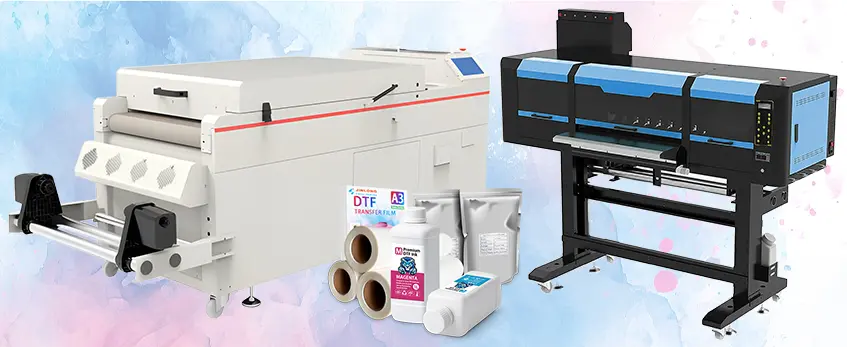
High-Speed DTF Printer and Shaker for Efficient Bulk Transfer Production
Understanding DTF Printing for High-Volume Operations
Direct-to-Film (DTF) printing has quickly become a go-to solution for high-volume transfer production, standing apart from small-batch or alternative methods like DTG (Direct-to-Garment) and sublimation. But what really sets high-volume DTF printing systems apart? The answer lies in its streamlined, scalable workflow optimized for consistent, vibrant output.
What Makes High-Volume DTF Different?
Unlike DTG or sublimation, high-volume DTF printing uses specialized printers paired with automatic powder shakers to handle large runs efficiently. This combination allows for:
- Mayor rendimiento with wide-format printers often exceeding 24\” or even 48\” print widths.
- Durable, stretchable transfers that hold up after 50+ wash cycles without cracking or fading.
- Broad fabric compatibility, including cotton, polyester, blends, and even some hard-to-print surfaces.
- Menores costes por unidad thanks to reduced labor and material waste.
The Complete High-Volume DTF Workflow
High-volume industrial DTF transfer production follows a precise sequence designed for efficiency and quality control:
- Impresión – Using advanced DTF printer technology with white ink circulation and anti-clogging features.
- Aplicación en polvo – An automatic DTF powder shaker spreads adhesive powder uniformly on the wet print.
- Curado – The printed film passes through integrated drying or curing ovens, solidifying the adhesive.
- Weeding (optional) – Removing excess printing film if needed, depending on the design.
- Prensado térmico – The transfer is applied to the garment with a heat press, ensuring strong adhesion and vibrant colors.
Seamless Printer and Shaker Integration
At high volumes, the efficiency of the process depends on the printer and shaker working in perfect sync. Any mismatch in speed or powder application can cause bottlenecks, uneven transfers, or wasted materials. Automatic powder shaker dryers with adjustable vibration and suction ensure consistent powder adhesion with minimal manual intervention, keeping your production line moving smoothly.
Key Advantages for Bulk DTF Production
- Colores vibrantes y duraderos that maintain brilliance even after multiple washes.
- Stretchable transfers that flex with fabric movement without cracking.
- Works on a wide variety of fabrics, from cotton tees to polyester blends.
- Rentable: High throughput lowers labor costs and reduces material waste, saving money over time.
High-volume DTF printing systems are built to meet the demands of bulk orders without compromising quality or speed. When paired with a professional DTF powder application machine and curing setup, they deliver consistency and scalability needed for today’s competitive apparel market.
Critical Role of the Powder Shaker and Dryer in High-Volume Success

In a high-volume DTF printing system, the powder shaker and dryer are game changers. Automatic DTF powder shakers remove the inconsistencies and labor bottlenecks that come with manual powdering. This automation ensures every transfer has uniform adhesive coverage, which is crucial when you’re pushing out bulk orders.
For efficient production, look for shaker features like adjustable vibration and suction settings that control how much powder is applied. Integrated drying and curing keep the powder perfectly bonded to the film, while powder recycling systems minimize waste. Fume extraction is also essential for a safer environment and better print quality.
These shaker components directly impact final transfer quality. You’ll see stronger adhesion, wash durability lasting over 50 cycles, crack resistance, and vibrant colors that hold up wash after wash. On the flip side, underpowered or poorly designed shakers often lead to patchy adhesive application, reduced wash life, and color fading.
Premium DTF printer shaker bundles solve these issues by matching shaker speed and curing power to the printer output, ensuring consistent, top-tier quality on every print. This synchronized workflow is key to scalable, reliable industrial DTF transfer production. For a deeper look at how powder adhesion affects your results, check out this detailed guide on how DTF printer ink affects adhesion, powder melting, and wash resistance.
Key Specs for High-Volume DTF Printer and Shaker Systems
Al elegir un high volume DTF printing system, focus on these critical specs to ensure smooth, big-batch production:
| Especificación | En qué fijarse | Por qué es importante |
|---|---|---|
| Print Width & Speed | Options: 24\”, 30\”, 48\”+; Dual, Quad, or more Epson i3200-style heads | Larger widths and more heads boost throughput for industrial DTF transfer production |
| Printhead Tech | White ink circulation, anti-clogging systems | Keeps runs uninterrupted with consistent white ink density and minimal maintenance |
| Shaker Type & Features | Conveyor vs. batch shaker; adjustable curing temp; throughput sync with printer | Ensures uniform DTF powder application and proper curing at production speed |
| Calidad de construcción y automatización | Touchscreen controls, auto powder recovery, integration readiness | Streamlines operation, reduces manual work, and supports workflow automation |
| Power & Safety | Check power draw, physical footprint, and safety features (air filtration, noise reduction) | Fits your production space and meets workplace safety and comfort standards |
A well-matched DTF printer shaker bundle that balances these specs guarantees consistent, vibrant transfers and minimal downtime in bulk runs.
For more on optimizing print quality and maintaining color vibrancy, explore this detailed guide on how to print matte DTF transfers for soft and professional results.
Benefits of Investing in a Dedicated High-Volume DTF Setup
Switching to a dedicated high volume DTF printing system can seriously boost your production game. Here’s what you gain:
Higher Output & Faster Fulfillment
Automating print, powder application, and curing means you get more transfers done daily and weekly — speeding up order turnaround and keeping customers happy.
Lower Labor & Material Waste
With an automatic DTF powder shaker dryer, manual errors drop, and you save money on powder and film waste thanks to precise, consistent application.
Consistent, Professional Results
Reliable equipment produces vibrant, durable transfers every time, letting you confidently offer premium pricing without compromising quality.
Easy Scalability
Whether it’s holiday rushes or expanding your business, a scalable DTF apparel production setup handles seasonal peaks without slowing down.
Long-Term Cost Savings
Investing upfront in a cost-effective high output DTF setup beats outsourcing or sticking to slower methods — you save on both time and money over the long haul.
| Beneficio | Por qué es importante |
|---|---|
| Increased Daily Output | Faster turnaround, meet tight deadlines |
| Reducción de residuos | Saves materials, lowers expenses |
| Calidad constante | Better products = more repeat business |
| Escalabilidad | Grow with ease during busy seasons |
| Long-Term Savings | Cut overall production costs |
If you’re serious about industrial DTF transfer production, pairing a reliable printer with an automatic powder shaker is key to hitting these benefits.
For best results, consider jinlong\’s DTF transfer films y de alta calidad opciones de tinta blanca optimized for high-volume setups.
jinlong DTF Printer and Shaker Solutions for Demanding Production
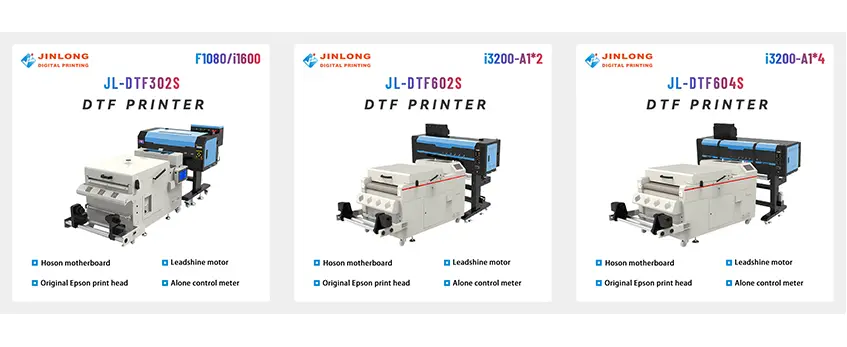
jinlong’s DTF printer and shaker systems are built specifically for high-volume DTF printing setups that demand speed, consistency, and durability. Designed for industrial DTF transfer production, these machines pair powerful Epson i3200-style printheads with advanced automatic DTF powder shakers to ensure your workflow keeps up with tight deadlines and large orders.
Key models and bundles from jinlong offer broad print widths and high-speed output, with reliable white ink circulation and anti-clogging tech to minimize downtime. Their integrated shaker technology delivers uniform powder application and curing, reducing waste while maintaining strong adhesion and vibrant colors—essential for durable DTF heat transfers bulk production requires.
Real-world benefits include rugged construction that stands up to continuous use, optimized powder application to cut material costs, and a smooth high throughput process that aligns perfectly from printing to finishing. Plus, jinlong consumables like certified DTF transfer film, inks, and powders are engineered to complement the hardware, giving you consistent results and top-tier color vibrancy. Check out their options for high-quality [DTF transfer film](https://jinlongprints.com/product/dtf-transfer-film-50cm
Comparing Printer + Shaker Options: What Matters Most for Your Volume
Al elegir un DTF printer and shaker setup, the biggest difference lies between entry/mid-level models and true high-volume systems. Here’s what you need to focus on:
| Factor | Entry/Mid-Level Systems | High-Volume Systems |
|---|---|---|
| Velocidad y rendimiento | Moderate speeds, suited for smaller batches | Fast printing with 24\”, 30\”, or 48\”+ widths to handle large orders |
| Duty Cycle | Designed for occasional use or low runs | Built for continuous, heavy daily use without breakdowns |
| Automation Depth | Basic powder application, manual adjustments | Fully automatic powder shakers with adjustable vibration and curing controls |
| Maintenance Intervals | More frequent servicing needed | Longer intervals with advanced anti-clogging and powder recovery |
| Upgrade Paths | Limited or no scalability | Options for adding printheads or upgrading software to boost output |
| Support Availability | Often basic or standard support | Priority support and on-call service geared to keep high-volume lines running |
Watch Out for These Common Pitfalls
- Mismatched Printer and Shaker Speeds: If your shaker can’t keep up with the printer’s throughput, powder coverage will be uneven, hurting transfer quality and durability.
- Inadequate Curing Power: Without efficient drying and curing, transfers won’t adhere properly or hold up to washing.
- Limited Automation: Manual steps increase labor time and risk inconsistency, slowing down production.
To make the most of your setup, pick a high-throughput DTF shaker matched precisely to your printer\’s speed and capacity. This ensures smooth, reliable operation and consistent transfer results.
For a detailed look at pairing DTF printers with shake and cure systems, check out how to use a DTF printer and shaker for t-shirt and apparel printing.
Setting Up and Optimizing Your High-Volume DTF Workflow
Running a successful high-volume DTF printing system requires thoughtful setup to keep production smooth and consistent.
Space, Power & Environment
Plan your workspace with enough room for the DTF printer and shaker to operate side by side. Ensure reliable power supply that matches your equipment’s requirements. Good ventilation and temperature control are essential to avoid ink drying issues and maintain powder adhesion quality during continuous operation.
Film Handling & Ink Management
Handle DTF film carefully to prevent dust or wrinkles that can ruin prints. Store films in a clean, dry place. Monitor ink levels closely and use white ink circulation systems to keep ink flowing without clogs. Proper ink management reduces downtime and maintains vibrant color output.
Powder Calibration & Curing Profiles
Calibrating your DTF powder application machine is key—adjust shaker vibration and powder amount for uniform adhesive coverage. Establish curing profiles in your conveyor DTF shaker curing oven that match the fabric type and transfer size for optimal bonding and durability.
Efficient Software & RIP Use
Leverage specialized RIP software designed for DTF to streamline batch processing and color management. Optimizing RIP settings can speed up print queues and reduce ink and powder waste. Learn how to fix common RIP issues for seamless workflow by referencing solutions from trusted sources like the common DTF RIP software problems and how to fix them guía.
Heat Press & Finishing Integration
Coordinate your printed and cured transfers with auto heat press machines already tested to work well with DTF films and powders. Proper heat pressing ensures transfers are fully bonded and stretchable, meeting durability standards required for bulk orders. For details on machine compatibility, check out auto heat press machines tested with different DTF films and powders.
By addressing these setup and optimization points, you’ll maintain a high output rate with excellent transfer quality, ready to meet the demands of industrial DTF transfer production.
Maintenance, Troubleshooting, and Maximizing Uptime
Keeping your high-volume DTF printer and shaker running smoothly means establishing simple daily and weekly routines. Start each day by inspecting printheads for clogs, checking powder application consistency, and verifying film alignment to prevent jams. Weekly, clean the shaker components and drying ovens to avoid buildup that can cause uneven powder distribution or curing issues.
Common problems like nozzle clogs or uneven powder coverage often arise from skipping these routines, so quick preventative care saves downtime. Use recommended cleaning solutions for printheads and replace worn parts promptly to maintain optimal performance.
For shaker systems, monitor vibration settings and curing temperatures regularly to ensure adhesive powder cures properly and sticks consistently, avoiding transfer quality drops.
To extend the life of your professional DTF equipment for bulk orders:
- Schedule routine service of printheads and shaker parts based on manufacturer guidelines.
- Keep the workspace clean and dust-free to protect sensitive components.
- Use high-quality inks, powders, and films that reduce wear and buildup.
- Train staff to spot early warning signs like discoloration or inconsistent prints.
A well-maintained industrial DTF transfer production setup not only boosts uptime but also guarantees consistent, vibrant transfers that meet your clients’ expectations. For tips on avoiding powder adhesion issues, check out this guide on why DTF sometimes doesn’t stick and common fixes.
Calculating ROI and Total Cost of Ownership
When investing in a high volume DTF printing system, it’s crucial to understand the full financial picture. Your initial outlay includes the cost of the DTF printer and shaker bundle, but ongoing expenses like inks, powder, film, and energy use add up quickly. For example, premium white ink circulation systems and quality powder application machines, such as those featured in jinlong’s lineup, help reduce waste and improve efficiency, impacting your overall cost structure.
To estimate your break-even point, calculate how many transfers you’ll need to produce at your current pricing to cover both fixed and variable costs. Consider your typical order volume and throughput—higher volume setups with faster Epson i3200 DTF printer high speed technology can shorten this timeline significantly.
Here are some strategies to lower your cost-per-transfer without sacrificing quality:
- Optimize powder usage with automated shakers that ensure consistent adhesive coverage, cutting down on waste.
- Use high-quality, compatible consumables like jinlong’s DTF transfer film and TPU hot melt adhesive powder for smooth, durable prints.
- Maintain efficient curing cycles matched to your shaker’s capabilities to avoid rework.
- Streamline your workflow to reduce labor costs and downtime.
By carefully balancing these factors, your scalable DTF apparel production can achieve steady profitability while delivering vibrant, durable heat transfers suitable for bulk orders.


 English
  Español
  Deutsch
  Français