


DTF Powder Not Sticking Printing Causes and Proven Fixes Guide
Understanding DTF Powder Adhesion in the Printing Process
Direct-to-Film (DTF) printing involves several critical stages, and one of the most important is the application of DTF adhesive powder. After the ink is printed onto the PET film, this hot melt powder acts as the glue that bonds the ink to the fabric during heat transfer. Proper DTF powder adhesion ensures durable, vibrant prints that withstand washing and wear.
Several key factors influence how well the DTF powder sticks to the ink:
- Ink Wetness: The ink must be fresh and tacky enough to hold the powder. Too dry, and the powder won’t adhere properly; too wet, and it may clump or smear.
- Powder Size and Quality: Powder particle size affects coverage and melting behavior. High-quality powders like Jinlong DTF powder have consistent particle size and reliable adhesive properties.
- Environmental Conditions: Humidity and temperature impact ink drying and powder melting. High humidity can cause powder clumping or poor adhesion.
- Curing Parameters: Correct curing temperature and dwell time are essential to fully melt the powder and create a strong bond without degrading the print.
Adhesion failures typically result from issues in one or more of these areas, but the good news is they’re often fixable. By understanding how these factors interact, operators can troubleshoot and optimize the DTF workflow to achieve consistent, professional powder adhesion every time.
Common Causes of DTF Powder Not Sticking (and How to Diagnose Them)
When DTF powder for printing doesn’t stick properly, it usually comes down to a few key issues. Here’s what to watch for and how to spot each problem:
Inadequate or uneven powder application: Applying too little powder means it won’t fully cover the wet ink, leading to weak adhesion. Too much powder or clumping, on the other hand, can cause uneven melts and poor bonding. Quick test: Run your finger over the powdered print—if patches feel bare or bumpy, application needs adjustment.
Incorrect curing temperature or time: If the powder isn’t melting enough (under-curing), it won’t bond to the ink. Overheating can degrade the powder or ink. Use a temperature probe and timer to confirm you’re hitting the recommended 160–180°C (320–356°F) range for the right duration. Uneven melting spots are a red flag.
Environmental factors (humidity): High humidity slows ink drying and can cause powder clumping or poor adhesion. If your shop feels damp, this is likely the root cause. Quick check: Feel the print’s surface after powdering—excess moisture means it’s not ready for powder.
Poor-quality or expired powder: Low-grade or old DTF adhesive powder can have inconsistent particle sizes or absorb moisture, reducing stickiness. If your powder has hardened chunks or looks dusty, it may be expired or contaminated.
Ink and film compatibility problems: Wetness of the ink, inadequate white ink density, or using low-quality PET film can hinder powder adhesion. This often appears as powder sliding off or peeling during transfer. Adjusting the white ink layer or switching to a trusted film improves results. Learn more about optimal Impresión de películas PET to boost compatibility.
Printer settings: Insufficient white ink layers, low print resolution, or drying the print before powdering can all cause weak powder adhesion. Check your RIP software and ink coverage; too thin a base under the color layer means powder won’t stick well.
Improper storage and handling: Moisture contamination, dust, or physical damage to powder during storage can degrade its effectiveness. Always use airtight containers and clean dispenser systems to keep powder fresh.
Fabric challenges during the final transfer: Some fabrics don’t bond well with DTF transfers due to texture or composition. While less common, it’s worth testing different materials if adhesion issues persist.
Additional factors: Differences in curing equipment and operator technique also play a role. An uneven heat press or rushed process can cause inconsistent adhesion.
Symptoms & Quick Tests:
- Powder falling off easily = too little powder or under-curing.
- Clumps in powder = moisture in powder or uneven application.
- Peeling transfers after wash = improper curing, low-quality powder, or fabric issues.
Identifying the exact cause helps you apply the right fix and prevents repeated problems in your DTF printing process. For detailed advice on your workflow stages, check the Guía de flujo de trabajo DTF to optimize powder application and curing steps.
Step-by-Step Fixes for DTF Powder Adhesion Problems
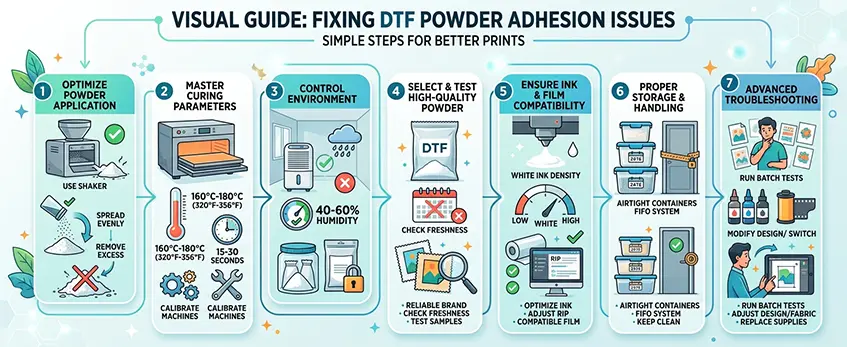
Fixing DTF powder adhesion issues starts with the basics and moves into detailed adjustments. Here’s a clear guide to get your prints sticking right every time.
Optimizar la aplicación del polvo
- Utilice un agitador de polvo for even coverage, avoiding clumps or sparse spots.
- If applying manually, spread the powder evenly and shake off excess loose powder to prevent uneven adhesion.
- Check powder particle size and quality regularly to prevent clumping, which is common with poor-quality or expired powder.
Master Curing Parameters
- Stick to the right DTF curing temperature settings—typically between 160°C-180°C (320°F-356°F).
- Ensure curing time is consistent, usually 15-30 seconds, depending on your equipment.
- Regularly calibrate curing machines to avoid under-melting or overheating, both of which cause powder adhesion failures.
Control Environment
- Keep humidity levels low (around 40-60%) because high moisture slows ink drying and affects powder sticking.
- Utilice deshumidificadores and store powder in airtight containers to keep moisture out.
- Maintain stable room temperature to avoid ink drying inconsistencies.
Select and Test High-Quality Powder
- Choose reliable powders like Polvo DTF Jinlong for consistent particle size and superior adhesion.
- Always verify powder freshness; expired powder absorbs moisture and loses effectiveness.
- Test new powder batches on different fabrics to confirm performance before large runs.
Ensure Ink and Film Compatibility
- Ajustar densidad de tinta blanca—too thin and the powder won’t adhere properly, too thick and prints may clog.
- Calibrate RIP settings to optimize ink layers.
- Use compatible PET films designed for DTF to maximize powder bonding.
Proper Storage and Handling
- Store powder in airtight, moisture-proof containers away from sunlight and temperature extremes.
- Rotate stock to use older powder first, respecting shelf-life recommendations.
- Avoid contamination from dust or packaging damage.
Advanced Troubleshooting
- Ejecutar batch testing to isolate problem powders or inks.
- Adjust designs or fabric types if adhesion issues persist on certain materials.
- Replace supplies suspected of causing repeated failures.
Safety Notes and Cost-Saving Tips
- Avoid over-curing, which can burn the powder and weaken adhesion.
- Regular maintenance of printers and curing ovens extends equipment life and ensures consistent results.
- Using high-quality products like jinlong DTF powder may cost more upfront but saves money by reducing rejects and reprints.
By following this step-by-step approach, you can solve most common DTF adhesive powder adhesion issues and keep your prints looking sharp and durable. For a deeper dive into equipment choices and powder handling, see our guide on the benefits of using an all-in-one DTF printer vs separate printer and powder shaker.
Prevention Tips for Reliable DTF Powder Performance
To keep your DTF powder for printing sticking consistently and avoid common adhesion issues, it’s crucial to set up clear standard operating procedures (SOPs) and maintenance checklists. These help ensure every step—from powder application to curing—is done right every time. Regularly inspect and clean your equipment to prevent buildup that can affect powder adhesion.
Implementing quality control workflows is another key step. This means testing batches of your powder and prints to spot any inconsistencies early. Monitoring white ink density and powder particle size can catch problems before they impact final transfers. Also, careful tracking of curing temperature settings and curing times ensures durability and reduces transfer peeling issues.
Building a reliable supply chain with trusted brands like jinlong DTF guarantees you get fresh, high-quality powders designed for optimum adhesion. Trusted supplies reduce risks of powder clumping, moisture contamination, and expired materials that cause hot melt powder not sticking to ink.
As your print operation scales up, maintaining these prevention practices helps you handle larger volumes without sacrificing print quality. Consistent training for operators on powder application and curing best practices ensures the same high standard from the first print to the thousandth.
For expanded info on DTF workflow and materials, consider reviewing detailed guides on DTF vs Heat Transfer equipment and workflow. This can help refine your setup for better powder adhesion and overall print durability.
Case Studies and Real-World Examples
In a high-humidity print shop in the southern U.S., DTF powder adhesion was a constant headache. The hot melt powder just wouldn’t stick right, leading to frequent transfer peeling and poor durability. After switching to Polvo DTF Jinlong and fine-tuning their DTF curing temperature settings, they saw immediate improvement. Controlling humidity levels with a dehumidifier and sticking closely to recommended curing times stopped moisture from interfering with ink wetness and powder bonding.
A small business struggling with uneven powder application found a simple fix by upgrading their powder shaker and training staff on even coverage techniques. This reduced clumping and inconsistent adhesion, leading to more reliable prints and less wasted material. Their improved workflow reflects common causes of uneven DTF powder application and highlights practical solutions for better results.
Before and after durability tests also show how optimized powder use and curing can enhance wash resistance dramatically. Prints that faded or peeled after one wash became long-lasting transfers after adjustments in white ink density for powder adhesion and using top-grade Jinlong powder. These real-world wins demonstrate the value of precise control over every stage—from ink to curing—to eliminate typical DTF adhesive powder adhesion issues while boosting product quality and customer satisfaction.
For more on avoiding common mistakes, check out tips on black DTF powder application mistakes that affect print quality.


 English
  Español
  Deutsch
  Français