


Common Problems with Low-Quality DTF Kits and How to Avoid Them
The Hardware Trap: Why Cheap Printers Fail
When diving into direct-to-film (DTF) printing, one critical decision is choosing between converted inkjet printers y professional DTF engines. Converted printers are standard inkjets retrofitted for DTF printing but lack specialized design features, while professional DTF printers are purpose-built with components tailored for the unique demands of DTF.
Converted vs. Professional Printers
- Converted Inkjet Printers: These machines often use paper feed rollers meant for traditional media. When feeding PET film with wet DTF ink, these rollers create pressure that damages the ink layer, leaving permanent \”pizza wheel marks\” or streaks.
- Professional DTF Engines: Designed with gentle film feeding systems, they prevent damage to the wet ink, preserving print quality and reducing waste.
The White Ink Circulation Crisis
A common downfall of low-quality DTF kits is the absence of a Sistema de circulación de tinta blanca (WICS). Since white ink contains dense pigments, it tends to settle quickly:
- Without WICS, white ink sedimentation builds up in the printhead.
- This causes frequent Obstrucción del cabezal de impresión DTF, leading to costly repairs and downtime.
- Persistent sediment can permanently damage the printhead, forcing early replacement.
Motherboard and Sensor Errors
Cheap DTF kits often cut corners by bypassing critical sensors on the machine’s motherboard. Since PET film is transparent, sensors detect film misfeeds or jams:
- Generic kits ignore these signals, resulting in repeated false \”paper jam\” errors.
- This disrupts production and frustrates users trying to print consistently.
In , low-cost DTF printers often falter due to poor hardware design, risking print quality, reliability, and operational efficiency. Investing in a professional DTF engine means fewer mechanical failures and a smoother printing experience.
Consumable Chaos: Ink, Film, and Powder Issues
Low-Grade DTF Ink (The Silent Killer)
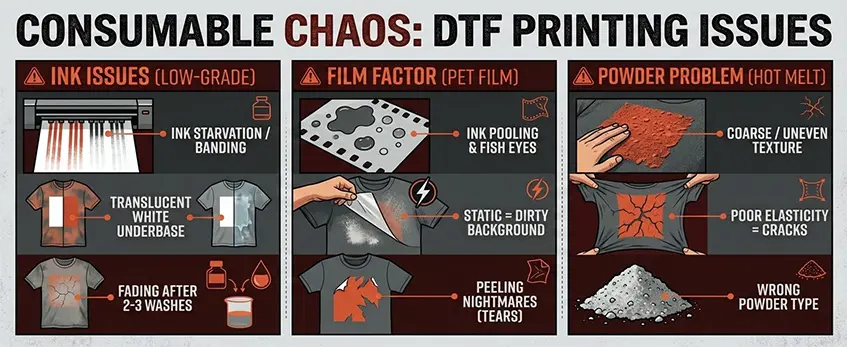
Cheap DTF ink is a major headache. Its poor viscosity means the ink flows unevenly, causing “ink starvation” and visible banding on prints. This makes your designs look patchy and unprofessional. Low-quality white ink is even worse—it tends to separate like oil and water, resulting in a translucent, watery white underbase that kills the vibrancy of your colors. On top of that, poor binder quality means prints start fading after just 2-3 washes, a deal-breaker for any apparel business.
The PET Film Factor
If your PET film coating is inconsistent, expect ink pooling and “fish eyes”—tiny spots where ink simply won’t stick. Lower-end film also generates static electricity, which makes powder cling to non-printed areas, creating a nasty “dirty background” effect that ruins the whole look. Plus, if the release layer isn’t applied right, your design can tear during hot or cold peeling, causing frustrating peeling nightmares. For consistent results, check out premium PET options like the Película de transferencia DTF Pro Series that guarantee better coating and less static.
The Powder Problem (Hot Melt Adhesive)
Using the wrong powder can also sabotage your prints. Coarse powder grains on detailed designs give a rough, uneven texture that feels cheap. Beyond texture, poor powder elasticity causes cracks when stretched with fabric—definitely not what you want on wearable items. The right hot melt powder must match the fabric’s stretch to stay intact and comfortable in everyday wear.
By focusing on high-quality inks, reliable PET film, and properly sized powders, you’ll avoid these common consumable pitfalls that lead to poor prints and unhappy customers.
The Software Gap: Color Management and RIP
Lack of ICC Profiles
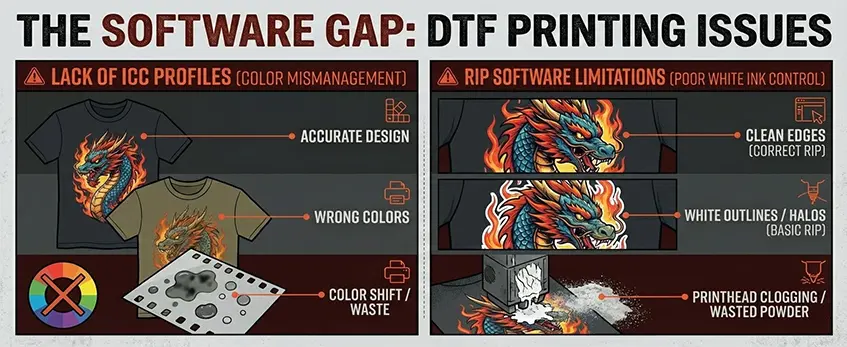
One of the biggest issues with low-quality DTF kits is the absence of professionally calibrated ICC profiles. Without these profiles, colors come out wrong — reds turn orange, grays shift green, and heavy ink layers can blur or ruin the PET film. This lack of color management makes your prints look unprofessional and inconsistent, especially for customers expecting accurate shades every time. ICC profiling for DTF is key to getting vibrant, true-to-design prints without wasting materials.
RIP Software Limitations
Cheap DTF kits often come with basic Raster Image Processor (RIP) software that can’t properly handle white ink channels. White ink choke or spread settings control how the white underbase sits behind color layers. When these controls are missing or poorly implemented, white outlines or halos peek through your design edges, ruining the clean look. This also contributes to printhead clogging from excess white ink usage and wasted powder adhesion. A solid RIP software combined with accurate ICC profiles improves transfer quality and reduces troubleshooting headaches.
How to Avoid These Pitfalls (The Jinlong DTF Solution)
A. Identifying Professional Specs
When shopping for a DTF kit, look beyond price tags and focus on key features that ensure quality and reliability:
- Active White Ink Circulation Systems (WICS) to prevent ink sedimentation and printhead clogging.
- Heating systems that help cure the transfers evenly and improve powder adhesion.
- Vacuum platens for stable paper feeding, avoiding “pizza wheel marks” on your prints.
These specs separate professional DTF printers from the “converted” or low-quality hardware that often causes costly headaches.
B. The Importance of Matched Systems
One big mistake is mixing inks, films, and powders from different brands or generics. Jinlong DTF products—inks, films, and powders—are designed to work as a matched set, creating a stronger chemical bond during the curing process. This synergy means better wash fastness, clearer colors, and fewer peeling or adhesion issues. Using Jinlong’s DTF white ink with their matched powder and film gives you consistent results that cheap combinations can’t match.
C. Maintenance vs. Quality
Regular printhead maintenance is important, but no amount of cleaning can fix low-quality consumables. Cheap inks and powders accelerate clogging and wear, forcing frequent cleanings that waste time and money. Choosing premium Jinlong DTF ink and powder reduces the need for constant maintenance and extends printhead life. Investing in high-quality consumables upfront protects your printer and keeps your production running smoothly with less downtime.
For a complete setup that delivers durability and softness, check out Jinlong’s guide on achieving soft-hand feel in DTF printing. This ensures your prints not only look great but also feel great long after the press.
By spotting the right features, using matched Jinlong consumables, and understanding the limits of maintenance, you can avoid common pitfalls that plague low-quality DTF kits. This approach saves money, time, and frustration—helping you grow a reliable DTF printing operation.


 English
  Español
  Deutsch
  Français