


Best DTF Kit 2026 Reviews Features and Expert Buying Guide
If you’re searching for the Best DTF Kit in 2026, you’re likely aiming to future-proof your printing operations with a bundle that delivers precision, durability, and efficiency. Choosing the right Direct-to-Film printer kit isn’t just about hardware—it’s about seamless integration between printer engines, inks, films, and curing systems designed to maximize ROI. This guide cuts through the noise, presenting expert insights on the top kits, essential features, and buying tips that matter for high-volume, commercial-quality output in 2026. Let’s get straight to what makes a modern DTF kit a smart investment for your business.
Why the \”Kit\” Approach is Essential for Modern DTF Printing
In 2026, opting for a complete DTF kit is no longer just convenient—it’s a necessity for anyone serious about direct to film printing. Think of it as a system where everything works in harmony: the Impresora DTF, RIP software, and the curing unit all sync up to deliver consistent accuracy and speed. When these components aren’t matched well, you risk misaligned prints, longer production times, and costly recalibrations.
System Synergy: The Key to Efficiency
Matching your printer with the right RIP software for DTF printing and an efficient curing unit ensures your workflow is smooth and reliable. The software handles color profiling and mask generation, while the curing oven’s temperature settings lock in vibrant, durable prints. Together, this system synergy reduces errors and maximizes output, especially important when moving from desktop machines to commercial roll-to-roll DTF systems.
Cost-Efficiency: Bundles vs. Individual Sourcing
Buying a commercial DTF starter bundle usually saves money in the long run compared to piecing together a setup on your own. Bundles are optimized for compatibility, minimizing downtime and maintenance costs. Plus, sourcing individual parts—Tinta DTF, Película DTFy Polvo DTF—from different vendors can lead to mismatches, poor adhesion, and inferior print quality.
The 2026 Standard: From Desktop to Commercial Roll-to-Roll Systems
The industry is shifting rapidly away from basic desktop printers to high-volume, commercial roll-to-roll setups. These systems support higher production speeds and larger garment runs, ideal for scaling your printing business. A full kit tailored for this shift will include advanced printheads, automated powder shakers, and more efficient curing ovens, setting a new benchmark for quality and productivity in 2026.
By choosing a well-integrated DTF kit, you’re not just buying equipment—you’re investing in a future-proof printing system built for speed, accuracy, and cost savings.
Anatomy of a High-Performance DTF Kit
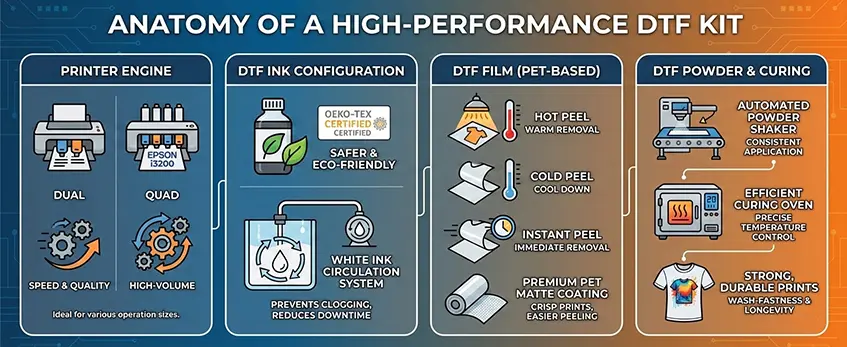
A top-tier DTF kit in 2026 starts with the printer engine, where you’ll commonly see dual or quad printhead setups. Dual printheads offer solid speed and quality, ideal for most small to mid-sized operations. But if you need volume without sacrificing detail, a quad printhead system like the Epson i3200 and newer models takes the lead for high-volume garment printing.
A continuación, el DTF ink configuration. Look for kits using Oeko-Tex certified inks—these are safer for skin contact and environmentally friendly. Plus, advanced kits come with a white ink circulation system to keep the white ink flowing smoothly and prevent clogging, a common maintenance headache. This extends printhead life and reduces downtime.
En Película DTF, typically PET-based, plays a huge role in transfer quality. In 2026, you’ll find hot peel, cold peel, and instant peel options. Hot peel requires the film to be peeled off while warm, cold peel after it cools down, and instant peel allows immediate removal. Each suits different production speeds and garment types, so pick what matches your workflow best. For example, premium PET transfer film with a good matte coating ensures crisp prints and easier peeling.
Por fin, DTF powder and curing are crucial for strong, durable prints. Automated powder shaker machines provide consistent powder application, boosting adhesion and reducing labor compared to manual ovens or hand-shaken powder. Efficient curing ovens with precise temperature control complete the process, ensuring wash-fastness and longevity. Choosing the right combination here can significantly impact your overall print quality and customer satisfaction.
For more on choosing quality DTF films, check out this detailed guide on DTF PET transfer film options.
Top Features to Look for in 2026 (Buying Tips)
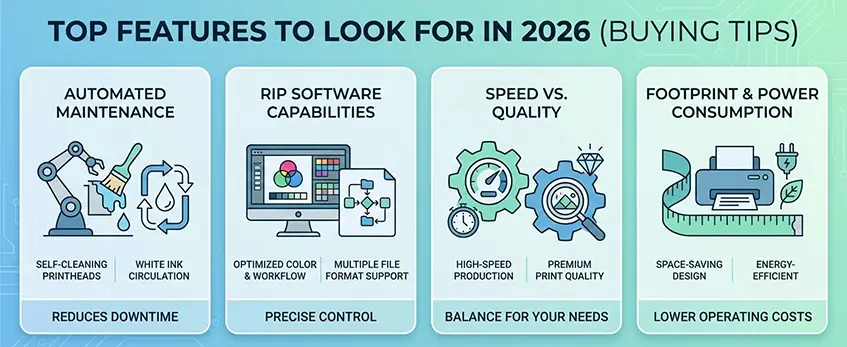
When choosing the best DTF kit in 2026, focus on features that boost uptime, efficiency, and print quality. Here’s what to watch for:
Automated Maintenance
- Self-cleaning printheads: Keeps your direct to film printer maintenance minimal by automatically flushing nozzles.
- Capping stations: Prevent ink from drying during idle times, reducing costly downtime.
Funciones del software RIP
- Color profiling: Ensures accurate, vibrant prints every time.
- White mask generation: Critical for sharp, opaque white ink layers in DTF printing.
- Nesting: Smart layout of designs to minimize PET transfer film wholesale waste and save materials.
Speed vs. Quality
| Característica | 6-Pass Mode | 8-Pass Mode |
|---|---|---|
| Velocidad de impresión | Faster, higher output | Slower, finer details |
| Caso práctico | High-volume garment printing | Premium, detailed prints |
| Ink Usage | Moderado | Slightly higher |
Choose the pass mode based on your production volume and customer quality expectations.
Footprint & Power Consumption
- Large commercial roll-to-roll DTF systems take up more space and require more power—perfect for established shops.
- Desktop or dual printhead DTF systems fit small businesses with limited space but might compromise speed.
Balancing these features will help you make a smart investment tailored to your business size and profit goals.
For deeper insights into optimizing your ink setup, check out our guide on DTF white ink differences and maintenance.
Review: Why Jinlong DTF Stands Out in the 2026 Market
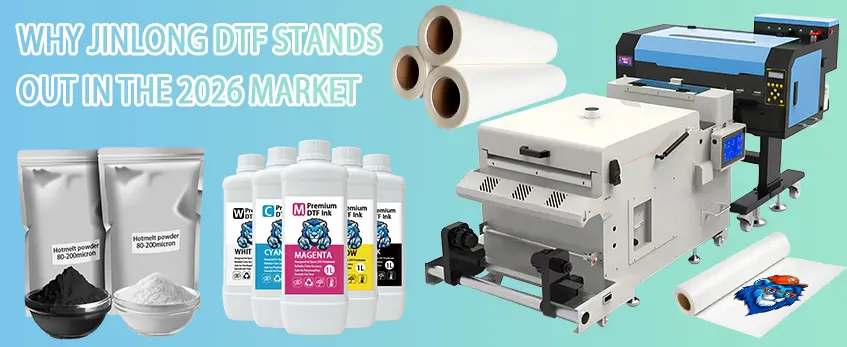
When it comes to the best DTF kit in 2026, Jinlong DTF truly sets the bar high. Their engineering upgrades, like advanced mainboards and precision paper feeding systems, give users smoother runs and fewer jams. This means less downtime and more prints per day—key for anyone serious about high-volume garment printing.
Jinlong’s kits come fully integrated, with specially paired DTF inks and films designed to work seamlessly together. This tight integration not only improves print quality but also extends wash-fastness well beyond 50 cycles, keeping designs vibrant wash after wash. For example, their range of rollos de película DTF de pelado en caliente is crafted for performance and reliability, making transfers crisp and consistent.
Another strong point is Jinlong’s customer support and warranty. Reliable technical help is essential in commercial setups where every minute counts—and Jinlong’s team is known for quick, knowledgeable support. This peace of mind lets you focus on production without worrying about unexpected breakdowns.
Choosing Jinlong means investing in a proven system that covers your needs from printer to powders and inks, backed by solid customer service. That makes it a smart pick for anyone aiming to future-proof their print shop with a premium DTF kit in 2026.
Comparing DTF Consumables: Not All Inks and Films Are Created Equal
When choosing a DTF kit, the quality of consumables like ink, powder, and film can make or break your print results. Let’s break down the key differences.
DTF Ink Viscosity
Ink viscosity plays a huge role in preventing damage to your printheads. Using ink with the right density, like Oeko-Tex certified DTF ink, ensures smooth flow and consistent print quality without clogging. Matching your ink viscosity with your printer system is essential to protect expensive parts and maintain sharp images.
Powder Granularity
Different powders suit different textile types. Fine powder is ideal for detailed designs and delicate fabrics, providing crisp edges. Meanwhile, coarser powder works better for heavy textiles like hoodies or thick cotton, offering strong adhesion and durability. Automated powder shaker machines can help apply powder evenly, reducing waste and improving print consistency.
Film Coating Quality
The coating on PET DTF transfer film affects final print vibrancy and ease of use. High-quality films with premium matte coatings produce vibrant colors without glare, while glossy finishes often brighten colors but may show fingerprints. Spotting the difference ensures your prints look professional every time. Check out our guide on why film coating quality matters for vibrant DTF prints in 2026 for more insights.
Choosing the right combination means better customer satisfaction and longer-lasting prints, so don’t overlook these consumable details when buying a DTF kit.
ROI Analysis: Calculating Profit Margins with a Pro Kit
When it comes to maximizing profits with a professional DTF kit, understanding your cost per print is crucial. Breaking down costs for ink, film, and powder per square meter gives you clear insight into your actual expenses. For example, using high-quality Oeko-Tex certified DTF ink alongside premium PET transfer film can slightly increase material costs, but it pays off with better durability and customer satisfaction.
Production speed directly impacts your bottom line. Faster kits, especially those with dual or quad printheads, allow you to increase daily output without compromising print quality. That means more orders completed and higher revenue potential. Plus, modern kits come with smart sensors that help reduce film wastage by precisely measuring and adjusting material use—this waste reduction lowers your overall costs and improves your environmental footprint.
Investing in a professional-grade DTF kit ultimately means balancing upfront costs with faster production, less waste, and consistent quality. These factors work together to boost profit margins and scale your custom apparel transfer solutions efficiently.
For a detailed look at how film costs affect profitability, check out the DTF rolls cost breakdown to see if roll film or sheets make more sense for your business.
Common Pitfalls to Avoid When Buying a DTF Kit
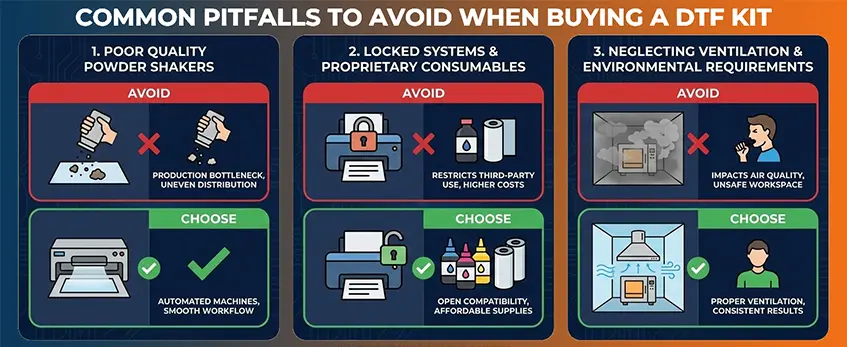
When investing in a DTF kit, steering clear of common mistakes can save you time and money down the road. First, watch out for poor quality powder shakers—they can become a production bottleneck if they don’t distribute DTF powder evenly or require constant refilling. Opt for automated powder shaker machines that keep the workflow smooth.
Second, avoid locked systems that restrict you from using third-party consumables like inks, powders, or PET films. Sticking with proprietary consumables might seem safer but often leads to higher costs and less flexibility in sourcing. Choose kits with open compatibility to access affordable, high-quality supplies.
Finally, don’t neglect ventilation and environmental requirements. DTF printing involves curing ovens and powders that can impact air quality. Proper ventilation ensures a safer workspace and consistent results, helping protect your equipment and staff.
For more on how integrated powder shakers improve production flow and reduce downtime, check out this detailed comparison of DTF printers with powder shaker vs integrated machines.
Preguntas más frecuentes (FAQ)
What is the typical printhead lifespan in 2026 for DTF kits?
Printheads in modern DTF kits, especially those using advanced models like the Epson i3200, typically last between 2 to 3 years under regular commercial use. Proper maintenance, including regular cleaning and use of Oeko-Tex certified DTF ink with the right viscosity, helps extend printhead life and prevents clogging.
Are Jinlong consumables compatible with other DTF brands?
Jinlong DTF consumables, such as their inks, powders, and PET transfer films, are designed primarily for optimal performance within their own integrated kits. While some users successfully pair Jinlong films and inks with other printers, it’s best practice to use matched consumables for guaranteed quality and wash-fastness, along with support for maintenance routines.
What maintenance schedules are recommended for commercial DTF kits?
Maintaining a commercial DTF kit involves:
- A diario: Clean printheads and nozzle checks using self-cleaning features or manual wipes.
- Semanal: Inspect and clean the white ink circulation system to avoid clogs.
- Mensual: Check curing oven temperature settings and powder shaker for even coating.
- Quarterly: Perform full system diagnostics and replace any worn parts like printhead caps or rollers to reduce downtime.
Consistent upkeep keeps your DTF printer running smoothly, preserving color accuracy and production speed. For insights on RIP software that helps streamline process and maintenance, refer to specialized guides like the DTF RIP software for DTF printing.
Future-Proofing Your Print Shop
Investing in a high-quality DTF kit is one of the smartest moves you can make to secure your print shop’s future. Quality kits, like those offered by Jinlong, not only deliver better print results but also reduce downtime, lower maintenance costs, and improve overall efficiency. When you buy a well-integrated system, you save money in the long run by avoiding frequent repairs and costly consumable replacements.
By choosing a professional DTF printer with industry-leading features—such as Oeko-Tex certified inks, automated powder shakers, and reliable white ink circulation systems—you’ll ensure your operation stays competitive as industry standards evolve. Plus, pairing your printer with the right RIP software and curing units guarantees you can handle high-volume garment printing demands with precision and speed.
For anyone serious about building a thriving direct-to-film printing business in 2026 and beyond, exploring the Jinlong DTF Kits is a solid step forward. Request samples to experience the quality firsthand and see how these kits can streamline your workflow while maximizing your ROI. Don’t just keep up with the market—lead it with the right DTF kit.


 English
  Español
  Deutsch
  Français