

No hay productos en la cesta.


Jinlong
Tinta blanca DTF de alta opacidad para una impresión vibrante de tejidos oscuros
La química de la tinta blanca DTF de alta calidad
Opacidad y blancura: Concentración de dióxido de titanio
La tinta blanca DTF de alta calidad depende en gran medida de la concentración de Dióxido de titanio (TiO2), TiO2, el pigmento clave que proporciona una opacidad superior y una blancura viva, esenciales para la impresión en tejidos oscuros. Una mayor concentración de TiO2 crea base de alta capacidad, Esta opacidad supera a la de los blancos lechosos o translúcidos, que dan lugar a impresiones más apagadas y a colores menos vivos en la transferencia final. Esta opacidad supera a la de los blancos lechosos o translúcidos, que dan lugar a impresiones más apagadas y a una escasa viveza del color en la transferencia final.
Viscosidad y fluidez: equilibrio entre cobertura y protección del cabezal de impresión
Adecuado viscosidad de la tinta es fundamental para la formulación de la tinta blanca DTF. La tinta debe ser lo suficientemente espesa como para proporcionar una cobertura completa para capas blancas brillantes, pero lo suficientemente fluida como para fluir suavemente a través de los cabezales de impresión de inyección de tinta, especialmente los modelos sensibles de Epson como el i3200, 4720 y XP600.
- Una viscosidad equilibrada evita la obstrucción y la sedimentación.
- Garantiza una expulsión fiable sin forzar el cabezal de impresión.
- Protege las boquillas piezoeléctricas manteniendo un caudal constante que evita que se sequen o goteen.
Estirabilidad: Capas blancas elásticas para mayor durabilidad
La tinta blanca utilizada para la impresión de tejidos también debe mantener elasticidad y extensibilidad después del curado. Una base blanca flexible resiste el estiramiento de la prenda durante el uso y el lavado, evitando que se agriete o se pele.
- Las capas elásticas formuladas absorben el movimiento del tejido.
- Garantizan una solidez al lavado duradera y la integridad de la impresión.
- Ayuda a mantener impresiones nítidas y consistentes en textiles elásticos.
En resumen, la química que hay detrás de la tinta blanca DTF de Jinlong equilibra de forma experta la opacidad del TiO2, la viscosidad optimizada y la durabilidad elástica, ofreciendo una calidad de impresión superior en prendas oscuras con una mayor resistencia al agrietamiento y la decoloración.
Por qué la tinta blanca es fundamental para los cabezales de inyección de tinta (Epson i3200/4720/XP600)
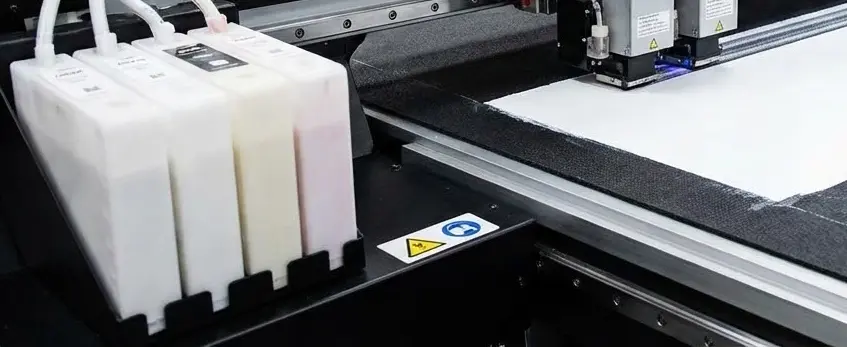
La tinta blanca en la impresión DTF no es sólo una cuestión de color, sino que afecta directamente a la salud y el rendimiento de su impresora, especialmente en modelos Epson populares como la i3200, la 4720 y la XP600. Uno de los principales problemas de la tinta blanca es sedimentaciónlos pigmentos pesados, principalmente el dióxido de titanio, tienden a depositarse en el fondo si la tinta no se formula o manipula adecuadamente. Esta separación puede provocar impresiones incoherentes e incluso obstruir los inyectores, lo que conlleva costosas reparaciones.
Por eso, las tintas blancas DTF de primera calidad vienen con avanzadas microfiltración sistemas. Estos filtros finos atrapan cualquier partícula no deseada que pudiera causar la caída de la boquilla, manteniendo sus cabezales de impresión funcionando sin problemas. La circulación regular de la tinta también ayuda a evitar la acumulación de sedimentos.
Otro factor crucial es la sistema de tapón húmedo. Cuando la impresora no está en uso, la estación de taponado debe mantener húmeda la tinta blanca para evitar que se seque y obstruya los cabezales piezoeléctricos. Las tintas blancas DTF de calidad están diseñadas para seguir siendo compatibles con los tapones húmedos, lo que garantiza que la tinta permanezca fluida durante el tiempo de inactividad sin dañar el cabezal de impresión.
Para impresoras como la Epson i3200 o la XP600, es esencial utilizar una tinta blanca bien formulada que equilibre la estabilidad del pigmento, la filtración y la compatibilidad con el tapón húmedo para obtener impresiones uniformes y seguridad del cabezal de impresión a largo plazo.
Si desea explorar opciones fiables, el Serie de tinta blanca Jinlong DTF ofrece fórmulas diseñadas para una protección de primer nivel de los cabezales de impresión y una cobertura fiable del blanco.
Optimización de los ajustes del RIP para prendas oscuras
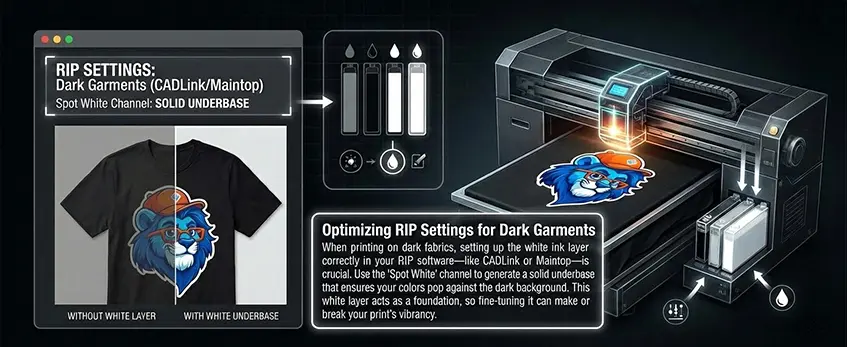
Cuando imprima sobre tejidos oscuros, es crucial configurar correctamente la capa de tinta blanca en su software RIP, como CADLink o Maintop. Utilice el canal ’Spot White’ para generar una base sólida que garantice que sus colores resalten sobre el fondo oscuro. Esta capa blanca actúa como una base, por lo que un ajuste fino puede hacer o deshacer la vitalidad de su impresión.
Preste especial atención a los ajustes de estrangulamiento y dispersión. Ajustar el tamaño de la base inferior ayuda a evitar ese indeseado halo blanco o contorno alrededor de tu diseño, proporcionándote siempre bordes nítidos y limpios.
Equilibrar el volumen de tinta blanca es igual de importante. Intente conseguir una densidad entre 40% y 60% para lograr el equilibrio adecuado entre rentabilidad y gran opacidad. Demasiada tinta blanca desperdicia material y puede causar problemas de secado o agrietamiento, mientras que demasiado poca deja las impresiones con un aspecto apagado. Encontrar este punto óptimo garantiza que sus impresiones sigan siendo vibrantes sin gastar más de la cuenta.
Para obtener más información sobre cómo sacar el máximo partido a tus impresiones DTF, consulta los consejos para sacar el máximo partido a una impresora DTF en los foros de expertos.
Solución de problemas comunes de tinta blanca
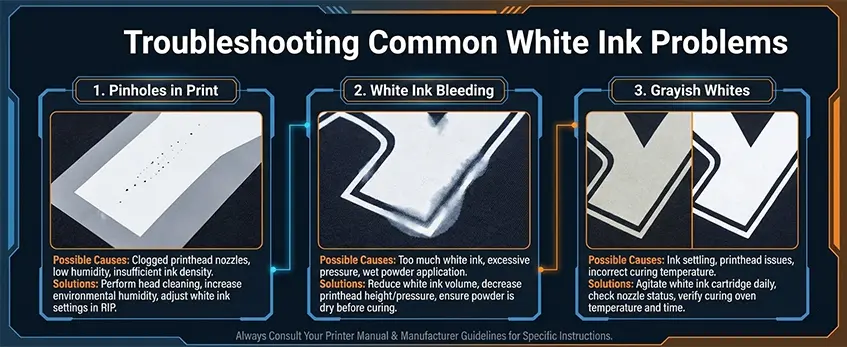
Cuando se trabaja con tinta blanca DTF para impresión inkjet sobre tejidos oscuros, pueden surgir algunos problemas comunes. A continuación le explicamos cómo abordarlos de forma eficaz:
Agujeros en la impresión:
Los agujeros de alfiler suelen aparecer debido a una humedad inadecuada o a restos de aceite en la película de PET. Mantenga su entorno de impresión entre 40-60% de humedad y compruebe siempre que la superficie de PET no tenga ninguna película aceitosa antes de imprimir. De este modo se evitan las gotas de tinta irregulares que causan esos agujeritos.
Sangrado de tinta blanca:
Un volumen excesivo de tinta o el calor de la plancha pueden hacer que la tinta blanca se corra por los bordes del diseño. Para evitarlo, ajuste el volumen de tinta y experimente con la temperatura de curado de la prensa térmica. Bajar ligeramente el calor de la platina puede mantener la tinta blanca nítida sin que se extienda.
Blancos grisáceos:
Los blancos descoloridos o grisáceos suelen deberse a la migración de colorantes, especialmente cuando se imprime sobre tejidos de poliéster baratos. El uso de polvo termofusible de alta calidad es clave: este polvo actúa como un fuerte adhesivo y bloquea los tintes para que no se mezclen con la capa de tinta blanca, manteniendo sus impresiones brillantes y limpias.
Dominar estas correcciones le ayudará a evitar costosas reimpresiones y a mantener sus impresiones DTF con un aspecto fresco y profesional. Si desea profundizar en los conceptos básicos de la impresión DTF y en cómo obtener los mejores resultados en las prendas, consulte nuestra guía sobre qué es la impresión de camisetas DTF para pequeñas empresas para obtener consejos prácticos.
Rutina de mantenimiento para sistemas de tinta blanca
Un mantenimiento adecuado es clave para que su tinta blanca DTF para impresión inkjet funcione sin problemas, especialmente en tejidos oscuros.
Regla del batido:
La tinta blanca contiene pigmentos pesados como el dióxido de titanio que tienden a sedimentarse. Acostúmbrese a agitar bien los depósitos y cartuchos de tinta antes de usarlos. Esto evita la sedimentación y mantiene el pigmento suspendido uniformemente, garantizando una calidad de impresión uniforme.
Sistemas de circulación:
Utilice un sistema de circulación de tinta como el sistema de gestión de tinta blanca (WIMS) o métodos de agitación manual. Éstos mantienen la tinta blanca en movimiento dentro de los depósitos y las líneas, reduciendo los riesgos de obstrucción y la sedimentación de pigmentos. Una circulación adecuada prolonga la vida útil del cabezal de impresión y mantiene una viscosidad uniforme, lo que es crucial para la compatibilidad con los cabezales piezoeléctricos.
Amortiguadores y líneas:
Lave regularmente los amortiguadores y los conductos de tinta para eliminar la tinta seca y la acumulación de pigmentos. Sustituya los amortiguadores según sea necesario para mantener un flujo limpio y evitar que se caiga la boquilla. Esta rutina ayuda a obtener una tinta blanca base pura y de alta opacidad, esencial para impresiones vibrantes en prendas oscuras.
Para obtener consejos detallados sobre el mantenimiento, incluidos los métodos de agitación del polvo y la prolongación de la vida útil de la máquina, considere la posibilidad de explorar la guía práctica de Jinlong sobre Mantenimiento de agitadores DTF. Mantener su sistema en plena forma garantiza un índice óptimo de solidez al lavado y evita los problemas habituales de la tinta blanca.
¿Por qué elegir la tinta blanca DTF de Jinlong?
Cuando se trata de Tinta blanca DTF para impresión inkjet sobre tejidos oscuros, Jinlong destaca por varias razones. He aquí por qué la fórmula de Jinlong es la mejor elección para las empresas y talleres de impresión de Estados Unidos:
| Característica | Jinlong DTF Tinta Blanca | Tinta blanca DTF genérica |
|---|---|---|
| Cobertura | Opacidad superior sobre algodón negro, capas de tinta vibrantes | A menudo lechoso, menos vibrante en los oscuros |
| Seguridad del cabezal de impresión | Diseñado con cuidado para cabezales piezoeléctricos (compatibilidad con Epson i3200/4720/XP600) | Puede provocar atascos y daños en las boquillas |
| Solidez al lavado | Resistencia certificada a la decoloración, el agrietamiento y el desgaste por lavado | Propenso a agrietarse y desteñirse con el tiempo |
Cobertura superior en tejidos oscuros
La tinta blanca de Jinlong base de alta capacidad con una fuerte densidad de pigmento que supera a muchas opciones genéricas cuando se imprime en camisetas de algodón negro. Esto garantiza que la capa blanca sea brillante y sólida, haciendo que los colores resalten y evitando impresiones apagadas o irregulares.
Seguro para cabezales piezoeléctricos
La formulación del ink\ está cuidadosamente equilibrada para compatibilidad con cabezales piezoeléctricos, ofreciendo un flujo suave y reduciendo el riesgo de obstrucción o acumulación de sedimentos. Esto prolonga la vida útil de los cabezales de impresión como los modelos i3200/4720/XP600 de Epson, minimizando el tiempo de inactividad y los costes de mantenimiento.
Excelente resistencia al lavado
La tinta blanca Jinlong DTF está diseñada para máxima elasticidad y durabilidad, resistiendo el agrietamiento tras múltiples lavados. Con el respaldo de índices de solidez al lavado y adhesión a polvo termofusible, mantiene el brillo y la suavidad del estampado en prendas oscuras, incluso con un uso intensivo.
Descubra más sobre cómo la avanzada tinta blanca DTF de Jinlong mejora la calidad de impresión y la durabilidad en esta descripción detallada de la tecnología de tinta blanca de Jinlong. También puede explorar sus Impresoras digitales DTF que optimizan el rendimiento de la tinta desde el primer momento.



 English
 Español
 Deutsch
 Français