

No hay productos en la cesta.

Jinlong
Impresora DTF para camisetas vs DTG Qué impresión es mejor en 2026
Conceptos básicos: cómo funcionan la DTG y la DTF
Si está inmerso en la impresión de camisetas personalizadas, probablemente haya oído hablar de Impresión DTF vs DTG y se ha preguntado en qué se diferencian. Vamos a desglosar los conceptos básicos para que pueda entender estos métodos populares.
DTG (directo a prenda) funciona mediante una impresora de inyección de tinta especializada que pulveriza tintas al agua directamente sobre un tejido pretratado, normalmente camisetas de algodón 100%. Este pretratamiento es esencial porque ayuda a que la tinta se adhiera bien a las fibras, dando lugar a diseños vibrantes y detallados que resultan suaves al tacto. La impresión DTG es conocida por sus finos detalles y suaves degradados de color, lo que la hace perfecta para ilustraciones complejas sobre prendas de algodón claras o blancas.
Por otro lado, DTF (Directo a película) toma un camino diferente. En lugar de imprimir directamente en la camiseta, imprime el diseño en una película especial de PET. A continuación, se aplica un polvo adhesivo sobre la impresión, que se funde durante una transferencia con prensa térmica sobre la camiseta. Este proceso ofrece una versatilidad impresionante: se puede imprimir en algodón, poliéster, mezclas, nailon, etc., incluso en camisetas de colores oscuros. La DTF está llamando la atención por sus colores vibrantes y su durabilidad en distintos tipos de tejidos.
He aquí un rápido cuadro comparativo visual y de procesos para aclarar las cosas:
| Característica | Impresora DTG para camisetas | Impresora DTF para camisetas |
|---|---|---|
| Método de impresión | Inyección directa de tinta sobre tejido pretratado | Impresión sobre película + polvo adhesivo + prensa térmica |
| Compatibilidad de tejidos | Lo mejor en algodón 100% | Funciona con algodón, poliéster, mezclas, nailon, etc. |
| Pretratamiento necesario | Sí | No |
| Vibración del color | Ideal para camisas claras | Brillante y opaco sobre camisas oscuras y de color |
| Tacto en el tejido | Suave y transpirable | Ligeramente más grueso pero flexible |
| Velocidad de aplicación | Más lenta, especialmente para grandes cantidades | Transferencias más rápidas, producción escalable |
Comprender estos fundamentos es clave a la hora de elegir el mejor impresora para camisetas personalizadas que se adapte a sus tipos de tejido, necesidades de diseño y escala de producción. A continuación, profundizaremos en los detalles del cara a cara.
Factores clave de comparación: Desglose comparativo
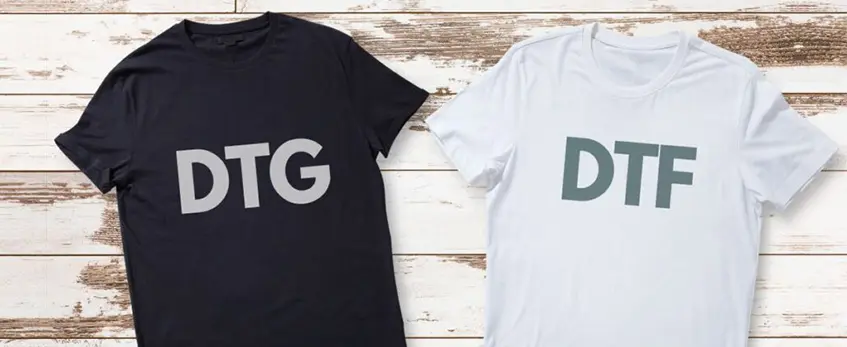
A la hora de decidir entre un Impresora DTF para camisas y DTG, es útil examinar los principales factores uno al lado del otro. He aquí un rápido resumen de sus diferencias:
| Aspecto | DTG (directo a prenda) | DTF (Directo a película) |
|---|---|---|
| Calidad de impresión | Detalles finos superiores y degradados suaves; los colores se funden suavemente en el tejido | Colores brillantes y vibrantes y gran opacidad, especialmente sobre camisas oscuras o de color |
| Compatibilidad de tejidos | Mejor en algodón 100%; limitado en poliéster y mezclas | Funciona en algodón, poliéster, nylon, mezclas - ideal para diversos materiales de camisas |
| Durabilidad y lavabilidad | Bueno; destiñe después de 25-50+ lavados con cuidado | Muy duradero; suele durar más de 100 lavados gracias a la adherencia termofijada |
| Tacto y comodidad | Impresión suave y transpirable con un tacto similar a la serigrafía | Capa ligeramente más gruesa, pero las láminas de alta calidad reducen la pesadez |
| Rapidez y facilidad de producción | Rápido para impresiones individuales pero necesita tratamiento previo y mantenimiento regular | Transferencias rápidas; no necesita tratamiento previo; ideal para impresión por lotes |
| Coste | Mayor configuración inicial; mejor para grandes volúmenes | Puesta en marcha generalmente más asequible; más barata por camiseta en tiradas pequeñas y medianas |
| Impacto medioambiental y mantenimiento | Utiliza tintas al agua pero requiere más pretratamiento químico | También tintas al agua; menos uso de productos químicos y mantenimiento más sencillo |
La DTF está ganando popularidad por su versatilidad en tipos de tejido y su gran durabilidad, mientras que la DTG brilla cuando se necesitan impresiones con gran detalle y suavidad en camisetas principalmente de algodón. Para profundizar en los aspectos de coste y rendimiento de las impresoras DTF, consulte este detallado desglose coste-rendimiento de las impresoras DTF de 4 cabezales.
La elección del método adecuado depende en gran medida de sus necesidades específicas, ya sean tipos de tejido, durabilidad o escala de producción. Ambos estilos de impresión utilizan tintas al agua más respetuosas con el medio ambiente, pero la DTG necesita más productos químicos de pretratamiento, lo que puede afectar a las consideraciones de mantenimiento y sostenibilidad.
Tabla de pros y contras
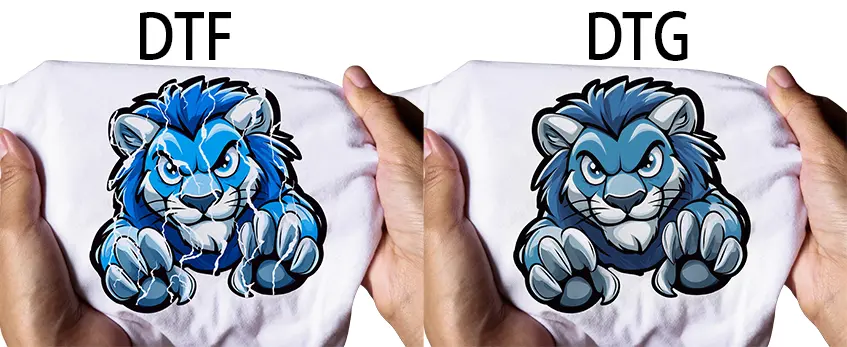
| Característica | Impresora DTG para camisetas | Impresora DTF para camisetas |
|---|---|---|
| Calidad de impresión | Detalles finos superiores, degradados suaves, tacto suave en camisas de algodón | Colores vivos, gran opacidad, ideal para camisas oscuras o de color |
| Compatibilidad de tejidos | Mejor sólo en algodón 100% | Funciona bien en algodón, poliéster, mezclas, nailon, etc. |
| Durabilidad | Buena lavabilidad (alrededor de 25-50+ lavados con cuidado) | Suele durar más (más de 100 lavados) gracias a la adherencia termofijada |
| Tacto de la mano | Comodidad suave y transpirable “como una pantalla de impresión | Capa de impresión ligeramente más gruesa, pero las películas de alta calidad reducen la rigidez |
| Velocidad de producción | Rápida para impresiones individuales, requiere tratamiento previo y mantenimiento regular | Sin tratamiento previo, transferencias rápidas con prensa térmica, escalable para lotes |
| Coste | Mayor coste inicial del equipo, mejor para grandes volúmenes | Configuración más asequible, mejor coste por camiseta para tiradas pequeñas y medianas |
| Mantenimiento | Requiere más mantenimiento (pretratamiento, limpieza del cabezal) | Menor mantenimiento, menos consumibles aparte de la película y el polvo |
| Impacto medioambiental | Utiliza tintas al agua pero necesita productos químicos de pretratamiento | Tintas al agua, sin tratamiento previo: considere opciones ecológicas en polvo como este |
| Mejores casos de uso | Estampados detallados en camisetas de algodón 100%, tacto suave | Tejidos versátiles, camisas oscuras, pedidos al por mayor y pequeñas empresas |
Este claro cara a cara hace que sea más fácil decidir qué impresora se adapta a sus necesidades específicas, equilibrando la calidad de impresión, la versatilidad del tejido, el coste y los objetivos de producción. Para obtener consejos más detallados sobre el manejo de las transferencias DTF sin que se deforme la película, consulte cómo curar polvo DTF con prensa térmica.
¿Cuál se adapta mejor a sus necesidades específicas?
Elegir entre un Impresora DTF para camisas y DTG depende sobre todo del tipo de tejido, la complejidad del diseño y los objetivos de producción.
Lo mejor para camisas de algodón 100% con diseños intrincados: El DTG brilla aquí. Ofrece un nivel superior de detalle y degradados suaves directamente sobre algodón, perfecto para artistas que buscan impresiones suaves y detalladas.
Ideal para tejidos versátiles, camisas oscuras o tiradas grandes o personalizadas: DTF es el camino a seguir. Funciona bien en algodón, poliéster, mezclas e incluso nailon. Además, sus vibrantes transferencias de película aguantan muy bien los colores más oscuros y los lotes grandes.
Principiantes y pequeñas empresas: La impresión DTF suele tener una barrera de entrada más baja, con menos mantenimiento y sin tratamiento previo, lo que la hace más fácil y asequible para las nuevas empresas.
Impresión bajo demanda (POD) de gran volumen: La elección depende de su enfoque del tejido. Aun así, el DTF está ganando terreno en 2026 gracias a la creciente demanda de estampados duraderos y vivos en diversos materiales.
Una gran ventaja es jinlong DTF, conocida por sus impresiones fiables, vibrantes y duraderas. Sus impresoras y consumibles de calidad, como los de calidad superior Película de transferencia DTF, ayudan a las empresas a obtener resultados constantes, por lo que es una opción inteligente tanto si está empezando como si está creciendo.
Para aquellos que deseen simplificar aún más su configuración, jinlong también ofrece opciones como el Polvorines DTF adecuados diseñado para agilizar la aplicación de polvo, aumentando la durabilidad de la impresión sin complicaciones adicionales.
Conclusión: Si su principal objetivo es obtener impresiones suaves y detalladas en algodón 100%, la DTG es excelente. Pero si lo que busca es versatilidad, rentabilidad y facilidad de mantenimiento -especialmente en tejidos mixtos y prendas más oscuras-, la DTG, sobre todo con el fiable equipo de jinlong, es cada vez más la mejor opción.
Casos prácticos y ejemplos reales
A la hora de elegir entre una impresora DTF para camisas y una DTG, entender en qué destaca cada una en el uso real puede ayudarle a tomar la decisión correcta.
Pequeñas tiendas Etsy: Muchos propietarios de pequeñas empresas prefieren la DTF por su versatilidad y menores costes de puesta en marcha. Es ideal para mezclar algodón, poliéster y mezclas sin complicaciones de pretratamiento, por lo que es perfecto para pedidos personalizados con tejidos variados. Para obtener los mejores resultados, invierta en polvos adhesivos y ajustes de prensa térmica de calidad: marcan una gran diferencia en la durabilidad de la impresión.
Uniformes de equipo y camisetas promocionales: La impresión DTF destaca aquí gracias a sus colores vibrantes y su gran capacidad de lavado, especialmente en tejidos oscuros o sintéticos. Los pedidos a gran escala se benefician de la rapidez del proceso de transferencia de DTF y de su calidad constante, que permite que la producción se desarrolle sin problemas. Para logotipos muy detallados, es fundamental combinar DTF con un sistema de película y polvo de buena reputación. cómo el polvo de TPU DTF está revolucionando la impresión para aumentar la durabilidad.
Marcas de ropa de calle: Tanto las impresoras DTG como las DTF tienen cabida en la ropa de calle, dependiendo del tejido y de la complejidad del diseño. La DTG es la preferida para diseños complejos y suaves en camisetas de algodón 100%. Por su parte, la DTF es ideal para gráficos atrevidos y vibrantes que resaltan en una gran variedad de materiales. El equilibrio entre la elección del tejido y el estilo de impresión garantizará que su ropa de calle destaque y resista el uso y los lavados.
Consejos para obtener los mejores resultados con cada método:
- Para Impresión DTG en camisetas, realice siempre un tratamiento previo adecuado de los tejidos de algodón y mantenga su impresora con regularidad para evitar atascos y que el color se vuelva apagado.
- Con Impresión DTF, Además, utilice tintas y películas DTF de calidad, por ejemplo, las tintas de confianza de la marca Productos de tinta DTF diseñada para obtener colores vivos y detalles nítidos.
- Pruebe siempre en prendas de muestra antes de realizar grandes tiradas, independientemente del método de impresión.
Si adapta el método de impresión a los objetivos de su producto y a la elección del tejido, mejorará la calidad del producto y la satisfacción del cliente, tanto si dirige una pequeña empresa como si aumenta la producción.



 English
 Español
 Deutsch
 Français