
No products in the cart.

Jinlong
Best Heat Press for DTF Hoodies T-Shirts and Heavy Fabrics 2026
Why Choosing the Right Heat Press Matters for DTF Applications
Picking the best heat press for DTF hoodies, T-shirts, and heavy fabrics is crucial to your printing success. DTF (Direct to Film) transfers demand precise heat, pressure, and timing to ensure vibrant, durable prints—especially on thick materials like fleece sweatshirts and hoodies. The right heat press guarantees even heat distribution, firm pressure, and consistent temperature, which prevents issues like peeling, fading, or incomplete transfer adhesion.
Using a subpar or mismatched heat press can lead to wasted materials, unhappy customers, and increased costs. For example, insufficient pressure or uneven heat often ruins the finish on heavy fabric stacks, while poor platen size limits your ability to press larger or multi-item designs smoothly.
Investing in a professional heat press optimized for custom apparel tasks ensures your transfers adhere perfectly every time. It also boosts your production efficiency, reduces downtime for adjustments, and opens the door to more creative printing options like full back DTF printing on hoodies. In short, the right heat press is the foundation for durable DTF transfers on heavy garments and a thriving DTF business.
Key Features to Look for in a Heat Press for DTF on Hoodies, T-Shirts, and Heavy Fabrics
When choosing the best heat press for DTF hoodies, T-shirts, and heavy fabrics, several key factors come into play to ensure durable, high-quality transfers.
| Feature | What to Look For & Why |
|---|---|
| Platen Size & Shape | Minimum 15×15 inches; 16×20 inches recommended for hoodies and multi-item pressing to cover larger designs and bulkier fabrics. |
| Heat Distribution & Recovery | Even heat distribution is critical to avoid transfer issues. Look for quick recovery time so production isn’t slowed down. |
| Pressure Adjustment | Options include manual, pneumatic, or auto. Firm, even pressure is essential for thick stacks or heavy materials like fleece sweatshirts. |
| Temperature Range & Controls | Digital controls with ±2–5°F accuracy ensure the right heat setting for different fabrics, making it easier to follow the DTF temperature and time chart precisely. |
| Press Type | – Clamshell: Saves space but less ideal for thick items – Swing-away: Safer and perfect for bulky items like hoodies – Draw-style / Auto-open: Great for high-volume production efficiency |
| Build Quality & Warranty | Durable construction is a must. Look for models with solid warranties and added perks like timers, safety features, and interchangeable platens for versatile pressing. |
| Power & Portability | Stationary pro models offer stability for heavy use, while portable units can work for small setups. Make sure your workspace supports the power requirements. |
The right heat press balances these features depending on your specific needs, whether you’re producing full-back DTF prints on hoodies or multiple T-shirts at once. For example, if you’re working with thicker fabrics or multi-layered stacks, a swing-away or draw-style press with strong, adjustable pressure will be key.
For more insights on compatible heat presses for DTF film and the benefits of premium equipment, you can check out comprehensive guides on professional heat press for custom apparel and optimal heat transfer materials.
Understanding DTF Heat Press Settings for Different Fabrics
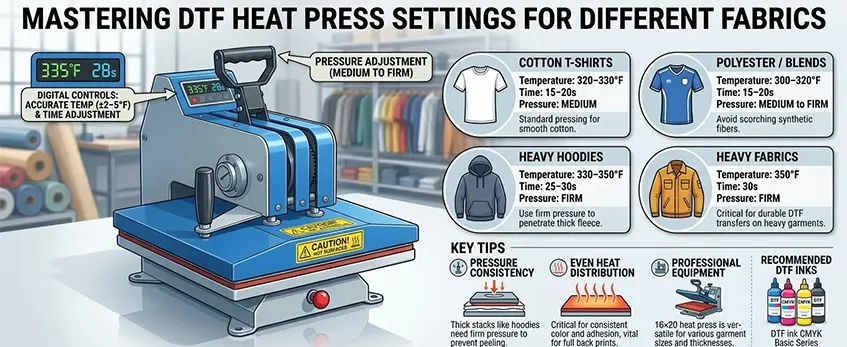
When pressing DTF transfers on hoodies, t-shirts, and heavy fabrics, the right heat press settings are crucial for vibrant, durable results. Different materials demand adjustments in temperature, time, and pressure to ensure the ink bonds properly without damaging the fabric.
Basic DTF Heat Press Settings by Fabric
| Fabric Type | Temperature (°F) | Time (Seconds) | Pressure | Notes |
|---|---|---|---|---|
| Cotton T-Shirts | 320–330 | 15–20 | Medium | Standard pressing for smooth cotton |
| Heavy Hoodies | 330–350 | 25–30 | Firm (tight stacks) | Use firm pressure to penetrate thick fleece sweatshirts |
| Polyester/Blends | 300–320 | 15–20 | Medium to Firm | Avoid scorching synthetic fibers |
| Heavy Fabrics | 350 | 30 | Firm | Critical for durable DTF transfers on heavy garments |
Key Tips for Perfect Settings
- Pressure: Thick stacks like hoodies need firm pressure to prevent peeling. Adjustable options like pneumatic or auto pressure presses help maintain consistency.
- Heat Distribution: Even heat distribution across the platen avoids hot spots. This is vital for consistent color and adhesion on full back DTF printing on hoodies.
- Digital Controls: Accurate temperature (±2–5°F) ensures fabric safety and ink durability.
- Time Adjustment: Start with recommended times but adjust based on fabric thickness and ink type.
Using a professional heat press designed for custom apparel can simplify managing these settings. For example, a 16×20 heat press is versatile enough for various garment sizes and fabric thicknesses, giving you the flexibility needed for DTF printing.
For the best results, check out recommended DTF inks like those found in the DTF ink CMYK Basic Series that work well with these pressing parameters.
Mastering these settings leads to durable, vivid DTF transfers regardless of fabric type—helping your apparel stand out with quality and consistency.
Top Heat Press Recommendations for DTF in 2026
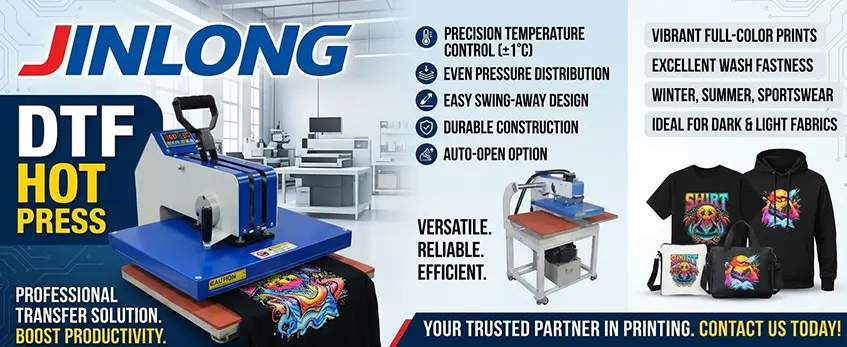
When choosing the best heat press for DTF hoodies, t-shirts, and heavy fabrics in 2026, certain models stand out for their reliability, features, and ease of use. Here are top picks that fit different budgets and production needs:
1. JINLONG JL-16×20 Pro Heat Press
- Platen size: 16×20 inches, ideal for full-back DTF printing on hoodies and thick stacks.
- Heat distribution: Even heat across the surface, minimizing hot spots for durable DTF transfers on heavy garments.
- Pressure: Manual adjustable with firm pressure capability, perfect for pressing fleece sweatshirts and layered fabrics.
- Controls: Digital temperature control with ±3°F accuracy; ensures precise DTF heat press settings for hoodies.
- Extras: Includes a built-in timer, safety features, and interchangeable platens for versatile use.
- Highly recommended for businesses serious about professional heat press performance with DTF film.
2. JINLONG Auto Open Swing-Away Heat Press
- Type: Swing-away design maximizes safety and works great on thick apparel.
- Pressure: Pneumatic pressure adjustment handles multi-item pressing effectively.
- Temperature control: High accuracy digital controls for solid DTF temperature and time chart adherence.
- Benefit: Auto open feature improves production speed and reduces operator fatigue.
- It’s a solid choice for production-heavy environments requiring consistent quality on heavy fabrics.
3. JINLONG 15×15 Clamshell Heat Press
- Best for: Small businesses or startups with budget constraints.
- Size: 15×15 platen works for standard t-shirts and smaller hoodies.
- Pressure: Manual pressure adjustment, sufficient for thinner fabrics; may be less ideal for heavy fleece stacks.
- Portability: Lightweight and compact, making it easy to move but less suited for large volume production.
- Great entry-level option for those new to DTF transfers, especially with budget-friendly needs.
4. JINLONG 16×20 Digital Swing Away Heat Press
- Features: Large platen size with precise digital temperature and time controls.
- Pressure: Manual pressure system, but firm enough for thick materials like hoodies and sweatshirts.
- Design: Swing-away style enhances safety and prevents accidental burns, suitable for full-back DTF printing.
- A good balance between professional features and affordability.
For reliable DTF printing results, a heat press that offers consistent heat, firm pressure, and adequate platen size is critical. Models like the JINLONG JL-16×20 Pro combine these essentials with durability and user-friendly features, making them a top choice for any serious custom apparel business.
For beginners, reviewing DTF transfer basics and compatible heat presses can be useful—check out the detailed DTF for beginners guide to get started right. Also, using high-quality DTF transfer film ensures your heat press delivers vivid, long-lasting prints on all fabric types.
How to Press DTF Transfers Like a Pro: Step-by-Step Guide
Pressing DTF transfers correctly is crucial for durable, vibrant designs on hoodies, t-shirts, and heavy fabrics. Here’s a simple, professional method to get it right every time:
Prepare Your Heat Press
- Set the temperature between 320°F and 350°F, depending on your fabric. Use digital controls for accuracy within ±2–5°F.
- Adjust pressure firmly—thicker materials like hoodies need more pressure for proper adhesion.
- If you’re working with bulky items, a swing-away or draw-style heat press can make handling easier.
Preheat and Position the Garment
- Preheat the garment for 3–5 seconds to remove moisture and wrinkles.
- Lay the garment flat on the platen, smoothing any folds. For hoodies or fleece sweatshirts, ensure the fabric’s surface is even to avoid pressing issues.
Place and Secure the DTF Transfer
- Position the transfer film with the printed side facing the fabric. Use heat-resistant tape if needed to keep it from moving.
- Cover with a non-stick, heat-resistant sheet to protect both the transfer and press platen.
Pressing Time and Pressure
- Press for 12–18 seconds, timing carefully. Setting off the timer prevents under- or over-pressing.
- Apply firm pressure according to your heat press’s adjustment mechanism (manual or pneumatic). This ensures the transfer adheres deeply, especially on thick or heavy fabrics.
Peel the Transfer Properly
- Use a hot peel method unless your film specifies otherwise. Peel the transfer film off immediately after pressing while hot for the best results.
- For detailed info on hot peel DTF film settings temperature, pressure, and timing, there’s a helpful guide on hot peel DTF film roll print settings.
Post-Press Care
- Let the garment cool flat for a few minutes. Avoid folding or stacking until completely cooled to prevent smudging or cracking.
Mastering this process will lead to vibrant, long-lasting prints on all kinds of fabrics—from lightweight tees to heavyweight hoodies. Being consistent with temperature, pressure, and timing is the key to professional-quality DTF prints every time.
Budget Considerations and ROI for DTF Businesses
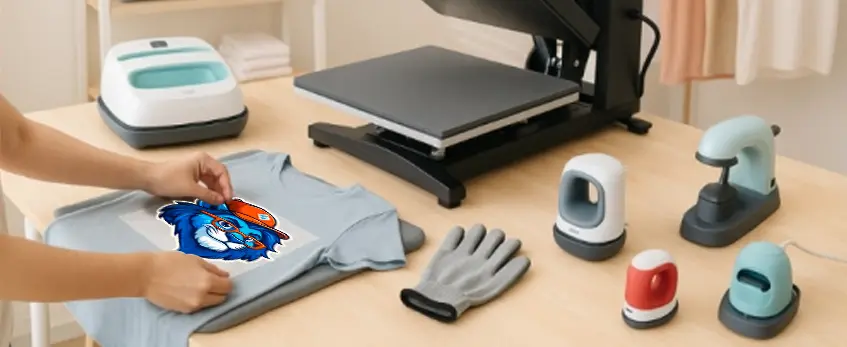
When choosing the best heat press for DTF hoodies, T-shirts, and heavy fabrics, budget plays a huge role—especially if you’re just starting or scaling your custom apparel business. Investing in a professional heat press might seem costly upfront, but the return on investment (ROI) often makes it worthwhile.
Here’s what to keep in mind for budget and ROI:
- Initial cost vs. durability: Cheaper models may save money now but often lack even heat distribution or firm pressure needed for durable DTF transfers on heavy garments. Spending a little more means fewer rejects and longer-lasting machines.
- Size and versatility: A larger platen (16×20 recommended) allows you to press more items or bigger designs at once. This boosts productivity and lowers time spent per item.
- Energy efficiency: Heat presses with fast recovery times and good insulation reduce electricity bills, helping control ongoing costs.
- Maintenance costs: Simple and sturdy designs reduce repairs and downtime. Keep an eye on warranties and availability of replacement parts.
- Production speed: Auto open or swing-away presses that handle thick stacks efficiently can save time and increase output dramatically—critical for growing businesses.
- Scalability: Think about whether your chosen heat press will support your business growth. For example, models compatible with DTF transfer films and powders like those offered on Jinlongprints DTF Transfer Film ensure smooth operation and consistent quality.
Balancing your budget with these factors will help you find the best heat press for your DTF needs while maximizing your long-term profits. Remember, the right press isn’t just a tool; it’s an investment in your apparel business’s success.
Maintenance, Safety, and Common Mistakes to Avoid
Keeping your heat press in top shape is crucial for crisp, durable DTF transfers on hoodies, t-shirts, and heavy fabrics. Regular maintenance includes cleaning the platen surface to avoid residue buildup, checking pressure settings, and testing temperature accuracy often. This prevents uneven heat distribution and ensures consistent transfer quality every time.
Safety is a must—always use heat-resistant gloves when handling hot platens, and keep your workspace clear to avoid accidents. Be mindful of the type of heat press you use; for example, swing-away presses reduce burn risk by allowing you to work away from the hot element. Also, never exceed recommended temperature and time settings to avoid damaging fabric or transfer film.
Common mistakes to watch out for include:
- Applying too little or uneven pressure, which leads to poor adhesion, especially on thick fabrics like fleece sweatshirts.
- Using incorrect temperature or pressing time, causing peeling or cracking. For detailed guidance, check out our why incorrect DTF temperature causes peeling or cracking article.
- Not pre-pressing garments to remove moisture and wrinkles before applying transfers.
- Ignoring manufacturer instructions on pressure settings and platen sizes, which impacts transfer durability.
By avoiding these pitfalls and performing routine heat press maintenance, you’ll deliver durable DTF transfers on heavy garments with a professional finish and reduce downtime in your production process.


 English
 Español
 Deutsch
 Français