
No products in the cart.


Jinlong
Are 4-Head DTF Printers Worth It Real Cost and Performance Review
What Makes a 4-Head DTF Printer Different? Core Technology and Specs
When we talk about 4-head DTF printers, the main difference lies in the advanced print head setup and streamlined workflow. Most 4-head models use the Epson I3200-A1 print heads, featuring four separate heads that spray CMYK + White inks simultaneously. This parallel printing boosts accuracy and speed, producing crisp designs at resolutions up to 3200 DPI.
Key Tech Highlights
| Feature | Detail |
|---|---|
| Print Heads | Epson I3200-A1 (4 heads) |
| Ink Configuration | CMYK + White parallel spraying |
| Max Resolution | Up to 3200 DPI |
| Max Speed | Up to 200 sq ft/hour |
| Print Width | 24 inches |
| White Ink System | Auto white ink circulation |
| Powder System | Integrated shaker/powder mechanism |
Compared to generic imports, our 4-head DTF models offer automatic white ink circulation, preventing clogging and reducing downtime. The integrated shaker and powder system ensure even powdering and faster curing, which many cheaper imports lack.
Versatility Across Fabrics
One standout benefit is fabric compatibility. These printers handle a wide range of materials smoothly, including:
- Cotton and cotton blends
- Polyester and polyester blends
- Leather and synthetic materials
Add eco-friendly inks to the mix, and you get vibrant, wash-fast prints rated 4–5 on the color fastness scale, meaning designs stay sharp and bright after 50+ washes.
In short, 4-head DTF printers blend speed, quality, and versatility thanks to the Epson I3200-A1 setup and thoughtful engineering—perfect for scaling up your custom apparel business.
The Real Costs: Upfront, Ongoing, and Hidden Expenses
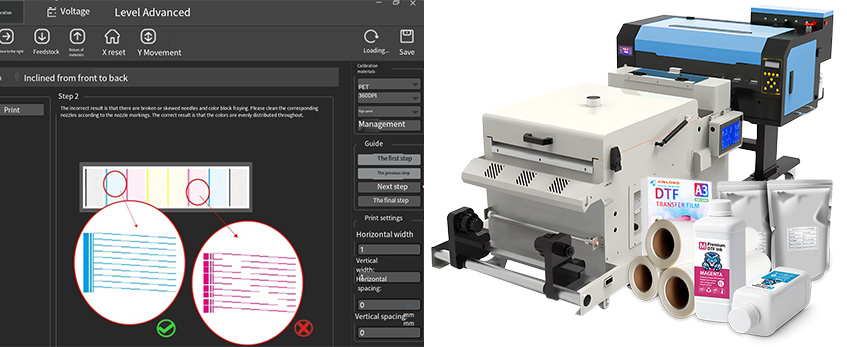
When considering a 4-head DTF printer, it’s important to look beyond just the sticker price. The upfront investment ranges between $8,000 and $12,000 for a quality 4-head model, compared to $4,000 to $6,000 for dual-head alternatives. On top of the machine cost, factor in shipping fees, setup charges, and any import duties that may apply depending on your location.
Per print, you’re looking at about $1 to $3 per shirt, covering ink, DTF transfer film, and adhesive powder. Bulk orders over 500 units often unlock better pricing, which can significantly improve your margins. For example, sourcing premium film like Jinlong’s DTF transfer film or top-rated adhesive powder can affect your cost per print but improve overall quality and durability.
Ongoing costs include regular ink and maintenance part replacements, plus the energy required to run the printer and maintain optimal humidity levels. Controlling the environment is crucial because high humidity can cause ink clogging and misprints—adding indirect costs if ignored. You’ll also need to consider dedicated space and power needs, so a proper, ventilated setup is key.
Be cautious of hidden pitfalls too—many cheaper imported models come with inconsistent parts quality and limited warranty support. Investing in trusted models like Jinlong DTF provides peace of mind with solid warranty coverage and reliable customer service, which can save money and headaches down the line.
Performance Deep Dive: Speed, Quality, and Efficiency Gains
When it comes to production speed, 4-head DTF printers really pull ahead. They can output up to 145 linear feet per hour, which is nearly double the 50–80 feet per hour typical of dual-head models. That means you’re looking at printing between 200 and 400 shirts a day, a major boost for high-volume operations.
Quality-wise, these printers deliver sharp edges, vivid colors, and consistent prints that hold up well—retaining durability after 50+ washes with minimal fading or cracking. Side-by-side tests clearly show the difference in vibrancy and detail compared to lower-end setups.
Efficiency in workflow is another big plus. Features like auto-alignment reduce manual setup time, while waste stays low, with less than 5% of transfer film ending up as scrap. This efficiency makes scaling for e-commerce order fulfillment easier and more cost-effective.
For anyone serious about growth, using a reliable ROI calculator to estimate your payback period based on monthly print volumes can be a game changer. It helps you see exactly how quickly your investment in a 4-head setup will pay off.
For more details on how DTF transfer film impacts your costs and quality, check out our insights on DTF transfer film options.
Pros and Cons: Balanced View for Real-World Operations
Pros:
Handles scalability well, ideal for businesses printing over 1,000 orders per month
Faster turnaround times improve client satisfaction and retention
Long-term cost savings become clear after the first year’s amortization
Cons:
Requires regular maintenance like weekly cleaning, which adds to operational costs
More complex setup and workflow not ideal for low-volume or hobbyist users
Needs controlled environment—humidity and temperature impact print quality
User Personas:
Best suited for mid-size apparel brands looking to grow efficiently. Not the top choice for solo home-based entrepreneurs or very small batch printers due to complexity and upkeep.
4-Head vs. Alternatives: Head-to-Head Comparisons
When deciding on a 4-head DTF printer like jinlong’s models, it helps to see how they stack up against other options in speed, cost, and usability.
| Printer Type | Cost | Speed | Setup Ease | Best For |
|---|---|---|---|---|
| 4-Head DTF | $8,000–$12,000 | Up to 200 sq ft/hr | Moderate (some setup) | High-volume (500+ units/mo), diverse fabrics |
| Dual-Head DTF | $4,000–$6,000 | 50–80 sq ft/hr | Easy | Small to mid runs (100–500 units/mo) |
| DTG Printers | $10,000+ | 30–60 shirts/hr | Moderate | Cotton-heavy shops needing fast setup and less pretreatment |
| Screen Printing | $2,000+ (setup) | 500+ shirts/hr | Complex | Very high volume, consistent designs |
| Sublimation | $3,000+ | 100+ shirts/hr | Moderate | Polyester-only fabrics, vibrant colors |
Dual-Head vs. 4-Head DTF
4-head printers offer faster throughput, ideal if you’re pushing 500+ orders monthly. Dual-head machines save money upfront and work well for growing brands printing under 500 shirts monthly.
DTF vs. DTG Printers
DTF needs less fabric pretreatment and covers cotton blends, polyester, leather, and more. That boosts versatility and lowers per-shirt costs compared to most DTG systems, which often limit fabric types and need costly pretreatment.
DTF vs. Screen Printing
For custom or short runs, DTF shines with faster setup, less mess, and no screen costs. But if you’re printing thousands of the same design, screen printing still leads on cost-per-shirt.
DTF vs. Sublimation
Sublimation is great for vibrant prints but only works on polyester fabrics. DTF printers, like the jinlong 4-head models, print on virtually anything—including cotton—that widens your product scope.
When you consider upfront costs, speed, fabric flexibility, and ease of use, the jinlong 4-head DTF strikes a balanced choice for many small to midsize businesses aiming to scale without overspending.
For supplies like quality DTF transfer film and durable white ink, jinlong keeps both cost and quality consistent, which adds to long-term savings.
ROI Breakdown: When Does It Pay Off? Case Studies and Projections

Understanding when a 4-head DTF printer pays off is key for any apparel business planning to scale. Take, for example, a $10,000 jinlong DTF 4-head model. At a production rate of 300 shirts per week, and roughly $15 profit per shirt, you can recoup your investment in about 8 months. That’s a solid timeline for small to mid-size businesses aiming to grow efficiently.
Real-world stories back this up: a Texas-based shop doubled their revenue after upgrading to a 4-head jinlong printer, thanks to faster turnaround and higher volume capacity. Meanwhile, a European startup began with a dual-head model to manage lower volumes before stepping up, showing how entry points vary by business size.
Break-even volumes generally look like this:
- Below 200 units/month: ROI is unlikely due to lower production scale.
- Between 200–800 units/month: ROI depends heavily on retail price and operational efficiency.
- Above 800 units/month: 4-head printers become highly cost-effective.
Long-term value matters too. Besides depreciation, a jinlong DTF printer holds good resale potential. Regular support and service from jinlong extend your machine’s lifespan, helping you squeeze more value over the years.
For businesses ready to analyze their numbers closely, tools like the jinlong ROI calculator and bundles on DTF transfer films can help optimize cost per print and speed up payback.
Setting Up for Success: Maintenance, Troubleshooting, and Best Practices
To keep your 4-head DTF printer running smoothly, regular care is a must. Daily and weekly routines like maintaining ink circulation and cleaning the nozzles help prevent clogs and downtime. Proper storage of your DTF transfer film also plays a big role in preserving print quality and extending consumable life, which contributes to a reliable 99% uptime.
Common issues like ink clogs are often fixed with the printer’s auto-stir feature, which keeps white ink properly mixed. If you notice ghosting or blurry prints, humidity levels could be the culprit—keeping your workspace controlled helps avoid this. Simple troubleshooting steps can save time and protect your investment.
For getting the most out of speed and quality, software adjustments using tools like AcroRIP can fine-tune prints based on your workflow needs. This flexibility means you can dial in the right balance between faster jobs or top-tier color vibrancy.
On the sustainability front, 4-head DTF printers generate minimal waste thanks to efficient powder use and low film scrap rates. This fits well with eco-conscious apparel brands wanting to reduce their environmental impact while maintaining vibrant, durable prints. For more insights on optimizing your setup and powder application, check out our detailed comparison of integrated shaker systems versus manual powdering.
Spotlight on jinlong DTF: Why Our 4-Head Models Stand Out
With over 10 years of precision printing experience, jinlong DTF has built a solid reputation for quality and reliability, fully compliant with US and EU standards. Our 4-head Pro-4H model is designed for serious production, offering speeds up to 110 sq ft/hour—perfect for businesses ready to scale. It comes with a 12-month warranty and access to free training webinars, so you’re never left figuring things out on your own.
We also offer exclusive customer perks like 15% savings on supply bundles, round-the-clock support, and flexible startup financing to ease your investment. If you’re considering a 4-head printer, take advantage of our free ROI consultation to see how the Pro-4H can fit your business goals and boost your profits.
For more on optimizing your printing workflow and maximizing efficiency, check out our jinlong DTF printing workflow optimization tips.


 English
 Español
 Deutsch
 Français