
No products in the cart.

Jinlong
How to Choose the Best DTF Powder for Durable Flexible Prints
Understanding DTF Powder: The Foundation of Successful Transfers
DTF powder plays a critical role in the direct-to-film (DTF) printing process, acting as the adhesive that bonds the printed design to the fabric. Choosing the right DTF hot melt adhesive powder ensures strong adhesion, vibrant colors, and durability. The quality and particle size of the DTF powder directly affect transfer quality, wash resistance, and the overall hand feel of the print.
DTF powder typically comes in different grades—from fine to coarse—each suited for particular fabric types and printing needs. Understanding how the DTF powder’s melting temperature and adhesion strength interact with your chosen fabric is essential. For example, TPU DTF powder offers excellent elasticity, making it ideal for stretch fabrics, while other powders are better for cotton or polyester blends.
A clear grasp of DTF powder’s role sets the foundation for successful transfers. When your powder matches your fabric and printing requirements, your prints last longer, resist washing better, and maintain a clean finish without residue. This foundation paves the way for professional-quality results every time.
Key Factors to Consider When Choosing DTF Powder
Choosing the best DTF powder for your printing needs means focusing on several crucial factors to get durable, high-quality prints. First, consider the DTF powder particle size. Fine powders offer smoother prints and better hand feel but may require precise handling, while medium and coarse powders can provide stronger adhesion but may affect the texture. Next, look at the DTF powder melting temperature; matching the powder’s melting point with your heat press settings ensures optimal adhesion and wash resistance.
Material compatibility is huge. For cotton or polyester, pick a DTF powder formulated for those fabrics to avoid cracking or peeling. If you’re printing on stretch fabrics, go for a high elasticity DTF adhesive powder that moves well with the material. Also, think about the DTF powder adhesion strength—you want a powder that bonds firmly but won’t leave residue or compromise fabric softness.
Finally, consider the powder’s wash resistance and how the print will wear over time. A quality powder will stand up to repeated washing without losing vibrancy or cracking. For more on perfect temperature settings that complement your powder choice, check out our detailed DTF temperature guide with best heat press settings.
Keep these factors in mind, and you’ll pick a DTF powder that fits your printing style and fabric types perfectly.
Types of DTF Powder..Fine, Medium, and Coarse Explained
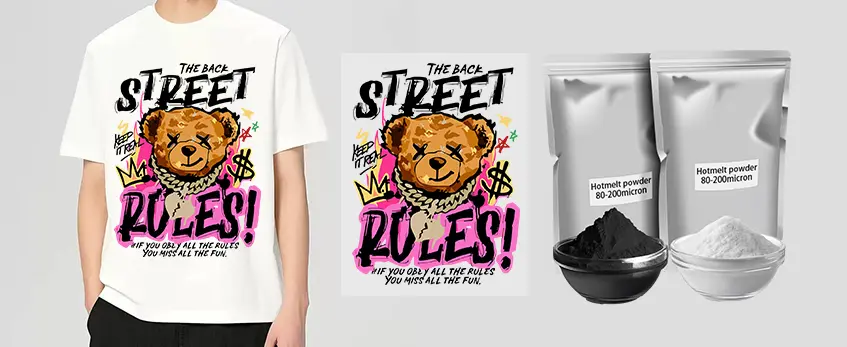
DTF powder comes in three main types based on particle size: fine, medium, and coarse. Understanding these differences is key to picking the best DTF powder for your printing needs.
Fine DTF Powder: With the smallest particle size, fine powders create smooth, detailed transfers. They’re perfect for prints that need sharp lines and subtle color gradients. Fine powder also offers a softer hand feel and excellent adhesion strength, making it a top choice for delicate fabrics like cotton or polyester blends.
Medium DTF Powder: Medium powders strike a balance between coverage and detail. They melt evenly at a moderate DTF powder melting temperature and provide solid durability without compromising flexibility. This makes medium powder versatile for most general printing tasks.
Coarse DTF Powder: The largest particles give coarse powder strong adhesion and exceptional wash resistance, ideal for heavy-duty items or stretch fabrics. Coarse powder is the go-to for when you want prints that hold up under wear and tear, though it may result in a slightly rougher transfer surface.
Choosing between fine, medium, and coarse DTF powder depends on factors like fabric type, desired finish, and durability. For professional results, consider how each powder’s particle size affects print detail, elasticity, and overall feel.
If you’re looking into quality materials, the Jinlong DTF Transfer Film works especially well with these powders for sharp, durable prints that last.
Matching DTF Powder to Your Specific Printing Needs
Choosing the right DTF powder means matching it to the fabric and design you’re working with. For example, cotton and polyester blends demand powders with excellent adhesion and wash resistance, while stretch fabrics need a TPU DTF powder that offers high elasticity without cracking.
When working with delicate or thin fabrics, fine or medium DTF powder particle size helps maintain a smooth hand feel and prevents residue buildup. Coarser powders, on the other hand, are better for heavier fabrics where strong adhesion is key.
Temperature settings matter too. Make sure your DTF powder’s melting temperature aligns with your printer and press capabilities to avoid incomplete melting or poor bonding. For cotton, a powder optimized for durability and flexibility will resist cracking and fading over time.
If you’re still getting started, consulting guides like our DTF for beginners can help you navigate powder choices and get consistent results. Taking time to match your DTF powder to your specific job means fewer headaches and better, more professional prints every time.
White vs. Black DTF Powder: When to Use Each
Choosing between white and black DTF powder depends largely on your design and fabric. White DTF powder is your go-to for vibrant, sharp prints on dark or colored fabrics. It acts as a strong base layer for colors to pop and offers excellent DTF powder adhesion strength and wash resistance, especially when working with cotton or polyester blends.
Black DTF powder, on the other hand, is ideal for creating dark, bold designs on light-colored fabrics. It blends well with the ink to create deep blacks without the residue or stiff hand feel sometimes found with white powder. This makes it perfect for designs needing a high level of detail and smooth finish.
Keep in mind the DTF powder melting temperature can vary slightly between white and black powders, so adjusting your pressing settings is crucial for avoiding powder residue and ensuring durability. Whether you’re working with stretch fabrics or standard cotton, selecting the right color powder impacts both the look and the longevity of your prints.
For seamless results, consider pairing your choice of DTF powder with premium DTF transfer films like those found in the Jinlong Double Pro Series, which optimize transfer quality and durability.
Common Mistakes to Avoid and Troubleshooting Tips
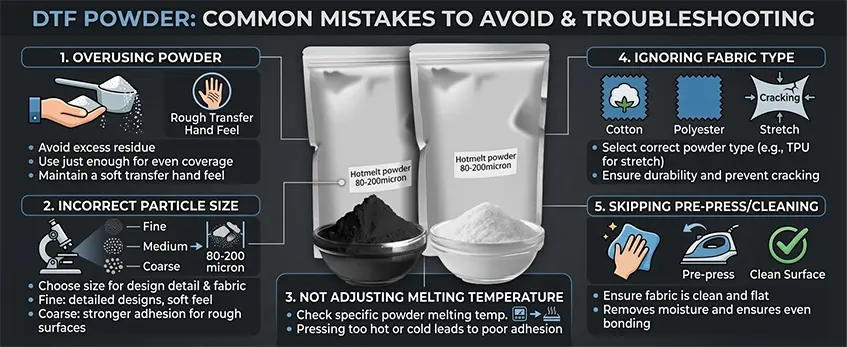
When working with DTF powder, avoiding common mistakes can save you time and keep your prints looking sharp. Here are some key points to watch out for:
- Overusing Powder: Applying too much DTF powder can cause excess residue and a rough transfer hand feel. Use just enough to cover the print evenly, ensuring good adhesion strength without extra buildup.
- Incorrect Powder Particle Size: Choosing the wrong DTF powder particle size (fine, medium, or coarse) for your fabric can affect melting and wash resistance. Fine powder works best for detailed designs and soft hand feel, while coarse powder offers stronger adhesion for rougher surfaces.
- Not Adjusting Melting Temperature: Every DTF powder has a specific melting temperature. Pressing at too high or too low heat can lead to poor adhesion or powder residue. Always check your powder’s melting temperature and adjust your heat press settings accordingly.
- Ignoring Fabric Type: Using a general DTF powder without considering if your fabric is cotton, polyester, or stretch fabric can cause durability problems. For stretch fabrics, opt for TPU DTF powder or high elasticity DTF adhesive powder to avoid cracking.
- Skipping Pre-pressing or Cleaning: Not pre-pressing or cleaning the fabric before applying the transfer can reduce powder adhesion strength and cause uneven bonding. Make sure your fabric surface is clean and flat before pressing.
If you run into issues like peeling or fading prints, revisit these steps. Troubleshooting often starts with reassessing powder application and heat press settings. For professionals seeking reliable results, using proven products like jinlong DTF powder helps reduce common problems thanks to their optimized formula for durability and wash resistance.
By steering clear of these slip-ups and fine-tuning your process, you\’ll get the most out of your DTF hot melt adhesive powder and produce vibrant, lasting prints every time.
Why jinlong DTF Powder Stands Out for Professional Results
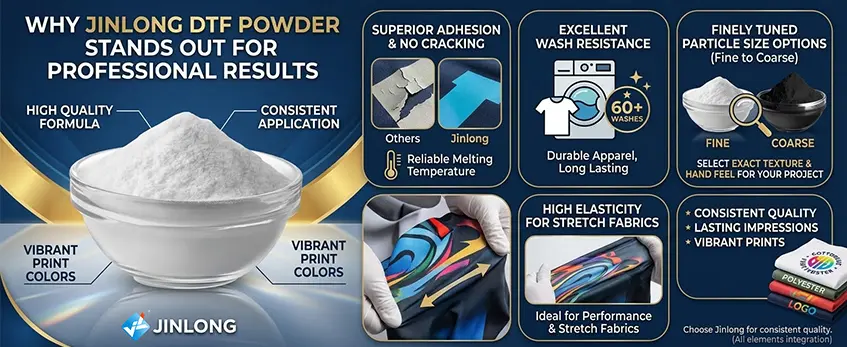
Jinlong DTF powder is designed with professionals in mind, delivering consistent, high-quality transfers every time. What makes jinlong stand out is its superior DTF powder adhesion strength and reliable melting temperature, which ensures your prints stick well and last long without cracking or peeling. Whether you’re printing on cotton, polyester, or blends, jinlong’s carefully engineered formula offers excellent wash resistance, making it ideal for durable apparel.
Another big plus is jinlong’s finely tuned DTF powder particle size options — ranging from fine to coarse — so you can match the exact texture and hand feel needed for your project. With their high elasticity DTF adhesive powder, it’s easier to work with stretch fabrics while maintaining vibrant print quality.
For those using a DTF printer setup, like the ones described in this guide on using a DTF printer and shaker for t-shirt printing, jinlong DTF powder integrates smoothly, ensuring clean, residue-free transfers. This translates to less downtime cleaning and better end-product consistency, essential for professional shops focused on quality and efficiency.
In short, jinlong DTF powder blends performance and reliability, making it a top choice for anyone serious about achieving professional-grade DTF prints.
Practical Application and Best Practices
Using DTF powder correctly is key to getting smooth, durable prints every time. Here’s what works best in practice:
Apply the right amount: Use enough DTF hot melt adhesive powder to fully cover your printed film without overloading. Too much powder can lead to residue and a rough hand feel.
Control the melting temperature: Stick to the recommended DTF powder melting temperature that suits your powder type and fabric. Overheating can affect adhesion strength and wash resistance.
Match powder with fabric: Choose the best DTF powder for cotton or polyester based on your garment type. For stretch fabrics, high elasticity DTF adhesive powder works best to maintain flexibility without cracking.
Even curing: Heat press at consistent pressure and time. This ensures the powder fuses well, avoiding weak spots or powder residue.
Clean workspace: Keep your workspace tidy to avoid powder contamination, which can affect print quality and durability. A clean environment also reduces powder waste.
Test your combination: Always do a small test print to check DTF powder adhesion strength, wash resistance, and print feel before producing a big batch.
For professionals wanting reliable options, explore the Jinlong DTF powder range known for superior quality and ease of use.
By following these best practices and using high-quality powder, you’ll create durable DTF prints that look professional and last through multiple washes.


 English
 Español
 Deutsch
 Français