
No products in the cart.


Jinlong
DTF vs Vinyl 2026 Why Print Shops Are Choosing DTF Printing
Understanding the Basics – DTF vs Vinyl Explained
If you’re running a print shop or thinking about entering custom apparel printing, understanding the difference between DTF and vinyl is key. Both methods let you transfer designs onto garments, but they work in very different ways and suit different needs. Let’s break down each process, starting with the longtime favorite: Heat Transfer Vinyl (HTV).
What is Heat Transfer Vinyl (HTV)?
Heat Transfer Vinyl (HTV) involves cutting a vinyl sheet into a design and then heat pressing it onto fabric. Here’s how it works:
- Materials: Vinyl sheets available in solid colors, glitter, metallic, reflective, and specialty finishes.
- Process:
- Design created on software.
- Vinyl is cut using a plotter.
- Excess material is weeded (removed) by hand.
- Design is heat pressed onto the garment.
- Typical Use Cases: Simple logos, lettering, sports uniforms, and small runs where color layering is minimal.
HTV is praised for its sharp edges and vibrant solid colors but can be time-consuming due to weeding and layering for multi-color designs. It works best on cotton, polyester, and blends but can feel thicker and less breathable on the fabric.
What is Direct-to-Film (DTF)?
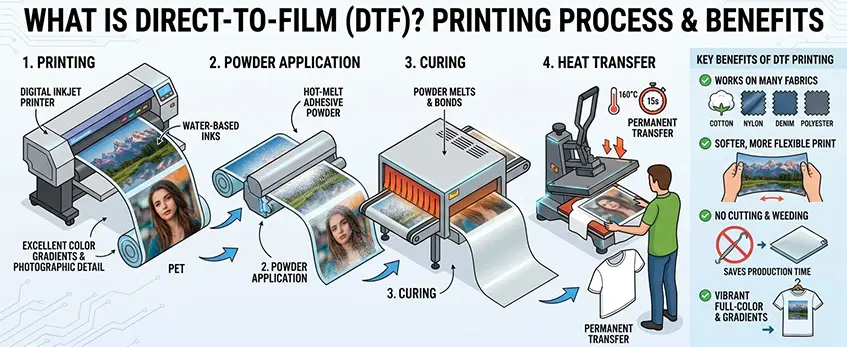
Direct-to-Film (DTF) printing is a newer and increasingly popular technique that prints a full-color image directly onto a special film, then transfers it onto fabric using heat. The process involves:
- Step-by-step process:
- Printing: The design is digitally printed in full color onto a PET film using water-based inks.
- Powder Application: A hot-melt adhesive powder is applied over the wet print.
- Curing: The powder sticks and is cured by passing the film through a dryer.
- Heat Pressing: The film is placed onto the garment and pressed to transfer the design permanently.
DTF offers excellent color gradients, photographic detail, and works on a wide range of fabrics beyond just cotton, including nylon and denim. It eliminates the need for cutting and weeding, speeding up production while delivering a softer, more flexible print.
Quick Side-by-Side Comparison – DTF vs Vinyl
| Feature | Heat Transfer Vinyl (HTV) | Direct-to-Film (DTF) |
|---|---|---|
| Design Capability | Limited colors; solid designs or simple layering | Full-color prints, complex gradients, photos |
| Setup Time | Longer; requires cutting and weeding | Shorter; digital print with no weeding |
| Fabric Compatibility | Cotton, polyester, blends | Versatile: cotton, polyester, nylon, denim |
| Feel on Garment | Thicker, stiffer | Softer, lightweight, breathable |
Understanding these core differences helps explain why many print shops are considering a switch to DTF in 2026. It’s about faster workflows, greater design flexibility, and meeting evolving customer demands for vibrant, personalized apparel.
Head-to-Head Comparison – Key Factors in 2026
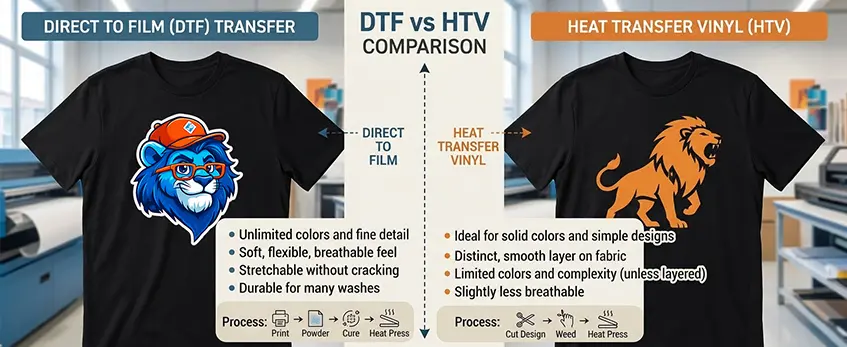
When deciding between DTF vs vinyl printing in 2026, here’s how they stack up on the most important factors:
| Factor | DTF Printing | Heat Transfer Vinyl (HTV) |
|---|---|---|
| Design Flexibility | Full-color gradients, photos, fine details | Limited to solid colors and layering |
| Production Speed | Faster: No cutting or weeding needed | Slower: Time-consuming weeding and setup |
| Durability & Washability | 50+ washes without cracking or peeling | Can crack or peel, especially on stretchy fabrics |
| Hand Feel & Comfort | Soft, breathable, lightweight prints | Thicker, stiffer feel on garments |
| Fabric Compatibility | Works on cotton, polyester, blends, nylon, denim | Limited, often struggles on stretchy or rough fabrics |
| Cost Breakdown | Higher initial investment, but lower per-unit costs and labor savings over time | Lower startup cost but higher labor per item |
Why This Matters
- Design Flexibility: DTF shines with complex, full-color prints allowing for photorealistic designs. Vinyl is best for simpler, bold color layouts.
- Speed & Efficiency: DTF eliminates the cutting and weeding process, cutting production time significantly, which is a big win for busy shops.
- Durability: DTF prints are proven to last 50+ washes with no cracking or peeling, making them perfect for high-quality apparel.
- Comfort: Customers appreciate the soft and breathable feel of DTF prints over the thicker, stiffer hand feel of vinyl.
- Fabric Options: DTF’s ability to work on a wide variety of fabrics like nylon or denim makes it versatile and in demand.
- Cost: Though DTF printers and consumables can be pricier upfront—brands like Jinlong offer user-friendly, stable models—the long-term savings on labor and materials often outweigh these costs.
For example, using reliable DTF transfer film options helps optimize print quality while ensuring efficient workflow.
In , 2026 markets push print shops toward DTF for its flexibility, speed, durability, and cost-efficiency compared to the traditional HTV process.
Why Print Shops Are Switching to DTF in 2026 – The Real Drivers
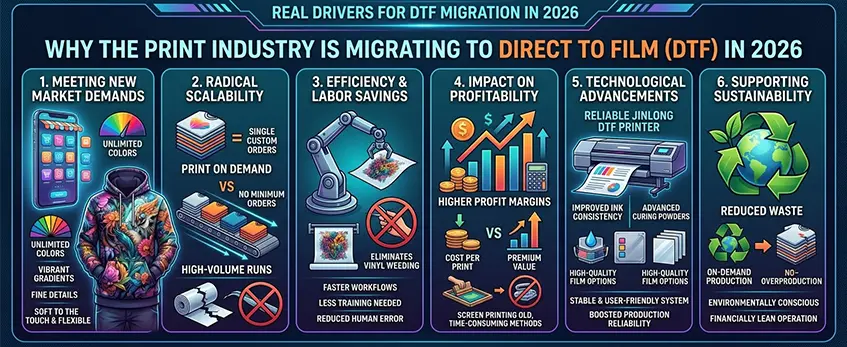
More print shops are moving from vinyl to DTF in 2026 because market demands have shifted dramatically. E-commerce and social media-driven businesses now want full-color, photorealistic, and personalized apparel prints that traditional vinyl can’t easily deliver. DTF printing advantages include vibrant gradients and fine details, meeting this growing need for high-quality, custom t-shirt printing methods.
Technological advancements have also played a big role. Improvements in inks, films, and powders—like those in the reliable jinlong DTF systems—make the process smoother and beginner-friendly. Modern DTF printers are more stable and easier to use, cutting down setup headaches and boosting production reliability. You can learn more about the DTF transfer film options available that help achieve these results.
Scalability is another huge factor. DTF supports on-demand apparel printing with no minimum order sizes and quick turnaround times, making it perfect for small runs or bulk pre-printing alike. This flexibility beats vinyl’s more rigid, time-consuming workflows.
Labor and time savings can\’t be overstated—DTF eliminates the vinyl weeding process, which is often a major bottleneck and common source of errors. With fewer steps and less specialist training needed, shops get jobs out faster and with less hassle.
Sustainability is increasingly important too. Because DTF supports on-demand printing, it significantly cuts waste compared to vinyl setups, which often require overproduction and leftover stock.
Finally, the profitability boost with DTF is clear. Shops see higher margins on complex, colorful designs and benefit from faster job completion and competitive pricing, making DTF an appealing choice for modern printing businesses.
For a closer look at how safe and efficient the DTF powder application process is, check out this DTF powder safety guide covering ventilation and best practices.
All these factors come together to make DTF the go-to method for print shops aiming to stay competitive and meet evolving customer demands in 2026.
When Vinyl Still Makes Sense in 2026
Even as more print shops switch to DTF in 2026, vinyl printing still holds value in certain cases. For simple one- or two-color designs, especially logos or text-based jobs, heat transfer vinyl remains a cost-effective choice. Small startups or shops with tight budgets might prefer vinyl due to its lower upfront investment compared to DTF printer setups.
Vinyl also shines in specialty applications. Reflective, glow-in-the-dark, or textured vinyl effects can’t be easily achieved with DTF and are still popular in safety gear, sportswear, and promotional items. For these unique finishes, vinyl is often the go-to.
Many shops adopt hybrid approaches—using DTF for complex, full-color graphic jobs and vinyl for straightforward or specialty orders. This flexible setup helps balance cost, speed, and quality while meeting diverse customer demands.
By understanding when vinyl still fits best, shops can optimize resources and keep profitability strong even as they expand into DTF printing.
Making the Switch – Practical Steps and Considerations
Switching from vinyl to DTF printing in 2026 requires a good look at your current setup and business needs. Start by assessing your order volume, the complexity of your designs, and your customer base’s demands. If you frequently get full-color or photorealistic requests, it’s a strong signal that DTF can offer more value.
Investment Factors to Keep in Mind
- DTF printer: Choose reliable and user-friendly models, like the jinlong DTF series, which is popular for its stability and quality.
- Consumables: Expect costs for film, hot melt adhesive powder, and inks. These are essential for consistent durability and print feel.
- Space: You need room for the printer, powder application station, curing oven, and heat press.
Tips for a Smooth Transition
- Start small: Pilot with simple designs to understand the workflow and avoid large upfront risks.
- Test equipment first: Using trusted setups like the jinlong DTF series helps reduce learning curves and ensures quality prints.
- Master powder application and curing: These steps are key to print durability and feel. Proper powder use makes a big difference.
- Pay close attention to color management: Getting colors right out of the printer avoids waste and unhappy customers.
Common Pitfalls to Avoid
- Overapplying powder leads to stiffness; too little means weak adhesion.
- Ignoring color calibration can cause faded or off-tone prints.
- Underestimating space and workflow adjustments slows down production initially.
ROI Timeline: When Does DTF Pay Off?
Based on 2026 market data, most print shops see a return on investment within 6 to 12 months, thanks to labor savings, faster production times, and higher demand for intricate, colorful designs. After setup, your per-unit costs drop, especially on small to mid-size runs, making DTF an affordable and scalable solution.
By planning carefully, investing smartly, and relying on proven equipment like jinlong’s DTF printers, making the switch can boost your print shop\’s efficiency and open up new profitable opportunities.


 English
 Español
 Deutsch
 Français