
No products in the cart.

Jinlong
DTF Rolls Guide Film Types Thickness and Uses by Jinlong DTF
Categorizing DTF Rolls by Peel Type
When choosing DTF rolls, understanding the peel type is crucial because it affects your workflow, garment quality, and production speed. Let’s break down the three main peel types: hot peel, cold peel, and warm peel.
Hot Peel Film: How It Works and When to Use
Mechanism: With hot peel film, you remove the PET transfer film immediately after heat pressing while it’s still hot.
Pros:
- Faster production since you don’t wait for the film to cool.
- Sharp, vibrant prints with excellent ink adhesion.
- Ideal for high-volume, fast-turnaround jobs.
Best for: Hot peel works great with cotton and polyester blends and is preferred in busy textile transfer printing shops that prioritize speed and durability.
Cold Peel Film: Benefits and Application
Mechanism: Cold peel film requires waiting until the transfer cools down completely before peeling off the film.
Pros:
- Reduces risk of ink smudging on delicate designs.
- Better for thin or light-colored fabrics where extreme heat might cause damage.
- Ideal for detailed designs needing perfect clarity.
Best for: Cold peel is perfect for specialty fabrics and more intricate designs where precision counts.
Warm Peel (Hybrid): Balance of Speed and Safety
Mechanism: Warm peel is a hybrid approach—you peel the film when it’s warm but not fully hot or cold.
Pros:
- Offers a good compromise between speed and print quality.
- Reduces risk of garment or print damage compared to hot peel.
- Easier handling with less curling or warping of prints.
Best for: Versatile enough for a range of fabrics and design types, warm peel is often used where you want a safer, quicker peel without sacrificing quality.
Understanding these peel types helps you select the right PET transfer film for your application and optimize your heat transfer durability and print results. Choosing the right peel method ensures smoother workflow and better garment decoration outcomes every time.
Understanding Film Thickness (Microns)
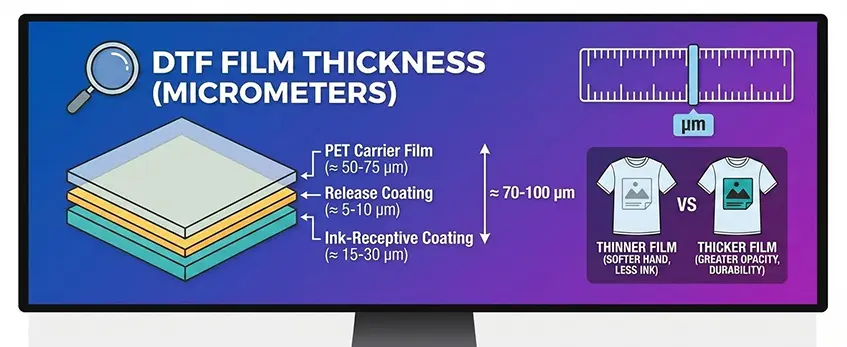
DTF rolls commonly come in two standard thicknesses: 75 micron and 100 micron. The thickness you choose impacts how smoothly your printer feeds the film and how stable the film is during the heat transfer process.
75 Micron: Thinner and more flexible, this film is ideal for desktop or entry-level printers that handle lighter media. It feeds easily but can be prone to wrinkling if heat or tension isn’t carefully controlled.
100 Micron: Thicker and more durable, this film offers better heat stability and resists buckling during curing. It’s favored for industrial setups with dual or quad-head printers, ensuring smoother operation during long print runs.
Why does thickness matter? Film that’s too thin might cause feeding jams or stretch under the heat press. Too thick, and it may strain your printer’s feeder system. Jinlong recommends choosing 75μ for fast, light jobs or when using smaller printers like an XP600, while 100μ fits best for heavy-duty printing and better heat transfer durability.
Understanding this helps avoid common issues with film feeding and ensures crisp, high-quality prints every time. For more tips on choosing the right DTF film type, check out our guide on selecting the best DTF film for high-quality prints.
The Science of Coating: Single vs. Double Sided

When it comes to DTF rolls, the coating style plays a huge role in print quality and ease of use.
Single-Sided Matte films are a solid choice for budget-conscious operations. They have the coating only on one side, which cuts costs but can limit print precision and durability. This option works if you’re just starting out or experimenting with textile transfer printing and don’t need heavy-duty output.
Double-Sided Matte Film is the industry standard for good reason. The coating is on both sides, allowing better friction feed and improved static control during printing. This helps your printer handle the film smoothly without jams or misfeeds, especially important with machines like the XP600 and i3200 printhead film setups. The double-sided coating also boosts ink absorption, preventing ink bleeding and delivering sharp, high-resolution prints. This means cleaner transfers and stronger garment decoration supplies.
Choosing the right coating depends on your production needs — if you want consistent quality with fewer printing issues, double-sided matte is the smarter bet. It’s a key part of reliable heat transfer durability and overall DTF ink absorption.
For more on optimizing your film and ink setup, check out Jinlong’s insights on white ink circulation systems, which complement the coating technology for better results.
Visual Effects and Specialty Rolls
Choosing the right finish on your DTF rolls can make a big difference in how your final design pops. Here’s a quick look at common visual effects and specialty film options:
| Film Type | Finish Description | Best Application |
|---|---|---|
| Standard Matte | Soft-touch and smooth | Casual wear, subtle designs |
| Glossy Finish | Shiny, vinyl-like surface | Bold graphics, vibrant colors |
| Specialty Rolls | Glitter, glow-in-the-dark, reflective | Eye-catching designs, safety gear, novelty apparel |
Specialty options give you unique texture and effects that can set your garments apart. Glitter adds sparkle, glow-in-the-dark is perfect for nighttime visibility, and reflective films boost safety and design appeal.
Matching the right finish to your design style is key to achieving professional-looking textile transfer printing. For more on choosing the best DTF film types and coatings that fit your printer, explore our detailed DTF transfer printer guide for custom apparel printing.
Roll Sizes and Printer Compatibility
DTF rolls come in different widths to match various printer setups, making it key to pick the right size for your machine. The most common sizes are 30cm (12 inch) and 60cm (24 inch).
30cm (12 inch) Rolls: These are perfect for desktop and entry-level printers. They’re easier to handle and ideal for small businesses or home setups focusing on custom garment decoration supplies without the need for large-scale production.
60cm (24 inch) Rolls: Designed for industrial dual or quad-head printers, these rolls support higher volume jobs and wider prints. If you’re running an XP600 or i3200 printhead film system, 60cm rolls ensure efficient printing and fewer roll changes.
Core Size: Don’t forget the core size, which must fit your printer’s feeder system for proper film feeding. Proper fit prevents film feeding issues like misalignment or jamming during the printing process.
Choosing the right roll size upfront helps avoid downtime and ensures consistent quality, especially when dealing with DTF ink absorption and heat transfer durability. For more on selecting compatible gear, check out our guide on the best DTF printers for beginners in 2026.
Troubleshooting Common Film Issues

Running into problems with your DTF rolls is frustrating, but most issues have straightforward fixes.
Oily Residue:
This usually happens when the release film coating isn’t balanced or the powder isn’t cured properly. Clean your rollers regularly and make sure your DTF curing temperature is on point to avoid buildup that causes oily patches.
Film Buckling:
Thin films, especially 75 micron rolls, can buckle during printing or heat pressing if heater settings aren’t right. Adjust your heat press temperature and pressure to match the film thickness and keep feeding smooth without wrinkles.
Powder Sticking:
If the adhesive powder clumps or sticks unevenly, anti-static coating might be missing or ineffective. Using double-sided matte film with built-in anti-static treatment helps prevent powder sticking, ensuring clean transfers and less waste.
Addressing these common issues keeps your prints sharp and your textile transfer printing process running smoothly, especially when using Jinlong DTF rolls designed for consistent performance.
Why Choose Jinlong DTF Rolls?
Jinlong DTF rolls stand out for reliable performance across every batch. Here’s why they’re a top choice for textile transfer printing in the U.S.:
| Feature | Benefit |
|---|---|
| Consistency | Batch-to-batch stability means no surprises in print quality. Perfect for keeping production smooth and predictable. |
| Advanced Coating Technology | Enables max ink load without running or bleeding, improving DTF ink absorption and sharpness. This tech also helps control static, reducing powder sticking. |
| Ease of Peel | Smooth release reduces ruined garments, whether you use hot peel, cold peel, or warm peel films. This lowers waste and saves time on production. |
Choosing Jinlong means fewer film feeding issues and better heat transfer durability on your designs, ideal for commercial printers using XP600 printer consumables or i3200 printhead films. Their double-sided matte films are especially known for industry-leading friction feed and consistent ink absorption.
If you want dependable DTF rolls that perform well no matter the printer or textile, Jinlong is a smart pick. This consistency helps you deliver high-quality garment decoration supplies customers expect, with less hassle in production.


 English
 Español
 Deutsch
 Français