
No products in the cart.


Jinlong
Cheap DTF Printer Cost Breakdown and True Ownership Expenses Explained
Beyond the Sticker Price: What Does a \”Cheap\” DTF Setup Actually Cost?
When you see a cheap DTF printer advertised, it’s tempting to focus just on that low upfront price. But here’s the reality: the total cost of ownership DTF goes far beyond the machine itself. Many new users overlook essential expenses that add up quickly, turning a seemingly affordable setup into a pricey venture.
Think about it—getting into direct-to-film printing means more than buying a printer. You’ll need consumables like DTF ink, PET film rolls or sheets, and powder. These aren’t one-time buys; they’re ongoing costs that directly impact your profit margins. Plus, don’t forget about accessories like heat presses and curing ovens, which are often sold separately. Add in software, maintenance, repairs, and environmental controls, and the true price begins to show.
Here’s what a cheap DTF setup really costs beyond the sticker price:
- Initial hardware investment: Printer (converted Epson vs. purpose-built), heat press, curing oven, and computer requirements
- Recurring consumables: Ink (including white ink waste), PET film pricing differences (roll vs. sheets), powders, and unavoidable waste from nozzle checks
- Software expenses: RIP software licenses and color management tools, which can affect print quality and waste
- Maintenance and repairs: Printhead replacements, dampers, wipers—all of which kill your budget if neglected
- Utilities and environment: Climate control for stable print conditions and electricity consumption costs
Understanding these factors upfront saves you from surprises later. The goal is to evaluate a cheap DTF printer not just by its purchase price but by its cost-efficiency and total operational expenses—because that’s what will truly determine your print shop profit margins.
The Initial Investment: Hardware Reality Check
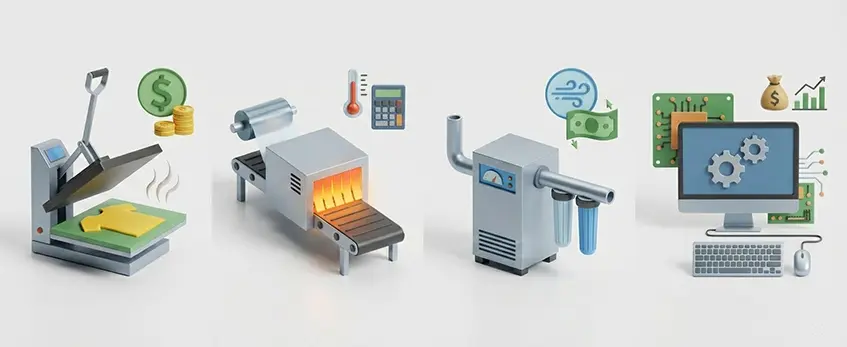
When you hear “cheap DTF printer,” it’s easy to think the upfront cost is the full story. But that initial price usually covers just the printer itself. You’ll find two main types: converted Epson printers, which are modified standard models, and purpose-built DTF printers designed specifically for the job. Converted Epson printers often come cheaper but may lack the durability and features of industrial DTF machines, which can impact long-term costs.
Beyond the printer, essential add-ons often come separately but are critical for quality printing and finishing. These include:
- Heat press: Needed to cure transfers and make sure the print sticks properly.
- DTF curing oven: Ensures a consistent cure and durability, unlike DIY methods.
- Air purification system: Helps control dust and fumes that can damage prints and equipment.
- Computer specs: A reliable setup capable of running demanding RIP software smoothly.
Failing to budget for these can spike your total cost of ownership DTF, so don’t just focus on the sticker price. For example, pairing your machine with a proper heat press and oven saves time and prevents costly reprints.
To get quality, consistent prints without surprises, factor in all equipment costs upfront. If you want to explore high-grade DTF films that pair well with industrial setups, check out our DTF transfer film options for better cost-efficiency versus cheap alternatives.
In short, a “cheap DTF printer” is only cheap if you have the full picture—otherwise, those add-ons and hardware needs can quickly add up.
The Recurring Consumables: Calculating Cost Per Print

When looking beyond the cheap DTF printer cost, consumables are where your real expenses stack up. Understanding these helps you gauge your true cost per print.
DTF Ink Costs
DTF ink prices vary, but expect to pay around $100 to $150 per liter, with white ink typically costing more due to higher usage and waste. White ink is thicker and prone to settling, meaning you’ll deal with some loss during cleaning and circulation. This white ink circulation system is essential to reduce waste but adds to maintenance complexity.
PET Film and Powder
Choosing between PET film rolls and sheets impacts your budget. Rolls generally offer better pricing per square foot than sheets, but consider quality—lower-grade film often leads to more waste from misprints or poor transfers. Same goes for DTF powder; bulk powder costs less, but inconsistent quality can clog your powder shaker or impact curing. For detailed insights on powder application, check out the comparison of DTF printer models with powder shaker systems.
Hidden Consumable: Waste
Several invisible costs creep in—nozzle checks, side cleaning, and flushing eat up ink without producing prints. Frequent printhead cleaning prevents long-term damage but can burn through your ink budget faster than expected.
Factoring in these recurring consumable expenses is crucial for an accurate total cost of ownership with any DTF setup, especially when starting with a cheap DTF printer.
The Software Trap: RIP Software and Color Management
A cheap DTF printer often hides costs in its software setup. RIP software is essential—it translates your image into printer instructions and manages color accuracy. Free RIP software might sound like a great deal, but it usually comes with limitations like fewer color controls, lower resolution options, or restrictions on the number of prints. Paid RIP software licenses, while more expensive upfront, offer better color profiling, ink usage optimization, and smoother workflows that reduce waste.
Color profiling is another cost many underestimate. Without accurate profiles tailored to your specific printer, ink, and PET film, you risk color mismatches that lead to rejected prints. This means wasting ink, film, and powder—a hidden expense that adds up fast. Investing in professional color management tools helps maintain consistency and cuts down on costly reprints.
Choosing the right RIP software and color management solution plays a huge role in controlling your total cost of ownership DTF, ensuring your prints look sharp and vibrant without draining your budget. For practical info on the materials involved, checking out guides on DTF transfer film types and coatings can also help align your software choices with the best substrate setups.
Maintenance and Repair: The \”Cheap\” Printer Killer
When budgeting for a cheap DTF printer, maintenance and repair often fly under the radar—but they can quickly become your biggest expenses. Printhead replacement is the single highest ongoing cost you’ll face. Cheap or converted Epson printers tend to have higher printhead replacement frequency compared to industrial models, sometimes needing new heads every few months. Printhead replacement prices can easily run into hundreds, and frequent replacements eat into your profit margins fast.
Beyond printheads, other parts like dampers, capping stations, and wipers also wear out, especially on lower-cost printers. These components are critical for keeping your nozzles clean and preventing clogs. Failure in any of these parts usually leads to costly downtime and more repairs. For many users of cheap DTF printers, downtime means lost revenue that’s rarely factored into bottom-line costs.
Regular maintenance kits can help, but time spent troubleshooting nozzle clogs and repairing hardware adds up—especially without professional support. To avoid surprises, factor in the total cost of ownership DTF printers have beyond the initial purchase price, including common repairs and the impact on production schedules.
For a detailed look at how different printer types stack up in costs and reliability, check out our guide on commercial vs hobbyist DTF printers.
Environmental and Utility Costs
When budgeting for a cheap DTF printer, don’t overlook environmental and utility expenses. Proper climate control—especially humidity and temperature—is essential to keep your prints consistent and prevent issues like ink drying too fast or powder clumping. Many printers thrive in stable conditions around 65-75°F with 40-60% humidity, which might mean investing in a humidifier or air conditioner depending on your workspace.
Electricity consumption is another hidden cost that adds up. DTF printers paired with curing ovens and heat presses use significant power. For example, a typical DTF curing oven’s electricity usage can be quite high compared to standard hobbyist machines. Keeping track of how much power your entire setup pulls is vital since it affects your total cost of ownership DTF.
Balancing environmental controls and electricity consumption helps maintain print quality while managing ongoing costs. Efficient units like the ones with white ink circulation systems often optimize power use better. For detailed guidance on energy-smart DTF setups, check out our breakdown of commercial vs hobbyist DTF printers, which also covers utility considerations in depth.
The Jinlong DTF Difference: Value Over Lowest Price
When it comes to cheap DTF printers, going for the absolute lowest price often backfires. Jinlong DTF stands out by offering real value through cost-efficiency and industrial-grade reliability, making it a smarter investment over time.
Cost-Efficiency & Industrial Reliability
Industrial DTF printers like Jinlong are built to last with fewer breakdowns, meaning lower printhead replacement prices and less downtime. This translates directly to better total cost of ownership DTF compared to hobbyist or converted Epson setups that might look cheaper upfront but add up fast with repairs and wasted materials.
White Ink Circulation System Benefits
A major plus in Jinlong’s system is its advanced white ink circulation system. It helps reduce white ink waste and prevents clogging, which not only cuts consumable costs but also avoids frequent nozzle cleaning and costly maintenance. This system ensures smoother operation and less unexpected downtime.
Support vs DIY Troubleshooting
Choosing Jinlong also means you get solid customer support, which saves hours or even days spent on troubleshooting tricky issues like those found in third-party equipment. Instead of wasting time and money on repairs, you get professional help that keeps production running—critical for print shops focused on growing profit margins.
ROI Calculator: Hobby vs Professional Setups
Investing in a Jinlong printer pays off with improved ROI. Here’s a quick comparison table for clarity:
| Feature | Hobby Setup | Jinlong Professional Setup |
|---|---|---|
| Initial Cost | Low | Moderate |
| Consumable Cost Efficiency | Low (more waste) | High (white ink circulation reduces waste) |
| Maintenance Frequency | High (printhead, dampers) | Low (industrial parts designed for longevity) |
| Downtime Impact | Significant revenue loss | Minimal due to support and reliability |
| Overall ROI | Slow/Uncertain | Faster, more predictable |
For anyone serious about scaling a custom apparel business, Jinlong’s approach beats cheaper alternatives by focusing on sustainable, professional-grade solutions.
Check out how their DTF powder shaker troubleshooting and DTF Transfer Film Pro Series work hand in hand with the hardware to optimize your print shop’s efficiency.
This makes Jinlong more than just a cheap DTF printer—it’s a long-term partner for reliable production and better profits.


 English
 Español
 Deutsch
 Français