


Refurbished DTF Printer Checklist 2026 What to Inspect Before Buying
Refurbished vs. New DTF Printers – Is Refurbished Right for You?
When deciding between a refurbished DTF printer and a new model, it’s important to weigh the pros and cons carefully. Refurbished DTF printers often come at a lower price, making them an attractive option if you want to save upfront costs. These printers have usually been inspected, repaired, or upgraded to function close to new condition, but they might show some signs of wear or have limited warranties compared to new printers.
Key Advantages and Drawbacks of Refurbished Models
Advantages:
- Lower cost: Typically 20-40% cheaper than new models, helping you stretch your budget.
- Faster ROI: Reduced investment upfront means quicker return on investment.
- Eco-friendly: Buying refurbished supports sustainability by extending product life.
- Tested functionality: Many refurbishers provide inspection reports and partial warranties.
Drawbacks:
- Limited warranty and support: Refurbished printers often have shorter or more limited warranties.
- Potential for hidden issues: Even with testing, some components may wear out sooner.
- Older technology: Models might be a generation behind the latest features or improvements.
- Variability in refurbishment quality: Not all sellers follow strict refurbishment standards.
When Refurbished Makes Sense Versus New DTF Printers
Refurbished DTF printers are a smart choice if:
- You’re on a tight budget but need reliable printing capabilities.
- You’re familiar with printer maintenance and comfortable troubleshooting minor issues.
- You want to test market demand before investing heavily in a brand-new machine.
- You find a reputable seller offering clear service history and warranty.
New DTF printers make more sense if:
- You need the latest technology and maximum uptime.
- Your business depends on guaranteed support and manufacturer warranty.
- You want less risk and hassle with setup, calibration, and parts compatibility.
Realistic Cost Comparison and ROI for Typical Users
When comparing costs, keep in mind:
- Initial price: Refurbished DTF printers typically cost 30-50% less upfront.
- Consumables and maintenance: Both types have similar ongoing expenses for ink, films, and maintenance.
- Downtime risk: Used or refurbished models may require more maintenance, potentially impacting productivity.
- Resale value: New printers retain higher resale value but depreciate quickly.
For many small to mid-sized print shops, the refurbished option offers a faster ROI, especially if you factor in the reduced capital expense. However, if you prioritize long-term reliability and brand support, a new DTF printer might save you money and time over the printer’s lifespan.
In , choosing refurbished vs. new depends on your budget, technical comfort, and how critical printer uptime is to your business. Use this refurbished DTF printer checklist to assess your options carefully before making a purchase.
Essential Pre-Purchase Questions to Ask the Seller
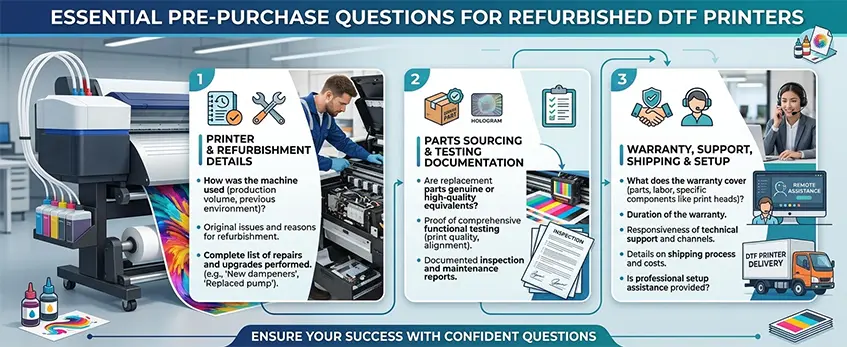
Before buying a refurbished DTF printer, getting clear answers from the seller is crucial. Start by asking about the printer history and refurbishment details. Find out how the machine was used, what issues it had, and what repairs or upgrades were done during refurbishment. Knowing the full backstory helps you assess its true condition.
Next, request parts sourcing and testing documentation. You want proof that replacement parts are genuine or high-quality and that the entire system was thoroughly tested before resale. This paperwork confirms the printer was properly maintained and inspected — a key part of any refurbished DTF printer inspection.
Finally, clarify the terms around warranty, support, shipping, and setup. Does the refurbished printer come with a warranty? How long is coverage, and what does it include? Also, ask about customer support responsiveness and whether setup assistance is offered. This ensures smooth delivery and helps you avoid unexpected headaches after purchase.
Asking these essential questions will give you confidence and protect your investment when buying a used DTF printer. For more insights on ink quality affecting printer longevity, check out the effects of DTF white ink on printhead life.
Comprehensive Physical and Mechanical Inspection Checklist
When inspecting a refurbished DTF printer, a thorough physical and mechanical check is crucial to avoid surprises later. Start with the exterior condition: look closely for any dents, scratches, or signs of rough handling that could hint at poor maintenance. Make sure all buttons, knobs, and hinges work smoothly without stiffness or loose parts.
Next, move to mechanical components like rollers, belts, and film feeding systems — these parts should operate quietly and uniformly, with no irregular noises or jerky movements. Pay special attention to the DTF film feeding system, which needs to feed the transfer film evenly to avoid print defects.
The ink delivery system and electronics also deserve a detailed look. Check for leaks, dried ink residues, or clogged lines. Electronic panels should power up consistently with no flickering lights or error codes during initial startup. Wiring must be intact and securely connected.
Finally, the printhead specifics and model verification are vital. Confirm the printhead model matches the one specified by the seller, as some refurb units get mixed parts that affect quality. Inspect the printhead for any visible wear or damage, as a worn printhead is expensive to replace and directly impacts print performance. This detailed refurbished DTF printer inspection ensures you’re getting a machine that’s functional and worth your investment.
Performance Testing – What to Demand Before Buying
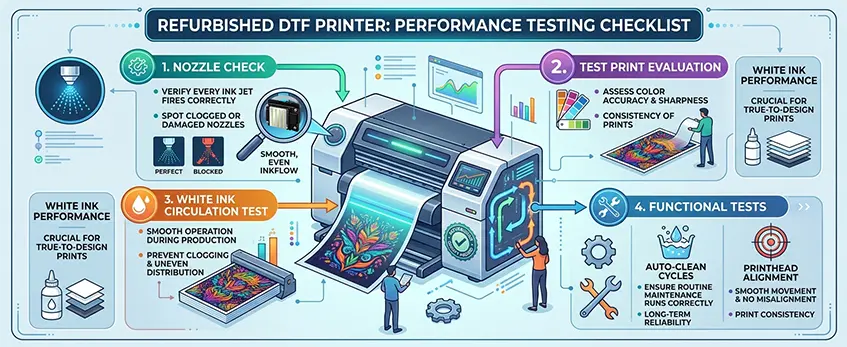
Before buying a refurbished DTF printer, thorough performance testing is key. Start with a nozzle check to ensure every ink jet fires correctly—this helps spot clogged or damaged nozzles that affect print quality. Next, request a test print evaluation to see real-world output. Pay close attention to colors, sharpness, and especially the consistency of the white ink performance, which is crucial for true-to-design prints. White ink often causes issues like clogging or uneven distribution, so ask for a white ink circulation test DTF to verify smooth operation during a full production run.
Don’t stop there—demand additional functional tests like auto-clean cycles and printhead alignment checks. These features heavily affect long-term reliability and print consistency. Confirm the printer correctly runs cleaning routines and the printhead moves smoothly without misalignment or skipping.
Taking these steps gives you a clear picture of the printer’s condition, ensuring you get a refurbished DTF printer that delivers quality prints and dependable uptime. For extra tips on print quality and maintenance, explore resources like how to use DTF transfer film to complement your printer setup effectively.
Red Flags and Common Scams to Avoid
When inspecting a refurbished DTF printer, watch out for suspicious pricing that seems too good to be true. Extremely low costs often hide underlying issues. Always ask for a detailed service history—vague or incomplete records are a warning sign that the seller might be hiding problems.
Be cautious if the seller does not disclose any machine modifications or uses incompatible parts. These can cause major performance problems or void potential warranties. It’s essential to confirm the printer’s originality and whether any non-standard replacements were made.
Lastly, evaluate the seller’s credibility by checking their support responsiveness. Reliable sellers will answer questions thoroughly and provide clear information about warranty and post-sale service. Avoid sellers who dodge essential questions or delay responses, as this can indicate future headaches with maintenance or troubleshooting. Keeping these points in mind helps ensure a safe investment when buying a refurbished DTF printer.
Post-Purchase Considerations and Long-Term Ownership
Once you’ve bought a refurbished DTF printer, setting it up correctly is crucial. Start with thorough setup and calibration, following the manufacturer or seller’s guidelines closely. Proper calibration ensures your print quality is sharp and colors are vivid right from the start.
Long-term success hinges on regular maintenance routines. Keep an eye on the ink delivery system, clean the printhead frequently, and check the DTF film feeding system to prevent jams or misfeeds. Budget realistically for consumables like ink, adhesive powder, and replacement parts—you’ll want to avoid surprises down the line.
Knowing when to upgrade is just as important. Watch for signs like consistent nozzle clogs or poor white ink circulation performance. Having access to reliable brand support and warranty options can make a big difference in extending your refurbished DTF printer’s life. For ongoing tips and quality supplies for your printing projects, consider checking out professional DTF transfer printing methods and recommended accessory products like TPU hot melt adhesive powder.
Maintaining your printer well and staying informed on upgrades ensures you get the best long-term ROI from your refurbished DTF printer investment.


 English
  Español
  Deutsch
  Français