



How to Cure DTF Powder Heat Press vs Curing Oven Which Is Better
Ever had a DTF powder cure go sideways—like uneven melting or peeling that ruins your perfect print? If you’re diving into curing DTF powder with a heat press vs. using a curing oven, you’re asking the right question: which method really delivers vibrant, wash-proof transfers without the headache? Whether you’re a hobbyist handling small batches or a growing print shop ready to scale, knowing the best curing technique can save you time, money, and frustration. Stick around—I’ll break down the step-by-step curing methods, pros and cons, and exactly when to pick a jinlong DTF heat press or oven so your designs pop and last.
Understanding DTF Powder Curing
What is DTF Powder and Why Cure It?
DTF (Direct to Film) powder is a special adhesive powder applied to prints before transferring them onto fabrics. Curing this powder properly is crucial—it melts and bonds the design onto the material, ensuring durability and vibrant colors. Without proper curing, the powder won’t fully adhere, leading to peeling, poor washability, and faded transfers.
Common Curing Challenges
Curing DTF powder isn’t always straightforward. You might face issues like uneven melting, under-curing (where the powder stays powdery and flakes off), or over-curing (causing brittleness and discoloration). Temperature control, time, and pressure all play into these challenges, making the right curing method essential for a lasting, quality finish.
Essential Tools Overview
To cure DTF powder effectively, you’ll typically need one of two key tools:
- Heat Press: Widely used for its accessibility, offering precise temperature and pressure control.
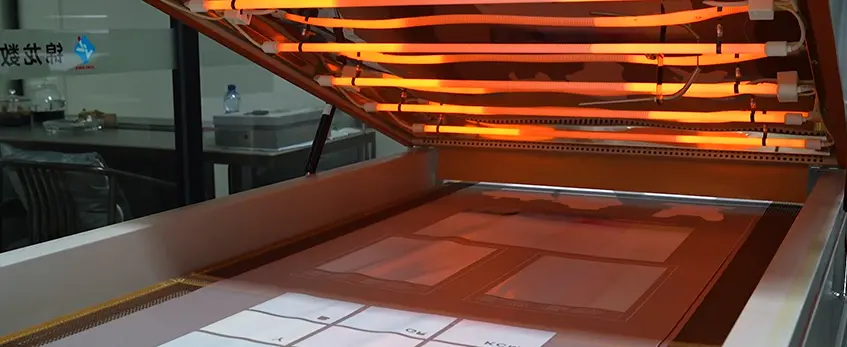
- Dedicated Curing Oven: Designed for uniform heat application, ideal for batch curing and consistency.
Both tools have their pros and cons depending on your volume, budget, and workspace. Understanding each is your first step toward flawless DTF transfers.

Curing DTF Powder with a Heat Press
Preparation Essentials
Before you start curing DTF powder with a heat press, make sure your workspace is clean and well-organized. Have your powder-coated prints ready and use a powder shaker for an even application of adhesive powder. Preheat the heat press according to the recommended DTF curing temperature guide, usually around 270°F to 300°F (132°C to 149°C). Use parchment paper or a Teflon sheet to protect your transfer during pressing.
Machine Setup
Set your heat press to the proper temperature and medium pressure. For curing DTF powder, a swing-away heat press is often preferred because it allows better access to your prints and prevents accidental shifting. Adjust the timer to about 10-15 seconds, but this can vary depending on your powder and film. Hover the heat press lightly over the print—not too much pressure at first—to avoid powder displacement.
Curing Process
Place your powder-coated DTF film on the heat press platen, cover it with the protective sheet, and apply heat and pressure for the set time. The powder will melt and fuse with the film, creating a strong adhesive layer. Make sure to cure each print evenly, moving quickly if you’re working with multiple transfers to maintain consistent curing.
Pro Tips for Success
- Use a swing-away heat press to prevent print smudging.
- Do a quick DTF transfer durability test after curing to check adhesion.
- Avoid over-pressing to prevent the powder turning brittle or discoloring.
- If you’re handling batches, preheat the press to reduce time between prints.
- For details on optimal powder adhesion and workflow, explore high-quality DTF prints.
Following these steps will help you get uniform DTF curing and strong transfer durability with your heat press.
Curing DTF Powder with a Dedicated Oven
Preparation Essentials
Before you start, make sure your DTF transfers are ready for curing—powder has been evenly applied and the excess shaken off using a powder shaker for curing prep. Preheat your dedicated curing oven to the recommended DTF curing temperature, typically between 300°F and 320°F. Ensure the oven is clean and free of any dust or debris to avoid imperfections in the curing process.
Machine Setup
Set your convection or dedicated curing oven to maintain consistent airflow. This uniform heat distribution prevents uneven melting or over-curing in spots. Arrange your DTF transfers flat on wire racks or heat-resistant trays spaced evenly to allow maximum air circulation. Avoid stacking transfers to help cure the powder evenly across the entire surface.
Curing Process
Place the loaded trays inside the oven and set a timer for about 3 to 5 minutes, depending on the oven type and powder specifics. Keep an eye on the powder’s transformation—you\’re aiming for a fully melted, slightly glossy finish without any bubbling or burning. After curing, allow the transfers to cool completely on the racks before handling or printing, which helps solidify the adhesive for optimal performance.
Pro Tips for Success
- Use an oven thermometer to double-check temperature accuracy.
- Rotate trays midway through curing if your oven has hot spots.
- Avoid opening the oven door too frequently, as this causes temperature drops affecting powder adhesion.
- Consider batch curing DTF film if you have multiple transfers; it saves time and ensures consistent results.
- Follow detailed curing guidelines in your printer or powder manufacturer\’s instructions for the best durability and wash fastness.
For more tips on optimizing your DTF workflow and powder adhesion, check out this detailed DTF printing machine guide for beginners.
Heat Press vs. Curing Oven for DTF Curing
When it comes to curing DTF powder, both heat presses and curing ovens have their strengths and weaknesses. Here’s a quick breakdown of how they compare in key areas:
| Aspect | Heat Press | Curing Oven |
|---|---|---|
| Efficiency & Speed | Fast for small batches; cycle times around 15-30 seconds per sheet | Best for large batches; can cure multiple sheets at once for longer cycles (5-15 mins) |
| Quality & Consistency | Good, but requires steady pressure and temperature control for even curing | Excellent uniform heat distribution ensures consistent, even melting of DTF powder |
| Cost & Accessibility | More affordable upfront; widely available for hobbyists and small shops | Higher initial investment; suited for professional setups with large volume needs |
| Space & Workflow Fit | Compact, fits in small spaces; integrates easily into heat press workflows like Swing-away heat press DTF systems | Requires dedicated space and ventilation; fits best in production lines focused on batch curing DTF film |
Key Takeaways
- Heat presses are ideal if you want quick turnaround and have limited space or budget.
- Curing ovens excel in delivering uniform quality on big batches, saving labor time in larger operations.
For more on optimizing your setup, check out our guide on DTF transfer films that work great with both curing methods.
Which is Better? Recommendations Based on Your Setup
Deciding between curing DTF powder with a heat press or a dedicated curing oven really comes down to your specific needs and workflow. Here’s a quick breakdown to help you choose:
For Hobbyists and Small Batches
If you’re just starting out or working on small projects, a heat press is usually the way to go. It’s more accessible, affordable, and doesn’t require a large workspace. Plus, many heat presses come with features like the swing-away option, making it easier to handle your DTF transfers. You can still achieve great adhesion and durability by mastering techniques like the heat press hovering method and following the DTF curing temperature guide.
For Professionals and High-Volume
If you’re running a business or dealing with large batch production, a dedicated curing oven is better. Ovens provide more consistent, uniform curing, and can handle batch curing DTF films efficiently, improving your workflow and product quality. Also, energy-efficient DTF ovens can save on power costs while maintaining top-notch transfer durability.
Hybrid Approach
Some setups combine both: using a heat press for smaller or complex jobs and a curing oven for bulk orders. This way, you have flexibility without compromising on speed or quality.
Factors to Consider
- Budget: Heat presses are generally cheaper upfront; ovens can be an investment but save time long-term.
- Space: Ovens need dedicated space; a heat press fits on most workbenches.
- Workflow: Consider how much volume you process regularly and if batch curing would help optimize your workflow.
- Consistency: For the highest uniformity, ovens typically edge out heat presses, but careful heat press use can get very close.
In all cases, using quality materials like the proper DTF transfer films from Jinlong Prints ensures your prints come out strong, vibrant, and wash-fast regardless of curing method.

Troubleshooting Curing Issues
Getting the curing just right with DTF powder can be tricky. Here’s how to address the most common problems:
Under-Cured Powder (Peeling)
- Cause: Curing temperature too low, insufficient pressing time, or uneven heat.
- Fix: Increase temperature slightly (follow the DTF curing temperature guide), extend pressing duration by 5-10 seconds, and make sure the heat press or oven heats evenly.
- Tip: Use a powder shaker to apply an even layer before curing to help adhesion.
Over-Cured Powder (Brittle/Discolored)
- Cause: Excessive heat or too long pressing time.
- Fix: Lower the curing temperature or reduce the pressing time. Keep an eye on color changes during testing to avoid discoloration.
- Tip: Hovering technique with a swing-away heat press can help control heat exposure for delicate designs.
Uneven Melt
- Cause: Hot spots or uneven contact on the heat press, or inconsistent oven airflow.
- Fix: Check heat press platen for even pressure, and use a convection oven for uniform heat distribution if batch curing.
- Tip: Use a Teflon sheet for even heat transfer and prevent sticking.
Method-Specific Hacks
- Heat Press: Try small test runs with transfer durability tests to dial in ideal temps and timing. If powder peels, use light pressure adjustments or try a pre-press to stabilize the fabric.
- Curing Oven: Rotate trays mid-curing to promote even airflow. Consider energy-efficient DTF ovens with built-in convection options to avoid hot/cold spots.
When struggling with curing, fine-tuning your setup and process with these tips can make a huge difference. For more details on optimizing your DTF workflow and supplies, check out the high-quality DTF printers and materials that work seamlessly with your curing setup.
Advanced Tips to Elevate Your DTF Curing Game with jinlong DTF
Boost your DTF curing process with these advanced tips tailored for jinlong DTF products. Whether you’re aiming to improve quality, efficiency, or sustainability, these insights will help you get the most out of your workflow.
Integration with Full Workflow
- Prep Consistency: Use a reliable powder shaker to evenly coat your transfers before curing. Consistent powder application leads to uniform DTF adhesive powder melting, reducing peeling and improving wash fastness.
- Heat Press Hovering Technique: When using a heat press, try a light hover method instead of pressing down hard fully, allowing even heat penetration without squishing your design.
- Batch Curing DTF Film: For larger runs, combine your curing oven with precise temperature control for batch curing. This keeps transfers consistent, especially when paired with jinlong’s high-quality transfer films like the 40cm Double STD Series.
Sustainability Angle
- Energy-Efficient DTF Ovens: Opt for convection ovens designed for DTF curing that use less energy while delivering even heat. Jinlong’s solutions often focus on workflow optimization, helping reduce power consumption and overall waste.
- Minimize Over-Curing: Avoid over-curing your powder to reduce brittle or discolored prints, extending the life of transfers and minimizing material waste.
Community Insights
- Many jinlong DTF users share their success stories and troubleshooting tips in forums and exhibitions, which you can explore in the Jinlong Inspiration Gallery. These insights often include specific curing temperatures and methods that work best for popular films and powders.
- Engage with the community to stay updated on new curing techniques and tools, especially for the best results in both heat press and oven curing methods.
By incorporating these advanced tips into your workflow, you can achieve perfect DTF powder curing every time with jinlong DTF, boosting durability and quality while saving time and resources.



 English
  Español
  Deutsch
  Français