


How to Choose the Right 4 Head DTF Printer for Business Success
If you’re diving into the world of custom apparel printing, choosing the right 4 head DTF printer can make or break your business success. These printers offer a serious boost in speed and capacity compared to 2-head models—but only if they fit your daily production goals, budget, and quality standards. In this guide, you’ll discover how to cut through the noise and pick a 4-head DTF printer that’s tailored to your unique business needs. Whether you’re scaling up your print shop or just stepping into high-volume orders, understanding the trade-offs in cost, maintenance, and performance is key. Let’s get started on finding the perfect fit for your growing operation.
Understanding 4-Head DTF Printers and When They Make Sense
A 4-head DTF printer features four printheads working simultaneously, significantly boosting productivity compared to smaller models. This multi-head configuration allows for faster print speeds and higher output volumes, making it an ideal choice for businesses aiming to scale their custom apparel printing operations.
4-Head vs. 2-Head DTF Printers: Speed, Output, and Maintenance
When comparing 4 head DTF printers vs 2 head models, the advantages become clear:
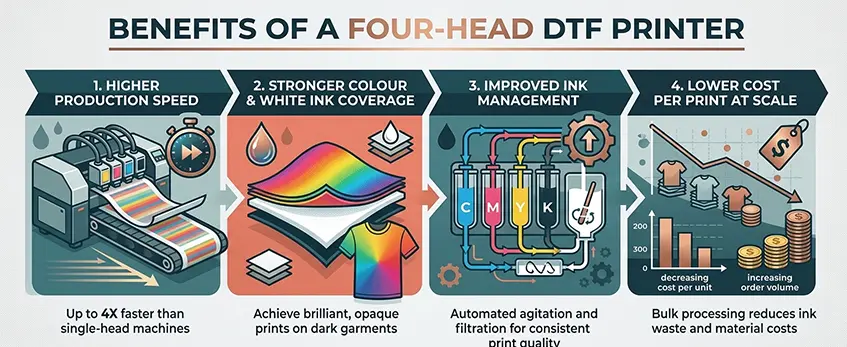
- Speed & Output: A 4-head setup can almost double the print speed and volume, producing more high-quality prints in less time.
- Color Consistency: Multiple heads ensure smoother color gradients and better white ink circulation, critical for durability on fabrics.
- Maintenance: While 4-head printers provide higher throughput, they also require more regular maintenance—especially on printheads—to avoid downtime.
Best Business Fit for 4-Head DTF Printers
Businesses with high-volume DTF transfers production needs, like custom apparel shops dealing with medium to large orders, benefit the most from 4-head machines. Smaller operations or startups might find 2-head printers sufficient for their current workload and budget.
Realistic Expectations: Investment vs. ROI
Investing in a 4-head DTF printer means higher upfront costs and more complex maintenance. However, for businesses ready to commit to growing their printing capacity, the return on investment (ROI) can be substantial. Calculating the balance between cost, print speed, and order volume is key to ensuring long-term profitability.
Assessing Your Business Needs Before Purchasing
Before investing in a 4 head DTF printer, it\’s crucial to realistically assess your business needs to ensure you choose the right model.
Production volume and print size: Start by calculating how many transfers you need daily or weekly. High volume DTF transfers production demands a 4 head setup to maintain speed and output without bottlenecks. Also, consider the maximum print size, especially if you target large-format items. A 24-inch DTF printer comparison can help if bigger prints are part of your plan.
Target markets and workspace: Think about who your customers are—custom apparel printing equipment needs vary if you serve bulk orders or small boutique runs. A 4 head printer suits businesses scaling quickly or taking on bigger jobs. Also, make sure your workspace can accommodate a larger machine with space for accessories like DTF shakers and dryers.
Budget and hidden costs: Beyond the upfront price, plan for ongoing expenses such as ink, film, printhead replacement cost, and maintenance downtime. Consider the DTF printer total cost of ownership, factoring in utilities, consumables, and potential service fees. Don\’t overlook software investments like RIP software for DTF printing or training your staff.
Getting these numbers clear upfront avoids surprises and helps ensure your 4 head DTF printer fits your unique operational needs.
For a comprehensive look at optimal setups, you can explore our detailed best 24-inch DTF printer setup guide for professional results.
Key Factors to Evaluate in a 4-Head DTF Printer
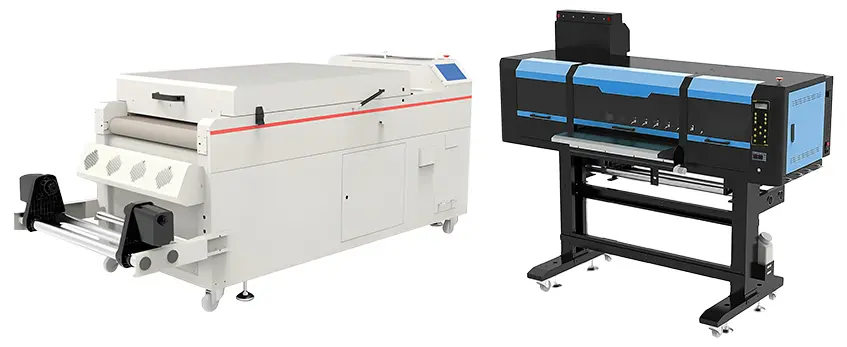
When choosing a 4-head DTF printer, print quality is at the top of the list. Look for high resolution and consistent durability on different fabric types so your transfers stay vibrant and last through washes. Color accuracy and sharp details matter, especially if you\’re serving custom apparel printing customers who expect professional results.
Print speed is another crucial factor. Don’t just trust advertised numbers—real-world efficiency can vary based on your workflow and setup. A 4-head DTF printer generally offers faster production than 2-head models, but check how it performs under continuous use to avoid bottlenecks.
Next, check the printhead technology and reliability. Printers with proven, easy-to-replace printheads—like those using Epson’s printhead systems—can save you time and money. Replacement costs for printheads can add up, so it’s worth considering models known for longevity and smooth white ink circulation systems, which keep prints consistent without frequent clogs.
Build quality also impacts long-term satisfaction. Look for sturdy frames, automated features like nozzle checks and cleaning cycles, and software compatibility that fits your existing RIP software and workflow. A user-friendly interface and accessible maintenance routines make daily operation less stressful and reduce downtime. Regular maintenance is key to minimizing unexpected repair needs.
Finally, evaluate the after-sales support, warranty, and availability of local service. Solid manufacturer backing and responsive customer service help you keep your printer running smoothly, especially with technical hiccups. A reliable support network is a big plus for scaling your DTF printing business.
For more details on optimizing printer performance and setup, explore resources like how to choose the right DTF kit for your printing business to ensure your investments deliver both quality and efficiency.
Cost Analysis and Return on Investment
When choosing a 4-head DTF printer, understanding the total cost of ownership is crucial. This includes not just the upfront purchase price but ongoing expenses like ink, maintenance, replacement printheads, and consumables such as DTF rolls and powder. Entry-level 4-head models typically cost less initially but may have higher maintenance demands or slower print speeds, which can impact your business’s efficiency and long-term profitability. Premium models come with advanced features like better white ink circulation systems and more durable printheads, often reducing downtime and maintenance costs.
Estimating per-transfer costs is key to maintaining healthy profit margins. Factor in ink usage, film, powder, electricity, and labor to get an accurate cost per print. This will help you price your products competitively while ensuring you cover expenses. To calculate the payback period, divide your initial investment by your average monthly profit from transfers. This method gives a clear picture of how long it will take for the printer to pay for itself.
Scaling your DTF printing business efficiently means balancing production speed with cost. A 4-head DTF printer can speed up output significantly compared to a 2-head model, making it ideal for high volume DTF transfers production. However, it’s important to avoid relying only on advertised speeds—real-world efficiency depends on your workflow, RIP software, and maintenance routines.
By carefully analyzing these costs and projections, you can choose the right 4-head DTF printer that aligns with your budget and growth goals for custom apparel printing equipment. For more details on maintaining printhead health to reduce replacement costs, check out effective white ink circulation tips and troubleshooting strategies.
Common Pitfalls to Avoid When Buying a 4-Head DTF Printer
When choosing a 4-head DTF printer, don’t just trust the advertised speeds without putting the machine to the test. Real-world print speed and quality often reveal more than specs on paper. Also, printhead maintenance can be demanding—neglecting it leads to downtime and higher repair costs, especially with key parts like Epson printheads.
Price is tempting, but skipping after-sales support or warranty to save money is risky. A low upfront cost doesn’t always mean lower total cost of ownership. Make sure to factor in ongoing expenses like printhead replacement costs and maintenance supplies.
Environmental factors in your workspace matter too. Temperature, humidity, and dust can impact print quality and printer durability. Finally, ensure your new 4-head DTF printer works well with your existing finishing equipment, like DTF shakers and dryers, so your workflow stays smooth and efficient.
For durable printing and reliable white ink circulation, consider models like those offered by Jinlong DTF, which balance cost, performance, and support in one package. Check out their DTF transfer film options to pair with your printer for the best results.
Top Considerations for Long-Term Success with 4-Head DTF Printers
When investing in a 4-head DTF printer, thinking long-term is key to growing your business efficiently. Here are some top considerations to keep your operation future-proof and scalable.
Future-Proofing Through Upgrades and Expandability
Choose a printer that allows hardware upgrades or software updates. This flexibility means you can boost print speed or add features without buying a new machine. Expandable 4 head DTF printers help you handle increasing production demands without a complete overhaul.
Integration with Full DTF Workflow Components
A smooth workflow combines your printer with other essential equipment like DTF shakers, dryers, and RIP software for DTF printing. Integrating all components streamlines production, reduces downtime, and improves consistency. Investing in properly compatible accessories ensures your 4-head setup runs efficiently.
Sustainability and Operational Efficiency Trends
Modern businesses focus on sustainability and cutting waste. Look for 4 head DTF printers with reliable white ink circulation systems and energy-efficient designs. These features reduce ink waste and power consumption, lowering your overall printing total cost of ownership. Efficient machines mean better margins and a smaller environmental footprint.
Examples of Businesses Scaling Successfully with 4-Head Setups
Many small to medium custom apparel printing businesses in the US have scaled up by upgrading to 4-head DTF printers. The increased print speed and output volume enable them to meet high volume DTF transfers production targets. With proper maintenance and workflow integration, these companies enjoy faster ROI and steady growth.
For more insights on managing a scalable DTF printing business setup and choosing reliable consumables, check out how to choose a reliable DTF consumables manufacturer.
Why Jinlong DTF Stands Out for Business Needs
Jinlong DTF printers deliver balanced performance with a reliable white ink circulation system that minimizes downtime and ensures consistent print quality. This feature is a game-changer for high volume DTF transfers production, where smooth white ink flow is critical.
Built tough, Jinlong printers offer durable construction designed to withstand the demands of busy custom apparel printing equipment setups. Despite their robust build, they keep ownership costs competitive, making them a smart choice when considering total cost of ownership for 4 head DTF printers.
User-friendly features simplify operation and maintenance, reducing the learning curve and helping businesses avoid common pitfalls like neglecting printhead upkeep or sticker-shock on replacement parts. Plus, their strong support ecosystem ensures you’re never left on your own, which is crucial for minimizing DTF printer maintenance and downtime.
Many growing printing operations have scaled successfully with Jinlong’s 4 head DTF printers, benefiting from consistent print speed and quality, plus smooth integration with accessories like DTF shaker and dryer systems. For a complete setup, pairing your printer with quality consumables such as Jinlong DTF ink CMYK 1L bottles and premium DTF transfer films guarantees top results and reliable ROI on your investment.



 English
  Español
  Deutsch
  Français