



White Inkjet Ink vs Standard Ink Differences Benefits and Uses
What Is White Inkjet Ink?
White inkjet ink is a specially formulated pigment-based ink designed to deliver opaque white color on a variety of substrates. Unlike standard dye-based or typical pigment inks used in CMYK printing, white ink contains a high concentration of titanium dioxide. This key ingredient gives white ink its exceptional opacity, allowing it to stand out clearly on dark, colored, or transparent surfaces.
The formulation of white ink involves larger and heavier pigment particles compared to standard inks, which makes it prone to settling and clogging. Because of this, white inkjet ink requires dedicated printheads and specialized les systèmes de circulation within inkjet printers to keep the pigments suspended and flowing smoothly during printing. This careful system design prevents sedimentation, ensuring consistent print quality and reliability.
Overall, white inkjet ink serves a unique role in printing setups, particularly for applications needing vibrant white or underbase layers—something standard transparent CMYK inks cannot achieve. Its distinct properties make it an essential choice for printing on surfaces where color vibrancy and opacity are non-negotiable.
What Is Standard Ink? (CMYK Overview)
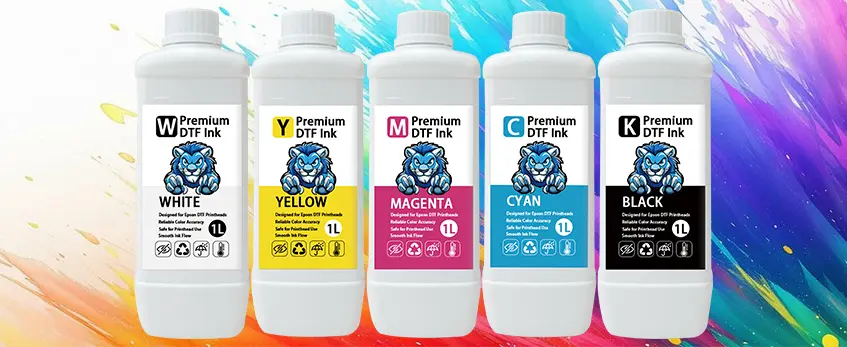
Standard ink in inkjet printing typically refers to the CMYK set—Cyan, Magenta, Yellow, and Black. These inks are mostly transparent by design, allowing them to blend together and produce a wide range of colors when layered on top of white or light-colored substrates. Because of their transparency, CMYK inks rely heavily on the underlying material’s color to achieve the intended look.
This transparency works great for printing on white or light surfaces like paper, where the colors can show up vivid and true. However, with CMYK inks alone, you cannot create true white because the inks mix colors but don\’t add opacity or brightness on dark or colored backgrounds. That\’s why a separate white inkjet ink is necessary when printing on dark fabrics or non-white materials—something CMYK can’t achieve through standard color mixing.
Key Differences: White Inkjet Ink vs. Standard Ink
| Fonctionnalité | White Inkjet Ink | Standard Ink (CMYK) |
|---|---|---|
| Opacité | Opaque, thanks to high titanium dioxide content | Transparent, designed for layering colors |
| Pigment Size & Viscosity | Larger, heavier particles; prone to settling and clogging | Finer particles; smooth flow and less clogging |
| Color Reproduction | Used as a white base or underbase for vibrant prints | Uses color blending in cyan, magenta, yellow, black |
| Substrate Compatibility | Works on dark, colored, transparent, and non-porous surfaces | Best on white or light-colored paper and fabrics |
| Ink Consumption & Cost | Higher, especially with underbase layers required | Lower, no extra white layer needed |
| Maintenance | Needs circulation systems to prevent sedimentation | Simpler maintenance routines |
| Drying & Curing | Longer drying times; special curing to avoid smudges, especially in DTF | Faster drying on porous substrates |
White inkjet ink\’s opaque nature makes it essential for printing on dark or non-porous materials, where standard transparent CMYK inks fall short. The bigger pigment particles in white ink can lead to settling or clogging, which is why circulation systems are critical to keeping it flowing smoothly. Conversely, standard inks boast finer pigments allowing simpler maintenance and quicker drying, but they can\’t create a true white or vibrant prints on dark backgrounds.
If you’re working with DTF printing or want vibrant colors on dark garments, white ink is usually non-negotiable due to these key differences. For more on DTF setups and white ink\’s role, check out our detailed Guide d'achat des imprimantes à transfert DTF.
Advantages of White Inkjet Ink

White inkjet ink is a game-changer when it comes to printing on dark fabrics and garments, such as black t-shirts. Unlike standard CMYK inks, white ink provides a true-color vibrancy by acting as an opaque base layer that makes colors pop vividly. This opacity is crucial for creating sharp, bright designs that stand out instead of fading into the fabric.
Beyond textiles, white ink expands your creative options by enabling printing on unconventional materials like glass, wood, metal, acrylic, and various films. Its ability to adhere and remain opaque on these non-porous or colored substrates opens doors to specialty inkjet ink applications that standard inks simply can’t handle.
In transfer printing methods like DTF (Direct-to-Film), white ink serves as the essential underbase layer to ensure crisp, professional results. This underbase prevents colors from blending into dark or transparent backgrounds, boosting both the sharpness and durability of prints.
Furthermore, white inkjet ink offers better brightness and lasting durability in specialty applications, making it ideal for custom merchandise and apparel businesses looking to deliver standout products with long-lasting impact. For anyone aiming to enhance print quality on dark or diverse substrates, white ink is simply indispensable.
For more on how white ink works with DTF setups, consider checking out this guide on les meilleures imprimantes DTF pour les débutants.
Disadvantages and Challenges of White Inkjet Ink
White inkjet ink comes with some unique challenges you should be aware of before committing. The most common issue is clogging or sedimentation. Because white ink contains larger pigment particles, mainly high-opacity titanium dioxide, it tends to settle in the printheads if not circulated regularly. This means printers need specialized maintenance routines to keep the ink flowing smoothly and avoid costly downtime.
Operational costs are also higher compared to standard CMYK inks. White ink is pricier upfront, and the need for frequent cleaning and circulation systems adds to maintenance expenses. Plus, not every printer supports white ink—many DTF (Direct-to-Film) setups rely on Epson-based printheads optimized for handling these pigmented inks. So, compatibility is a key factor.
Lastly, white ink printing can take longer. Applying white as an underbase or multiple layers requires extra passes, which slows down production compared to standard transparent CMYK prints. Despite these drawbacks, white ink’s ability to deliver opaque, vibrant prints on dark and specialty substrates often outweighs the challenges.
For smooth operation, consider using high-quality inks such as the reliable options featured in Jinlong’s DTF ink range, which are designed to reduce clogging issues and maintain consistent flow in Epson-based printers.
Primary Applications and Use Cases
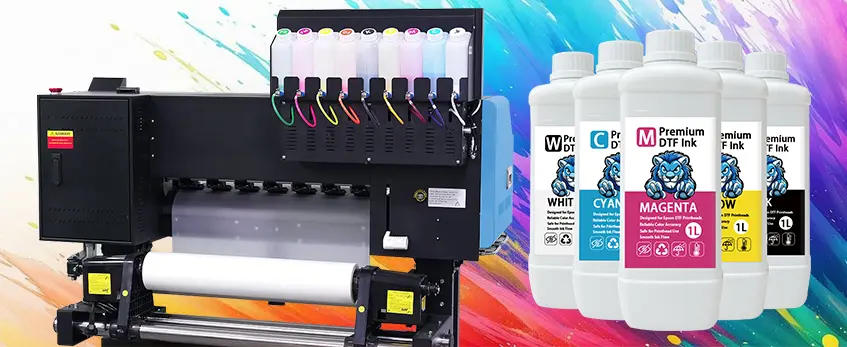
White inkjet ink plays a crucial role across various printing methods, especially when vibrant, opaque prints on dark or transparent substrates are essential. In Impression DTF (Direct-to-Film), white ink acts as an indispensable underbase layer for heat transfers, enabling brilliant colors on any fabric color, including black or dark garments. This white underbase ensures designs pop and maintain sharp detail during transfer, making it a go-to choice for custom apparel makers. You can explore reliable options for quality white ink and supplies like Films de transfert DTF pour optimiser votre installation.
En DTG (Direct-to-Garment) printing on dark textiles, white ink is used as a foundational base to achieve vivid, lifelike designs without color distortion. Without this white layer, standard CMYK inks would struggle to show up on dark fabrics.
Pour UV flatbed inkjet printers, white ink enables printing on rigid materials such as signage, promotional items, and other physical goods. Its opacity stands out on non-porous surfaces like acrylic, metal, and glass, expanding creative possibilities beyond typical paper prints.
White inkjet ink is also popular in specialty graphics applications including transparent films, stickers, labels, and backlit displays where opacity and brightness matter. Finally, custom merchandise and apparel businesses rely heavily on white ink to deliver professional results and vibrant prints on a wide range of substrates.
These applications highlight the versatility of white ink compared to standard CMYK inks, proving its worth in specialty printing environments where color vibrancy and opacity are essential.
When to Choose White Inkjet Ink Over Standard Ink
Choosing between white inkjet ink and standard CMYK ink depends largely on your substrate color, design needs, volumeet budget. Here’s a quick decision guide to help:
| Facteur | Use Standard CMYK Ink | Use White Inkjet Ink |
|---|---|---|
| Substrate Color | White or light-colored materials | Dark, colored, transparent, or non-porous |
| Design Needs | Full-color prints on light backgrounds | Vibrant colors on dark bases; crisp underbase layers |
| Volume d'impression | High-volume, fast runs without complex setup | Moderate volumes due to higher ink cost and maintenance |
| Budget | Lower ink and maintenance costs | Higher ink cost and printer upkeep |
When CMYK-only is enough
- Printing on white or light textiles, paper, or films where white ink’s opacity isn’t required.
- Designs without the need for an opaque white layer or special substrates.
- Faster, cost-effective production without specialty equipment.
When white ink is non-negotiable
- Printing on black or dark garments where color vibrancy depends on a white underbase.
- Specialty items like glass, metal, clear films, or wood that need an opaque white layer.
- Direct-to-Film (DTF) printing requiring white ink as an essential base for heat transfers.
- Applications demanding sharper, more durable prints with superior brightness.
For those using DTF or specialty printing setups, white inkjet ink opens up creative possibilities that standard CMYK inks simply can’t match. To explore equipment that supports this, check out reliable options like DTF printer with powder shaker setups for seamless white ink circulation and image quality.
In short, if your project involves dark or transparent surfaces and demands standout color vibrancy, white ink is the way to go. For basic, high-speed prints on standard items, sticking with CMYK ink remains a solid choice.
Tips for Working with White Inkjet Ink
Working with white inkjet ink demands a bit more care to keep your prints vibrant and your equipment running smoothly. Here are some practical tips to help you manage white ink efficiently:
Printer Maintenance: White ink contains larger and heavier pigment particles, making it prone to clogging and settling. Regular circulation of the ink through your printer’s system is essential to prevent sediment buildup. Also, run frequent cleaning cycles to keep printheads clear and maintain consistent ink flow.
Sélection d'encres : Always choose high-quality, low-sediment white ink formulas to reduce maintenance issues. Jinlong DTF offers reliable white inkjet ink options specially formulated for smooth flow and minimal clogging, ensuring better performance and less downtime.
Software and File Preparation: When preparing your designs in RIP software, properly set the white ink layer. This ensures accurate underbase printing, crucial for vibrant results on dark or transparent substrates.
Storage and Handling: Store white ink in a cool, dark place and tightly sealed to extend shelf life. Avoid exposure to extreme temperatures and always shake the ink gently before use to keep pigments evenly dispersed.
Following these tips will help you get the most out of your white inkjet ink, especially in demanding applications like DTF printing and specialty graphics. For more information on durable DTF printing and ink choices, check out Jinlong’s detailed guides on cheap DTF printer vs premium models et leur professional CMYK and white DTF inks.





 English
  Español
  Deutsch
  Français