


TPU Powder Melting Temperature and Heat Press Settings Guide
Comprendre les caractéristiques de la poudre TPU
Thermoplastic Polyurethane (TPU) powder is a specialized Adhésif thermofusible en poudre widely used in DTF (Direct to Film) printing applications. Knowing its properties is essential for achieving optimal transfer and durability.
Melting Point vs. Flow Point
- Point de fusion : La poudre de TPU fond généralement entre 160°C to 220°C (320°F to 428°F), depending on the formulation. This is the temperature at which it transitions from solid to liquid.
- Flow Point: Slightly above the melting point, the flow point is where TPU powder becomes viscous enough to bond effectively with DTF ink and fabric. Maintaining correct curing and heat press temperatures within this range is critical to avoid under or over melting.
Particle Size Matters
- TPU powders commonly feature particle sizes around 80 microns, providing a balance between ease of application and consistent coverage.
- Finer particles improve detail but may clump; coarser particles raise flow point variability and affect film opacity.
- Jinlong DTF supplies maintain a controlled particle size distribution to ensure consistent adhesion and smooth finish.
Color Variations
- TPU powders come in various formulations, including clear and white, calibrated to match specific DTF ink colors and reduce dye migration risks.
- Color variations affect heat absorption and flow characteristics; selecting the right powder color prevents issues like film yellowing or print washout.
Understanding these key TPU powder characteristics — melting point vs. flow point, particle size control, and color options — helps optimize Température du four de polymérisation DTF et réglages de la presse à chaud for superior textile transfers.
Phase 1: Curing the Powder (Oven Settings)
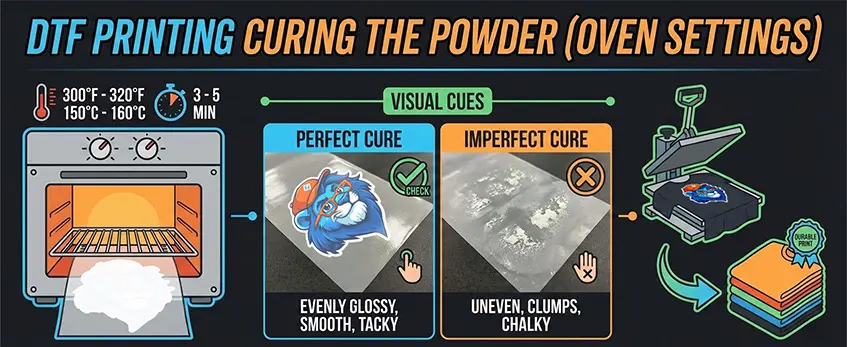
Curing TPU powder properly is the first crucial step in your DTF workflow to ensure a smooth, durable print. The standard curing temperature for most TPU powders falls between 300°F to 320°F (150°C to 160°C). This range allows the powder to melt and bond correctly without burning or under-curing.
Time Durations
Typically, curing time lasts around 3 à 5 minutes in a heating oven, depending on the oven’s power and the powder amount on your DTF film. Longer curing times risk over-melting the powder, leading to stickiness or poor flow, while shorter times might leave the powder too dry to adhere well.
Visual Cues of a Perfect Cure
You’ll know the powder is perfectly cured when it looks evenly glossy and slightly melted, forming a smooth layer across the film. The melted powder should feel tacky but not wet or overly sticky to the touch. Uneven melting, powder clumps, or a chalky feel means the cure wasn’t right, and you’ll want to adjust your oven settings.
Ensure your curing oven has an accurate temperature control and uniform heat distribution for consistent results. Properly cured powder improves heat press adhesion and final print durability.
For more on selecting the right powder for your needs, check out our guide on the best DTF powder for cotton, polyester, and blended fabrics.
Phase 2: Heat Press Application (Transfer to Garment)
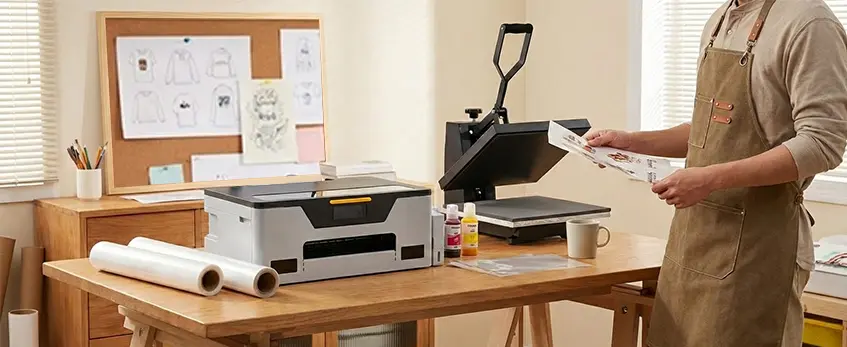
When you move to the heat press stage, getting the settings right is key to a smooth and durable TPU powder transfer. Here’s how to dial in your temperature, pressure, time, and peeling for different fabric types.
Temperature Settings by Fabric Type
- Coton : Use 320°F to 330°F (160°C to 165°C) for the best melt and adhesion without scorching.
- Polyester : Lower it to around 300°F to 310°F (150°C to 155°C) to avoid melting or damaging synthetic fibers.
- Blends (Cotton/Poly): Aim for a middle ground—310°F to 320°F (155°C to 160°C) works well.
Pressure Settings
- Medium to firm pressure is usually ideal. This means around 40-50 PSI on your heat press. Consistent pressure ensures the TPU powder bonds properly with the fabric without squishing it too much.
- Avoid overly light pressure that makes transfers weak and too heavy pressure that may cause print distortion.
Time Duration
- Heat press time typically ranges from 10 à 15 secondes depending on fabric thickness and TPU powder characteristics.
- Start with 12 seconds and adjust if needed; too little time results in poor bonding, too much can cause yellowing or melting issues.
Techniques de peeling
- Peeling à chaud : Most TPU powders perform best when peeled immediately after pressing while the film is still warm, for a clean release and perfect imprint.
- Peeling à froid : Some specialty powders require cooling before peel—check if the TPU powder or DTF film packaging mentions cold peel.
- Peel slowly and steadily to avoid lifting the print or damaging the surface.
This process works hand-in-hand with the curing temperature of your oven and proper powder melting. For an all-in-one DTF setup, using quality materials like Film de transfert Jinlong DTF jumelé avec Jinlong DTF ink cartridges ensures consistent results.
Keep these settings in mind and run small tests on your fabric of choice to fine-tune the balance between temperature, pressure, and timing for a flawless print every time.
Troubleshooting Common Adhesion Issues with TPU Powder
When working with TPU powder in DTF printing, adhesion problems can pop up, but most have straightforward fixes.
Print Lifts During Peeling
If the print lifts while peeling, it usually means the heat press settings weren’t quite right. Try increasing the pressing temperature by 5-10°F and ensure you’re applying firm pressure. Also, check that you’re peeling the film at the right time—some films require a hot peel, others a cold peel. For best results, follow the specific guidelines for your film type to avoid premature lifting.
Print Cracks After Washing
Cracking happens when the curing wasn’t thorough or the heat press was too hot, causing the TPU layer to become brittle. Stick to recommended curing oven temperatures and times, and use moderate heat during pressing, especially on delicate fabrics. It helps to perform a DTF washability test on samples to catch this before full production.
Dye Migration (Colors Bleeding on Polyesters)
Dye migration is common with polyester fabrics—colors from the garment bleed into the TPU print. To prevent this, use anti-sublimation DTF powder or pre-treat garments properly. Applying a barrier coating or double pressing with a protective sheet can also reduce bleeding.
Oily Residue on Film
An oily residue can show up when excess powder hasn’t fully melted or if the powder particle size isn’t well matched to the film. Use a high-quality 80 micron TPU powder for smoother melting and always ensure even curing in the oven. For more detailed insights on powder characteristics and curing, check out the hot melt adhesive powder particle sizes explained guide.
Addressing these common issues will improve print durability and appearance, keeping your direct to film transfers strong and vibrant.
Storage and Handling of TPU Powder
Proper storage and handling of TPU powder are critical to maintaining its quality and consistent melting temperature for your DTF process. Humidity is the biggest enemy here — moisture can cause the powder to clump or change its melting behavior, which leads to poor adhesion or uneven curing during heat press application.
Impact of Humidity on Melting Points
- TPU powder absorbs moisture easily, which can lower its effective melting point.
- Excess humidity makes the powder sticky, causing clumping that impacts powder distribution.
- Damp powder may produce inconsistent melting and curing, leading to issues like print lift or cracking after transfer.
Best Practices for Reselling Bags and Storing Jinlong DTF Supplies
- Toujours reseal bags tightly immediately after use to minimize exposure to air and moisture.
- Use airtight containers or vacuum-sealed bags for longer storage.
- Store TPU powder in a endroit frais et sec away from direct heat or sunlight.
- Keep relative humidity below 50% when possible to ensure stable powder viscosity and performance.
- Before use, gently sift or shake the powder to break up any clumps formed during storage.
Following these simple steps preserves your TPU powder’s melting point and flow characteristics, maximizing the quality of your DTF transfers. For optimized results with Jinlong supplies, pairing storage tips with recommended oven and heat press settings is key. You can also explore detailed handling and storage guidance along with advanced powder selection on the best DTF powder for high-quality transfers page.



 English
  Español
  Deutsch
  Français