


Is the Best 24 Inch DTF Printer Worth the Investment in 2026
What Is a 24-Inch DTF Printer and Why Consider One?
A 24 inch DTF printer is a direct-to-film printing machine designed to produce high-quality custom transfers on films up to 24 inches wide. DTF (Direct-to-Film) printing involves printing designs onto a special film, applying adhesive powder, then curing it. This process allows prints to be transferred to various fabrics like cotton, polyester, and blends with excellent durability.
Direct-to-Film Process and Key Benefits
- Prints vibrant, detailed designs on clear or white films
- Uses special water-based inks that bond well with fabric
- Adhesive powder ensures strong wash-resistant transfers
- Works on a wide range of materials beyond just cotton
- Faster production time compared to traditional screen printing
Ideal Size and Production Capacity
The 24\” width hits a sweet spot for many small-to-medium businesses:
- Large enough for most custom T-shirts, hoodies, and apparel
- Supports multi-color, detailed designs without oversize waste
- Ideal for batch sizes from single prints to moderate runs (50–200 pieces/day)
- Balances speed and quality, making it cost-effective for SMBs
Comparing Smaller and Larger Formats
| Taille de l'imprimante | Meilleur pour | Pour | Cons |
|---|---|---|---|
| A3 (13–16 in) | Very small runs, samples | Low cost, compact | Taille d'impression limitée |
| 24 inch DTF | Small to medium business output | Versatile size, scalable | Higher upfront cost than A3 |
| 30–60 inch+ | Large volume, industrial prints | Fastest throughput for bulk | Expensive, space & maintenance |
If you’re running a small business or a startup looking to expand your custom apparel output, the 24 inch DTF printer provides a great balance: it maximizes efficiency without overwhelming startup costs or space requirements. It’s a practical investment with scalable production capacity as you grow.
Breaking Down the True Costs of a 24-Inch DTF Printer
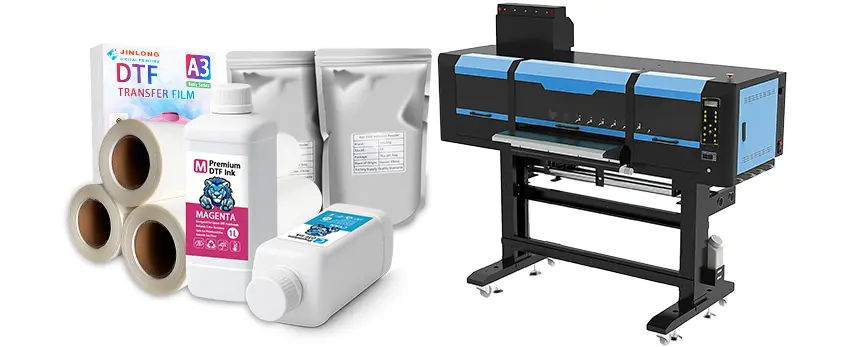
When considering the best 24 inch DTF printer, understanding the full cost picture is key. The upfront investment varies depending on the model, with prices ranging from budget-friendly entry-level options to high-end machines, like the popular Epson i3200 DTF printer, equipped with dual heads for faster production. Along with the printer itself, essential accessories include a heat press, powder shaker setup, and high-quality DTF transfer film, such as those found in the DTF Film de transfert A3 Double Pro Series.
Ongoing costs can add up quickly. Ink expenses depend on your print volume and the type of inks used—pigment-rich white ink for opacity tends to be pricier but necessary for durable prints. Film costs are recurring, so buying in bulk can help lower prices. Don’t forget the DTF powder, a crucial consumable for adhesion, plus maintenance supplies to keep your printer running smoothly. Electricity use is also a factor, especially when operating the printer and heat press continuously.
Hidden costs often get overlooked. Employee training or time spent mastering RIP software and color management tools can impact your budget. Workspace modifications might be necessary for ventilation or to comply with safety standards due to powder handling and solvent fumes. All these factors add up.
Here’s a snapshot of realistic costs for a small-to-medium business setup in 2026:
| Expense Category | Estimated Cost Range |
|---|---|
| 24-inch DTF Printer | $5,000 - $12,000 |
| Heat Press & Accessories | $1,200 – $3,000 |
| DTF Film de transfert | $0.50 – $1.00 per sheet |
| White Ink & CMYK Inks | $200 – $400 per liter |
| DTF Poudre | $50 – $150 per 10 lbs |
| Maintenance & Repairs | $500 – $1,000 annually |
| Training & Workspace Setup | $500 – $2,000 |
| L'électricité | Variable, approx. $100/month |
All these elements are essential to calculate when determining if a 24\” DTF transfer machine is the right investment for your custom t-shirt printing equipment lineup. Proper budgeting upfront means fewer surprises and better ROI down the road. For a deeper understanding of how the printing process ties into these costs, check out this detailed guide on comment fonctionne l'impression DTF, de la conception à la presse à chaud.
Key Benefits That Make a Quality 24-Inch DTF Printer Worth Considering
Investing in the best 24 inch DTF printer can bring solid perks, especially if you\’re running a small to medium business.
Faster turnaround vs outsourcing: Having your own 24\” DTF transfer machine means you cut lead times significantly. No waiting days for orders to come back means happier customers and quicker cash flow.
Short-run flexibility & no minimum orders: Unlike large-scale printing, DTF lets you print small batches or one-offs easily. Perfect if you want to test new designs without big risk.
Durability and fabric versatility: DTF prints stick well on many fabrics—from cotton to polyester blends—offering strong, long-lasting transfers. This versatility expands your product range without extra equipment.
Profit margins and scalability: Owning the printer avoids outsourcing fees, boosting your margins. Plus, the 24-inch width balances speed and size, helping your business scale up as orders grow.
Maximizing output and minimizing waste: Quality models optimize ink use and film feeding to reduce waste. That saves money on consumables like DTF film and toner powder, improving your DTF printing ROI.
| Bénéfice | Impact |
|---|---|
| Délai d'exécution plus court | Meet tight deadlines, increase orders |
| Short-Run Flexibility | Print small runs, no min quantities |
| Polyvalence des tissus | Broaden product lines |
| Higher Profit Margins | Save on outsourcing costs |
| Waste Reduction | Save on ink, film & powder expenses |
For businesses wanting to grow with minimal hassles, a reliable 24-inch DTF printer is worth the investment. Check specifics on quality films and powder compatibility to get best results, like those offered in Jinlong’s TPU powder compatibility guide.
Potential Drawbacks and Challenges to Evaluate Honestly
Owning the best 24 inch DTF printer comes with real challenges you need to consider before investing. Maintenance is a big one—clogging printheads happen if you don’t use the machine regularly, and managing DTF powder adds an extra step that requires care and consistent cleanup. A good powder shaker setup helps, but it still demands attention.
Ventilation and workspace also matter. The powder and inks can release fumes or dust, so having proper airflow is essential to keep your shop safe and comfortable. Not every workspace is ready for this out of the box.
There’s also a learning curve with RIP software and color management, which can trip up new users. Getting consistent color output takes practice, especially when switching between fabric types or inks. Brand differences add to this—initial print quality and printer reliability vary, so choosing a trusted model like the Imprimantes Jinlong DTF can mitigate headaches.
Sometimes, a 24” DTF transfer machine might not be worth it if your order volume is low or you’re not ready for maintenance demands. For those cases, starting smaller or outsourcing print jobs could save money and hassle. Proper planning and knowing your business needs upfront will keep your DTF printing venture profitable and smooth.
ROI Analysis: When and How a 24-Inch DTF Printer Pays for Itself
Investing in the best 24 inch DTF printer can seem hefty upfront, but understanding when and how it pays for itself is key. The break-even point usually comes down to order volume and cost savings compared to outsourcing transfers. Typically, if you handle around 500 to 1,000 transfers monthly, owning a 24\” DTF transfer machine starts to make clear financial sense.
Per-transfer cost comparison is a crucial factor. Outsourcing often costs between $4 to $7 per transfer depending on volume and quality. Running your own DTF printer drops that to about $1 to $2 per transfer once you factor in consumables like inks, film, and powder. This difference adds up fast, boosting your profit margins.
Payback timelines generally range from 3 to 12 months, depending on:
- Your monthly print volume
- Labor costs and operational efficiency
- Material and maintenance expenses
- Pricing strategy for your custom t-shirt printing equipment
Maximizing machine utilization and streamlining workflow help reduce downtime and labor, directly impacting your ROI. Remember, higher consistent use shortens your payback period dramatically.
For U.S. small businesses, choosing a reliable 24\” DTF printer model with strong support can avoid costly breakdowns and maintenance delays — factors that can otherwise drag out ROI. With smart management, a 24-inch DTF printer quickly becomes a profitable asset, freeing you from outsourcing margins and improving turnaround times.
How to Choose the Best 24-Inch DTF Printer in 2026
Picking the right 24 inch DTF printer for your business means focusing on a few key things: printhead quality, machine reliability, included software, and customer support. Whether you want an entry-level model or a premium setup, these factors determine your long-term satisfaction and ROI.
| Decision Criteria | Ce qu'il faut rechercher | Pourquoi c'est important |
|---|---|---|
| Tête d'impression | Durable, high-resolution printheads | Sharp prints and less downtime |
| Fiabilité | Proven track record, low maintenance | Keeps your workflow smooth |
| Logiciel | User-friendly RIP, good color control | Easier design, better color output |
| Soutien à la clientèle | Responsive and knowledgeable | Quick help reduces costly delays |
Entry-Level vs Premium Features
- Niveau d'entrée: More affordable, suitable for startups or low volume. Might lack advanced color profiles or fast printing speeds.
- Prime: Higher price, faster prints, better color accuracy, and longer-lasting parts. Great for scaling and more demanding jobs.
Why Jinlong DTF Printers Stand Out for SMBs
Jinlong DTF printers strike a solid balance between affordability and professional features, making them ideal for small and medium businesses (SMBs). They offer reliable printheads, excellent software integration, and strong after-sales support. Many users praise their ease of use and consistent print quality, which is critical when building a profitable DTF business.
For a deeper dive into the best DTF printer features and benefits, you’ll find why Jinlong models lead in the SMB space.
Choosing wisely now can save you time and money down the road while boosting your business growth with a proven 24” DTF transfer machine.
Real-World Performance and User Experiences
Many home-based and small shops have found the best 24 inch DTF printers a game-changer for their custom t-shirt printing equipment. These users often highlight faster turnaround times and the ability to handle short runs without minimum orders as key benefits. One success story involves a small apparel business that doubled its monthly output within three months, thanks to a reliable 24\” DTF transfer machine that blends speed with quality.
However, some common pitfalls do come up. New users sometimes struggle with maintaining consistent print quality due to clogging or uneven powder application. Regular cleaning and investing time in learning proper powder shaker setup can avoid these issues. Additionally, managing color profiles in RIP software is essential to get vibrant, accurate colors from the start.
To optimize daily workflow, users recommend:
- Scheduling routine maintenance to reduce downtime
- Pre-cutting film sheets for faster press setup
- Keeping spare consumables like inks and powders on hand
- Using detailed print settings to balance speed and quality, such as those recommended in best settings for A3 DTF printer ink and film
These real-world tips help maximize output while minimizing waste, proving why a quality 24 inch DTF printer can be worth the investment for small businesses aiming for profitable DTF business growth.
Alternatives to Buying a 24-Inch DTF Printer
Before committing to a large investment in a 24 inch DTF printer, it’s smart to weigh other options. Outsourcing your DTF transfers can save you upfront costs and reduce the hassle of maintenance, especially if your order volume is low or inconsistent. Many small businesses find that paying per transfer from a reputable supplier is more cost-effective until they’re ready to scale.
If you want to own a machine but aren’t ready for a full 24\” setup, starting smaller with A3 desktop models is a good entry point. These compact printers handle smaller jobs well and let you learn the ropes of DTF printing with lower startup costs and fewer space requirements. Over time, you can upgrade to a 24 inch dual head DTF printer as demand grows.
Print-on-demand platforms and hybrid approaches are another alternative. You can design your graphics and have transfers printed and fulfilled by third-party services without managing equipment or inventory. This model gives flexibility with no setup costs and works great for testing new designs or low volume runs.
Consider outsourcing before investing if:
- Your production needs are seasonal or unpredictable
- You don’t have the space or ventilation setup for DTF powder management
- You want to avoid a learning curve with RIP software and machine maintenance
- Your budget is tight but you want to test market demand first
Making the right choice depends on your business size, goals, and budget. For those aiming to build a profitable DTF business but remain cautious about costs, exploring these alternatives can be a smart move before buying the best 24 inch DTF printer for your needs.
Setup and Maintenance Guide for Long-Term Success
Getting your 24-inch DTF printer up and running smoothly means setting up the right workspace and sticking to regular maintenance. First, make sure your area is clean, well-ventilated, and free from dust. This helps prevent clogging and keeps your prints consistent. Equip your station with proper shelving and storage for DTF films, inks, powders, and cleaning supplies, so everything is organized and ready.
Calibration is key to maintaining print quality. Regularly check your printheads and alignments using the printer’s built-in tools or software. A quick calibration routine before each job keeps colors accurate and avoids wasted materials. Routine maintenance should include cleaning printheads, checking the powder shaker setup, and inspecting rollers and belts for wear.
Basic troubleshooting skills go a long way. Learn to identify common issues like ink clogs, uneven powder application, or film jams early. Keeping extra DTF film and consumables on hand reduces downtime. Good powder management, including proper storage and application, is vital to avoid mess and improve adhesion, as explained in detail on efficient DTF powder shaker setups.
To extend your machine’s lifespan and keep output quality high, create a maintenance schedule and stick to it. Avoid skipping cleansing cycles and replace consumables before they cause damage. Use recommended inks and films like the 60cm Pro Series DTF transfer film that are tested for compatibility.
By preparing your workspace well and committing to these maintenance best practices, your 24-inch DTF printer will deliver reliable, high-quality prints, making your investment a profitable asset for years.
Is It Worth the Investment? Final Decision Framework
Deciding if the best 24 inch DTF printer is worth the investment depends on a few key factors. Here’s a straightforward checklist to help you assess:
- Volume des commandes: Do you have consistent small-to-medium batch orders? A 24\” DTF transfer machine shines when handling these sizes efficiently.
- Workspace Availability: Ensure you have enough dedicated space and proper ventilation for printing and powder application setups.
- Objectifs commerciaux: Are you aiming for scalability, higher profit margins, and quicker turnaround times? Or is outsourcing still meeting your needs?
Recommendations for Different User Profiles
- Small Businesses & Startups: If you plan to grow or want more control, investing in a reliable 24 inch DTF printer can pay off quickly—especially models designed for SMBs like those from Jinlong, known for durability and support.
- Casual or Low-Volume Users: Outsourcing or starting smaller with A3 desktop models might be smarter to keep costs low and avoid maintenance hassles.
- Established Shops Scaling Up: Moving to a 24-inch dual head DTF printer can save money and boost output without losing quality.
Smart Business Practices & Brand Choices Matter
Choosing the right brand and model is crucial. Look for printers with easy maintenance, good software support, and consistent quality to maximize your DTF printing ROI. For the US market, models like the Jinlong series offer great balance between price and performance, aligning perfectly with local needs for custom t-shirt printing equipment.
Ultimately, weigh your volume, space, and growth goals carefully against startup costs — and don’t forget to factor in ongoing expenses like film, inks, and powder. Proper planning and picking the best 24 inch DTF printer can turn this investment into a profitable long-term asset. For more beginner-friendly insights, check out DTF resources for beginners.


 English
  Español
  Deutsch
  Français