



How to Store DTF Printer Ink to Prevent Settling and Clogs
Understanding the Root Causes of Settling and Clogs in DTF Ink
When storing DTF printer ink, especially white ink, it’s key to understand what causes settling and clogging. Unlike CMYK inks, white ink contains heavier titanium dioxide pigments that settle much faster at the bottle bottom. This makes proper storage and handling critical to prevent issues.
Why White Ink Settles Faster Than CMYK
| Type d'encre | Pigment Weight | Settling Speed | Common Issue |
|---|---|---|---|
| CMYK | Lighter | Plus lent | Minimal settling |
| White | Heavy (TiO2) | Plus rapide | Rapid sedimentation |
Key Triggers for Ink Settling and Clogs
- Gravity over time: Ink particles naturally sink when left still.
- Temperature fluctuations: Changes cause pigments to separate or thicken.
- Extreme humidity: Can dry the ink or cause moisture absorption.
- Light exposure: UV and strong light degrade ink quality.
- Infrequent use: Long idle periods let pigment settle, leading to clogs.
How Settling Leads to Printer Clogs
Settled pigments form thick sediment. When ink flows through printer parts like lines, dampers, and printheads, clogged lines block ink delivery, causing:
- Missing nozzles
- Weak print opacity
- Frequent maintenance needs
Understanding these root causes is your first step to prevent DTF printer ink clogs and extend your ink’s life. Keep white ink especially well-stirred and stored for reliable printing results.
Ideal Storage Environment for jinlong DTF Ink
To keep your jinlong DTF ink in top shape, store it within the recommended temperature range of 15–28°C (59–82°F). Temperatures outside this range can cause the ink to separate or thicken, leading to clogging issues during printing. Maintaining stable temperature helps prevent pigment settling and keeps the ink flow smooth.
Humidity is another key factor—aim for 40-60% humidité relative. Too much moisture can cause the ink to absorb water and thin out, while too little leads to drying and thickening. Keeping DTF ink in a controlled environment reduces the risk of both problems.
Choose a storage spot that\’s cool, dark, and well-ventilated, like a closet or cabinet away from windows, heaters, or direct sunlight. This prevents exposure to UV light and heat, which can accelerate ink degradation and pigment breakdown, especially for sensitive white ink with heavy titanium dioxide pigments.
By following these DTF ink storage tips, you\’ll extend the life of your jinlong inks and avoid common issues like white ink sedimentation DTF et DTF printer ink clogs before your print jobs even begin.
For more insight on DTF printing materials, check out how Films de transfert DTF complement ink performance in your workflow.
Proper Handling and Storage Techniques for Ink Bottles
To keep your DTF printer ink in top shape and prevent clogs, proper handling and storage are key. Always store ink bottles upright—this helps reduce air exposure and keeps sediment from gathering near the caps, which can cause blockages. After opening, make sure to seal bottles tightly using the original caps or airtight alternatives to avoid ink drying out or contamination.
If you’re left with partially used bottles, try to avoid long-term storage of these half-full containers. If possible, transfer the remaining ink to smaller bottles to minimize air space, which slows down settling and ink degradation. It also helps to label each bottle with the opening date and keep track of expiration dates—jinlong DTF ink typically lasts 6–12 months unopened but goes bad faster once opened.
Following these simple yet effective storage tips will extend the life of your ink and help you avoid frustrating clogs and print quality drops. For a smooth printing experience, pair this with proper shaking routines and ideal storage conditions. To explore high-quality inks designed to perform well under proper storage, check out our JL-DTF302S DTF Imprimante numérique and compatible ink options.
Daily and Weekly Routines to Prevent Settling
To keep your DTF printer ink flowing smoothly, especially white ink, make it a habit to shake the bottles gently but thoroughly before every use. White ink contains heavier titanium dioxide pigments that settle much faster, so consistent shaking is essential to redistribute these pigments evenly and avoid clogs.
Even on days when you’re not printing, give white ink bottles a gentle shake daily during long-term storage. This simple step prevents pigment buildup that leads to clogs in lines and printheads.
Incorporate shaking into your printer startup routine to ensure consistent ink flow throughout your printing session. If your printer supports circulation or stirring features, use these as an extra layer of protection against settling, backing up your manual shaking habits.
By following these daily and weekly routines, you’ll significantly reduce the risk of DTF ink settling and printhead blockages, maintaining top print quality and saving time on maintenance. For more advanced storage and handling tips, check out our guide on DTF rolls explained: film types, thickness, and applications.
Long-Term Storage Strategies for DTF Printer Ink
When storing DTF printer ink for weeks or even months, proper long-term storage is key to preventing pigment settling and clogs. Here are some essential tips to keep your jinlong DTF ink fresh and ready to use:
- Keep bottles as full as possible to minimize air exposure. Less air means less chance for the ink to oxidize or dry out, which helps stop sediment buildup.
- Store ink in a stable, climate-controlled environment, ideally between 15–28°C (59–82°F). Using dehumidifiers or silica gel packs can help maintain consistent humidity levels, which is crucial since fluctuating moisture can cause thickening or separation.
- Avoid freezing or refrigerating ink unless jinlong or the manufacturer specifically recommends it. Cold temps can cause condensation inside bottles, damaging the ink quality.
- Before printing again, bring ink back to room temperature and give it a thorough shake to redistribute pigments evenly. Always run a test print to make sure the ink flows well and no clogs have formed during storage.
Following these long-term DTF ink storage tips ensures your ink stays in optimal condition, reducing downtime and printhead issues. Proper care maximizes your ink’s shelf life and print performance.
For more on maintaining print quality and handling your DTF setup, check out our guide on affordable DTF transfer printers entry-level to professional options.
Common Mistakes to Avoid When Storing DTF Ink
Proper DTF ink storage is key to keeping your prints smooth, but many folks slip up in ways that cause quick settling and clogs. Here are the biggest mistakes to watch out for:
Exposing ink to sunlight or heat sources: UV light and heat speed up pigment breakdown and cause the ink to thicken or separate faster. Always keep your DTF ink in a cool, dark place to prevent damage.
Storing near chemicals, solvents, or strong odors: These can contaminate the ink or change its consistency, leading to printhead clogs or poor print quality.
Ignoring shaking routines, especially for white ink: White ink’s heavier pigments settle faster. Skipping daily or pre-use agitation means sediment builds up at the bottom, causing weak opacity and line blockages.
Using expired or poorly stored ink: Old or improperly stored ink loses its effectiveness quickly, increasing the chance of clogs in your lines, dampers, and printheads.
Avoid these pitfalls to maintain your DTF ink’s performance and extend its usability. For best results, follow storage tips designed for jinlong DTF ink that help prevent common issues like white pigment settling and printhead clogs. If you want to improve your entire setup, check out how to choose the right DTF kit for your printing business.
Signs Your Stored Ink Is Compromised (and Quick Fixes)
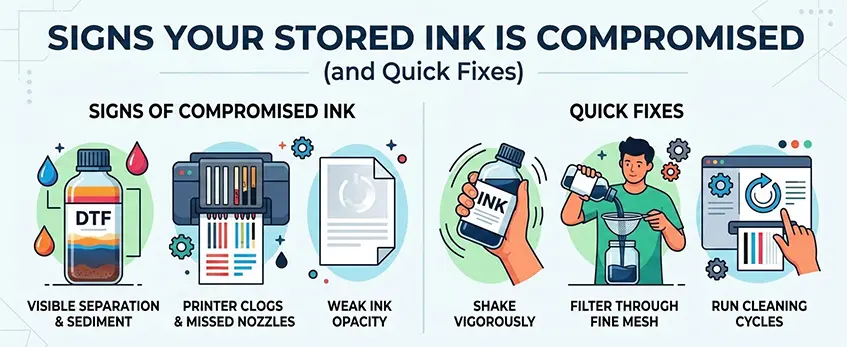
When your DTF ink starts showing visible separation layers or thick sediment at the bottom of the bottle, it’s a clear sign the ink’s quality is dropping. This is especially common with white ink due to its heavy titanium dioxide pigments settling faster. You might also notice printer problems such as missing nozzles, weak white opacity, or recurring clogs — all classic symptoms of compromised ink.
To salvage your ink, try these quick fixes:
- Shake the bottle vigorously to redistribute pigments evenly.
- Filter the ink through a fine mesh if sediment is stubborn and might clog printer lines.
- Run a few printer cleaning cycles to clear any blockages after reloading the ink.
Still, prevention is key. Following proper DTF ink storage tips and routines will help avoid these issues altogether for smooth printing with every use. For deeper insights on handling white ink and avoiding clogs, check out our guide on white inkjet ink for DIY and small business printing.
Why jinlong DTF Ink Performs Better with Proper Storage
Jinlong DTF ink is specially formulated to keep pigments evenly suspended, which means it resists settling and separation better than many other brands. This improved pigment suspension helps prevent clogs and ensures consistent print quality, especially with the white ink that contains heavier titanium dioxide pigments. When you follow proper storage guidelines—like keeping ink at the right temperature and humidity, sealing bottles tightly, and shaking before use—you maximize the ink’s performance and extend its shelf life.
Taking care of your jinlong ink not only protects your investment but also reduces downtime caused by clogged printheads or uneven prints. You get smoother prints and better opacity, which means your designs pop with vibrant, durable colors. For best results, pair your storage routine with high-quality materials like jinlong’s reliable Films de transfert DTF designed for consistent output. This way, you get the most value from your jinlong DTF ink every time you print.



 English
  Español
  Deutsch
  Français