


Fine vs Medium DTF Powder Comparison Guide for Optimal Printing Results
Struggling to decide between fine vs medium DTF powder for printing? You’re not alone. Picking the right Poudre thermofusible DTF can make or break your transfer’s detail, softness, and wash durability. Whether you’re tackling intricate designs or bulk orders on cotton, blends, or stretchy fabrics, knowing which powder size fits your project is key. In this guide, we’ll cut through the confusion—explaining how fine (0-80 microns) et medium (70-170 microns) powders affect print quality, feel, and handling. By the end, you’ll have a clear roadmap to choosing the perfect powder, helping you boost your DTF prints with confidence and ease. Let’s get started!
Understanding DTF Powder and Particle Size Basics
DTF hot melt powder is a crucial adhesive in the direct-to-film (DTF) printing process. After printing the design on a special film, this powder is applied to the wet ink to help it bond securely to the fabric when heat pressed. Essentially, DTF powder acts as the glue that ensures vibrant, durable transfers on various textiles.
Particle size is a key factor in choosing DTF powder. Measured in microns (one micron = 1/1,000,000 meter), particle size affects how the powder melts, adheres, and covers the print. Additionally, mesh counts relate to the number of particles per inch on a screen and influence particle fineness.
Fine DTF powder typically ranges from 0 to 80 microns in size. You can think of it as similar in texture to flour—very smooth and lightweight. Medium DTF powder falls between 70 and 170 microns, more like granular salt, offering a coarser feel.
Why does particle size matter? Here’s the impact at a glance:
- Melting behavior: Fine powders melt quicker and more evenly, perfect for detailed designs, while medium powders require slightly higher heat but provide robust bonding.
- Coverage: Fine powder creates smooth, even layers with less excess, ideal for small text and intricate prints. Medium powder offers thicker coverage, enhancing durability but can sometimes lead to a heavier hand feel.
- Transfer performance: The powder’s size influences how well the ink bonds during transfer, affecting flexibility, wash resistance, and longevity.
Understanding these basics helps you select the right DTF powder for your printing needs, balancing sharpness, durability, and fabric compatibility.
Detailed Comparison: Fine DTF Powder vs Medium DTF Powder
When choosing between fine and medium DTF powder for printing, understanding their differences can make a big impact on your results. Here’s a clear side-by-side look at key factors you’ll want to consider:
| Fonctionnalité | Fine DTF Powder (0-80 microns) | Medium DTF Powder (70-170 microns) |
|---|---|---|
| Résolution détaillée | Higher detail and sharper edges — ideal for small text and intricate designs | Moderate detail; best for bold graphics and larger prints |
| Hand Feel & Flexibility | Softer, smoother finish with excellent fabric hand feel | Slightly thicker feel but strong flexibility on most fabrics |
| Adhesion & Durability | Good adhesion but can be less durable on heavy use or washing | Superior adhesion and wash/stretch resistance, tougher wear |
| Ease of Application | Needs controlled environment; powder dusts easily and requires precise handling | Easier to handle with less waste; forgiving during powdering process |
| Curing Behavior | Melts quickly at slightly lower temps; needs careful heat press control | Requires slightly higher and longer curing for best results |
| Inconvénients | Can clump or over-powder if not controlled; less durable for rough use | Not as crisp for fine lines; can feel slightly rough on delicate fabrics |
Real-World Notes:
- Fine powders tend to produce prints with crisp edges and vibrant detail on premium cotton or light fabrics, but they need steady hands during powder application.
- Medium powders dominate in general apparel production with their reliable adhesion and durability, especially on bulk runs of hoodies or blended fabrics.
When evaluating your project needs, balancing detail resolution with durability and ease of use will guide you to the best DTF powder solution. For professional-quality prints, many turn to specialized powders like the jinlong DTF powders, designed to optimize these trade-offs effectively.
For deeper insights into how powder types affect printer workflow and film compatibility, explore resources on how to compare DTF printer deals and avoid buying mistakes.
When to Choose Fine DTF Powder

Fine DTF powder works best for designs that need high detail resolution, like small text and intricate logos. Its smaller particle size (0-80 microns) allows for sharper edges and smoother prints, making it a top choice for detailed artwork.
Cas d'utilisation idéaux
- Detailed designs & small text: Perfect for intricate logos and detailed graphics.
- Lightweight, smooth fabrics: Works great on premium cotton, baby clothes, and delicate fashion apparel where softness matters.
- Soft-hand premium products: Offers a softer feel, improving comfort on high-end garments.
Benefits of Fine Powder
| Fonctionnalité | Avantage |
|---|---|
| Sharpness & Detail | Excellent edge definition |
| Compatibilité des tissus | Ideal for smooth, lightweight textiles |
| Sensation de la main | Soft and flexible finish |
Limitations & Solutions
- Requires controlled environment: Fine powders can be tricky with humidity and airflow, affecting powder distribution.
- Precise powder application needed: Over-powdering causes clumps; under-powdering weakens adhesion.
Mitigation Tips: Use a proper DTF powder shaker system and manage your workspace environment carefully. For the best results, consider Jinlong DTF fine powder, designed specifically for these precise applications.
For more insight on achieving crisp designs with fine powder, check out how Jinlong DTF Pro Ink supports high-resolution designs and logos.
When to Choose Medium DTF Powder
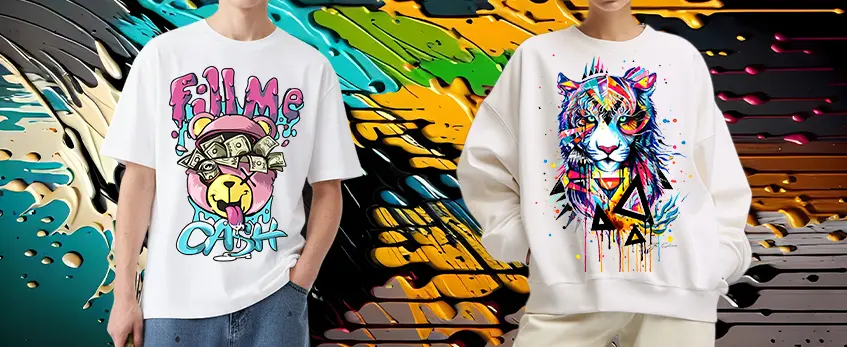
Medium DTF powder is the go-to choice for most users—about 85% of DTF printers prefer it for good reason. It’s incredibly versatile, working well on general apparel and fabric blends without fuss. If you need reliable adhesion, quick workflow, and solid wash and stretch performance, medium powder has got you covered.
Why Medium DTF Powder Works Best for Most
| Fonctionnalité | Medium DTF Powder Strengths | Pourquoi c'est important |
|---|---|---|
| Compatibilité des tissus | Great for hoodies, sportswear, blends | Handles thicker, stretchier materials |
| Durabilité | Strong adhesion and wash resistance | Keeps prints looking good longer |
| Vitesse du flux de travail | Easier to handle and sprinkle evenly | Faster production on medium runs |
| Sensation de la main | Balanced softness and flexibility | Comfortable for everyday wear |
| Durcissement | Stable curing times at standard heat press | Hassle-free production |
Medium DTF powder is especially suitable for pieces like hoodies, sportswear, and garments used in active settings—places where durability and stretch matter most. Its particle size balances good coverage with ease of handling, avoiding issues like powder clumping or excessive thickness.
If you’re handling medium volume runs and need a dependable powder without constant tweaking, consider the jinlong DTF medium powder option. It’s designed as a balanced all-rounder to keep your production steady and quality consistent. For insights on heat press compatibility and boosting your workflow with DTF films and powders, check out jinlong’s guide on auto heat press machines tested with different DTF films and powders.
Choosing medium powder means you’re prioritizing speed, versatility, and reliability—a smart bet for many small-to-mid scale print businesses.
Key Factors to Consider When Choosing Between Fine and Medium DTF Powder
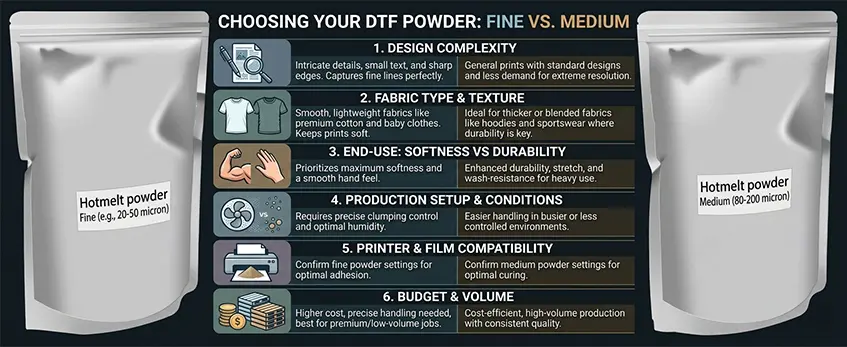
Picking between fine and medium DTF powder comes down to a few clear factors. Here’s a straightforward decision framework to help you choose the right powder for your printing needs:
1. Design Complexity
- Poudre fine : Best for intricate details, small text, and sharp edges. It captures fine lines and delicate designs perfectly.
- Poudre moyenne : Great for general prints with less demand for extreme resolution.
2. Fabric Type and Texture
- Poudre fine : Works well on lightweight, smooth fabrics like premium cotton and baby clothes. It keeps prints soft without adding bulk.
- Poudre moyenne : Ideal for thicker or blended fabrics like hoodies and sportswear where durability is key.
3. End-Use: Softness vs Durability
- Choisir poudre fine if you prioritize softness and a smooth hand feel.
- Opt for medium powder if you need prints that can withstand washing, stretching, and heavy use.
4. Production Setup and Environmental Conditions
- Fine powder requires controlled humidity and precise powdering to avoid clumping or uneven coverage.
- Medium powder is easier to handle in busy or less controlled environments, supporting faster workflow.
5. Printer and Film Compatibility
- Verify your printer and film settings. Some setups perform better with a specific DTF powder particle size for optimal adhesion and curing.
- Check your gear’s user guidelines to avoid troubleshooting issues.
6. Budget and Volume
- Poudre fine can be more expensive and may require careful handling, making it suited for lower volume or premium jobs.
- Poudre moyenne offers a cost-efficient solution for high-volume runs with consistent quality.
Quick Checklist
| Facteur | Poudre fine de DTF | Poudre DTF moyenne |
|---|---|---|
| Détail de la conception | Excellent for fine details | Good for standard detail |
| Best Fabric Type | Lightweight, smooth fabrics | Thicker, blended fabrics |
| Sensation de la main | Soft, flexible | Slightly firmer, durable |
| Durabilité | Modéré | Haut |
| Environnement de production | Controlled, low humidity | Tolerant to varied conditions |
| Ease of Handling | Requires precise powdering | Easier, faster workflow |
| Rapport coût-efficacité | Higher cost, lower volume | Cost-effective for bulk runs |
By weighing these factors, you can confidently choose the best DTF powder for your prints. For a deep dive into how these powders interact with your film and printer setups, explore our detailed DTF kit explained et printer cost breakdown ressources.
Practical Tips for Optimal Results with Either DTF Powder
Getting the best from fine or medium DTF powder means dialing in the right techniques and setup. Here are some proven tips to maximize your DTF transfer powder application and performance:
Even Powder Distribution: Use a quality DTF shaker to apply powder evenly—this avoids clumps that cause uneven melting or rough spots. Light, consistent coating is key for crisp transfers.
Enlever l'excès de poudre : Shake off extra powder before curing to prevent residue buildup. Excess powder often leads to powder sticking and cracking issues after heat press.
Curing Temperature & Heat Press Settings: Follow the recommended curing temperature (usually around 160–165°C). Overheating causes powder to burn or crack, while underheating can result in poor adhesion. Use a calibrated heat press for consistent pressure and timing (typically 15-20 seconds).
Troubleshooting Powder Problems:
- Powder sticking? Check powder distribution and shake off excess before curing.
- Cracking prints? Lower heat press temperature or reduce pressing time slightly.
- Mauvaise adhérence ? Confirm transfer film quality and ensure curing time is adequate.
Storage & Mixing Strategies: Store powders in a dry, sealed container to prevent moisture absorption, which affects powder flow and adhesion. Experiment with blending fine and medium powders for custom finish—this can balance softness with durability.
Testing Protocols: Always run wash and stretch tests on sample prints to confirm durability before full production. This safeguards against unexpected peel or fading.
Jinlong DTF users benefit from tailored tips combining powder handling with printer and film settings—details you can explore in the guide de flux de travail DTF numérique couvrant l'impression, le poudrage, le durcissement et le pressage.
Applying these best practices will ensure your prints stay vibrant, flexible, and durable, no matter which DTF powder type you choose.
Exemples concrets et études de cas
To see how fine vs medium DTF powder stacks up in real settings, let’s look at some practical cases familiar to many small-to-medium DTF businesses.
Kids’ Clothing Brand Using Fine Powder
A boutique kids’ apparel brand swears by fine DTF powder for its prints. The powder’s 0-80 micron size allows for super crisp details and sharp small text, perfect for playful characters and logos on baby clothes. The soft hand feel and smooth finish align with the brand’s need for premium comfort and lightweight cotton fabrics. Although fine powder requires careful powdering and curing control, the brand manages this through a tightly controlled environment, enhancing print clarity and softness without sacrificing wash resistance.
Bulk T-Shirt Printer Choosing Medium Powder
On the flip side, a high-volume T-shirt printer relies on medium DTF powder (70-170 microns) for its workflow. The medium powder offers strong adhesion and durability, ideal for hoodies and sportswear where stretch and repeated wash cycle performance are vital. Its coarser texture makes powder distribution easier and speeds up the process, which suits their bulk runs. Around 85% of users prefer medium powder exactly because it balances reliability and production speed, which was a perfect match here.
Comparative Wash and Durability Outcomes
In side-by-side testing, fine powder prints exhibit sharper edges and softer feel but need controlled conditions to avoid cracking over time. Medium powder prints might feel slightly firmer but hold up better in wash and stretch tests, making them more forgiving in everyday wear. Both have their spots depending on what your product needs—softness and detail, or robustness and speed.
These examples highlight how choosing the right particle size powder impacts not only your print quality but also production efficiency and customer satisfaction. For businesses focused on premium cotton or detailed designs, fine powder like Jinlong DTF fine powder fits best, while for general apparel and bulk jobs, Jinlong’s medium powder is the all-rounder choice.
To understand the entire DTF process and improve your results, check out this guide on comment fonctionne l'impression DTF, de la conception à la presse à chaud.


 English
  Español
  Deutsch
  Français