


DTF Pro Ink vs Standard Ink Differences in Quality Durability and Cost
If you’ve ever wrestled with inconsistent colors, clogged nozzles, or transfers that fade after a few washes, you know not all Encres DTF are created equal. The real question is: when does upgrading from standard DTF ink à DTF Pro Ink make a difference worth your money? Whether you’re a hobbyist printing for fun, an Etsy seller scaling up, or running a serious apparel business, understanding the technical and practical gaps between these inks is key. In this guide, we’ll break down the DTF Pro Ink vs Standard DTF Ink debate—covering everything from print vibrancy and durability to maintenance and cost—helping you decide which fits your 2026 printing needs perfectly.
What Is Standard DTF Ink?
Standard DTF ink is a water-based pigment ink designed specifically for Direct-to-Film (DTF) printing. This ink formulation typically includes pigments, resins, solvents, and various additives that work together to produce sharp, vibrant prints on PET films. The pigments provide color, while resins help with adhesion and flexibility once transferred to fabric.
Most standard DTF inks are compatible with popular printer brands like Epson et Ricoh, making them a versatile choice for hobbyists and small print shops. They offer reliable performance for petites séries, producing good color quality and opacity, especially on light-colored garments. However, they may have limitations when used for more demanding, high-volume, or professional applications.
For beginners or those testing the waters of DTF printing, standard ink presents an affordable and accessible entry point without requiring extensive printer maintenance or advanced handling.
Qu'est-ce que l'encre DTF Pro ?
DTF Pro Ink is an upgraded, premium-grade ink designed specifically for professional Direct-to-Film (DTF) printing. Compared to standard DTF ink, it features a higher pigment concentration, which means richer, more vibrant colors and better opacity—especially important for white ink on dark fabrics. Its optimized viscosity ensures smooth flow and precise printing, reducing the risk of clogging and sediment buildup.
Advanced binding agents in DTF Pro Ink improve adhesion to PET film and all types of fabric, resulting in transfers that stretch, wash well, and resist cracking over time. These engineering improvements help maintain consistent print quality and reduce printer downtime.
One standout example is the Encre Jinlong DTF Pro, which has become popular among professional print shops in the United States due to its superior durability, color depth, and reliability even in high-volume production environments. Its formulation is tailored to provide excellent compatibility with leading DTF printers like Epson and Ricoh, enhancing overall print performance and production efficiency.
Key Differences: Head-to-Head Comparison of DTF Pro Ink vs Standard DTF Ink
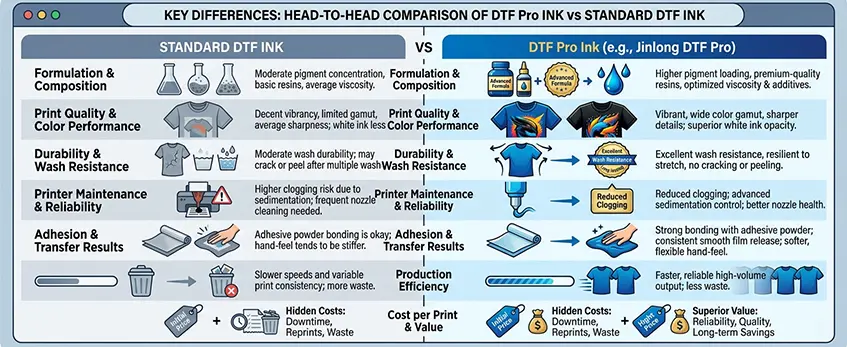
Here’s a clear breakdown of how standard and DTF Pro Ink differ in key areas, helping you decide the best fit for your needs.
| Fonctionnalité | Encre standard DTF | DTF Pro Ink (e.g., Jinlong DTF Pro) |
|---|---|---|
| Formulation & Composition | Moderate pigment concentration, basic resins, average viscosity | Higher pigment loading, premium-quality resins, optimized viscosity and additives for stability |
| Print Quality & Color Performance | Decent vibrancy, limited gamut, average sharpness; white ink less opaque, visible washout on dark fabrics | Vibrant, wide color gamut, sharper details; superior white ink opacity and consistency on light/dark garments |
| Durabilité et résistance au lavage | Moderate wash durability; may crack or peel after multiple washes | Excellent wash resistance, resilient to stretch, no cracking or peeling after repeated laundering |
| Printer Maintenance & Reliability | Higher clogging risk due to sedimentation; frequent nozzle cleaning needed, potential downtime | Reduced clogging; advanced sedimentation control; better nozzle health and less maintenance required |
| Adhesion & Transfer Results | Adhesive powder bonding is okay; film release can be uneven; hand-feel tends to be stiffer on cotton/polyester blends | Strong bonding with adhesive powder; consistent smooth film release; softer, more flexible hand-feel on various fabrics |
| Efficacité de la production | Slower speeds and variable print consistency; more waste due to reprints | Faster, reliable high-volume output; less waste from failed prints or transfer issues |
| Cost per Print & Value | Lower upfront cost but higher hidden costs from failed prints and downtime | Higher initial expense balanced by reduced maintenance, fewer reprints, and better finished product quality |
What This Means for You
- Encre standard DTF is great for startups or low-volume jobs where budget is tight and print longevity isn’t critical.
- DTF Pro Ink, like Jinlong DTF Pro, suits professional environments needing high-quality, durable, consistent results with minimal maintenance — especially on dark or blended fabrics.
For those serious about reducing downtime and improving transfer results across various garments, upgrading to DTF Pro Ink saves money in the long run.
If you want to dive deeper into optimizing production efficiency and ink compatibility with your equipment, check out this guide on kits DTF de bureau ou industriels to find the right setup for your needs.
Pros and Cons of Standard DTF Ink
Standard DTF ink offers an affordable entry point, making it ideal for beginners and those running low-volume jobs. Its water-based pigment formulation works well with popular Epson and Ricoh printers, providing decent print quality for basic designs and hobby use. If you’re just starting or handling occasional orders, standard ink keeps costs low without complicating printer maintenance.
However, there are clear trade-offs. Standard DTF inks typically have lower pigment concentration and simpler resin formulas, which limits color depth and vibrancy. Over time, prints made with these inks may show reduced longevity, especially after several washes. They can also be less reliable under heavy production, as clogging and sedimentation tend to be more common. This can increase downtime and affect consistency, especially on darker garments where opacity and white ink performance are crucial.
In short, standard DTF ink is great for budget-conscious startups and casual use but falls short in durability and professional-grade results needed for commercial or high-volume printing. For better wash durability and color performance, upgrading to a premium option like Jinlong DTF Pro ink is often worth the investment. For more on how ink choice impacts output, check out this guide on how RIP software affects DTF color accuracy and ink consumption.
Pros and Cons of DTF Pro Ink (Jinlong DTF)
DTF Pro Ink, like the Jinlong DTF Pro, offers superior vibrancy and opacity, especially noticeable on dark fabrics where a strong white ink base makes colors pop. The wash durability is top-notch, ensuring prints hold up well after multiple washes without cracking or peeling. Thanks to its advanced formulation, it causes minimal clogging, which means less downtime and better printer reliability—something every professional print shop values.
Users also report a softer hand-feel on finished transfers, enhancing garment comfort compared to standard inks. Although the initial cost is higher, this investment is often justified by the improved print quality, reduced maintenance, and lower ink waste. For busy shops looking for consistent results and efficiency, Jinlong DTF Pro Ink delivers real-world benefits that pay off over time.
For professional setups, pairing this ink with reliable equipment and workflow software like the Jinlong high-volume DTF printer and shaker system ensures smooth production and maximum value.
When to Choose Standard DTF Ink
Standard DTF ink is a solid choice for those just starting out or working with a limited budget. It suits:
- Budget-conscious startups: Helps keep initial costs low while testing the waters.
- Testing and occasional use: Ideal for experimenting with designs or small-scale projects.
- Low-volume production: Works well when output is limited and consistency across large runs isn’t critical.
- Non-critical designs: Suitable where basic durability and color depth meet the job requirements.
| Pour | Cons |
|---|---|
| Affordable and accessible | Less vibrant colors |
| Compatible with common printers like Epson and Ricoh | Durabilité réduite au lavage |
| Easy to handle for beginners | Potential for more maintenance |
If you don’t need premium wash resistant transfers or intense color vibrancy, standard DTF ink provides cost-effective printing without overinvesting. For an overview of standard ink options and compatibility, check out Jinlong’s Standard DTF Ink CMYK Series.
When to Upgrade to DTF Pro Ink
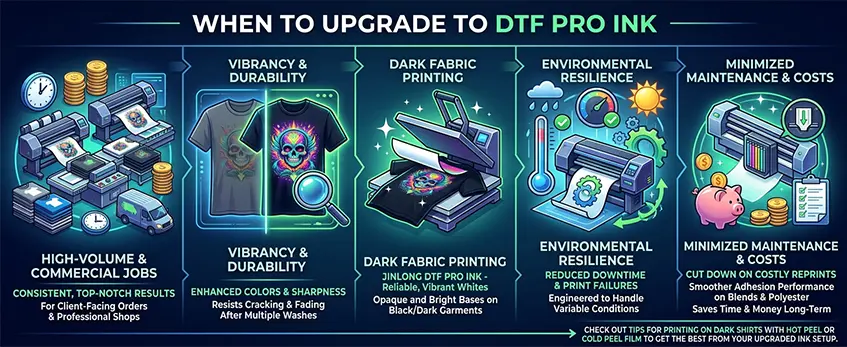
Upgrading to DTF Pro Ink makes sense when you’re dealing with high-volume or commercial jobs that demand consistent, top-notch results. If your prints are client-facing or part of a professional order, the enhanced vibrancy and durability of pro-grade ink will keep your work looking sharp and impressive.
Dark fabric printing often needs a strong white ink base for opacity and brightness, something standard inks might struggle with. Pro inks like Encre Jinlong DTF Pro offer reliable, vibrant whites that resist cracking and fading over multiple washes.
If you’re working in environments with variable temperature or humidity, pro inks are engineered to handle these conditions better, reducing downtime and print failures. Plus, using DTF Pro Ink helps minimize maintenance headaches and cuts down on costly reprints—saving time and money in the long run.
For a professional setup, considering Jinlong DTF as a premium reliable option ensures you get consistent quality along with the advantages of wash durable DTF transfers and smoother adhesion performance on blends and polyester fabrics. This is ideal for businesses looking to elevate print quality without constant disruption.
Check out tips for printing on dark shirts with hot peel or cold peel film to get the best from your upgraded ink setup.
Real-World Testing and User Considerations
When working with DTF Pro Ink or standard DTF ink, real-world testing is key to getting the best results. Printer model compatibility plays a big role—inks perform differently depending on your printer brand, with Epson and Ricoh being popular choices. Always check if your ink matches your printer specs for consistent output.
Environmental factors like temperature and humidity can affect ink flow and adhesion. Extreme conditions may cause clogging or poor transfer quality, so keep your printing area climate-controlled when possible.
Proper storage and handling are critical. Store your inks in a cool, dark place and shake well before use to prevent pigment sedimentation. This maintains the pigment concentration and ensures smooth DTF ink viscosity and flow.
Pair your ink with quality DTF transfer film and compatible adhesive powder for the best results. For example, using premium films like those in the Jinlong DTF Pro series can improve adhesion and vibrancy on both dark and light fabrics, minimizing transfer issues and boosting overall durability.
To evaluate ink performance, run thorough test prints and wash tests before full production. This helps you check white ink opacity, color vibrancy, wash durability, and transfer hand feel. Testing also reveals any clogging risk or inconsistencies, letting you adjust your printer settings early on.
For guidance on compatible films and settings, it’s worth exploring detailed resources such as the Jinlong Pro Series DTF Transfer Film and their recommended print settings. These help optimize adhesion and produce vibrant, durable prints suitable for professional applications.
How to Transition from Standard to Pro Ink
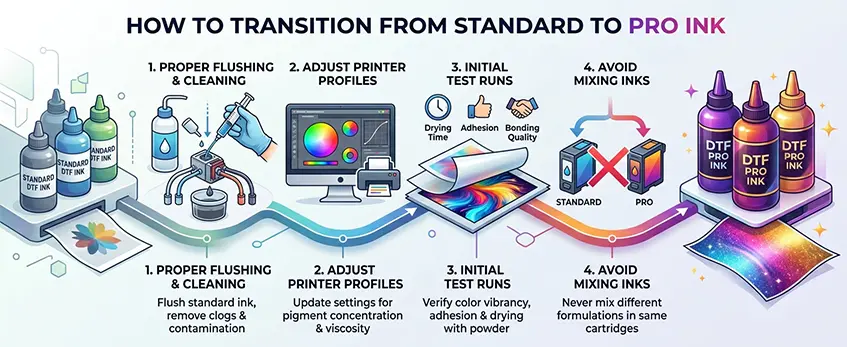
Switching from standard DTF ink to DTF Pro ink takes a bit of care to get the best results and avoid printer issues. Here’s a simple guide to make the transition smooth:
Proper Flushing and Cleaning: Before loading Pro ink, thoroughly flush your printer’s system to remove any leftover standard ink. This prevents clogging and color contamination. Use a recommended cleaning solution for your model, especially if your printer is an Epson or Ricoh, which are popular for DTF printing.
Adjust Printer Profiles: DTF Pro ink usually has a different pigment concentration and viscosity, so you’ll need to update your printer profile settings. This ensures accurate color output and prevents head strain. Calibrate your printer based on the new ink’s flow characteristics and print test patterns to check color accuracy.
Initial Test Runs: Run a few test prints on the same film and fabric types you usually use—this helps verify adhesion, color vibrancy, and drying time. Also, test with your adhesive powder to check the bonding quality in transfer.
Avoid Mixing Inks: Never mix standard DTF ink with Pro ink in the same cartridges or print runs. The formulations differ, and mixing can cause sedimentation, inconsistent colors, and clogs that reduce printer reliability.
By carefully cleaning, adjusting profiles, and doing test prints, your switch to premium DTF Pro ink (such as Jinlong DTF Pro ink) will boost your print quality and durability without downtime. For high-volume professional shops, this upfront effort translates into fewer maintenance headaches and better wash durability for your transfers.
FAQs About DTF Pro Ink vs Standard DTF Ink
What are the main differences between Pro and standard DTF inks?
DTF Pro Ink has a higher pigment concentration, better resin quality, and optimized viscosity compared to standard DTF ink. This translates into brighter colors, stronger white ink opacity, improved wash durability, and less clogging during print runs.
Can you mix Pro and standard DTF inks?
Mixing inks is generally not recommended. Combining different formulations can cause inconsistent color output, clogging, or damage to your printer’s printhead. Stick with one type, especially when upgrading to premium DTF inks like Jinlong DTF Pro Ink.
Do Pro inks really help reduce clogging?
Yes. Premium DTF inks are engineered to minimize sedimentation and maintain smooth flow. This reduces the risk of clogs and nozzle damage, which lowers printer downtime and maintenance frequency.
What wash durability can I expect?
Pro DTF inks offer superior wash resistance after multiple cycles, compared to standard inks. They hold up better on both light and dark fabrics without cracking, peeling, or fading, making them ideal for high-quality, durable transfers.
How do costs compare between standard and Pro inks?
While DTF Pro Ink has a higher upfront price, it delivers better value long-term. The savings come from reduced reprints, less maintenance, and higher customer satisfaction due to consistent print quality and durability.
Which fabrics work best with premium DTF inks?
Premium DTF inks perform well on cotton, polyester, and blends. Their strong adhesion and vibrant appearance on dark and light garments make them a versatile choice for professional print shops.
Any tips for storing DTF ink to maintain quality?
- Keep inks sealed tightly when not in use
- Store in a cool, dry place away from direct sunlight
- Follow manufacturer guidelines for shelf life
Proper storage helps maintain pigment stability and prevents clogging issues, ensuring your prints stay vibrant and consistent over time.
For more on choosing the best inks and maintenance tips, check out the detailed Jinlong DTF Pro Ink review and usage guide.


 English
  Español
  Deutsch
  Français