


DTF Printer with Powder Shaker vs Integrated Machines Comparison Guide
Comprendre les bases de l'impression DTF
If you’re new to DTF printing, you might wonder how this process really works and why some steps are so crucial. Direct-to-Film (DTF) printing involves several key stages that together create vibrant, durable designs on fabrics like T-shirts or hoodies. Here’s the basic workflow:
Impression sur film : The design is printed using specialized DTF inks onto a clear PET film. This film acts as the transfer medium, capturing every detail and color.
Poudre Application : Right after printing, a special hot-melt adhesive powder is dusted onto the wet ink. This step is critical — the powder ensures the ink will properly stick and bond with your fabric when heat is applied later.
Curing with Powder Shaker/Dryer: The powder then needs to be evenly shaken or dried onto the film to prevent clumps and guarantee full coverage. This is where a powder shaker or DTF shaker dryer combo plays a vital role in achieving consistent powder adhesion and durable prints.
Transfert de chaleur : Finally, the film with cured ink and powder is heat-pressed onto the fabric. The powder melts, bonding the ink firmly to the garment, resulting in a soft, vibrant, and long-lasting print.
Common Challenges in the DTF Printing Workflow
Even though DTF printing promises great results, the process isn’t without hurdles:
Uneven Powder Application: If the powder isn’t evenly coated or dried, prints can peel or fade quickly. Inconsistent powder adhesion is one of the top quality killers.
Workflow Bottlenecks: Separating printing and powder shaking stages can slow down production, especially without tight synchronization. Manual film handling increases the risk of damage or misalignment.
Powder Waste and Mess: Excess powder can create waste and cleanup hassles, affecting both cost-efficiency and workspace cleanliness.
Understanding these core steps and challenges is key to choosing the right DTF printer setup, whether you’re eyeing a modular DTF printer with powder shaker or an all-in-one integrated DTF machine. In the following sections, I’ll break down how each setup handles these essential parts of DTF printing and what that means for your workflow and print quality.
Modular Setup: DTF Printer with Separate Powder Shaker
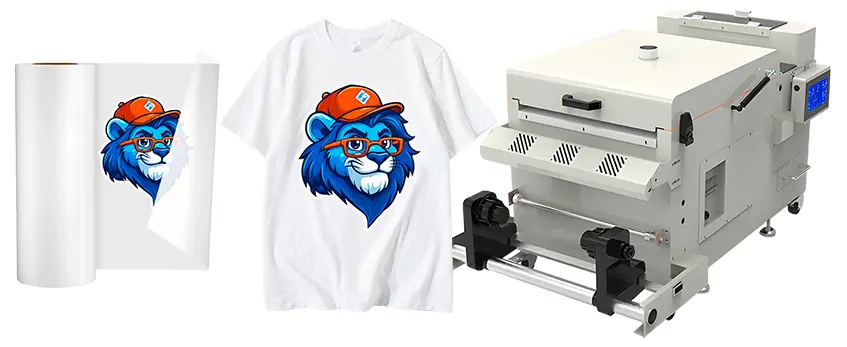
A modular DTF setup typically involves a standalone DTF printer paired with an independent powder shaker and dryer unit. This separation allows each part of the process—printing, powder application, and curing—to be handled by specialized machines optimized for their tasks.
Key advantages:
- Greater flexibility: You can pick and choose best-in-class components, mixing and matching printers and powder shakers that meet your specific needs.
- Easier upgrades and repairs: If your printer or powder shaker needs maintenance or replacement, you can handle each part independently without overhauling the whole system.
- Ideal for high-volume or customized jobs: This setup works well in shops producing large batches or running varied designs, as it allows better workflow control.
- Enhanced powder control and curing: Premium separate shaker/dryer units often provide more consistent powder application and drying, boosting powder adhesion quality and overall print durability.
Drawbacks:
- More space required: You’ll need additional room to accommodate both the printer and shaker/dryer, plus the workspace for moving printed films.
- Manual film transfer: This step needs an operator to move wet prints between units, potentially slowing down the workflow compared to all-in-one DTF machines.
- Setup complexity: Aligning and synchronizing the printer with the powder shaker can be tricky, especially at first, and may cause wasted powder or inconsistent results if not carefully managed.
While modular setups demand more hands-on workflow management, they often deliver better scalability and customization options, making them a solid choice for growing or busy print shops. For more details on optimizing powder adhesion and achieving vibrant, wash-durable designs, you might find this guide on DTF printer ink circulation systems utiles.
Integrated Setup: All-in-One DTF Machines
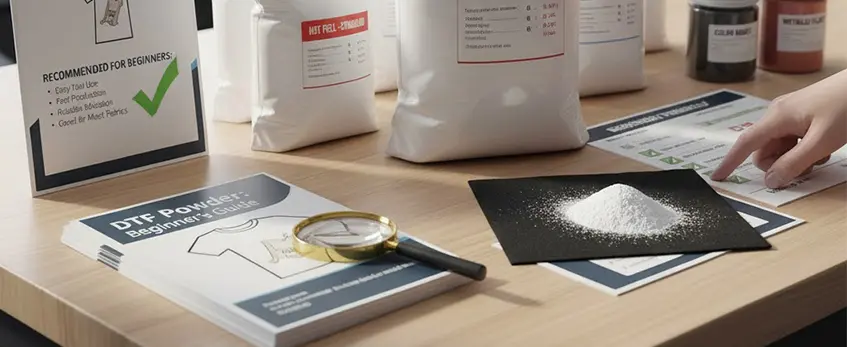
An integrated DTF machine combines the printer, automatic powder application, powder shaker, and drying system all in one single unit. This all-in-one DTF printer design is perfect for small spaces or home-based operations where saving floor space is important.
Key Advantages
- Compact footprint: Takes up less room, making it ideal for tight work areas and startups.
- Automated workflow: Powder application, shaking, and drying are built-in, requiring minimal manual handling, which speeds up the DTF printing workflow.
- Faster production: Especially efficient for low-to-medium volume jobs since the entire process happens within one machine.
- Easier maintenance: Reduced powder mess means less clean-up, which is great for beginners or operators not ready for complex setups.
Inconvénients
- Limited upgrade options: If one part fails, the whole unit might need servicing or replacement, limiting flexibility.
- Scalability concerns: While great for smaller operations, integrated units can struggle to keep up with very high-volume demands.
- Higher upfront cost: Quality integrated DTF machines can be pricey compared to modular setups.
For those new to DTF printing or looking for a straightforward, space-saving solution, an integrated DTF machine offers a balanced mix of ease and productivity. For a deeper dive into the basics of DTF printing and how white ink plays into it, you might find this complete guide helpful.
Head-to-Head Comparison: DTF Printer with Powder Shaker vs. Integrated DTF Machines
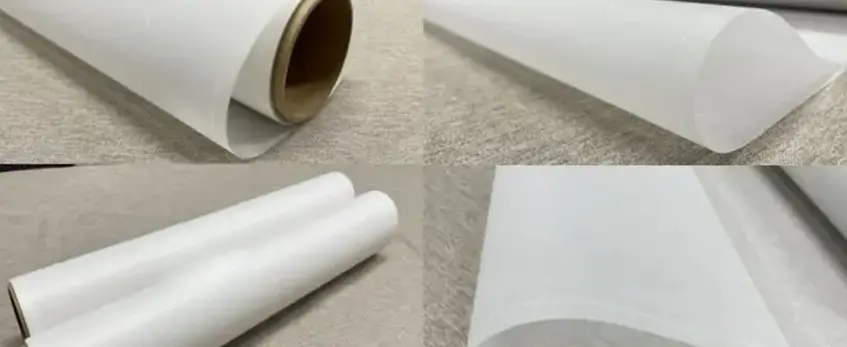
When deciding between a DTF printer with powder shaker and an integrated DTF machine, several factors come into play. Here\’s a quick comparison to help you understand the key differences.
| Facteur | DTF Printer with Powder Shaker | Integrated DTF Machine |
|---|---|---|
| Investissement initial | Moderate–higher, with separate units to buy | Higher upfront cost, all-in-one purchase |
| Ongoing Supplies | Slightly higher powder waste if not synced well | More efficient powder use, less waste |
| Maintenance Costs | Can be variable; separate parts may increase maintenance needs | Typically requires full unit servicing |
| Space & Workflow | Needs more space; manual film transfer needed | Compact footprint; smooth automated flow |
| Print Quality & Consistency | Potentially better powder control and curing in premium separate units | Consistent outputs but limited powder adjustment options |
| Production Speed & Volume | Suited for high volume; slower manual steps may affect throughput | Faster for small to mid volumes |
| Facilité d'utilisation et courbe d'apprentissage | Steeper learning curve; operator skill impacts quality | User-friendly; good for beginners |
| Reliability & Longevity | More flexible upgrades; potential alignment issues | Fewer parts to tweak; entire unit may stop if one part fails |
| User Feedback | Preferred by high-volume and custom shops valuing control | Favored by small shops and beginners for ease and space savings |
Both setups have pros and cons depending on your business needs. For example, shops growing in production volume often lean toward a modular system for greater flexibility, while those prioritizing space and simplicity prefer integrated machines.
To get the best out of either system, consider quality consumables like premium Encres DTF and durable films, which greatly impact print longevity and vibrancy.
Factors to Consider When Choosing a DTF Printer with Powder Shaker or Integrated DTF Machine
Volume de production
For low to medium production volumes, integrated all-in-one DTF machines often deliver efficient, quick output with less hassle. High-volume businesses usually benefit from a modular DTF setup, where a separate shaker/dryer offers better powder control and scalability.
Available Workspace and Budget
Integrated DTF machines save space and are budget-friendly for startups and home-based operators. On the other hand, setups with separate powder shakers require more room but provide flexibility to upgrade parts independently, ideal for growing shops with more investment to spread out.
Experience Level
Beginners tend to favor integrated machines for their straightforward, automated workflow, reducing the learning curve. Experienced operators might prefer modular setups that allow for fine-tuning and maintaining each component separately.
Fabric Types and Design Complexity
Complex designs or varied fabric types may call for superior powder adhesion and curing, often better achieved with premium standalone powder shaker units in modular setups. Integrated machines, while convenient, might not offer the same customizable powder control.
Future Scaling Plans
If you plan to scale your business, modular DTF solutions with separate powder shaker units provide easier upgrades and maintenance over time. Integrated machines may limit expansion or require replacing the entire unit if upgrades are needed.
By considering these aspects alongside your specific needs, you can choose the best DTF equipment 2026 tailored for your shop size, skill level, and growth goals. For a deeper dive into DTF printing workflow and equipment options, check out this detailed guide on DTF printer meanings and applications.
Recommendations by Business Type
Choosing the right DTF printer setup depends a lot on your business size and goals.
Best for beginners and small home setups: Integrated DTF machines are the way to go. Their all-in-one design means less hassle, compact space needs, and a straightforward workflow—perfect if you’re just starting out. These machines simplify powder application and drying, reducing your learning curve and maintenance headaches.
Best for growing or mid-volume shops: A modular setup with a standalone DTF printer and separate powder shaker offers more flexibility. You can pick top-notch components and upgrade or replace parts independently. This setup handles higher volumes while giving better control over powder adhesion and drying quality, which is key when customer orders start stacking up.
Best for high-production environments: Advanced modular systems or premium integrated models work best here. High-volume shops benefit from the precise powder control and scalable features modular setups offer, but some high-end integrated machines can also meet heavy demands with streamlined automation.
For balanced performance across all levels, Jinlong DTF solutions provide reliable options that fit many needs—from beginner-friendly integrated units to robust modular systems. Their equipment is designed to maximize print quality, durability, and production efficiency in the U.S. market. You can explore their range to find the best match without overspending or compromising on quality.
For more details on starting out and maintaining your setup, check the practical tips on xp600 DTF printer setup and maintenance. For a variety of printing needs, their collection of DTF printers for t-shirts covers beginner to advanced options perfectly.
Tips for Optimal DTF Setup and Maintenance
Getting the most out of your DTF printer with powder shaker—or any integrated DTF machine—starts with having the right accessories and habits. Here’s what to focus on:
Essential Accessories
- High-quality inks and films: Always use reliable DTF inks and transfer films like the ones from Jinlong to ensure vibrant colors and strong adhesion. You can explore options like their Film de transfert DTF for top-notch results.
- Fume extraction: Proper ventilation keeps your workspace safe and helps maintain consistent drying conditions for powder adhesion.
- Powder shaker/dryer: If you’re using a modular DTF setup, a dedicated shaker helps evenly coat and cure the powder, preventing clumps and ensuring durability.
Les erreurs courantes à éviter
- Skipping calibration: Regularly calibrate your printer and shaker to avoid alignment issues and powder waste.
- Overloading powder: Too much powder leads to weak prints and messy clean-up, while too little compromises durability.
- Ignoring maintenance: Clean print heads and shaker components often to prevent clogging and uneven powder application.
- Poor film handling: Avoid touching the printable side of the film to prevent dust or oils interfering with powder adhesion.
Maximize Print Quality and Machine Longevity
- Consistent workflow: Stick to an organized routine from printing to powder shaking and curing to maintain consistent print quality.
- Proper drying: Ensure the powder is fully cured before transfer; wet powder can ruin prints and cause machine clogs.
- Regular software updates: Keep your printer’s firmware and drivers current to benefit from improved performance and fixes.
- Monitor environment: Temperature and humidity affect prints—ideally, keep your workspace climate-controlled for best results.
By focusing on these tips, whether using a standalone powder shaker or an integrated DTF printer, you’ll boost print durability, vibrancy, and your equipment’s lifespan. For more info on inks and printer basics, check out the detailed guide on DTF ink fundamentals.


 English
  Español
  Deutsch
  Français