


Are Auto Heat Press Machines Worth It for Small Apparel Businesses
If you run a small apparel business, you’ve probably hit the limits of manual heat press machines—the slow pace, operator fatigue, and inconsistent results holding back your growth. The question is: Are auto heat press machines worth it for your shop? These high-ticket investments promise faster production, uniform pressure, and less wasted labor, but do they deliver a measurable ROI? In this post, we’ll cut through the noise and show exactly when upgrading to an automatic heat press makes sense—breaking down costs, efficiency gains, and why brands like Jinlong DTF rely on precision pressing to scale without sacrificing quality. If you’re ready to move beyond bottlenecks and streamline your apparel production, keep reading.
Defining the Upgrade: What Actually Changes with Auto Heat Press Machines?
If you’re running a small apparel business, moving from a manual to an auto heat press machine feels like stepping into a new league. But what exactly changes? It’s not just about hitting a button and walking away—though that’s part of it.
Beyond the Button: Manual, Semi-Auto, Fully Automatic Heat Presses
- Manual Heat Presses: You control the pressure and timing, often using a lever. Great for low volume but taxing on your arms and precision.
- Semi-Automatic Machines: These use air compressors or electric motors to lift the platen, reducing physical effort. You still start and stop the press.
- Fully Automatic Heat Presses: These models handle everything from closing to opening and even swinging the platen away—all at the press of a button.
The \”Set and Forget\” Mechanism
Auto heat press machines typically replace human force with air compressors or electric motors. This not only saves your energy but applies consistent pressure measured precisely in PSI or Bar. It also maintains exact temperature regulation throughout the entire pressing cycle, which is crucial for professional results.
Key Features That Make Auto Presses Stand Out
- Consistent Pressure (PSI/Bar): Ensures every garment gets the same even heat and pressure, vital for DTF transfers and screen printing.
- Precise Temperature Control: Keeps heat steady, avoiding under or overcooking your transfers.
- Auto-Open & Auto-Swing: Platen lifts and swings open automatically after the set time, speeding up workflow and improving safety.
In short, upgrading to an automatic heat press means better repeatability, fewer mistakes, and less physical fatigue — a solid move if you want to scale your small apparel business efficiently.
The \”Worth It\” Equation: The Pros (ROI Drivers)
When weighing if auto heat press machines are worth it, the biggest benefits boil down to efficiency, quality, and cost savings.
Production Speed & Dual Platens
With dual platen heat presses, you can load one shirt while the other is pressing. This continuous workflow effectively doubles your output per hour compared to manual presses. For small apparel businesses aiming to scale up without hiring extra staff, this kind of throughput is a game-changer.
Eliminating Operator Fatigue
Manual heat presses demand constant physical effort, which leads to operator fatigue over a long shift. This hidden labor cost can drag down productivity and consistency. Auto presses keep things steady and efficient all day by replacing human force with air compressors or electric motors, maintaining 100% operational efficiency without tiring out your team.
Quality Control & Waste Reduction
Consistent pressure, usually measured in PSI or Bar, is key—especially for DTF and screen printing transfers. Auto heat presses guarantee uniform pressure and temperature every cycle, cutting out human error that causes uneven transfers or garment spoilage. This consistency lowers the rates of heat transfer spoilage, meaning fewer ruined shirts and less money wasted on materials. For businesses using Jinlong DTF technology, this precision is even more critical to ensure durable, high-quality prints without peel issues. You can dive deeper into optimizing your DTF prints on their DTF rolls storage and handling tips for consistent results.
In short, the auto heat press’s ROI lies in faster production, less labor strain, and better, more reliable print quality—crucial factors for small apparel businesses ready to grow.
The Strategic Considerations: The Cons
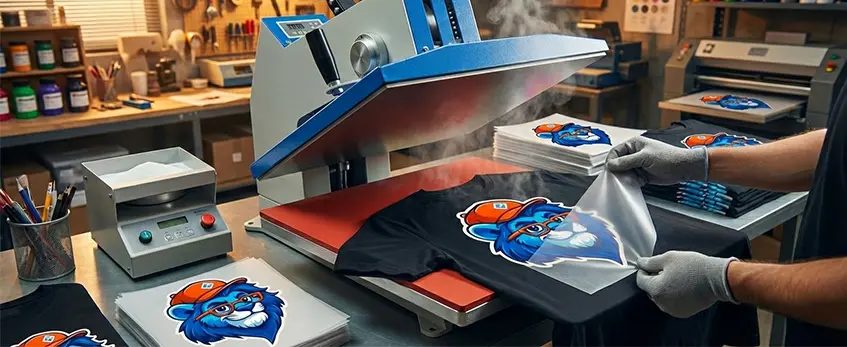
Auto heat press machines offer big perks, but they come with some real drawbacks to keep in mind before upgrading.
The Price Tag
Professional auto presses aren’t cheap. Expect to spend anywhere from $3,000 to $7,000 or more based on features like dual platens and pneumatic systems. This upfront cost can be tough for small shops on a budget.
| Type | Fourchette de coûts typique |
|---|---|
| Entry-level Auto | $3,000 – $4,500 |
| Mid-range Pneumatic | $4,500 – $6,000 |
| High-end Dual Platen | $6,000 – $7,500+ |
Infrastructure Requirements
Automatic presses often need extra setup:
- Air compressor noise and space: Pneumatic models require a compressor, which adds noise and demands workspace.
- Electrical needs: Higher-powered electric motors may require dedicated circuits for stable operation.
These factors can complicate your shop layout and increase setup costs.
Maintenance
More moving parts mean more chances for problems. Regular upkeep is a must to keep your auto press running smooth:
- Lubrication and cleaning of pneumatic or electric components
- Periodic checks on heating elements and pressure systems
- Potential for costly repairs down the line
While manual presses are simpler, the advanced functions in automatic models come with higher maintenance responsibility.
Carefully weigh these cons against the production benefits before investing in an industrial grade heat transfer machine. For shops moving towards DTF printing, balancing costs and infrastructure is key to maximizing return on investment. For more about how DTF works, check out our guide on the les meilleures imprimantes DTF pour les débutants.
The DTF Connection: Why Jinlong DTF Customers Need Precision
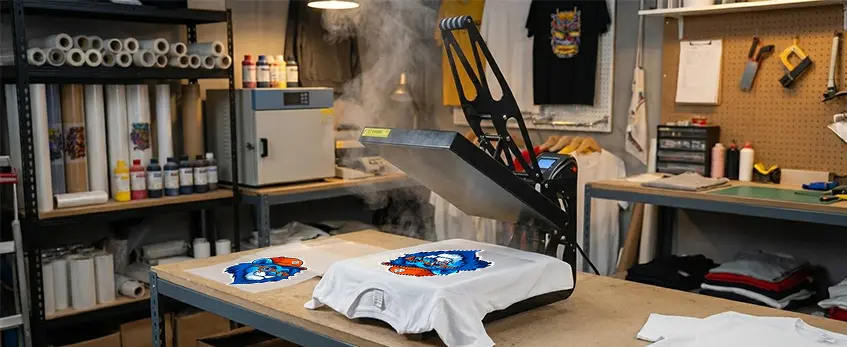
When working with Jinlong DTF films, precise heat press settings are a game changer. The science of the peel depends heavily on applying the right pressure and following exact cooling times. Too much or too little pressure can ruin the transfer, while improper cooling affects the adhesive’s bond, weakening wash durability.
Auto heat press machines shine here because they maintain consistent pressure and temperature automatically, ensuring the adhesive melts evenly across the entire design. This uniformity is crucial for Jinlong DTF users aiming for vibrant, long-lasting prints.
For small apparel businesses handling large DTF gang sheet orders, automatic machines offer a smooth batch processing experience. They keep heat and pressure steady throughout long runs, preventing common issues like heat transfer spoilage rates and inconsistent print quality. This means fewer wasted garments and better overall efficiency.
If you\’re exploring ways to optimize your DTF workflow, consider the benefits of precise equipment alongside quality supplies like the meilleure poudre DTF pour la résistance au lavage et l'extensibilité to push your production to the next level.
The Decision Matrix: Manual vs. Auto Heat Press Machines
Choosing between manual and auto heat press machines depends largely on your production volume and business goals. Here’s a simple breakdown:
Scenario A – Hobbyist/Boutique (<50 shirts/week):
If you’re printing fewer than 50 shirts a week, manual or magnetic heat presses usually fit the bill. These machines keep costs low and work well for small batches with occasional customization.
Scenario B – Growing Shop (50-200 shirts/week):
Once you hit around 50 to 200 shirts per week, it’s time to consider semi-automatic presses or single platen auto heat press machines. They strike a good balance by speeding up production without needing a full industrial setup, helping optimize your apparel production workflow.
Scenario C – Production House (200+ shirts/week):
For high-volume shops producing over 200 shirts weekly, dual platen pneumatic auto heat press machines are the way to go. These industrial-grade machines maximize efficiency by allowing you to press one shirt while prepping the next, dramatically boosting output and reducing operator fatigue.
This decision matrix helps you scale smartly by matching machine capability to your business needs—whether you’re just starting out or managing a full-scale commercial garment printing operation.
For more on growing your print shop, you might find insights on scaling a t-shirt printing business useful.
What to Look for When Buying an Auto Heat Press Machine
When investing in an auto heat press machine for your apparel business, keep these key factors in mind to get the best value and performance:
Platen Size: Why 16×20 Is the Sweet Spot
A 16×20 inch platen is the industry standard for most apparel printing. It fits everything from standard t-shirts to hoodies, offering versatility without being bulky. Having the right platen size means you can handle a variety of garment sizes efficiently while maintaining consistent heat and pressure.
Pneumatic vs. Electric: Power and Noise Comparison
| Fonctionnalité | Pneumatic (Air Compressor Driven) | Electric (Motor Driven) |
|---|---|---|
| Niveau de bruit | Louder due to compressor | Quieter, suitable for small shops |
| Power Source | Requires air compressor setup | Runs on standard electrical circuits |
| Contrôle de la pression | Reliable, consistent PSI/Bar | Precise motor control, no compressor needed |
| Maintenance | Compressor upkeep needed | Motor maintenance required but generally simpler |
Pneumatic presses are favored for heavy-duty production, offering strong, steady pressure, but they come with more noise and space requirements from the air compressor. Electric presses are quieter and easier to set up in smaller shops but might not deliver the same pressure consistency for very large runs.
Safety Features: Must-Have Protections
Safety should never be overlooked with auto heat presses. Look for:
- Emergency stop buttons to immediately halt operation if something goes wrong.
- Heat guards and insulation around the platen to prevent accidental burns.
- Auto-open and auto-swing safety mechanisms to reduce injury risks during high-speed production.
Choosing a machine with these safety features protects your operators and helps maintain smooth, worry-free workflow.
For more insights on optimizing your apparel production, check out our detailed guide on scaling a t-shirt printing business.


 English
  Español
  Deutsch
  Français