


DTF Film Rolls Explained How They Work and Key Features for Printing
If you’re diving into DTF printing, understanding DTF film rolls is essential for unlocking vibrant, durable designs that stick perfectly to any fabric. These specialized PET-based films aren’t just transfer media—they’re the backbone of a smooth, efficient workflow that delivers bold colors and sharp details without the hassle of weeding. Whether you’re a beginner or scaling up your print shop, knowing what DTF film rolls are and how they work will transform your production quality and speed. In this article, we’ll break down the science behind the film, explore key specs like thickness and peel types, and show you why Jinlong DTF film rolls are trusted by pros for consistent, high-quality results. Ready to elevate your DTF game? Let’s get started.
What Are DTF Film Rolls?
DTF film rolls are the essential starting point in the Direct to Film printing process. At their core, they’re built on a high-quality PET (polyethylene terephthalate) base, designed for durability and consistent performance. This sturdy base is layered with several functional coatings that make printing, powder adhesion, and heat transfer possible.
Key Layers of DTF Film Rolls
| Layer | Purpose |
|---|---|
| Anti-static coating | Prevents dust build-up and static cling |
| Ink-receptive surface | Ensures ink adheres sharply and vividly |
| Release coating | Allows easy peeling after heat pressing |
| Thermal stability | Maintains integrity under high heat |
Rolls vs. Sheets: Why Choose Rolls?
While some printers use DTF sheets, rolls bring major benefits that fit perfectly with the demands of high-volume production:
- Continuous feeding reduces waste compared to individual sheets.
- Faster setup and operation for bulk printing runs.
- Consistent print area size, perfect for repetitive designs.
- Easier storage and handling in roll form.
Think of DTF film rolls as a design canvas that moves smoothly from your printer all the way to the fabric, capturing your artwork with precision at every stage. They’re not just a material; they’re the essential bridge between digital design and vibrant garment decoration.
How DTF Film Rolls Work in the DTF Printing Process
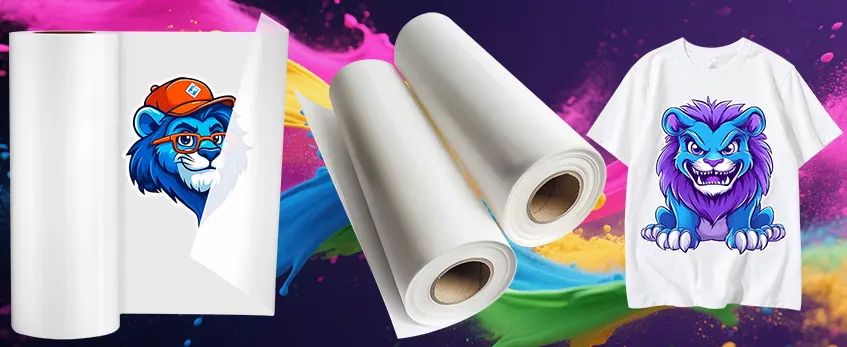
DTF film rolls play a crucial role in the direct to film printing process, making full-color, detailed prints possible on both light and dark fabrics. Here’s how the process usually goes:
Design Prep and Printing
First, your design gets prepped with CMYK plus white ink printing directly onto the frosted side of the DTF film roll. White ink acts as the base layer, especially important for darker garments, ensuring vibrant colors show up true.
Applying Hot-Melt Adhesive Powder
While the ink is still wet on the film, a layer of hot-melt adhesive powder is applied evenly. This powder is what helps the design stick firmly to the fabric during transfer.
Curing and Drying
Next, the film moves into a curing stage where heat dries and bonds the adhesive powder to the wet ink, creating a durable layer that won’t smudge or peel during transfer.
Heat Press Transfer
Now, the film with the cured print is heat pressed onto the chosen fabric. Correct temperature, pressure, and timing are critical—usually around 320–340°F for 15–25 seconds—ensuring a strong, flexible bond.
Peeling the Film
After pressing, the film is peeled off. Depending on your project, you might do a hot peel (peeling while still warm) or a cold peel (letting it cool first). Hot peel works great for fast workflows and soft finishes; cold peel suits stretch fabrics or when you want extra durability.
Science Behind Print Quality
The multi-layer coatings on the PET DTF film are engineered to:
- Prevent ink bleeding for sharp, clean edges
- Improve ink adhesion so prints stay vivid after many washes
- Ensure consistent release so films feed smoothly and transfer cleanly
Using the right DTF film rolls helps achieve vibrant full-color transfers on a variety of textiles without the hassle of traditional methods.
For high-quality results, combining top-grade DTF film with proper heat press settings and the correct adhesive powder, like the TPU DTF hot-melt adhesive powder, keeps your prints sharp, durable, and professional every time.
Key Specifications and Types of DTF Film Rolls
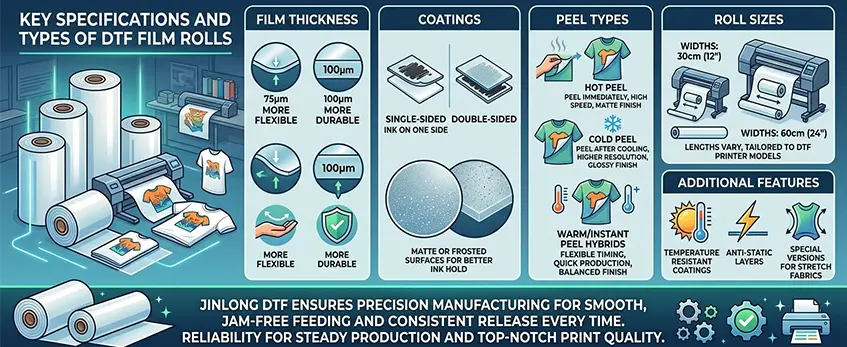
DTF film rolls come in various options to fit different printing needs, offering flexibility and durability. Here’s a quick look at key specs:
| Specification | Options & Impact |
|---|---|
| Thickness | 75μm (more flexible), 100μm (more durable) |
| Coatings | Single-sided (ink on one side), double-sided |
| Matte or frosted surfaces for better ink hold | |
| Peel Types | Hot peel, cold peel, warm/instant peel hybrids |
| Affect speed and finish quality | |
| Roll Sizes | Widths: 30cm (12”), 60cm (24”) |
| Lengths vary, tailored to DTF printer models | |
| Additional Features | Temperature resistant coatings, anti-static layers |
| Special versions for stretch fabrics |
Jinlong DTF ensures precision manufacturing of their DTF film rolls for smooth, jam-free feeding and consistent release every time. This reliability keeps your production flow steady and your print quality top-notch.
For those using larger or specialized printers, consider Jinlong’s 60cm double pro DTF transfer film known for perfect balance between durability and flexibility.
Advantages of Using DTF Film Rolls Over Traditional Methods
DTF film rolls bring vibrant color reproduction to life with smooth gradients and sharp details—no need for weeding or cutting like with vinyl transfers. This makes them perfect for complex designs and full-color prints, saving time on prep and cleanup.
These rolls offer great versatility, working well on a wide range of substrates including apparel, accessories, promotional items, and even some non-textiles. Whether you\’re printing on cotton, polyester, or blends, DTF film rolls adapt to your needs.
Efficiency is a big plus too. From small runs to bulk orders, the roll format minimizes setup time and reduces waste, helping you keep costs down. Plus, the continuous feed system means fewer stops and starts, speeding up the whole process.
Durability stands out as well—DTF transfers are stretchable, maintain vibrant colors after 50+ wash cycles, and provide a soft hand feel that customers appreciate. This durability beats many traditional printing methods, giving your products a long-lasting quality.
When you compare costs and time, DTF film rolls often outperform screen printing and DTG, especially for continuous, high-volume work. The combination of speed, quality, and versatility makes DTF film rolls a smart choice for U.S. businesses looking to grow efficiently with professional results.
For more on achieving high-resolution designs, check out how DTF Pro Ink supports vibrant prints.
How to Choose the Right DTF Film Rolls for Your Needs
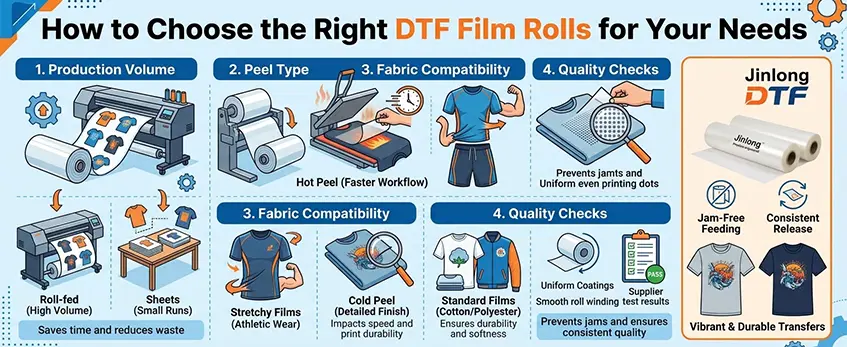
Picking the right DTF film rolls comes down to knowing your production style, fabric type, and finish expectations. Here’s a quick guide:
| Factor | What to Consider | Why It Matters |
|---|---|---|
| Production Volume | Use roll-fed film for high-volume printing; sheets fit smaller runs | Saves time and reduces waste |
| Peel Type | Hot peel for faster workflow; cold peel for detailed finish | Impacts speed and print durability |
| Fabric Compatibility | Stretchy films for athletic wear; standard films for cotton or polyester | Ensures durability and softness on garments |
| Quality Checks | Uniform coatings, smooth roll winding, supplier test results | Prevents jams and ensures consistent print quality |
When you’re ready to pick, consider suppliers like Jinlong DTF. Their precision-engineered film rolls are designed for jam-free feeding and consistent release — essential for pro-level results in busy shops. Plus, Jinlong offers reliable supply and films optimized for dark and light fabrics, helping you get the most vibrant and durable DTF transfers every time.
For deeper insights on printing and ink management, check out Jinlong’s reliable resources like their detailed overview of DTF RIP software controlling color and white ink.
Common Challenges and Troubleshooting Tips
When working with DTF film rolls, you might face a few common issues like ink bleeding, adhesion failure, film jamming, and incomplete transfers. Here’s what usually causes these problems and how to fix them:
- Ink Bleeding: This often happens if the ink isn’t fully cured or if the film coating isn’t compatible with the ink type. Make sure you use quality DTF ink and allow proper curing time before applying adhesive powder.
- Adhesion Failure: Poor heat press settings (wrong temperature, pressure, or time) can lead to weak bonds. Follow recommended heat press guidelines tailored for your DTF film roll thickness and fabric type, ensuring powder is well fused.
- Film Jamming: Feeding problems usually arise from uneven roll winding or static buildup. Using anti-static coated DTF films and storing rolls properly helps prevent jams.
- Incomplete Transfers: This can result from insufficient adhesive powder coverage or uneven heat pressing. Apply powder evenly on the wet ink and maintain consistent heat pressing pressure across the design.
Storage Best Practices for DTF Film Rolls
To keep your rolls in perfect condition:
- Store them upright to avoid flattening or deformation.
- Keep in a cool, dry environment away from direct sunlight and humidity.
- Avoid stacking heavy items on top to maintain roll integrity.
Maintenance Tips for Jinlong DTF Films
Jinlong DTF’s precision-engineered films require simple upkeep to maximize results:
- Regularly clean your printer’s feed path to prevent dust or powder build-up.
- Use recommended heat press settings found in their product guides to avoid damage.
- Test each new roll for coating uniformity and feed smoothness before full runs.
Following these tips will help you produce vibrant DTF transfers on fabric consistently and reduce costly downtime. For detailed heat press and ink usage advice, check out Jinlong DTF’s setup and product info pages for professional guidance.


 English
  Español
  Deutsch
  Français