
No products in the cart.

Jinlong
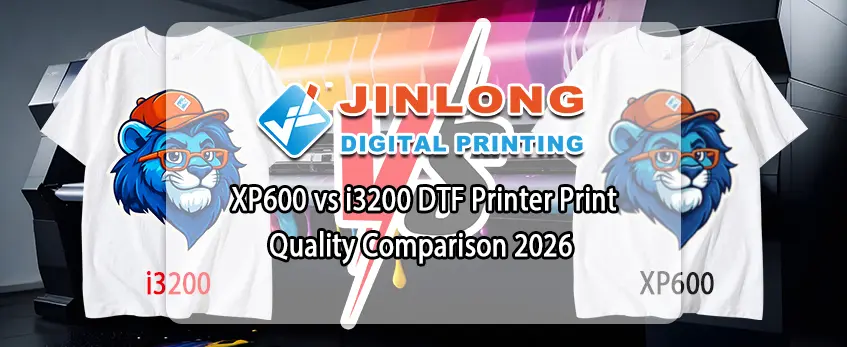
XP600 vs i3200 DTF Printer Print Quality Comparison 2026
Understanding the Printheads: XP600 and i3200 Basics
When diving into the world of DTF printing, the printhead plays a crucial role in defining the output quality. Two of the most popular Epson printheads powering DTF printers today are the XP600 and the i3200. Each has its own strengths, making them favorites in different segments of the market.
Epson XP600 Printhead Specs
The Epson XP600 printhead is known for its reliable performance in budget-friendly and entry-level DTF printers. Key specs include:
- Nozzle count: 180 nozzles per channel
- Channels: 6 channels (C, M, Y, K, White, and Clear)
- Resolution: Up to 720 dpi native resolution
- Droplet size: Fixed droplet size around 3 picoliters (pl), which delivers solid prints but less finesse in fine details
This setup allows the XP600 to produce consistent and vibrant prints but with slightly grainier textures compared to higher-end heads.
Epson i3200 Printhead Overview
The Epson i3200 printhead is designed for demanding, professional-level DTF printing, offering superior print quality and speed. Key features include:
- Nozzle count: Over 800 nozzles total
- Variable droplet technology: Allows droplets as small as 1.5 pl, enabling smoother gradients and finer details
- Resolution: Supports up to 1440 dpi (and can be configured higher), resulting in crisp and vivid images
With its advanced variable droplet technology, the i3200 creates smoother color blending and sharper edges, making it a favorite for high-end DTF applications.
Why XP600 and i3200 Dominate the DTF Market
Both printheads have carved out strong positions in the DTF printing world:
- XP600: Popular among beginners and smaller shops for its cost-effectiveness and ease of maintenance
- i3200: Preferred by commercial printers and larger operations aiming for top-tier quality and production speed
Their reliability, compatibility with DTF inks, and proven track records make the XP600 and i3200 the go-to choices in 2026 for many DTF print quality conscious users.
You’ll often find these printheads integrated into leading jinlong DTF models, giving you options whether you prioritize budget or professional-grade output.
Head-to-Head Print Quality Comparison

When comparing XP600 DTF printer vs i3200, the print quality differences come down to a few key areas:
| Feature | Epson i3200 | Epson XP600 |
|---|---|---|
| Resolution & Sharpness | Higher precision, crisper details | Slightly grainier, less sharp |
| Color Vibrancy | Richer colors & smoother gradients | Solid colors, but less intense |
| Droplet Size | Variable droplet technology enables smoother blends | Fixed droplet size, less smooth |
| White Ink & Edge Sharpness | Clean, sharp white underbase and edges | Good but edges can be softer |
Real-World Output Examples
- i3200 excels at detailed photos, fine gradients, and sharp white ink layers on fabric.
- XP600 handles solid prints well but lacks the finesse for high-detail images.
When You’ll Notice the Difference
- Up close or on large detailed prints, i3200’s superior resolution and smoother droplet variation stand out.
- For everyday viewing, especially smaller or simpler designs, XP600’s output is often good enough.
If you want consistent fine detail and vibrant colors on fabrics, the Epson i3200’s advanced printhead technology really shines. For solid prints with budget-friendly quality, XP600 remains a solid choice.
For more on choosing the right printer based on quality and business needs, check out this detailed 2026 buyers guide for the best DTF printer combos.
Other Factors That Influence Perceived Print Quality
Print quality isn\’t just about the XP600 vs i3200 printheads; several other factors play a big role in how your DTF transfers look on fabric.
Ink compatibility and consistency are crucial. Using inks that match the printhead specifications ensures smooth color flow and sharp details. Inconsistent ink mixing or incompatible formulations can lead to dull colors or poor adhesion.
Maintenance impact is another big one. Both XP600 and i3200 printheads can suffer from clogging if not cleaned regularly. Clogs reduce print precision and can cause streaks over time, hurting long-term quality. Proper upkeep means fewer interruptions and a longer printhead lifespan.
Printer setup variables like RIP software settings, curing times, and powder adhesion greatly affect final output. For instance, fine-tuning your RIP software optimizes color management and detail sharpness. Consistent curing and the use of quality DTF powder improve durability and vibrancy. Jinlong DTF’s powder shaker technology helps create even powder coatings, boosting print quality and adhesion learn how a DTF powder shaker improves adhesion and print quality.
Jinlong DTF also offers optimizations tailored for both the XP600 and i3200 printheads. These tweaks and setups help maximize color vibrancy and detail while reducing common issues. Whether you’re running a small business or a commercial setup, these adjustments can make a noticeable difference in your prints.
Pros and Cons Table: XP600 vs i3200

| Feature | Epson XP600 | Epson i3200 |
|---|---|---|
| Print Quality | Solid, good for casual use; slightly grainier details and color saturation | Sharper details with smoother gradients thanks to variable droplet technology; richer color vibrancy |
| Speed | Moderate speed, suitable for small to medium jobs | Faster print speeds, ideal for higher volume and commercial jobs |
| Cost | More budget-friendly, great for beginners and small workshops | Higher upfront cost but justified by better quality and speed for professional use |
| Lifespan | Reliable with regular maintenance; prone to clogging under heavy use | Durable printhead design with enhanced clog resistance, better for long-term industrial use |
| Best Use Cases | Small batch printing, newcomers to DTF, budget-conscious businesses | Professional print shops, detailed fine art prints, high-volume production |
This side-by-side comparison highlights why the XP600 is often chosen by those starting out or needing cost-effective DTF printing without the demand for ultra-fine detail. On the other hand, the i3200 caters to those focused on top-tier Epson i3200 DTF print quality, speed, and lasting printer performance.
For an optimized workflow with either printhead, consider jinlong DTF’s tailored inks and system setups designed to enhance print quality and longevity—especially important given ink compatibility\’s impact on final output. Check out our page on how to choose the best A3 DTF printer for high-quality durable prints to get started.
Which One Should You Choose for Better Print Quality?

When it comes to choosing between the XP600 DTF printer and the i3200 for better print quality, it really boils down to your specific needs, budget, and production scale.
i3200 Advantages
- Sharper details thanks to its variable droplet technology
- More vibrant colors and smoother gradients
- Professional-grade output suited for high-end DTF jobs
- Best for businesses focused on premium quality and large-volume production
XP600 Advantages
- More cost-effective option for startups and small businesses
- Great for beginners due to simpler maintenance and lower upfront costs
- Produces solid colors that are good enough for many standard applications
- Ideal for small runs and prototyping
Recommendations Based on Business Stage and Volume
| Business Stage | Best Choice | Why? |
|---|---|---|
| Beginner / Small Run | XP600 | Budget-friendly, easier to manage, lower cost |
| Growing Business | i3200 | Better print quality and faster speeds for scaling |
| Professional / Large Volume | i3200 | Superior print quality with sharper details and color |
Jinlong DTF Models and Upgrade Paths
Jinlong offers DTF printers equipped with both XP600 and i3200 printheads. For example:
- Models with XP600 cater to those entering the market or needing cost control.
- Their i3200-based models deliver premium print quality for commercial printers.
Luckily, many Jinlong DTF systems allow easy upgrades from XP600 to i3200, so you can start small and scale up as your business grows.
Choosing the right printhead means weighing print quality against budget and volume needs. For most U.S. shops aiming for the best DTF print results, the i3200 delivers unmatched vibrancy and detail. But if cost and simplicity are your priorities, the XP600 remains a solid, economical choice.
For further tips on maintaining these printheads to keep quality high, check out Jinlong\’s guide on DTF printer head problems and maintenance.
Real User Experiences and Case Studies
When comparing XP600 DTF printer vs i3200, real user feedback from small shops and commercial printers is invaluable. Many small businesses report the XP600 as a great starting point due to its ease of use and solid print quality without breaking the bank. It offers reliable output for basic jobs and helps beginners learn the DTF process without steep upfront costs. On the other hand, commercial printers upgrading to the i3200 often praise its sharper details, richer color saturation, and smoother gradients — essential for premium, sellable output that customers recognize.
ROI is a big factor in choosing between these printheads. While the XP600 keeps initial investments low, the i3200’s superior print quality can unlock higher price points and repeat business. Shops producing high-volume or complex prints find the i3200’s variable droplet technology and finer resolution drive better product margins. This means when quality matters most, the i3200 turns investment into consistent customer satisfaction and increased sales.
For businesses looking to scale efficiently with either printhead, exploring ways to optimize the entire DTF workflow—from printing to curing and powder adhesion—is crucial. Resources like jinlong DTF’s insights on choosing the best DTF film for high-quality prints help maximize output quality and ROI regardless of printhead choice.


 English
 Español
 Deutsch
 Français