


Best TPU Powder for DTF Printing Guide Grain Size Durability
Understanding TPU Powder: Composition and Performance
What is TPU?
Thermoplastic Polyurethane (TPU) is a versatile polymer widely used in DTF printing for its superior elasticity and durability. Compared to other common materials like Polyamide (PA) and Polyester (PES), TPU stands out as the gold standard for flexible and stretchable prints.
| Property | TPU | PA (Polyamide) | PES (Polyester) |
|---|---|---|---|
| Elasticity | High | Moderate | Low |
| Softness (Hand Feel) | Soft, flexible | Stiffer | Rougher |
| Wash Fastness | Excellent (50+ washes) | Good | Fair |
| Resistance to Cracking | Outstanding | Moderate | Poor |
Why TPU Is the Best for Elasticity
- Elasticity & Stretch: TPU’s molecular structure allows the printed layer to stretch without cracking or breaking, essential for activewear and stretch fabrics.
- Wash Fastness: High-quality TPU powder resists fading, peeling, and degradation even after 50+ washes, ensuring long-term durability.
- Hand Feel (Softness): Unlike thick, rubbery finishes often seen with other powders, TPU powder creates a smooth, soft hand feel that feels natural on the fabric.
Using the right TPU powder ensures a high-performance DTF transfer with superior adhesion, flexibility, and washability. This makes TPU the preferred choice for textile transfer printing where quality and longevity matter.
The Buying Guide: Grain Sizes and Their Applications
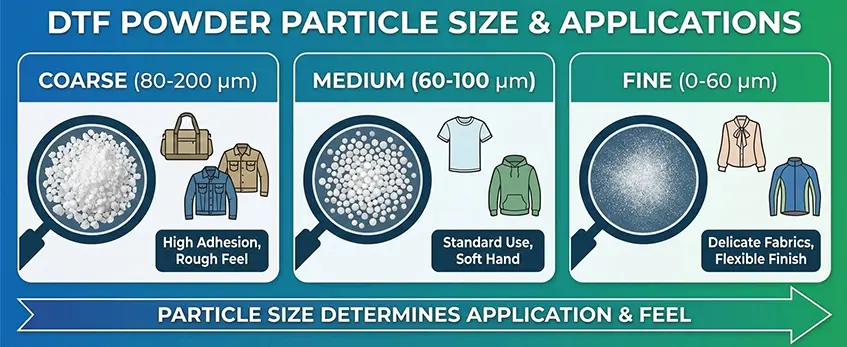
When choosing the best TPU powder for DTF printing, understanding grain size is key. Different powder sizes perform better depending on your fabric and design needs.
Fine Powder (0-80 microns)
- Best for: Detailed designs, small text, lightweight materials like thin cotton or polyester blends.
- Advantages: Offers a smooth, soft hand feel and a cleaner finish on delicate fabrics. The powder melts evenly, which helps achieve those crisp fine details.
- Drawbacks: Requires very precise curing temperatures and times; otherwise, you might get issues like under-curing or a “powder fall-off” effect. Also, it tends to need a more carefully calibrated printer head to ensure even ink laydown.
Medium Powder (80-170 microns)
- Best for: The all-rounder choice for most apparel—ideal on cotton, cotton blends, and everyday wear.
- Advantages: Great elasticity and durability with reliable wash fastness, making it perfect for commercial shops focused on consistency. This grain size balances softness and adhesion well.
- Recommendation: Jinlong DTF’s medium powder is highly recommended for businesses due to its consistent melting point and easy curing process, making it a go-to in textile transfer printing. For more on DTF supplies and films suited for commercial use, consider checking out Jinlong’s DTF Transfer Film Basic Series.
- Drawbacks: May not perfectly capture ultra-fine details that the fine powder excels at, but overall the most versatile choice.
Coarse Powder (170+ microns)
- Best for: Heavy textures like canvas, denim, or special effects like flocking where a stronger adhesive grip is needed.
- Advantages: Strong adhesion and excellent durability on rough or thick fabrics. The powder’s texture also adds a slightly raised effect which some designs benefit from.
- Drawbacks: The finish is less smooth and can feel a bit rough or thick on lighter fabrics. Curing requires a bit more attention to avoid over-melting or the “orange peel effect.”
By matching your TPU powder grain size to the garment and design type, you optimize print performance and durability. For high-quality DTF consumables that blend perfectly with your printer and fabric, explore options like the Jinlong DTF Pro Series Film designed for premium results.
White vs. Black Powder: Solving Dye Migration
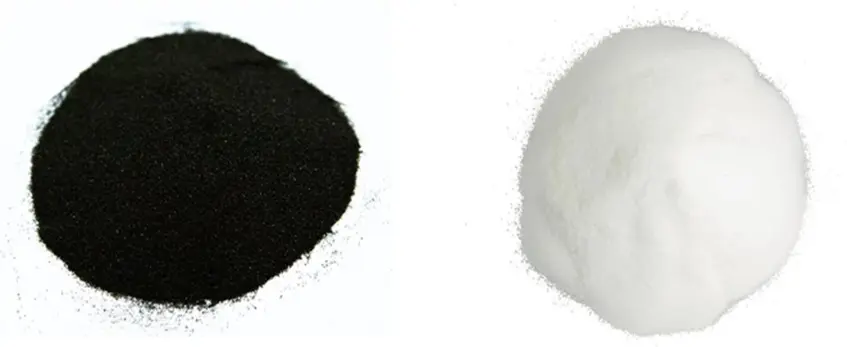
When it comes to TPU powder for DTF printing, choosing between white and black powder often comes down to solving dye migration issues and garment color.
White TPU Powder is the go-to choice for white and light-colored garments. It provides a clean, bright base that makes colors pop. You can also use white powder on darker fabrics—just make sure you apply a thick enough white ink layer beneath the powder to avoid dull results. This approach keeps the print looking vibrant and prevents the fabric’s color from bleeding into the design.
On the other hand, Black TPU Powder is specifically designed to tackle the tricky dye migration problem, especially on polyester fabrics. Dye migration happens when the polyester sublimates, causing discoloration or a yellowing effect on the white ink layer after washing. Black powder serves as a powerful dye migration blocker by creating a protective barrier that stops that discoloration—this is why it’s a favorite for sports jerseys and athletic wear made from polyester blends.
Both powders serve clear purposes: white powder for general use on lighter garments and black powder for specialized anti-sublimation protection on darker, polyester-rich items. Picking the right one is key to ensuring long-lasting, vibrant DTF transfers with excellent wash fastness.
For deeper insights into how powder works in
Technical Application: Curing and Melting Points
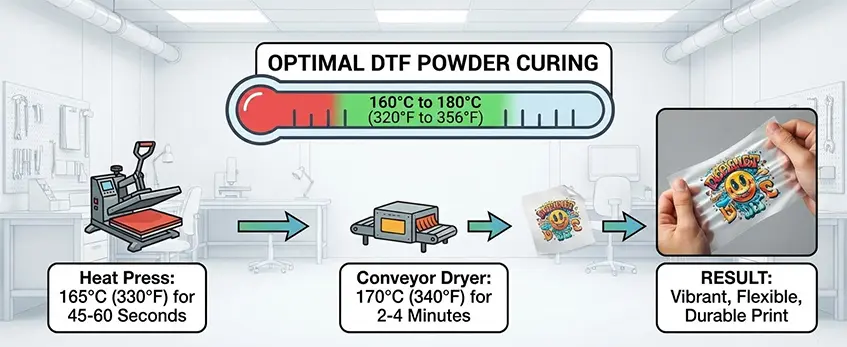
When using TPU powder for DTF printing, hitting the right curing and melting temperature is key to getting a durable, flexible print that feels great and lasts through many washes.
Optimal Curing Temperature
- Melting range: 115°C to 125°C (239°F to 257°F) is the sweet spot where TPU powder melts evenly and bonds well to fabric.
- Overheating risk: Temps above 130°C can cause the powder surface to get rough or develop the Orange Peel Effect — a bumpy texture that reduces print smoothness.
Oven vs. Heat Press Curing
| Method | Pros | Cons | Tips |
|---|---|---|---|
| Oven | Even heat distribution; good for batch | Takes longer; needs temperature control | Maintain stable temp; use timers; avoid hot spots |
| Heat Press | Quick curing; precise heat and pressure | Risk of overheating or under-curing | Use recommended pressure settings; test small print samples; avoid multi-layer stacking |
Troubleshooting Common TPU Powder Issues
- Orange Peel Effect: Usually caused by overheating. Lower curing temp or time to smooth the print’s feel.
- Powder Falling Off: Happens if curing is too short or ink isn’t wet enough before powder application. Ensure ink wetness and correct curing.
- Printer Head Cleanliness: Dirty print heads clog ink flow and cause poor ink laydown, leading to weak powder adhesion. Regularly clean your DTF printer head for consistent results.
For more on curing techniques and preventing print issues, check out our detailed guide on how DTF printing works from design to heat press.
Getting these steps dialed in ensures your TPU powder creates prints with the right elasticity, softness, and wash fastness customers expect.
Why Jinlong DTF TPU Powder?
Jinlong DTF TPU powder stands out because of its purity guarantee—it contains no recycled fillers, which means you get consistent melting points every time. This consistency is crucial for achieving reliable results during the DTF curing process and avoiding issues like the orange peel effect or powder falling off.
Another big plus is Jinlong’s anti-static formula. This feature prevents the powder from sticking to areas without ink, eliminating that annoying ‘halo’ effect around your designs. For anyone serious about clean, professional transfers with sharp edges, this makes a noticeable difference.
On top of performance, Jinlong’s TPU powders meet important safety standards, including OEKO-TEX certification. This ensures your DTF transfers are free from harmful substances, giving peace of mind for apparel, especially in the U.S. market where such certifications matter a lot.
If you\’re looking for reliable DTF consumables, be sure to check out Jinlong’s products for their purity and professional-grade quality. You can also explore the top features to look for when buying DTF film in 2026 to understand how Jinlong supports the whole DTF printing process end-to-end.


 English
  Español
  Deutsch
  Français