
No products in the cart.

Jinlong
TPU Powder vs Hot Melt Powders Key Differences and Features
Cracking prints and stiff, plasticky transfers have long frustrated garment makers and DTF printers alike. The secret to a flawless design? It’s not just the ink—it’s the hot melt adhesive powder behind it. When choosing between TPU powder vs. other hot melt powders like PA or PES, understanding their core differences means the difference between prints that last and those that peel after a few washes. If you want a soft hand feel, high wash fastness, and true elasticity on your prints, this breakdown will help you cut through the confusion—and upgrade your next run for good.
What is TPU Powder? The Gold Standard in DTF Printing
Thermoplastic Polyurethane (TPU) powder stands out as the gold standard in direct to film (DTF) transfer powders. Think of TPU as a unique bridge between rubber and plastic—it combines the flexibility and stretch of rubber with the durability and melt-ability of plastic. This balance makes TPU powder the ideal hot melt powder adhesive for textile printing.
Key Characteristics of TPU Powder
- Elasticity: TPU offers excellent stretchability, allowing printed designs to flex with the fabric without cracking.
- Soft Texture: It creates a smooth, soft hand feel, unlike stiff or heavy coatings from other powders.
- Low Melting Point: TPU melts at relatively low temperatures, which helps prevent scorching or damaging delicate fabrics.
Why TPU Dominates in T-Shirts and Sportswear Printing
For printing on cotton tees, polyester sportswear, or blends, TPU powder’s elasticity ensures garment transfer durability even after 50+ wash cycles. Its soft-touch finish matches the comfort standards customers expect, while its low curing temperature reduces energy use and prolongs machine life.
Simply put, TPU powder delivers the right balance of stretch, softness, and wash fastness, making it the preferred DTF transfer powder type for both hobbyists and professionals in the US textile printing market.
The \”Other\” Powders: PA, PES, and EVA
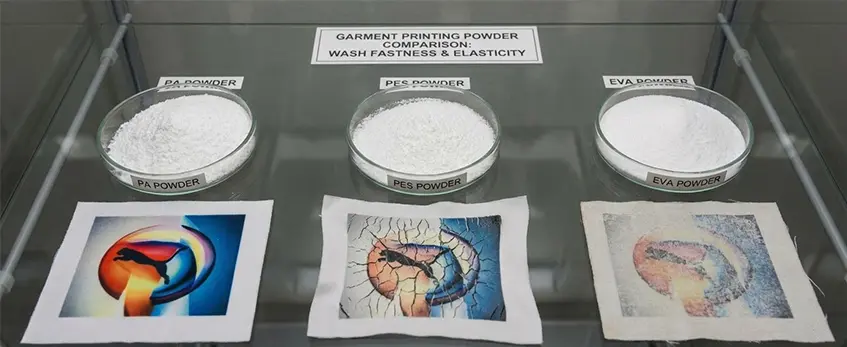
When it comes to hot melt powders beyond TPU, the main contenders are PA (polyamide), PES (polyester), and EVA (ethylene vinyl acetate). Each has its own set of pros and cons, making them suitable for certain uses but often limiting their appeal in modern textile printing.
PA Powder is known for its high wash resistance, which means garments hold up well through multiple laundry cycles. However, it has a stiffer hand feel and a higher melting point compared to TPU. This can make PA less ideal for stretchable fabrics and may require longer curing times with hotter temperatures, increasing the risk of scorching.
PES Powder sticks strongly to synthetic fibers, making it a good option if you mainly work with polyester garments. The downside is its rigidity—it doesn’t stretch, which means prints on stretch fabrics are prone to cracking or peeling. The lack of elasticity limits PES’s use in activewear and applications demanding fabric flexibility.
EVA Powder is rarely chosen for quality apparel printing since it doesn’t offer great wash fastness. It tends to degrade quickly in the wash, causing prints to lose vibrancy and durability. For that reason, EVA is mostly confined to low-cost or short-term applications.
Understanding these differences helps when selecting the right DTF transfer powder type for your garment needs, balancing wash fastness, fabric compatibility, and production efficiency. For a broader guide on hot melt powder applications, check out Jinlong’s expertise on Direct to Film consumables.
Critical Comparison: TPU Powder vs. Other Hot Melt Powders
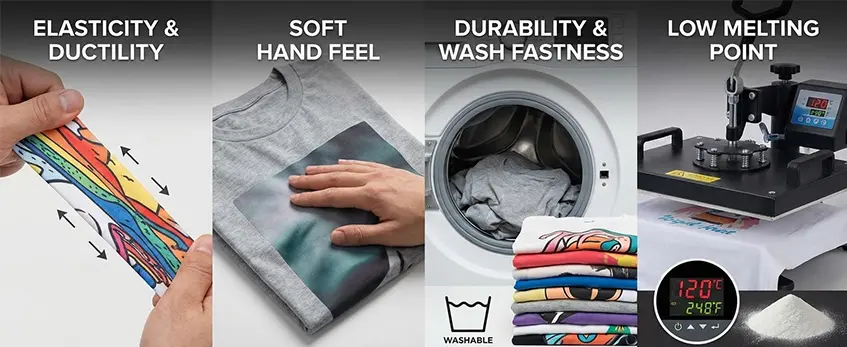
When it comes to choosing hot melt powders for DTF printing, TPU powder clearly stands out compared to PA, PES, and EVA in several key areas:
| Feature | TPU Powder | PA Powder | PES Powder |
|---|---|---|---|
| Elasticity & Stretch | Excellent stretch, no cracking | Durable but stiff, prone to cracking | Rigid, no stretch, may crack on stretch |
| Hand Feel | Soft-touch, flexible | Heavier, sticker-like | Hard and less pleasant |
| Wash Fastness | Good durability, 50+ wash cycles | High durability, less flexible | Moderate durability, less flexible |
| Melting Temp & Curing | Lower temp, reduces scorching risk | Higher heat needed, risk of scorching | High heat required, easy overheating |
Key Takeaways
- Elasticity and Stretchability: TPU powders are designed for modern fabrics, offering stretch without cracking. PA and PES powders often fail on stretchable garments, leading to cracking or peeling.
- Soft Hand Feel: TPU’s soft-touch finish feels natural on apparel, unlike PA and PES powders which can feel heavy or plasticky.
- Durability & Wash Fastness: TPU balances flexibility with durability, lasting through 50+ wash cycles. PA offers durability but sacrifices stretch, while PES is more rigid.
- Lower Melting Point: TPU’s lower melting temperature means less risk of scorching fabrics during curing, making it safer for varied textile types. PA and PES require higher temps and careful heat management.
For those looking for reliable, stretchable heat transfer adhesive powder that performs across different fabric blends without compromising on softness or durability, TPU powder is the clear winner.
If you\’re serious about quality and longevity in your DTF printing, exploring the benefits of TPU powder, including its anti-sublimation features and balanced melting point, is well worth it. For more on choosing the right powder and reliable DTF printer setups, check out Jinlong’s TPU DTF Hot Melt Adhesive Powder.
Why Jinlong DTF Recommends TPU for Modern Textile Printing
Jinlong DTF strongly recommends TPU powder for modern textile printing because of its unmatched versatility across a wide range of fabrics. Whether you\’re printing on cotton, polyester, blends, nylon, or even leather, TPU\’s elasticity and soft hand feel provide excellent fabric compatibility that other hot melt powders struggle to match. This versatility makes TPU the go-to adhesive for Direct to Film consumables, especially when working with diverse apparel types.
Quality is another key reason Jinlong favors TPU. Their TPU powder features a consistent particle size ensuring smooth application and reliable adhesion. Plus, it incorporates anti-sublimation properties to prevent unwanted dye migration during curing, maintaining crisp, vibrant prints. These qualities contribute to superior garment transfer durability and reduce common issues like print cracking or orange peel effects.
Though TPU powder may come with a slightly higher cost compared to alternatives like PA or PES powders, the overall value is clear. Its balanced wash fastness—holding up through 50+ wash cycles—and reduced garment failure rate translate to fewer returns and happier customers. For businesses seeking consistent, high-quality results without compromising on stretchability or print longevity, Jinlong’s TPU powder offers the best investment.
For more details on achieving flawless prints, check out Jinlong’s DTF transfer film options that work perfectly with TPU powder.
Selecting the Right Grain Size (It’s Not Just About Material)

When choosing TPU powder for your DTF printing, grain size plays a crucial role beyond just the type of hot melt powder you pick. Here’s how to decide based on your project needs:
Fine powder (0-80 microns): Ideal for detailed, small graphics where precision is key. The finer particles allow for sharp edges and smooth finishes, perfect for intricate designs on lightweight fabrics.
Medium powder (80-170 microns): This is the industry standard for general use, balancing ease of application with good adhesion. It works well across most fabrics, making it a versatile choice for everyday DTF transfers.
Coarse powder (170+ microns): Best suited for flocking effects or heavy-duty backing applications. The larger granules create a thicker adhesive layer, supporting durability on tougher textiles and special finishes.
Using the right powder size ensures better curing, prevents common issues like poor adhesion or powder residue, and helps maintain the soft hand feel that TPU adhesive is known for. For those looking to optimize printing on cotton, polyester, or blends, choosing the correct TPU powder grain size can significantly improve your garment transfer durability and overall print quality.
For more on high-quality powders and how to select the best for your needs, check out Jinlong’s guide on the best DTF powder for durable transfers.
Troubleshooting Common Adhesive Issues in DTF Printing
When working with hot melt powders like TPU powder, a few common adhesive problems can come up, but they’re usually easy to fix if you know what to look for.
Orange Peel Effect: This bumpy texture on your print surface often results from overheating the powder during curing. TPU adhesive melting point is lower than PA or PES, so watch your DTF curing temperature carefully to avoid scorching and that rough finish.
Poor Adhesion: If your print doesn’t stick well, it might be due to under-curing or using the wrong powder type. For example, using a rigid PES powder on stretchy fabrics can cause cracking and peeling. Make sure to match your powder choice to your fabric type and follow the recommended curing times to keep your prints durable.
Excess Powder Residue: Powder buildup can cause problems with the print feel and adhesion. Using anti-static TPU powder helps reduce clumping and ensures even application, giving you a smooth, soft hand feel adhesive that\’s perfect for quality apparel.
Understanding these issues and how to address them can save time and reduce garment transfer failures, keeping your DTF prints looking sharp and lasting through 50+ wash cycles. For more tips on powder application and avoiding common pitfalls, check out the detailed guide on DTF transfer film essentials.


 English
 Español
 Deutsch
 Français