


Why DTF Transfer Paper and Powder Deliver Premium Custom Apparel Prints
If you’re diving into custom apparel printing, you’ve probably come across a maze of methods — from screen printing to DTG — each with its own pros and cons. But here’s the thing: DTF transfer paper and powder have quietly become the game-changers for anyone serious about achieving crisp, vibrant, and durable prints without the typical headaches. Why? Because this dynamic duo unlocks a level of quality and versatility that’s tough to beat, delivering wash-resistant, high-resolution designs across all kinds of fabrics — even dark and synthetic blends. In this post, you’ll discover why DTF transfer paper and powder are the secret behind pro-grade, soft-feel prints and how premium supplies like jinlong DTF make all the difference. Let’s get into it!
What Is DTF Printing? A Quick Overview
Direct-to-Film (DTF) printing is a modern method for creating custom apparel designs. It involves printing a full-color design onto a special DTF transfer paper, then applying a hot melt adhesive powder before transferring the image onto fabric using heat.
How DTF Works: The Basic Process
| Step | Description |
|---|---|
| 1. Design Preparation | Create or edit artwork using RIP software. |
| 2. Printing on Film | Print the design onto DTF transfer paper with specialized inks, including a white base layer. |
| 3. Powder Application | Sprinkle hot melt adhesive powder evenly over the wet tinta (ink). |
| 4. Curing | Melt and bond the powder to the printed film using heat. |
| 5. Heat Transfer | Press the design from the film onto the garment with a heat press. |
Why Paper and Powder Matter in DTF
Unlike direct-to-garment (DTG) print methods, DTF separates the printing step from fabric bonding. This paper-powder combo is crucial because:
- Paper acts as the carrier and ink absorber, ensuring sharp, high-resolution prints.
- Powder functions as a hot melt adhesive, bonding ink securely to fabric during heat pressing.
This two-step approach enables vibrant, durable prints that stick well on multiple fabric types without pre-treatment, offering flexibility and superior quality compared to direct methods. Understanding how both transfer paper and adhesive powder work together is key to mastering DTF printing results.
The Critical Role of DTF Transfer Paper
DTF transfer paper is more than just a base for your prints—it’s the key to capturing vibrant, sharp designs every time. Premium DTF film offers superior ink absorption, ensuring colors pop with crisp edges and rich detail. Its matte coating helps prevent glare, making the final design look flawless on any fabric. Durability is another big plus; high-quality transfer paper resists wrinkling and tearing during processing. Plus, good ink compatibility means your prints stay consistent without smudging or fading.
Using low-quality paper often leads to weak ink adhesion, dull colors, and even transfer failures that waste time and materials. Poor paper can cause uneven ink absorption, resulting in blotchy or faded areas.
That’s why many pros trust jinlong DTF film—designed to maximize print clarity and durability. Jinlong’s premium DTF transfer paper provides a smooth surface that handles high-resolution custom designs beautifully, and its durability supports multiple washes without cracking or peeling. For anyone serious about vibrant durable prints, jinlong DTF film is a smart choice that guarantees strong, long-lasting results.
For details on the printing process and how jinlong products fit in, check out our guide to the desktop DTF printer features and usage.
Why DTF Adhesive Powder Is the Real Game-Changer
DTF adhesive powder acts like a hot-melt glue that firmly bonds the printed ink film to your fabric. Without it, the design won’t stick properly, leading to peeling or cracking over time. This powder is essential in making sure your custom apparel feels soft and flexible instead of stiff or plastic-like.
Even powder distribution is critical—too little powder means weak adhesion, while too much can cause a rough surface or uneven prints. That’s why selecting high-grade adhesive powder is a must for top-quality results.
Jinlong DTF powder stands out because it melts evenly and creates a strong bond without compromising the garment’s stretch or softness. Using jinlong’s premium DTF powder ensures great print durability and a comfortable hand-feel, essential for apparel that lasts wash after wash while maintaining vibrant, soft prints.
How DTF Transfer Paper and Powder Deliver Superior Print Quality
DTF transfer paper and powder work together to produce vibrant, photorealistic colors, especially on dark fabrics where detail and color accuracy matter most. The premium DTF transfer paper absorbs ink sharply, preserving high-resolution details and smooth gradients that bring custom designs to life with clarity and depth.
What sets DTF prints apart is the soft, breathable finish created by the powder’s hot-melt adhesive. Once melted and bonded, it integrates with the fabric without adding stiffness or bulk, resulting in a print you can feel but barely notice. This combination ensures your custom apparel offers full-color garment decoration with durability and comfort, making it ideal for high-quality custom t-shirt printing and other apparel heat transfer projects.
Using top-tier products like the specialized jinlong DTF transfer film and carefully matched powder guarantees consistency and vibrant, durable prints that stand out on every fabric.
Durability and Wash Performance: The Proof in the Laundry
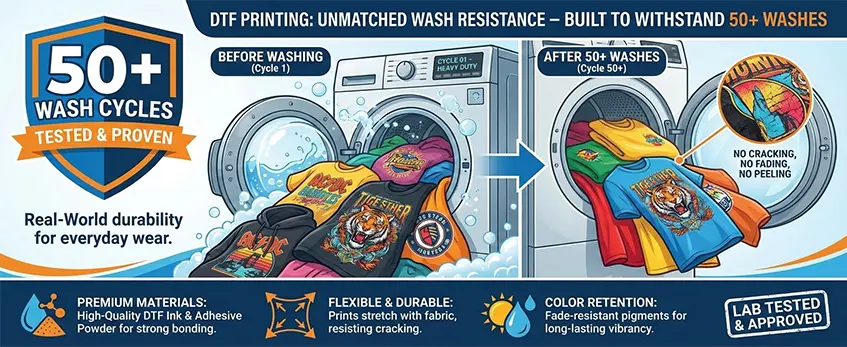
One of the biggest perks of using DTF transfer paper and powder is durability. When applied correctly, the powder-bonded transfers can last 50+ washes without cracking, fading, or peeling. This stands out especially when compared to other popular methods like DTG (Direct-to-Garment) and traditional screen printing.
| Method | Wash Durability | Common Issues |
|---|---|---|
| DTF Transfer | 50+ washes | Maintains color & flexibility |
| DTG Printing | 20-30 washes | Fading, less vibrant on darks |
| Screen Printing | 30-40 washes | Cracking and stiffness |
DTF’s toughness comes from the hot-melt glue function of the adhesive powder, which locks the ink firmly onto the fabric, creating a flexible and soft finish that holds up to stretching and frequent washing.
Why Curing Temperature and Pressure Matter
Achieving that wash resistance depends heavily on proper curing temperature and pressure during heat pressing. If the temperature is too low or pressure uneven, the adhesive powder won’t fully bond, leading to peeling or a rough feel after washes.
Tips for best results:
- Maintain recommended temperature (usually 320–350°F)
- Apply firm, even pressure
- Follow pressing time guidelines closely
For those looking to maximize wash performance, choosing premium powders like those from jinlong DTF powder ensures consistent melt quality and adhesive strength, vital for long-lasting prints.
Versatility Across Fabrics and Applications
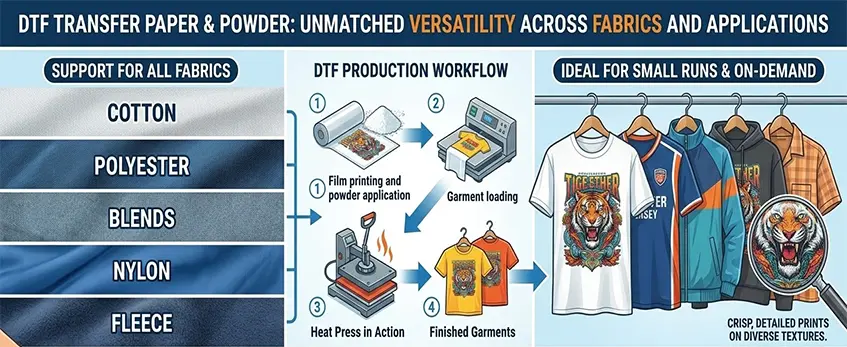
DTF transfer paper and powder work seamlessly on a wide range of fabrics, including cotton, polyester, blends, nylon, and fleece. This flexibility means you don’t need to worry about pre-treatment, saving time and money while simplifying the process. Whether you\’re working on thick fleece or smooth polyester, the adhesive powder bonds perfectly, delivering vibrant durable prints every time.
This method is especially ideal for small runs, on-demand orders, and multi-color designs where flexibility and quick turnaround are key. The ability to handle diverse fabrics without extra prep makes DTF printing a favorite in custom t-shirt printing and other apparel heat transfer tasks. For businesses looking to expand their offerings with high-resolution custom designs on various garment types, the versatility of DTF transfer paper and powder really stands out.
To explore how the DTF printing process affects color and durability across fabrics, check out this detailed guide on how textile printing techniques influence results.
Step-by-Step: Achieving Pro Results with DTF Paper and Powder
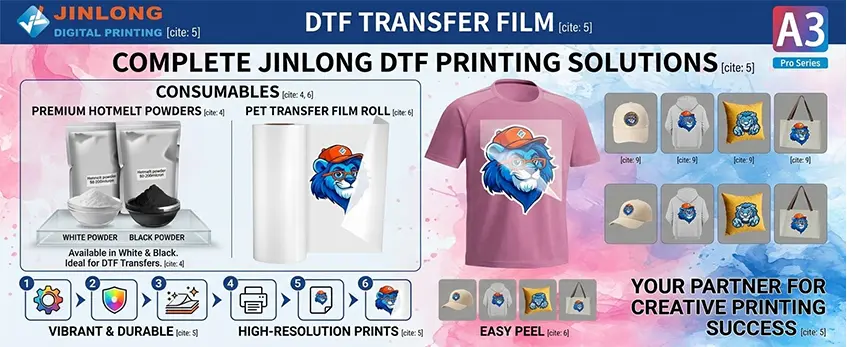
Getting professional-grade prints with DTF transfer paper and powder is all about following the right steps carefully:
Design Prep and RIP Software Settings
Start with a high-resolution design. Use RIP software to manage ink layers, especially the white base, which is crucial for vibrant colors on dark garments. Adjust ink density so the print isn’t too thick or too light—this balance ensures smooth transfers and sharp images.
Printing on Film with Proper Ink Density and White Base
Print your design onto premium DTF transfer paper, including a solid white underlayer. This white base acts like a blank canvas for your colors, making them pop on any fabric color. Consistency here is key for sharp and vibrant results.
Powder Application Techniques
After printing, apply DTF adhesive powder evenly to the wet ink. Use tools or powder shakers designed for this job to avoid clumps—uneven powder can cause weak bonding and rough textures. Tap off the excess to keep the surface clean and ready for curing.
Curing/Melting Process
Cure the powder by heating it until it melts and bonds with the ink. Proper curing activates the hot-melt adhesive powder, locking your design firmly in place. Avoid under- or overheating, as incorrect curing affects durability and print softness.
Heat Pressing Guidelines and Post-Press Care
When heat pressing onto the garment, use the recommended temperature (usually around 300–320°F), pressure, and time (about 15–20 seconds). Consistent pressure ensures the transfer bonds well without damaging fabric. After pressing, let the print cool completely before handling or washing to preserve its quality.
Following these steps with quality DTF transfer paper and powder, like those from jinlong DTF, guarantees vibrant, durable prints with a soft, breathable feel perfect for custom t-shirt printing and more. For detailed guidance on printing techniques and ink compatibility, check out resources on how to choose the best A3 DTF transfer film for your printer and tips for managing DTF white ink clogging and maintenance.
Common Mistakes and How Premium Supplies Prevent Them
One of the biggest challenges in the DTF printing process is uneven powder coverage. When the hot-melt adhesive powder isn’t spread evenly, it can cause patchy bonding, leading to weak spots where the print may crack or peel after washing. This compromises the durability and overall quality of your custom t-shirt printing.
Using incompatible or cheap materials is another common problem. Low-quality DTF transfer paper or powder can result in poor ink absorption, fading colors, or a stiff, uncomfortable feel on the fabric. These issues not only hurt the final product but also increase reprint costs and disappoint customers who expect vibrant, durable prints.
That’s why sticking with premium supplies, like jinlong DTF’s consistently high-quality transfer paper and adhesive powder, makes all the difference. Their materials are engineered for uniform powder application and perfect ink adhesion, greatly reducing errors and ensuring reliable, wash-resistant transfers. By using jinlong DTF powders and films, businesses can save time, reduce waste, and deliver softer-feeling prints with exceptional detail and durability—key advantages that keep customers coming back.
For tips on improving your DTF printing setup, exploring how a DTF printer with shaker and oven improves print consistency and speed can also be a smart move.
Why Choose jinlong DTF for Your Supplies
When it comes to dtf transfer paper and powder, jinlong DTF stands out because they focus on quality materials engineered for reliability. This means you get supplies that perform consistently, giving you vibrant, durable prints every time. Their products are designed to reduce mistakes like uneven powder coverage or poor ink adhesion, so your custom t-shirt printing runs smoothly.
Key Benefits of jinlong DTF Supplies
| Feature | Benefit |
|---|---|
| Premium DTF transfer film | Sharp ink absorption & lasting prints |
| High-grade adhesive powder | Strong, flexible bond for soft prints |
| Consistent quality | Reliable results batch after batch |
| Wide compatibility | Works on cotton, polyester, blends |
| Support for businesses | Helps grow small and large operations |
Plus, jinlong’s dedicated customer support is a big help for growing businesses diving into full-color garment decoration or expanding their product lines. Choosing jinlong means fewer supply headaches and more time focusing on printing high-resolution custom designs that your customers will love. Check out their reliable DTF transfer film options engineered for optimal performance.


 English
  Español
  Deutsch
  Français