


What Is DTF Printing on Shirts Pros Cons and Print Quality Review
What Is DTF Printing? A Step-by-Step Explanation
Direct-to-Film (DTF) printing on shirts is a modern method that transfers designs from a specialized PET film onto fabric using heat. Unlike traditional printing styles, DTF doesn’t print ink directly onto the shirt. Instead, it prints full-color designs—including CMYK colors plus white ink—on a transparent PET film. Then, a hot-melt adhesive powder is applied to the wet ink. This powder is cured, or melted, to create a tacky layer that helps the design stick firmly to the fabric. Finally, the film is heat pressed onto the shirt, transferring the image in a durable, vibrant way.
Here’s how DTF printing differs from other popular shirt printing methods:
- DTG (Direct-to-Garment): Prints directly on the fabric but usually requires pretreatment and struggles with dark or synthetic materials.
- Screen Printing: Best for large runs with fewer colors, offering a soft hand feel but not ideal for complex, full-color designs.
- Sublimation: Works only on polyester fabrics and requires special inks that bond with the fibers, making it unsuitable for cotton or blends.
Step-by-Step DTF Process for Shirts
- Design Prep & RIP Software: Create or prepare your artwork and convert it with RIP software tailored for DTF to separate CMYK and white layers accurately.
- Printing on PET Film: Use a DTF printer to print the design in CMYK colors plus white ink on the PET film.
- Adhesive Powder Application: While the inks are still wet on the film, sprinkle hot-melt adhesive powder over the white ink.
- Powder Curing: Cure the powder by melting it in a drying oven, creating the film’s sticky backing.
- Heat Pressing: Place the film onto the shirt and heat press it—generally around 320°F (160°C) for 15-20 seconds with medium pressure.
- Peeling: Peel the film either hot or cold depending on the type of transfer and fabric used.
Common Shirt Fabrics for DTF
DTF printing works well on a variety of fabrics, including:
- Cotton: Great for softness and breathability, though colors appear vivid.
- Polyester: Handles vibrant colors, especially on dark shirts, without cracking.
- Blends: Offers a balance of softness and print durability.
DTF handles dark and light fabrics with equal ease, thanks to the white ink layer that provides bright, opaque whites on dark shirts and clean color prints on light fabrics. This versatility makes DTF transfers ideal for a broad range of apparel types.
In short, DTF printing is a flexible, reliable technique that opens up opportunities for vibrant, full-color designs on almost any fabric—without the need for pre-treatment or big setup costs. It’s particularly useful for custom t-shirt printing, small to medium runs, and complex images that other methods struggle to replicate.
Print Quality Review: What Does DTF Really Look Like on Shirts?
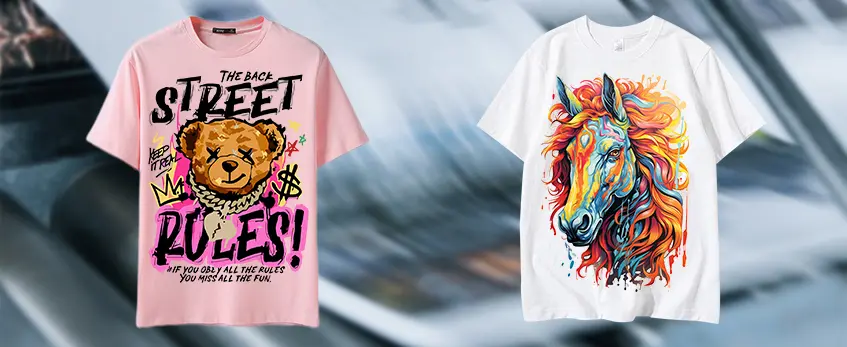
DTF printing on shirts delivers outstanding vibrancy and color accuracy. You get an excellent color gamut with bright whites that pop especially well on dark fabrics, making your full-color t-shirt transfers truly stand out. The print detail is sharp, capturing fine lines, smooth gradients, and even photorealistic images with impressive clarity.
When it comes to hand feel, freshly printed DTF transfers might feel slightly rubbery or plastic-like at first. However, this softens significantly after a few washes, especially on common fabrics like cotton, polyester, and blends. The durability shines in wash tests, often lasting between 50 to 80+ industrial washes with minimal fading or cracking, maintaining vibrant colors long term.
Real-user examples consistently show great stretch and crack resistance before and after multiple washes, proving the print quality holds up in everyday use. That said, quality can suffer if the process slips — be mindful of over-powdering adhesive, poor heat pressing, or using low-grade inks and films, which can cause peeling or dull colors.
Products like the jinlong DTF printers and compatible materials excel here, offering consistent ink adhesion, vibrant outputs, and reliable wash-fastness to help you achieve professional DTF print results every time. For best performance, check out jinlong’s range of specialized DTF films and powders designed for superior print quality and easy application.
Pros of DTF Printing on Shirts
DTF printing stands out for its exceptional fabric versatility—whether you\’re printing on cotton, polyester, blends, nylon, or even leather, it handles them all with ease. Unlike DTG, DTF requires no pre-treatment, saving time and simplifying the workflow.
It’s perfect for small-to-medium runs and detailed, full-color designs without the high setup costs of screen printing. Plus, its fast turnaround means you can print, press, and ship orders the same day, making it ideal for custom shops and on-demand businesses.
Durability is another big win—DTF prints offer strong wash resistance that rivals or even exceeds DTG results. For beginners, the process is straightforward, needing just a printer and heat press with minimal extra gear.
The jinlong DTF system shines here, too, providing superior ink adhesion and consistent adhesive powder application, which ensures reliable print quality every time. For high-quality DTF prints, using jinlong’s professional DTF transfer film and DTF inks helps unlock the best results on a wide range of fabrics.
Cons of DTF Printing on Shirts
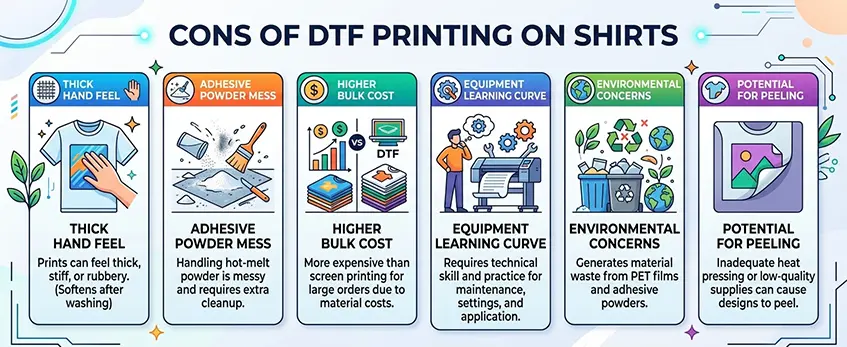
While DTF printing offers many benefits, it’s not without drawbacks you should consider before jumping in.
Thicker hand feel and breathability: DTF prints tend to feel thicker and less breathable compared to DTG or traditional screen printing. The print can be a bit stiff at first, which might not be ideal if you want an ultra-soft finish right out of the gate. On cotton shirts, this rubbery texture usually softens after a few washes but can still be noticeable initially.
Adhesive powder mess: Handling the hot-melt adhesive powder can get messy. If you’re not careful during application and cleanup, powder remnants can scatter, increasing production time and requiring extra workspace maintenance.
Higher cost for big runs: For very large orders, DTF printing often comes with a higher per-unit cost than screen printing. The specialized PET film and powders add up, making screen printing a better choice for bulk single-color designs.
Equipment learning curve: Getting the best results from DTF requires some technical skill. Printer maintenance, powder application precision, and correct heat press settings all take practice to master. Mistakes can cause peeling or poor adhesion, which hurts durability.
Environmental impact: Since DTF uses PET films and adhesive powders, there’s some environmental concern over waste and material usage. While the industry is working toward greener options, be mindful of disposal and recycling where possible.
Peeling issues: Inadequate heat pressing or using low-quality films and inks can cause peeling — a common problem when equipment or materials aren’t up to par. Ensuring proper temperature, pressure, and quality supplies is crucial to avoid this.
If you want a deep dive on managing adhesive powders and maintenance tips, check out this detailed TPU powder guide for DTF beginners and pros. Understanding these cons upfront can help you decide if DTF printing fits your custom t-shirt business or project needs.
DTF vs. Other Methods: Quick Comparison for Shirt Printing
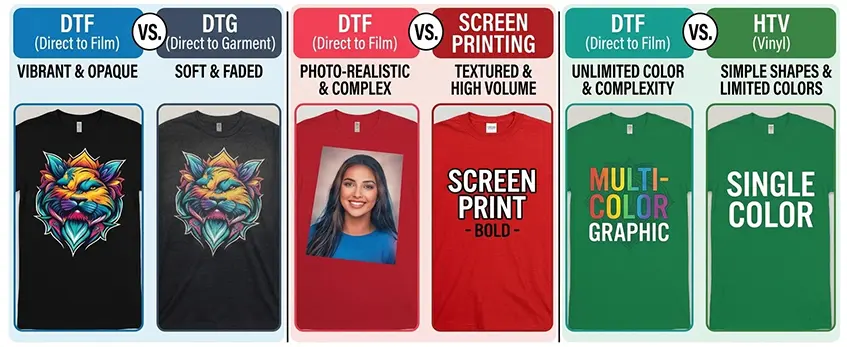
When choosing the best print method for your shirts, understanding how DTF stacks up against others can save you time and money. Here’s a quick breakdown based on common needs:
| Method | Pros | Cons | Best Use Case |
|---|---|---|---|
| DTF vs. DTG | – No pretreatment needed – Works great on dark polyester – Versatile fabric use | – Slightly thicker hand feel – More powder handling than DTG | Small runs, mixed materials, dark shirts |
| DTF vs. Screen Printing | – Easy full-color prints on low to medium runs – No setup costs for complex designs | – Screen printing is cheaper for huge runs – Screen prints feel softer on the skin | Full-color small batches, custom designs |
| DTF vs. Sublimation | – Works on cotton, polyester, blends – No gas bleed, clean colors | – Sublimation is limited to polyester light fabrics | Diverse fabric types, dark colors, crisp prints |
When to Choose DTF for Your Projects
- You want vibrant full-color t-shirt transfers without pretreating fabrics.
- Handling mixed orders with varied shirt materials or colors.
- Quick turnaround is key—print, press, and ship the same day.
- You prefer consistent, durable prints rivaling or exceeding DTG.
- Projects where screen printing setup costs or minimum runs aren’t practical.
For a practical look at how modern DTF machines simplify your workflow and maintain great print quality, check out this guide on upgrading your printing business with a DTF transfers machine. Also, exploring the difference between an all-in-one DTF printer versus separate components can help you decide the best fit for your operation—you can find more details on all-in-one DTF printer setups if curious.
Using these insights, you’ll know exactly when DTF printing on shirts is your smart pick and when another method might serve you better.
Who Should Use DTF Printing for Shirts? (And When to Skip It)
DTF printing on shirts is a great fit for custom shops, Etsy sellers, print-on-demand (POD) startups, event merchandise creators, and small brands needing eye-catching, full-color designs. It shines when you want vibrant prints on dark fabrics, work with mixed orders, or need quick prototypes without big setup costs. If your business or project involves varied shirt types and colors, DTF offers the flexibility and speed that make it an excellent choice.
However, if you\’re handling very high-volume runs with mostly single-color designs, traditional screen printing might be more cost-effective. Similarly, if ultra-soft hand feel is a priority—especially for 100% cotton shirts—DTG printing could be better. This helps avoid the slightly thicker, less breathable feel that sometimes comes with DTF transfers.
For those looking to get the best out of DTF, exploring high-quality materials like jinlong DTF transfer films and reliable printers can make a big difference. This ensures consistent print durability and vibrant colors for your apparel projects.
Tips for Getting the Best DTF Results on Shirts
Getting top-quality DTF prints on shirts means focusing on a few key areas — from materials to maintenance.
Choose Quality Materials
Start with reliable supplies like jinlong DTF films, inks, and hot-melt adhesive powders. High-grade materials directly impact print durability, color vibrancy, and adhesion. For example, jinlong’s DTF white ink is praised for consistent flow and less nozzle clogging, which helps maintain sharp prints over time. You can find useful advice on selecting prints and inks in the jinlong DTF white ink guide.
Optimize Heat Press Settings
Proper heat pressing is critical. Adjust temperature, pressure, and time depending on your shirt fabric:
- For cotton: about 320°F (160°C) for 15 seconds with firm pressure.
- For polyester or blends: slightly lower temperature around 300°F (150°C) to avoid fabric damage.
- Dark or thick shirts might need more pressure or a second press for better adhesion.
Follow heat press tips from experts like those found in the step-by-step guide to hot peel DTF transfers to nail your process.
Maintain Your Equipment and Troubleshoot Issues
Keep your DTF printer clean, especially the print head, to avoid clogging. Properly store powders and avoid excess application to prevent a messy finish. Common issues like peeling or dull colors often come from poor pressing or low-quality powder, so staying on top of maintenance saves headaches.
Follow Washing & Care Instructions
To keep prints vibrant and soft:
- Turn shirts inside out before washing.
- Use cold water and mild detergent, avoiding bleach.
- Air dry if possible, or tumble dry on low heat.
- Avoid ironing directly on the print.
Applying these tips ensures your Direct to Film printing shirts look professional, last longer, and keep customers happy with vibrant, durable designs.


 English
  Español
  Deutsch
  Français