



DTF Powder Dryer Functions and Temperature Control for Uniform Heating
Powder Application and Shaking Mechanism
At the heart of any great DTF powder dryer is its powder application and shaking system. This is where the magic begins—applying adhesive powder evenly onto your prints before curing. The automated shaker plays a big role in this.
How Automated Shaking Works
- Motor-driven brush: Jinlong DTF models use a precise motor-driven brush to shake excess powder gently but effectively.
- Adjustable shaker lever: You can fine-tune how much vibration happens, ensuring just the right amount of powder settles on your print.
- Uniform powder distribution: This prevents clumps or bare spots, giving your transfer a smooth, even coat.
Why Automated Shaking Matters
Choosing automation means less manual labor and more consistent results. Here’s why it’s a game-changer:
- Reduced labor: No more tedious hand-shaking or uneven powder application.
- Minimal powder waste: Shaking controls directly affect how much powder sticks, cutting down on waste and saving you money.
| Feature | Benefit |
|---|---|
| Motor-driven brush | Consistent, gentle powder spread |
| Adjustable shaker lever | Custom vibration levels |
| Automated hopper | Controlled powder feeding |
By using Jinlong DTF’s motor-driven brush system combined with an adjustable shaker lever, you get smooth, clump-free powder coverage—ready for perfect curing every time. This system takes the guesswork out of powder application, empowering your workflow with reliability and efficiency.
Understanding the Core Functions of a DTF Powder Dryer: Drying and Curing Process
The drying and curing process in a DTF powder dryer is all about heat activation. When powder adhesive is applied to the print, the dryer uses controlled heat to pre-cure and set the adhesive, ensuring it sticks properly to the film without melting prematurely. This step is crucial to achieving strong, durable transfers that last through washing and wear.
Most DTF powder dryers integrate seamlessly into your workflow with vacuum belt conveyor systems, which hold the film steady while moving it evenly through the heat zone. This continuous conveyor style offers consistent results and higher production speeds compared to traditional batch ovens, which cure prints in fixed chambers. Depending on your volume needs, you might choose between these options for optimal efficiency.
For heating, infrared quartz tubes are common in these dryers. They provide quick, responsive heat that evenly penetrates the adhesive layer without overheating the film. Temperature control is usually handled by PID controllers, which precisely manage heat levels and ensure consistent curing temperatures. This helps avoid common issues like powder clumping or uneven bonding.
For a closer look at how these elements improve your prints and workflow, check out our guide on how a DTF printer shaker and oven improve print quality and workflow.
Auxiliary Features for Efficiency in DTF Powder Dryers
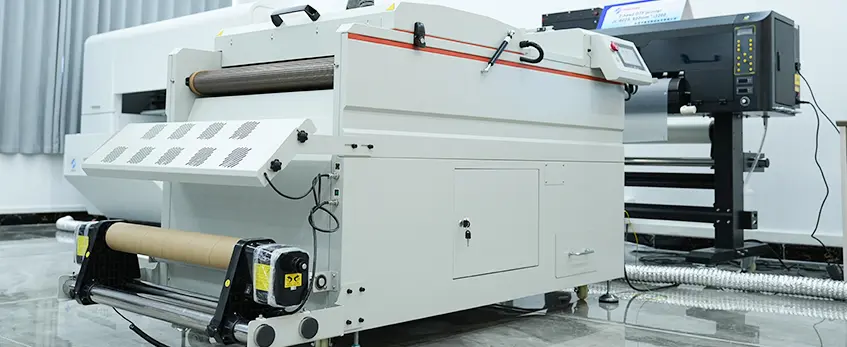
DTF powder dryers come with key extra features that boost workflow and protect your prints:
| Feature | Purpose | Benefit |
|---|---|---|
| Cooling Fans | Prevent fabric warping after heat | Keeps prints flat and smooth |
| Vacuum Absorption Platforms | Hold media firmly in place during drying | Avoids shifts and misalignments |
| Touchscreen Interface | Real-time control and monitoring of temperature and settings | Easy adjustments, better process control |
These features ensure your DTF powder drying is consistent and efficient, minimizing errors and downtime. For the best results, pairing your dryer with quality DTF transfer films can help improve overall print durability and ease of handling.
Optimal Temperature Ranges and Why They Matter
Getting the temperature right in a DTF powder dryer is key to quality transfers. Most curing processes recommend maintaining temperatures between 140°C to 160°C (284°F to 320°F). This range effectively melts the adhesive powder without burning it, ensuring a smooth, vibrant print.
Different materials need slight tweaks to these settings. For example, polyester blends might require a slightly lower temperature to avoid fabric damage, while cotton often handles the higher end of the range. Adjusting the temperature based on the substrate helps preserve the longevity and flexibility of the print.
Proper temperature control directly impacts transfer quality—too low, and the adhesive won’t set properly, leading to powder flaking or weak bonds. Too high, and you risk over-curing, which can cause yellowing or cracking over time. Staying within recommended temperature ranges boosts both durability and color vibrancy, delivering professional results every time.
For deeper insight on optimizing DTF printing processes, check out this detailed jinlong DTF beginners guide.
Key Control Technologies in DTF Powder Dryers
Accurate temperature control is crucial for consistent DTF curing results. Most modern DTF powder dryers use PID controllers and digital thermostats to maintain precise heat levels. These devices react quickly to temperature changes, avoiding overheating or under-curing, which can impact transfer quality.
Multi-zone heating systems are another big advantage. By dividing the dryer into several zones, each with its own heat source, the system ensures gradient-free temperature distribution. This means your powder and film get uniform heat across the entire surface, reducing hot spots and cold zones that cause uneven curing or clumping.
Safety and efficiency also come from built-in features like real-time temperature monitoring and auto-shutoff. These prevent damage from overheating and give you peace of mind during long runs.
For best results, pair your powder dryer with precision controls that match your specific heat profiles, especially when using different fabrics or powder types. This tech setup not only protects your equipment but helps produce sharper, longer-lasting prints.
Explore advanced DTF solutions such as the jinlong DTF motor-driven brush system that complements precise temperature control for flawless powder application.
Energy and Safety Considerations in DTF Powder Dryers

Controlling energy use is key for an efficient DTF powder dryer. Many units feature zoned heating operation, which targets only the active drying areas instead of heating the entire chamber. This reduces power consumption and lowers costs, especially during smaller runs or setup phases.
Proper ventilation and exhaust integration also play a critical role. Efficient airflow removes fumes and excess moisture, preventing powder clumping and overheating while improving operator safety. Exhaust systems help maintain consistent drying conditions without wasting energy.
For best results:
- Use multi-zone heating to optimize power where it\’s needed.
- Ensure the dryer has an effective exhaust fan or vent to control airflow.
- Regularly inspect filters and vents for blockages to maintain efficiency and safety.
By balancing zoned heating with good ventilation, DTF powder dryers deliver reliable temperature control, reduce energy bills, and keep your workspace safe and productive. For drying film and adhesive powder with precision, integrating these features along with trusted temperature controls such as PID regulators is essential. For more on materials that work well in these systems, check out the TPU DTF hot-melt adhesive powder that pairs perfectly with advanced drying setups.
Achieving Uniform Heating: Design Elements for Even Heat Distribution
Uniform heating is key in a DTF powder dryer to ensure consistent curing and avoid hot spots that cause transfer defects. Here are the main design features that make even heat distribution possible:
Infrared Tube Arrays for 360° Coverage
Using multiple infrared quartz tubes arranged around the drying chamber delivers all-around, infrared heating. This setup avoids cold zones by surrounding the film evenly with heat, which is critical for melting the adhesive powder uniformly.
Conveyor Belt Calibration and Speed Syncing
Properly calibrated conveyor belts control how fast the film moves through the dryer. Matching the belt speed with temperature settings ensures the powder gets enough time to cure without overheating or under-curing.
Airflow via Forced Convection Fans
Fans circulate hot air inside the dryer, promoting consistent temperature throughout the chamber. This extra airflow reduces temperature gradients and speeds up the drying process safely.
This combination of infrared heating, precise conveyor control, and forced convection is what gives jinlong DTF powder dryers their edge in delivering smooth, reliable heat across every inch of the transfer film. For more details on how these features improve quality and efficiency, check out the in-depth Jinlong DTF quality control and testing process.
Calibration and Testing Protocols for Uniform Heating
Ensuring consistent, uniform heating in your DTF powder dryer starts with proper calibration and regular testing. Before running any job, it’s crucial to perform pre-run temperature scans across the heating chamber. This helps identify any hot or cold spots that might lead to uneven curing or powder adhesion issues. Use thermal sensors at multiple points to map out the temperature distribution.
Don’t overlook humidity control—high moisture levels can affect powder flow and adhesion, so consider measuring ambient humidity and using dehumidifiers if needed. Consistent humidity supports both uniform heating and powder behavior.
If you notice uneven heating issues during operation, try these troubleshooting steps:
- Check infrared quartz tube alignment: Misaligned tubes often cause temperature variations.
- Verify conveyor belt speed and tension: Irregular belt movement can lead to uneven exposure time.
- Inspect airflow systems: Forced convection fans should provide steady airflow to prevent hot spots.
- Recalibrate PID temperature controllers: Ensure your digital thermostats are accurate and responsive.
Regular calibration combined with humidity awareness minimizes defects and keeps your transfer quality sharp. For tips on maintaining precision in your powder application and curing, explore best practices from trusted sources like jinlongprints.com.
Achieving Uniform Heating: Scaling for Production Volumes
When scaling up your DTF powder drying process, choosing the right equipment is key to maintaining consistent quality. For small batches or prototypes, batch ovens offer precise control over temperature and timing, letting you fine-tune settings without wasting materials. These ovens excel at handling limited runs, which is perfect for sampling or testing new designs.
For larger production volumes, conveyor dryers provide continuous, uniform heating that keeps up with high output demands. Conveyor systems, like those used in jinlong DTF powder dryers, integrate well into full production lines, ensuring that transfers move smoothly and consistently through the drying phase.
One major advantage in scaling up with jinlong DTF machines is the vacuum absorption platform. This feature securely holds prints and films in place during drying, preventing shifting or uneven exposure to heat. The vacuum system also contributes to more even powder distribution and reduces the chance of clumping—critical when working with larger batch sizes.
By combining conveyor dryers with vacuum platforms, you get:
- Consistent heat distribution over every part of the transfer
- Reduced risk of product defects caused by misalignment or uneven curing
- Improved workflow efficiency, supporting faster throughput without sacrificing quality
For businesses aiming to grow, understanding when to move from batch ovens to conveyor systems and leveraging jinlong’s vacuum technology can make all the difference in output consistency and cost-effectiveness.
Explore further details on integrating advanced drying technologies in your workflow with the next-gen DTF printing machines designed for high-speed, eco-friendly production.
Preventing Powder Clumping: Common Culprits Behind Clumping

Powder clumping in a DTF powder dryer can seriously affect print quality and workflow efficiency. Understanding the root causes helps tackle the problem before it starts.
Humidity and Environmental Factors: Moisture in the air is one of the biggest causes of powder clumping. High humidity causes powder to absorb water, making it stick together and clog the dispenser or shaker system. Maintaining a dry environment is key.
Equipment Issues: Faulty or poorly maintained dispensers can lead to uneven powder flow, encouraging clumping. Static electricity buildup inside the machine or on the powder surface also causes particles to stick together instead of spreading evenly.
Powder Quality and Particle Size: Lower-quality powders with inconsistent particle size tend to clump more easily. Fine powders might clump due to static, while coarser ones may not flow smoothly. Choosing the right powder for your printer and drying setup is crucial for smooth operation.
Addressing these factors with proper environmental control, routine equipment checks, and quality powder selection helps keep your DTF powder dryer running smoothly and clump-free. For optimized powder application techniques and to ensure you’re using compatible materials, check out jinlong’s full workflow guide to DTF printing.
Prevention Strategies in the Dryer Setup
Preventing powder clumping starts with controlling the environment inside your DTF powder dryer. One of the biggest culprits is humidity, which causes the powder to stick together and form lumps. Using dehumidifiers and sealed hoppers helps keep moisture out, maintaining a dry environment for smooth powder flow.
Optimizing the shaker system is also key. Adjusting the vibration strength and frequency ensures the powder spreads evenly without settling or clumping. This reduces waste and guarantees a consistent coating every time.
Lastly, managing the temperature ramp-up is crucial. Gradually increasing heat avoids sudden powder melting or sticking, allowing the adhesive powder to set properly without clustering. This gentle warming helps maintain the powder’s texture and performance throughout the drying process.
For users working with different powder types or looking to improve their setup, these prevention strategies make a noticeable impact on quality and efficiency. To explore compatible materials and powder options, check out the DTF transfer film collections designed for reliable adhesion and finish.
Preventing Powder Clumping: Maintenance Routines to Sustain Clump-Free Operation
Keeping your DTF powder dryer running smoothly means sticking to a solid maintenance routine. Here’s how to prevent powder clumping over time:
Daily Cleaning and Inspection
Wipe down the powder dispenser, shaker, and drying chamber daily to avoid residue buildup. Check for any signs of powder buildup or moisture that can cause clumps. Make sure shaker components are moving freely and powder flows evenly.
Weekly Calibration and Powder Testing
Calibrate your powder dispenser and shaker weekly to maintain consistent powder distribution. Test the powder quality to spot any changes in particle size or moisture content that might affect performance. This keeps your application smooth and your transfers flawless.
Annual Sensor Checks
Inspect and clean temperature and humidity sensors at least once a year. Accurate readings prevent overheating or uneven drying, both of which can trigger clumping. Regular sensor maintenance guarantees the PID temperature controller and other monitoring systems work as intended.
Following these simple but crucial steps helps ensure your DTF powder dryer stays efficient and your powder remains clump-free, protecting your print quality and reducing waste over time. For printers looking to integrate well-supported equipment, explore options like the JL DTF604P Digital Printer Pro Series which pairs well with Jinlong’s powder dryers for consistent results.
Integrating jinlong DTF Powder Dryers into Your Workflow: Setup and Onboarding
Getting your jinlong DTF powder dryer up and running is straightforward with quick-start wiring and easy software synchronization. The user-friendly setup means you can have your dryer connected and calibrated to your existing system without hassle, saving time during onboarding.
One big advantage is the compatibility with multi-head DTF printers, allowing smooth integration into larger production lines. This means you can efficiently handle higher volumes without worrying about synchronization issues between your powder application and drying stages.
For best results, pair your setup with high-quality films like the jinlong DTF transfer film series designed for consistent powder adhesion and curing. Proper integration helps maintain uniform heat and even powder distribution, maximizing your throughput and minimizing waste.
Integrating jinlong DTF Powder Dryers into Your Workflow: Case Studies and Performance Metrics
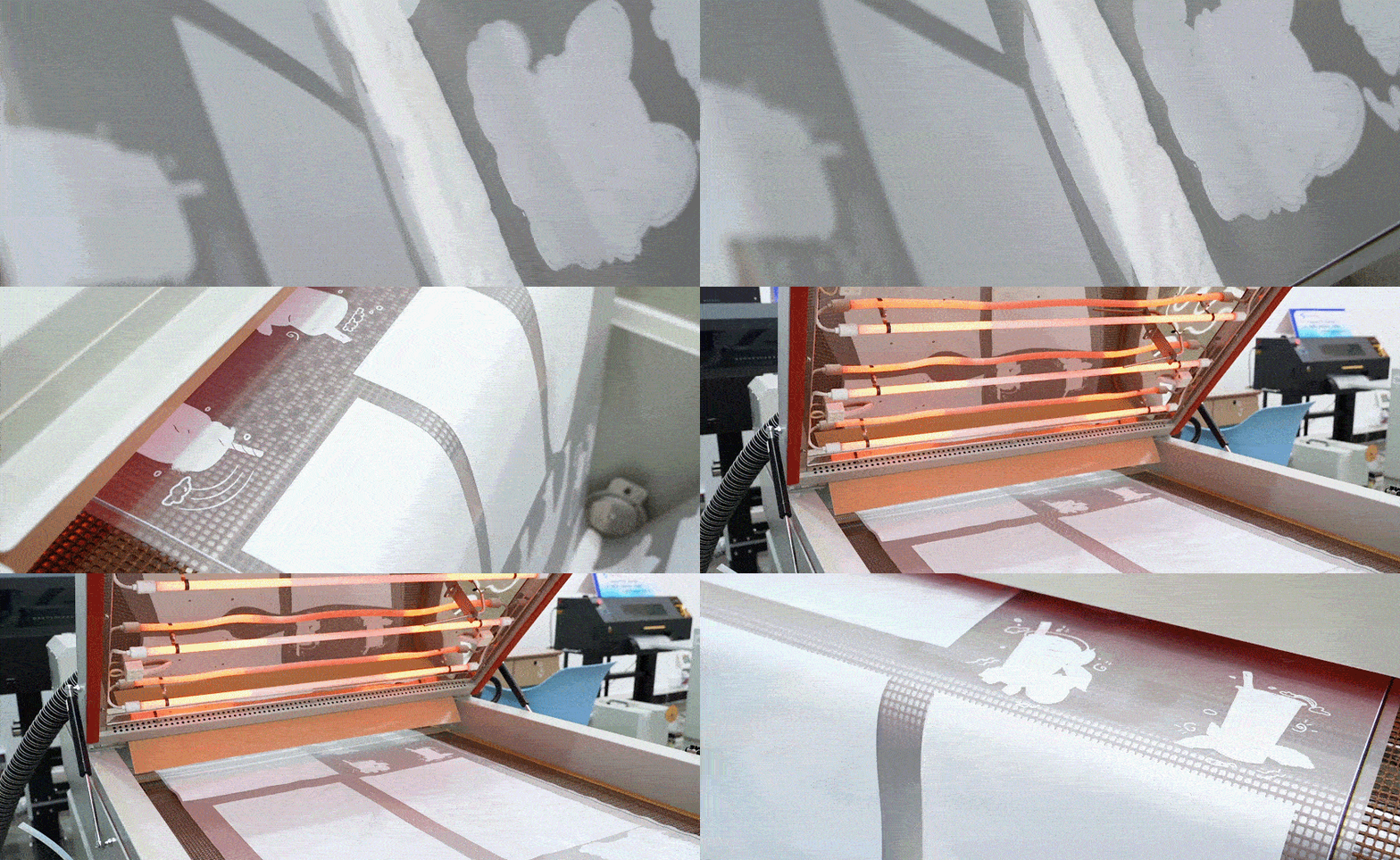
Using jinlong DTF powder dryers with precise PID temperature controls has shown clear results in reducing defects like uneven curing and powder clumping. By maintaining stable temperatures, these systems lower rework rates and improve the overall transfer quality, which means fewer rejects and better customer satisfaction.
Several users report a solid return on investment due to waste reduction and faster drying times. Automated shaking combined with efficient heat management cuts down powder waste, while quicker run cycles increase throughput without compromising quality. This balance boosts productivity and cuts operating costs over time.
For businesses looking to scale or optimize their DTF process, integrating jinlong’s dryers provides reliable, measurable improvements in both performance and ROI. If you want to learn how these innovations compare with other methods, check out our detailed breakdown of jinlong DTF printer durability and core components for deeper insights.
Customization Options for jinlong DTF Powder Dryers
When integrating jinlong DTF powder dryers into your production line, customization can play a big role in boosting efficiency and handling unique job needs. Here are common add-ons and modifications worth considering:
| Custom Feature | Benefit | Best Use Case |
|---|---|---|
| Smoke Extraction Add-Ons | Removes fumes and dust for safer air quality | Small workshops or indoor shops |
| Extended Conveyor Belts | Accommodates larger film sizes or longer runs | Large-format printing jobs |
Smoke extraction systems are crucial in confined spaces, helping maintain a clean work environment by pulling away fumes from heated powder curing. This makes your workflow healthier and ensures compliance with safety regulations.
Extended belts allow you to handle wide or multiple DTF films at once without needing to cut down sizes, streamlining operations and increasing throughput.
For example, if you work with wide-format transfers like those printable on the jinlong 40cm DTF Transfer Film, an extended belt dryer keeps pace with your printing speed without bottlenecks.
Tailoring your setup to your specific materials and production volume makes a big difference in output quality and labor savings.
Troubleshooting Common DTF Dryer Issues: Quick Fixes for Temperature Fluctuations
Temperature fluctuations in your DTF powder dryer can cause inconsistent curing and affect transfer quality. To fix these issues fast:
- Clean temperature sensors regularly: Dust and residue build-up can cause false readings. Wipe sensors gently with a soft cloth to keep them accurate.
- Update firmware: Make sure your dryer’s software is up to date. Firmware updates often improve temperature control precision and fix bugs.
- Check PID controller settings: Incorrect PID parameters can lead to unstable heat. Recalibrate if needed to maintain steady temperature.
- Inspect heating elements: Quartz tube performance may degrade over time. Replace any damaged tubes to ensure even infrared heating.
Keeping these simple steps in your maintenance routine can prevent common temperature swings and keep your DTF curing consistent. For best results, pair with high-quality materials like those found in the jinlong DTF Transfer Film Double Pro Series to maximize finish quality.
Troubleshooting Common DTF Dryer Issues: Clumping Persistence
If you’re still dealing with stubborn powder clumping in your DTF powder dryer, there are a couple of quick fixes that often do the trick:
Refresh the Powder Sieve: Over time, powder sieves can clog or become less effective, leading to uneven powder flow and clumps. Regularly clean or replace your sieve to keep the powder distribution smooth.
Boost Airflow: Insufficient airflow can cause powder to settle unevenly or stick together. Make sure your dryer’s fans and ventilation are working properly to maintain consistent air circulation.
Both these steps help prevent clumps and ensure better powder adhesion. For more on adhesive powders, consider checking out jinlongprints’ TPU DTF hot melt adhesive powder for a high-quality, clump-resistant option.
Troubleshooting Uneven Heating in DTF Powder Dryers
Uneven heating is a common issue that can affect the quality of your DTF transfers, leading to inconsistent curing and poor adhesive performance. Here are quick fixes to get your dryer back on track:
Check Tube Alignment: Infrared quartz tubes must be properly aligned for uniform heat distribution. Misaligned tubes cause hot spots or cold zones on the conveyor belt. Realign tubes according to the manufacturer’s guidelines.
Adjust Belt Tension: A conveyor belt that’s too loose or too tight can cause uneven movement, affecting heat exposure. Ensure the belt tension is balanced so the media moves smoothly and consistently through the drying chamber.
Clean Sensors and Reflectors: Dirt or powder buildup on temperature sensors or reflectors can skew heating patterns. Regularly clean these components to maintain accurate heat readings.
FAQ: Ideal Cure Times and Polyester Blends
What’s the ideal cure time? Most DTF powders cure best between 1.5 to 3 minutes at around 160-180°C (320-356°F), depending on your specific powder and ink mix.
Can I use polyester blends? Yes, polyester blends generally work well but may require slight temperature or timing adjustments to avoid scorching or under-curing.
For detailed powder and paper compatibility tips, check out this comprehensive guide to DTF transfer paper and powder.
By keeping your dryer’s heating components aligned and the conveyor properly tensioned, you’ll ensure consistent, professional results with every print.



 English
  Español
  Deutsch
  Français