


Maximize DTF Transfer Paper and Powder Efficiency for Superior Prints
Understanding jinlong DTF Transfer Paper and Powder: Key Features
When it comes to maximizing your DTF printing workflow, choosing the right transfer paper and powder is crucial. Jinlong offers a standout combo that delivers consistent, high-quality results.
jinlong DTF Transfer Paper Benefits
| Feature | Advantages |
|---|---|
| Matte/Coated Side | Ensures smooth ink absorption and vibrant prints without smudging. |
| Release Properties | Clean, easy peel for faster workflow and minimal residue. |
| Ink Absorption | Optimized for sharp ink transfer and excellent color fidelity. |
| Printer Compatibility | Works seamlessly with most popular DTF printers, simplifying setup. |
This paper’s coating balances ink retention and release, so your prints stay vivid while detaching cleanly during transfer.
jinlong Hot Melt Adhesive Powder Advantages
- TPU-Based Composition: Provides excellent stretchability and softness, making prints flexible and comfortable on garments.
- Granule Size Consistency: Ensures even powder application for smooth, reliable adhesion.
- Low-Melt Characteristics: Melts efficiently at standard curing temperatures (around 300–350°F), promoting strong bonds without damaging prints.
Why jinlong Paper and Powder Work Better Together
Pairing jinlong DTF transfer paper with its hot melt adhesive powder means you get a matched system engineered to optimize DTF powder shaking techniques, powder adhesion, and curing efficiency. Unlike generic mixes, this combination promises:
- Vibrant, crack-resistant prints with superior wash fastness.
- Improved consistency in every transfer, reducing defects.
- Streamlined workflow with compatible materials, saving you time and avoiding common DTF printing mistakes.
By investing in jinlong’s matched set, you ensure your workflow supports high-quality DTF transfers with durability and professional results tailored for the U.S. market.
Building a Solid Foundation: Essential Setup for Maximum Performance
To get the best out of your jinlong DTF transfer paper and powder, starting with the right setup is key. First, choose printers and inks that are fully compatible with jinlong products. Jinlong transfer paper works best with quality DTF inks that offer vibrant colors and good adhesion. For guidance on the best printer and ink combos, check out our detailed recommendations on the best DTF printers for beginners in 2026.
Next up is your RIP software settings. Proper color management ensures your prints come out accurately every time. Make sure to set a correct white ink underbase and adjust density levels for the perfect opacity without overloading the film. These tweaks help your prints stick well and look sharp.
Handling the jinlong DTF transfer paper right from the start is just as important. Load films carefully to avoid wrinkles or curling, and store them in a cool, dry place to prevent contamination or moisture buildup. These simple steps guard against print defects caused by improper film handling, making sure every transfer starts on a solid foundation.
By dialing in your printer, ink, RIP settings, and film handling properly, you’re setting yourself up for a smooth, efficient DTF printing workflow that maximizes the potential of jinlong transfer paper and powder.
Step-by-Step Optimization in the Core Workflow
Getting the best results with jinlong DTF transfer paper and powder comes down to nailing each step in your workflow. Here’s how to optimize printing, powder application, curing, and heat pressing for top-quality, durable transfers.
Printing Phase: Perfect Resolution and Ink Management
- Set your printer resolution between 1440 to 2880 dpi to get sharp details without wasting ink.
- Keep ink limits balanced—don’t over-saturate the matte side of the jinlong transfer film; it absorbs well but flooding it can cause issues with drying and powder adhesion.
- Allow proper drying time after printing. Too fast or too slow drying can affect powder bonding. Aim for a quick, tacky surface before moving on.
- For best ink and printer compatibility, see the jinlong DTF printing guide and settings.
Powder Application Mastery: Shaking Techniques and Coverage
- Whether you use a manual or automatic shaker, ensure even coverage of the TPU-based powder. This consistency is crucial for flexibility and washability in the final print.
- Shake off excess powder thoroughly to avoid clumps or powder buildup, which can cause patchy adhesion later.
- Adjust powder application depending on your ink load—heavier ink areas need a bit more powder for full bonding.
- Use tools designed for even powder distribution to improve workflow efficiency and reduce waste.
Curing Best Practices: Oven vs. Heat Press
- Preheat your oven or heat press to the ideal temperature range of 300–350°F (about 150–175°C).
- Stick to curing times recommended for jinlong powder—usually between 3 to 5 minutes—to avoid under-curing (poor bonding) or over-curing (brittle prints).
- Oven curing provides uniform heat and is great for batch prints; heat presses can be more precise for individual transfers.
- Monitor your curing processes closely to prevent issues before the transfer stage.
Heat Pressing and Transfer: Pressure, Temperature, and Peel
- Use optimal pressure plus the right temperature and timing, typically around 320°F with 15 seconds of pressing at medium to high pressure.
- For prints with multiple layers or heavy ink coverage, multi-press techniques help achieve consistent adhesion without over-pressing.
- Pay attention to peel type: cold peels often deliver better durability and finish, but hot peels can work depending on fabric and design.
- Allow post-press cooling before handling to lock in print quality and avoid distortion.
By mastering these core workflow steps with jinlong DTF transfer paper and powder, you’ll produce vibrant, durable prints consistently while optimizing your printing workflow. For more on ink and powder compatibility, check out the jinlong CMYK DTF inks to fine-tune your setup.
Advanced Tips to Maximize Quality and Durability
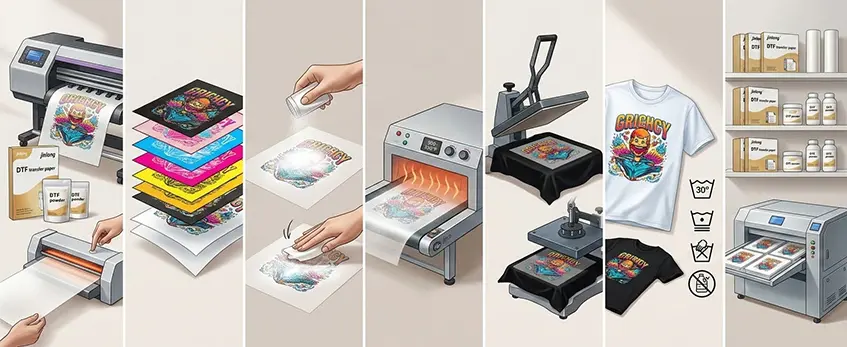
Getting vibrant, crack-resistant prints with jinlong DTF transfer paper and powder starts with smart layering and preparation. For heavy ink coverage, pre-heating the film before powdering helps the ink set better, reducing cracking after pressing. Applying multiple thin layers instead of one thick print enhances flexibility and color pop without compromising durability.
To boost wash-fastness, a solid post-cure process is key. After heat pressing, giving transfers a quick additional cure under a heat press or conveyor dryer locks the ink and adhesive powder in place. Also, following proper garment care—like washing inside out in cold water and avoiding harsh detergents—keeps your prints looking fresh longer.
Powder clumping and poor adhesion are common DTF transfer hurdles but easy to fix with these tips: use a fine, even powder shake and immediately tap off excess. If you see incomplete bonding or film release issues, double-check curing temps and times (usually 300–350°F) and ensure even heat distribution. Avoid humidity extremes, which can cause powder to cake.
When it’s time to scale production, consider batch processing where you print several transfers, then powder and cure all at once before pressing. Automating powder application with an automatic shaker saves time and keeps coverage consistent. Stay on top of your inventory, using authentic jinlong consumables to maintain quality and reduce costly defects down the line.
For even more details on optimizing your workflow, check out expert advice on choosing the best DTF printer and the advantages of jinlong’s DTF transfer film for professional results.
Efficiency Boosters: Streamlining Your Daily Operations
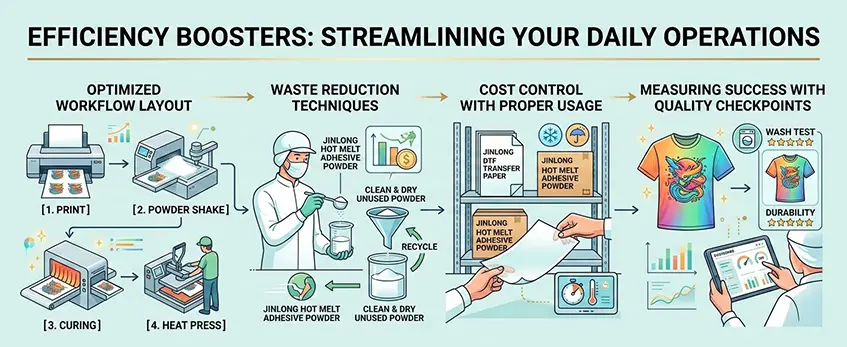
Maximizing your DTF printing workflow means cutting down wasted time and materials while keeping quality high. Here’s how to boost efficiency using jinlong DTF transfer paper and powder in your daily setup:
- Optimized workflow layout: Set up clear stations in this order—print → powder shake → curing → heat press. This organized flow reduces handling time and stops bottlenecks, making your process smoother and faster.
- Waste reduction techniques: Use precise measuring tools to apply just the right amount of jinlong hot melt adhesive powder. Excess powder not only wastes product but can cause defects. You can even recycle unused powder from previous jobs to save costs, provided you keep it clean and dry.
- Cost control with proper usage: Extend the life of your jinlong DTF transfer paper and powder by storing materials correctly — in cool, dry places — and handling films carefully to avoid curling or contamination. Following recommended curing temperatures and times also prevents costly errors.
- Measuring success with quality checkpoints: Regularly test your prints with wash tests and inspect for durability issues. Track production speed to identify bottlenecks and keep your workflow lean. These metrics help you maintain consistent high-quality results and spot improvement areas fast.
For more on powder application and troubleshooting, consider checking out common problems with low-quality DTF kits and how to avoid them, which offers great tips to keep your workflow efficient and high-quality.
Implementing these efficiency boosters will help you get the most from your jinlong DTF transfer paper and powder while streamlining daily operations.
Common Mistakes to Avoid with DTF Paper and Powder
When working with DTF transfer paper and powder, avoiding common pitfalls can save you time and money while improving the quality of your prints. Here are key mistakes to watch out for:
Over or under-applying powder: Applying too much powder leads to clumping, poor adhesion, and rough textures. Too little, and your transfers won’t bond well or will peel prematurely. Use consistent shaking techniques and precise measurements to get even coverage.
Incorrect curing temperatures or times: Curing outside the recommended 300–350°F range or rushing the timing causes under-cured prints that can crack or over-cured transfers that yellow and lose flexibility. Stick to manufacturer guidelines for your specific powder, like TPU-based options from jinlong, to optimize durability.
Ignoring humidity and environmental factors: DTF powder and ink performance can be affected by high humidity or dusty environments. Store your jinlong DTF transfer paper and powder properly to prevent curling, contamination, or moisture absorption.
Mixing incompatible inks and powders: Using inks not designed to work with your powder and paper can lead to poor ink adhesion or transfer faults. To get the best results, pair jinlong DTF hot melt adhesive powder with compatible inks like those from jinlong’s CMYK basic series.
Rushing steps in high-volume runs: In busy workflows, skipping or speeding up critical phases—whether powder shaking, curing, or heat pressing—often causes defects. Maintain steady, quality-focused routines even when production scales up.
By recognizing these mistakes and using high-quality materials like jinlong’s DTF transfer paper and hot melt adhesive powder, you can avoid common problems and improve your DTF printing workflow efficiency and final product durability.


 English
  Español
  Deutsch
  Français